
Hundreds of Travelers Disrupted Across the Middle East as Kuwait, UAE, Qatar, Egypt and More Cancel 61 Flights and Delay 169, Impacting Emirates, Flydubai, Air Arabia, Turkish Airlines and Others in Doha, Sharjah, Istanbul, London, Paris, and Beyond

Published
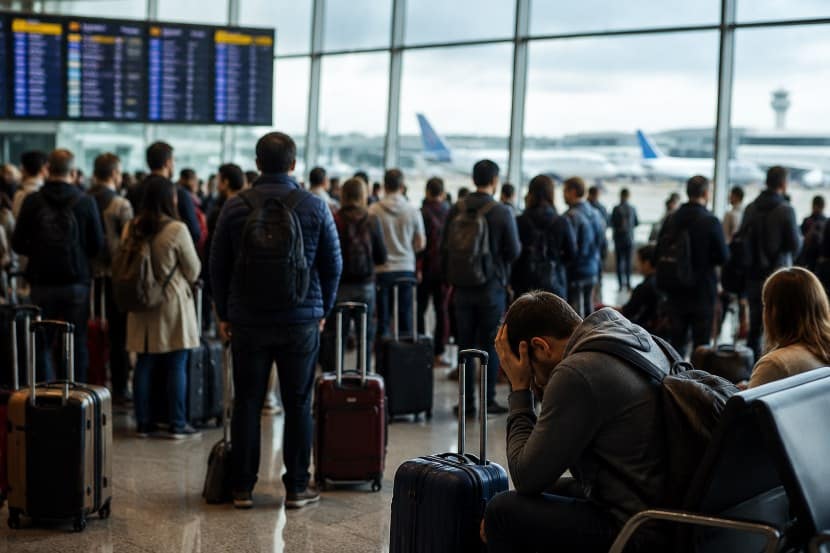
Today, hundreds of travelers have been disrupted across the Middle East as a coordinated wave of operational strain has hit key aviation hubs in Kuwait, the UAE, Qatar, and Egypt, forcing airlines to cancel 61 flights and delay 169 more, with knock-on effects spreading rapidly into global networks serving Doha, Sharjah, Istanbul, London, Paris, and beyond. The disruption unfolding today reflects a multi-airport system under simultaneous pressure rather than a single-point breakdown. Kuwait has seen the sharpest impact in terms of cancellations, indicating abrupt schedule resets likely tied to aircraft rotation and crew availability constraints. At the same time, Doha’s Hamad International Airport is absorbing heavy delay pressure as a major global transfer hub, where even minor timing shifts quickly cascade into missed onward connections. Dubai is experiencing a mixed pattern of cancellations and delays, consistent with congestion at one of the world’s highest-volume international airports. Cairo’s disruption underscores its role as a regional connector between Africa, the Middle East, and Europe, while Sharjah shows limited but operationally sensitive impacts typical of low-cost carrier networks. Istanbul stands out today for extreme delay concentration, signaling congestion across a critical Europe–Asia aviation bridge.
The effect has directly hit Emirates, Flydubai, Air Arabia, and Turkish Airlines, whose tightly synchronized schedules rely on precise turnaround cycles across interconnected hubs. As delays build at one airport, they propagate quickly through fleet rotations and connecting itineraries, reaching passengers traveling through London, Paris, and other major international gateways. The result today is a broad aviation slowdown marked by disrupted connections, extended waiting times, and widespread rebooking pressure across multiple continents.
Overview of Total Flight Cancellations and Delays Across the Region
The overall disruption pattern shows a clear imbalance between cancellations and delays, with 61 flights cancelled and 169 delayed across six major airports. Kuwait leads in cancellations, while Istanbul dominates delay figures. Doha, Dubai, and Cairo sit in the middle range, each contributing to a cumulative network slowdown. Sharjah, while smaller in scale, still adds measurable disruption through its low-cost carrier traffic.
This mix highlights a system under pressure not from a single failure point, but from interconnected operational strain across multiple hubs simultaneously.
Advertisement
Advertisement
Kuwait International Airport: Largest Cancellation Wave in the Network
Kuwait International Airport recorded the highest number of cancellations, with 44 flights grounded and just 1 delay reported.
This unusually high cancellation-to-delay ratio suggests a decisive operational reset, likely driven by scheduling breakdowns or upstream aircraft and crew disruptions. Rather than allowing extended delays to accumulate, airlines appear to have opted for full cancellations to stabilize downstream operations. The impact extended beyond Kuwait itself, affecting repositioning of aircraft and subsequent schedules across connected Gulf and international routes.
Advertisement
Advertisement
Hamad International Airport, Doha: High Delay Pressure on a Global Transit Hub
Hamad International Airport in Doha reported 3 cancellations and 42 delays, reflecting significant operational congestion at one of the world’s most important transfer hubs.
While cancellations remained limited, the delay volume points to bottlenecks in turnaround timing, runway sequencing, and passenger transfer coordination. Given Doha’s role as a major intercontinental connector, disruptions here quickly cascade into missed onward flights across Europe, Asia, and Africa. Passengers transiting through Qatar faced extended layovers and frequent rebooking challenges.
Advertisement
Advertisement
Dubai International Airport: Network Strain Across a High-Volume Global Hub
Dubai International Airport recorded 5 cancellations and 34 delays, impacting one of the busiest aviation centers in the world.
As the primary hub for Emirates and Flydubai, even moderate disruptions in Dubai ripple rapidly across global schedules. Tight aircraft rotation cycles mean delays in arrival often translate directly into delayed departures across multiple continents. Flights connecting Europe, South Asia, and Southeast Asia were among the most affected, with knock-on effects across long-haul operations.
Cairo International Airport: Regional Connector Under Sustained Pressure
Cairo International Airport reported 4 cancellations and 30 delays, contributing to broader instability across North African and Middle Eastern networks.
As a key transit hub linking Africa, the Middle East, and Europe, disruptions in Cairo extend far beyond domestic operations. Partner airlines and codeshare routes experienced secondary delays, particularly on connecting services into Gulf hubs and European destinations. The cumulative effect added further strain to already congested regional flight schedules.
Advertisement
Advertisement
Sharjah International Airport: Low-Cost Network Disruption
Sharjah International Airport recorded 4 cancellations and 6 delays, reflecting a smaller but still meaningful operational impact.
As a major base for Air Arabia, Sharjah’s disruption primarily affected high-frequency short-haul routes across the Gulf, South Asia, and nearby regional markets. Even limited cancellations created schedule gaps in tightly timed low-cost carrier operations. Passengers on budget routes faced rescheduling and reduced flexibility due to fewer backup flights.
Istanbul Airport: Delay-Heavy Congestion Across a Global Transit Bridge
Istanbul Airport reported just 1 cancellation but 56 delays, making it the most delay-affected hub in the entire network.
This pattern reflects congestion-driven disruption rather than outright operational shutdown. As a major global bridge between Europe and Asia, Istanbul handles dense traffic flows where minor inefficiencies quickly escalate into large-scale delay accumulation. Turkish Airlines, the dominant carrier at the hub, experienced widespread scheduling pressure, with knock-on effects stretching across Europe, the Middle East, and long-haul international routes.
Major Airlines Impacted Across the Middle East Network
The disruption has significantly affected Emirates, Flydubai, Air Arabia, and Turkish Airlines, along with several regional and international partners.
Emirates and Flydubai saw cascading delays originating from Dubai, affecting both regional and long-haul services. Aircraft rotation delays and gate congestion intensified schedule instability across their networks.
Advertisement
Advertisement
Air Arabia, operating primarily through Sharjah, experienced disruption across high-frequency budget routes, where even minor delays affect multiple daily rotations.
Turkish Airlines faced the most widespread knock-on effects due to Istanbul’s role as a global transit hub, with delays propagating across multiple continents.
Additional regional carriers operating from Cairo and Doha also experienced schedule disruptions on connecting routes feeding into global networks.
Causes Behind Widespread Disruptions
Several overlapping operational factors appear to be contributing to the disruption across multiple airports.
Airspace congestion across Middle Eastern corridors remains a structural pressure point, especially around major hubs like Dubai, Doha, and Istanbul where traffic density is consistently high.
Aircraft rotation disruptions also play a central role, as delayed inbound flights directly impact outbound schedules when aircraft and crew are unavailable for timely departures.
Advertisement
Advertisement
Ground handling constraints, including baggage processing, fueling, and turnaround delays, further amplify operational bottlenecks during peak travel periods.
Weather variability, even when not extreme, can reduce runway efficiency and slow sequencing, adding incremental delays across tightly scheduled networks.
Most significantly, cascading delay propagation across interconnected airline systems appears to be the dominant factor, where disruption in one hub rapidly spreads across multiple regions.
Passenger Impact Across Global Routes and Transit Hubs
Passengers have faced missed connections, extended layovers, and frequent rebooking across major international routes. Transit-heavy airports such as Doha, Dubai, and Istanbul have seen the highest concentration of affected travelers, particularly those connecting between Europe, Asia, and Africa. Routes into London, Paris, and other European destinations were significantly impacted due to reliance on Middle Eastern hubs as transfer points. Business travelers experienced uncertainty in scheduling, while leisure travelers faced longer airport waits and disrupted itineraries.
Passenger Guidance Amid Ongoing Travel Disruption
Travelers are advised to closely monitor flight updates, as schedules remain fluid across affected airports.
Airline apps and airport systems remain the most reliable sources of real-time information, as gate assignments and departure timings may change repeatedly within short periods.
Advertisement
Advertisement
Passengers with connecting flights should build in additional buffer time when traveling through Doha, Dubai, or Istanbul, where delays are most concentrated.
Flexible routing is strongly recommended, as airlines may rebook passengers through alternative hubs to reduce missed connections.
At airports, early check-in and direct coordination with airline service desks is essential for managing last-minute changes, reissued boarding passes, and baggage transfers.
Hundreds of travelers are disrupted across the Middle East today as Kuwait, UAE, Qatar and Egypt cancel 61 flights and delay 169 due to airport congestion, impacting Emirates, Flydubai, Air Arabia, Turkish Airlines across Doha, Sharjah, Istanbul, London and Paris.
Conclusion: A Region-Wide Aviation Disruption Under Strain
The disruption across Kuwait, UAE, Qatar, and Egypt highlights the fragility of tightly integrated aviation systems under simultaneous operational pressure. With 61 cancellations and 169 delays spread across major hubs, the Middle East network is experiencing a cascading imbalance rather than isolated airport issues. As airlines and airport authorities work toward stabilization, recovery will depend on restoring aircraft rotations, easing congestion at key hubs, and gradually clearing accumulated delays across global routes. For now, hundreds of travelers remain affected as disruption continues to ripple across some of the world’s most important aviation corridors.
Author’s Note: All information has been collected manually from FlightAware’s official website and may change in real time as flight operations are updated. Airlines continuously adjust schedules and routes to ensure passenger safety and smooth operations. Travelers are advised to stay calm, monitor real-time updates, and check airline rebooking policies before making further arrangements. Flexibility in travel plans and consideration of alternative routes are strongly recommended to avoid inconvenience.
Advertisement
