
El Salvador Tourism Unveils a Sixth Sense as Coast, Coffee, Cuisine and Community Deepen the Traveller Experience

Published
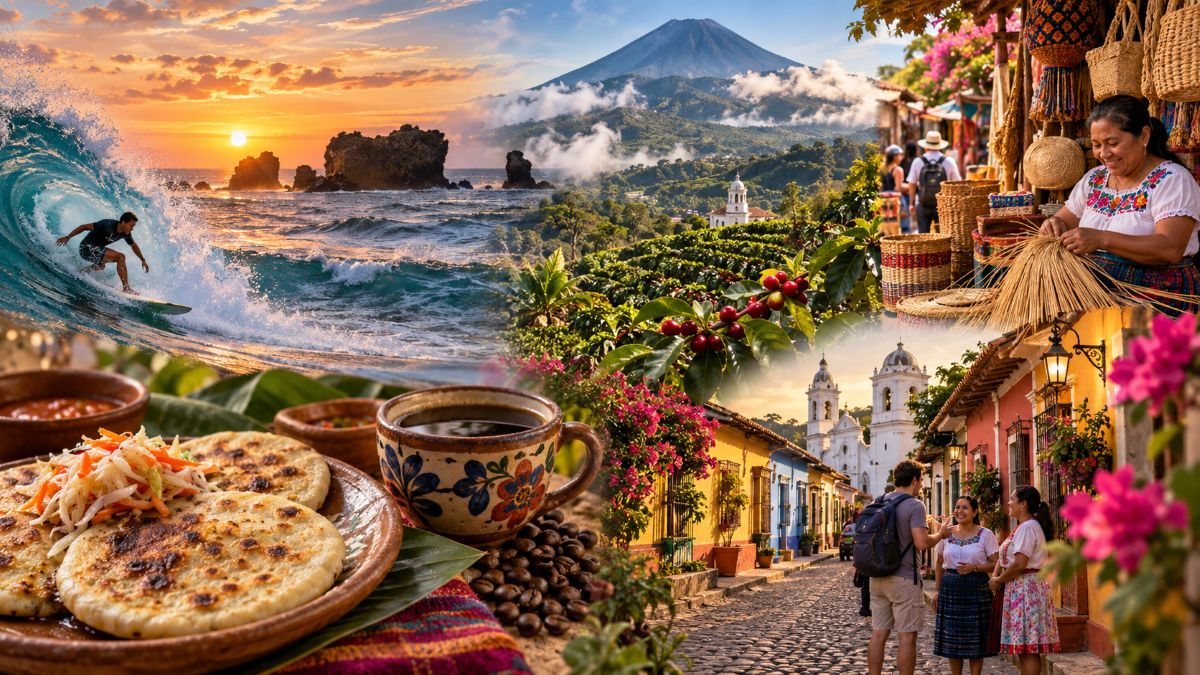
Image generated with Ai
El Salvador is using World Tourism Day 2026 to present tourism through an unusually intimate lens. Its latest campaign invites travellers to experience the country through five senses, linking coastlines, markets, food and communities. The concept arrives as El Salvador tourism enters a period of strong international expansion. The country recorded 3.9 million international visitors in 2024, up 17% from 2023. It then welcomed 2 million international visitors during the first half of 2025. Public tourism sites recorded another 5 million visits during that six-month period. These figures show why the sensory proposition matters now. El Salvador is no longer selling one attraction, but a connected portfolio of experiences.
The country’s selection as World Tourism Day 2026 host adds global visibility to that shift. UN Tourism has designated “Digital Agenda and Artificial Intelligence to redesign tourism” as the 2026 theme. Yet El Salvador’s five-senses storytelling offers a useful human counterpoint to the technology discussion. Behind digital discovery sits a physical journey involving waves, coffee, cooking, craftsmanship, landscapes and personal encounters.
Five Senses Turn A Country Into Experience
The most interesting feature of this approach is its refusal to treat a destination as a collection of landmarks. Instead, El Salvador can be read as a sequence of sensory encounters that connect tourism with agriculture, culture, recreation and local enterprise.
The visual landscape begins with the Pacific coast and its surf communities. It then moves inland towards volcanoes, coffee farms, mountain towns and historic urban spaces. The journey can change dramatically within a relatively compact geography, allowing travellers to combine coastal and highland experiences without building an itinerary around long intercity transfers.
Advertisement
Advertisement
The soundscape is equally important. Waves, market activity, street life, food preparation, conversation and community events create an experience that cannot be replicated through photographs alone. This matters because cultural tourism increasingly depends on participation rather than passive sightseeing.
Advertisement
Advertisement
The sense of taste introduces another layer. Pupusas, yuca, seafood, coffee and traditional sweets connect visitors with agricultural production and culinary heritage. Food therefore becomes more than an amenity for tourists. It becomes a route into the country’s communities and small-business economy.
Smell completes an unusually powerful travel vocabulary. Fresh coffee, wood-fired cooking, sea air, tropical vegetation and market produce create sensory memories that often survive longer than individual sightseeing stops. The final sense, touch, arrives through surfing, walking, crafts, food preparation and interaction with landscapes.
| Sense | Traveller Encounter | Strong El Salvador Examples | Wider Tourism Value |
|---|---|---|---|
| Sight | Landscapes and architecture | Pacific coast, volcanoes, historic centres | Destination discovery |
| Sound | Community and coastal life | Markets, surf, festivals | Cultural immersion |
| Taste | Food and drink | Pupusas, seafood, yuca, coffee | Culinary spending |
| Smell | Agriculture and cuisine | Coffee farms, markets, coastal air | Place memory |
| Touch | Participation | Surfing, crafts, hiking, food experiences | Experiential travel |
The Coast Supplies The Adrenaline
The Pacific coastline remains one of the country’s most recognisable tourism assets. Surf City has placed destinations such as El Tunco, El Zonte, La Libertad and Las Flores within a broader international surf narrative.
Advertisement
Advertisement
El Tunco illustrates how one beach community can activate several senses simultaneously. The official tourism platform describes a destination where surf culture, accommodation, food, cafés, transport services, crafts and nightlife operate within the same compact visitor environment.
Its signature surf experience is also unusually physical. The La Bocana break can produce powerful waves, while smaller sections provide more accessible conditions. The result is a destination where the traveller does not simply observe the ocean. The visitor interacts with it.
Advertisement
Advertisement
That distinction has economic implications. Surf tourism creates demand for instructors, equipment rental, accommodation, restaurants, transport and other visitor services. It can therefore distribute expenditure across a wider local ecosystem.
The government’s eastern tourism programme shows that this coastal strategy extends beyond the established western surf corridor. A US$106 million Inter-American Development Bank-backed tourism programme focuses heavily on the east, with infrastructure projects designed to improve access, recreation and community benefits.
Coffee Country Changes The Tempo
Leave the coast and the sensory rhythm changes sharply. The Ruta de Las Flores moves through the western highlands, where coffee, cooler temperatures, forests, artisan production and small-town culture create a markedly different travel proposition.
The route connects destinations including Ahuachapán, Salcoatitán, Nahuizalco, Concepción de Ataco, Juayúa and Apaneca. Official tourism material positions the corridor around nature, adventure, coffee, gastronomy and colour, making it almost a ready-made five-senses itinerary.
Coffee adds particular depth to this experience. Farms along the route sit at elevations of roughly 1,400 to 1,600 metres, according to the national tourism platform. Some sites also offer birdwatching opportunities involving more than 35 native species.
Advertisement
Advertisement
At coffee estates such as Beneficio El Carmen, visitors can follow coffee from cultivation through processing and tasting. That changes the visitor relationship with a product that many travellers normally encounter only after it reaches a café.
| Experience | Location Type | What Travellers Encounter | Sensory Dimension |
|---|---|---|---|
| Coffee cultivation | Ruta de Las Flores | Farms and processing | Smell, taste, touch |
| Artisan production | Nahuizalco | Woven goods and furniture | Sight, touch |
| Mountain walks | Apaneca and Juayúa | Forests, waterfalls and trails | Sight, sound |
| Gastronomy | Juayúa and Salcoatitán | Traditional dishes | Taste, smell |
| Historic streets | Ahuachapán and Ataco | Architecture and murals | Sight |
Markets Preserve The Human Texture
Nahuizalco provides perhaps the clearest example of tourism being shaped by people rather than scenery. Its market, artisan workshops, Indigenous heritage and traditional foods give visitors access to living cultural practices.
The town’s tourism proposition includes handcrafted products made from materials such as wicker and tule. Visitors can also encounter traditional dishes including yuca-based pupusas, yuca with chicharrón and canchules associated with local festivities.
This matters because souvenirs can become more meaningful when travellers understand who made them and why. A market visit can therefore move beyond retail consumption into cultural interpretation.
The same principle applies across the Ruta de Las Flores. Murals, workshops, cafés, historic buildings, food stalls and community spaces create an environment where culture remains part of ordinary daily life.
Advertisement
Advertisement
For travel businesses, this also widens the product mix. A visitor who might previously have booked a beach stay can now add a coffee tour, artisan visit, food experience or cultural excursion.
Food Connects Farms With Visitors
Few senses create a faster emotional connection with a destination than taste. In El Salvador, food provides an especially direct bridge between tourism and local identity.
Pupusas remain the internationally recognisable symbol, but the culinary story is broader. Yuca, seafood, tamales, traditional sweets, coffee and regional preparations reveal different layers of the country’s food culture.
El Tunco demonstrates how traditional dishes coexist with international cuisine. Meanwhile, the Ruta de Las Flores connects restaurants with agricultural landscapes and local producers.
This creates an important tourism-economy chain. A visitor’s meal can support a restaurant, which supports suppliers, transport operators and producers. Culinary tourism therefore allows visitor expenditure to travel deeper into the destination.
Advertisement
Advertisement
The country’s official tourism strategy has also identified gastronomy as part of wider destination development. Gastro-Lab Surf City, for example, has provided culinary training for young people, linking tourism skills with employment opportunities.
Community Becomes The Fifth Destination
The strongest part of the five-senses concept may ultimately be the human connection behind every experience. A coastline needs instructors and fishermen. A coffee landscape needs growers and processors. A market needs artisans. A food destination needs cooks, farmers and suppliers.
That makes community participation central to the visitor proposition. It also explains why tourism infrastructure must extend beyond hotels and airports.
A government tourism programme in eastern El Salvador illustrates this approach. Projects around El Cuco include a tourist plaza, sports areas, urban access corridors, cycling infrastructure, a gastronomic zone and public facilities. The programme cites more than 1.2 million annual domestic visitors and 342,000 international tourists for the wider beneficiary area.
| Tourism Indicator | Latest Official Figure Available |
|---|---|
| International visitors, 2024 | 3.9 million |
| Growth versus 2023 | 17% |
| International visitors, January–June 2025 | 2 million |
| Public tourism-site visits, January–June 2025 | 5 million |
| International visitors, 2019 | 2.64 million |
| International tourism growth, 2024 vs 2019 | 81% |
| International tourism receipts growth, 2024 vs 2019 | 206% |
| 2025 full-year projection announced in July 2025 | 4 million |
The Sixth Sense That Makes El Salvador Stay With You
The five senses explain what travellers see, hear, taste, smell and touch across El Salvador. Yet there is another sensation that emerges more slowly, often after the journey has begun: the sense of place. It is the feeling that a destination possesses its own character, created by landscapes, people, traditions, food, climate and everyday rhythms.
Advertisement
Advertisement
In El Salvador, that sixth sense becomes especially vivid because experiences are closely intertwined. The Pacific coast introduces the sound and movement of surf, while the western highlands replace salt air with the aroma of coffee and cooler mountain air. A market in Nahuizalco adds another layer through craftsmanship, local food and human interaction, showing travellers that the destination is not simply a collection of attractions.
The sense of place develops when these individual impressions begin to connect. A cup of Salvadoran coffee becomes more meaningful after seeing where it grows. A handmade craft carries greater significance after meeting the artisan. A plate of pupusas becomes part of the destination story when travellers understand its place within Salvadoran food culture.
This is where experiential travel moves beyond sightseeing. Travellers are no longer simply collecting photographs or visiting named attractions. They are building an emotional understanding of how landscape, culture and livelihoods intersect.
| First Five Senses | Sixth Sense — Sense of Place |
|---|---|
| Sight | Understanding the landscape |
| Sound | Recognising the local rhythm |
| Taste | Connecting food with culture |
| Smell | Associating aromas with place |
| Touch | Participating rather than observing |
| Sense of place | Feeling connected to the destination |
For El Salvador, this sixth sense also has an important tourism-economy dimension. When travellers seek experiences rooted in place, their spending can extend beyond conventional accommodation and attractions. Coffee farms, family-run restaurants, artisan workshops, surf instructors, local guides and community enterprises can all become part of the visitor journey.
The Numbers Explain The New Momentum
The statistics give the sensory narrative a much firmer foundation. El Salvador received 2.64 million international visitors in 2019, according to its National Tourism Plan. The country reported 3.9 million international visitors in 2024, demonstrating how substantially the inbound market has expanded.
Advertisement
Advertisement
UN Tourism data cited by the Salvadoran tourism ministry showed international tourism arrivals 81% above 2019 levels in 2024. International tourism receipts were reported 206% above the 2019 level.
The growth also has a regional dimension. Guatemala accounted for about 26% of international visitors in 2024, according to the tourism ministry. By May 2025, Guatemala represented 31% of arrivals, while the United States and Honduras remained important source markets.
This is significant for travellers because land connectivity matters alongside aviation. El Salvador can draw regional visitors who may travel for shorter breaks, while long-haul travellers can build longer multi-experience itineraries.
From Surf Destination To Multi-Layered Journey
The country’s earlier tourism proposition leaned heavily on beaches and surfing. That identity remains commercially important, but the current offer is considerably broader.
The Ruta de Las Flores introduces highland culture. San Salvador contributes urban heritage and gastronomy. Nahuizalco adds Indigenous history and artisan production. Coffee estates provide agricultural tourism. Volcanoes and protected landscapes introduce nature-based travel.
Advertisement
Advertisement
The shift can therefore be described as portfolio tourism rather than single-attraction tourism. Travellers are encouraged to combine experiences instead of selecting one destination and remaining there.
This also aligns with the country’s longer-term tourism planning. The National Tourism Plan 2030 established targets for segments including surf tourism, medical tourism and MICE travel, signalling an ambition to diversify demand.
For the traveller, diversification creates an itinerary with greater texture. A morning surf session can eventually become an afternoon food experience, followed by coffee in the highlands on another day.
World Tourism Day Adds A Global Lens
El Salvador’s role as World Tourism Day 2026 host gives this sensory campaign unusual international relevance. The country was recommended as host by UN Tourism’s Regional Commission for the Americas in 2025.
The official 2026 theme focuses on digital transformation and artificial intelligence. That might appear distant from markets, beaches and coffee farms, yet the two stories increasingly intersect.
Advertisement
Advertisement
Travellers now discover destinations through algorithms, maps, social platforms and AI-powered planning tools. However, the final tourism experience remains physical. A screen can recommend a coffee farm, but it cannot reproduce its aroma. It can identify a surf break, but it cannot recreate the movement of a wave.
That tension makes El Salvador’s proposition timely. Digital discovery may bring travellers to a destination, but sensory experience determines what they remember.
What Travellers Can Build From It
A five-senses itinerary does not require a long stay or an exhaustive circuit. A coastal base around La Libertad can introduce surf, seafood, cafés and community life, while the western highlands provide an entirely different atmosphere.
Travellers seeking coffee and culture can explore the Ruta de Las Flores. Nahuizalco suits those interested in crafts, food and heritage, while Juayúa combines gastronomy with nature. El Tunco works particularly well for visitors who want surf, social energy and coastal dining.
The practical lesson is to avoid treating these experiences as interchangeable attractions. They represent different tourism environments, climates and rhythms.
Advertisement
Advertisement
| Traveller Interest | Suggested Experience | Why It Adds Value |
|---|---|---|
| Surf and coast | El Tunco or El Zonte | Active coastal experience |
| Coffee | Ruta de Las Flores | Farm-to-cup perspective |
| Food | Juayúa and Salcoatitán | Regional culinary discovery |
| Crafts | Nahuizalco | Direct artisan connection |
| Nature | Apaneca and Juayúa | Hiking and biodiversity |
| Heritage | Ahuachapán and San Salvador | Historic and cultural context |
A Country That Can Be Remembered
El Salvador’s five-senses proposition works because it turns geography into memory. The traveller sees volcanoes, hears waves, tastes coffee and pupusas, smells food and coastal air, then physically engages with surf, trails and craftsmanship.
The statistics suggest that this broader experience is arriving at an important moment. International arrivals reached 3.9 million in 2024, while the first half of 2025 produced another 2 million arrivals and 5 million visits to public tourism sites.
For travellers, the opportunity is to encounter El Salvador beyond a single postcard image. For the industry, the larger opportunity lies in connecting beaches with farms, markets, kitchens, workshops and communities. The destination’s future story may therefore be less about one spectacular attraction and more about how several ordinary experiences become extraordinary when experienced together.
Advertisement
