
London Inspires a New Era of European Skyline Travel as Iconic Towers Transform City Breaks

Published
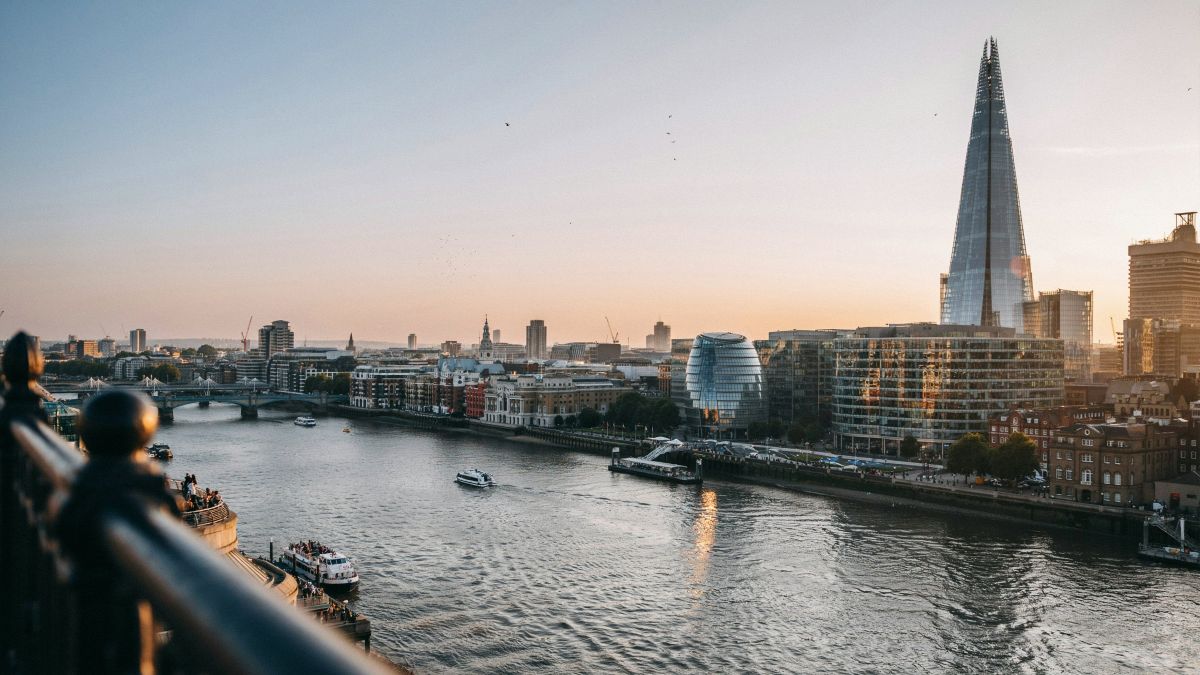
United Kingdom Creates a New Era of European Skyline Tourism Through its London Skyscrapers, Making City Breaks Exciting for Modern Tourists. In Europe, new skylines are a combination of heritage sites and modern architectures and skyscrapers. Also, London proves that heritage sites can be alongside skyscrapers without losing their identity. The river side and public space makes this easy to achieve. Hence, tourists in Europe will have architecture as part of their tours, and not just viewing from afar. This is how the New Era of Skyline Tourism is created, while London still Transforms the City Breaks.
London Turns Its Skyline into a Powerful Part of the UK Travel Experience
London provides one of Europe’s clearest examples of a city where historic landmarks and modern towers occupy the same visual landscape.
Advertisement
Advertisement
The Shard rises above the capital while the City of London and Canary Wharf create major high-rise clusters. At the same time, the Tower of London, Westminster, the River Thames and other historic elements remain central to the visitor experience.
More importantly, the skyline is still evolving.
Advertisement
Advertisement
London’s latest planning direction creates a strategic framework for managing tall buildings. Buildings reaching exceptional heights receive particular attention, with designated areas identified as locations where major vertical development may be suitable.
This is important because London is not simply allowing towers to spread everywhere.
Advertisement
Advertisement
The planning strategy seeks to concentrate very tall buildings in appropriate locations. It also considers architectural quality, surrounding neighbourhoods and important views across the capital.
For travellers, that creates something unusual.
Advertisement
Advertisement
London can deliver several different skyline experiences during the same journey. A visitor can see historic London around Westminster, follow the Thames towards the City and then experience the much more vertical landscape around Canary Wharf.
The city therefore offers more than height.
It offers contrast.
London Is Protecting the Views That Make Its Skyline Memorable
A tall building alone does not create a great travel experience. Travellers also need somewhere from which to see it.
Advertisement
Advertisement
London understands this connection.
Strategic views across the capital are protected because they contribute to London’s aesthetic, historic and cultural identity. These viewpoints include popular and accessible locations that provide memorable panoramas across the city.
That planning detail has direct tourism significance.
It means the view itself has value.
The relationship between St Paul’s Cathedral, modern towers, the Thames and London’s wider cityscape can become part of the visitor experience rather than an accidental consequence of development.
Current planning thinking also encourages prominent tall buildings to provide publicly accessible upper-level spaces where appropriate.
Advertisement
Advertisement
That is a powerful idea for city tourism.
Architecture does not simply become something travellers photograph.
It can become the place from which travellers see the destination.
France Gives Travellers Two Completely Different Versions of Paris
Paris demonstrates why skyline travel cannot be judged purely by skyscraper numbers.
Central Paris remains famous for its relatively low urban profile, monumental architecture and the Eiffel Tower. Move towards La Défense, however, and the visual language changes dramatically.
Glass, steel and vertical architecture take over.
Advertisement
Advertisement
La Défense forms the main concentration of modern towers within the wider Paris urban landscape. The district contains dozens of major towers and distinctive contemporary buildings.
That makes Paris especially interesting for travellers because the contrast is so strong.
Visitors can experience traditional boulevards, historic monuments and classical architecture before travelling to a district dominated by contemporary towers.
La Défense is also much more accessible to leisure travellers than the phrase “business district” may suggest.
Large pedestrian spaces allow visitors to explore substantial parts of the district on foot. Public spaces, parks and landscaped areas soften the dense concentration of offices and towers.
This means travellers can experience the architecture directly rather than simply viewing it through a vehicle window.
Advertisement
Advertisement
Architecture becomes the attraction.
Germany Gives Frankfurt a Skyline Few European Cities Can Copy
Frankfurt offers a different experience again.
Its towers sit in a comparatively compact urban area. That concentration creates the distinctive silhouette that helped produce the nickname “Mainhattan”.
High-rise buildings have become closely connected with Frankfurt’s international identity. Major towers including the Commerzbank Tower and Messeturm form important parts of the cityscape.
For travellers, Frankfurt demonstrates an important point.
Scale is not everything.
Advertisement
Advertisement
A skyline can become memorable because buildings are concentrated closely enough to create a recognisable silhouette.
The River Main strengthens that effect. Water creates open sightlines towards the city, helping visitors understand the shape of Frankfurt from a distance.
Walk beside the river and the city changes before your eyes.
Historic structures occupy the foreground in some locations. Modern towers rise behind them. Bridges create natural viewing platforms. Evening light changes the glass façades again.
This is why the skyline has become more than a collection of office buildings.
It forms part of Frankfurt’s visual identity and increasingly its visitor appeal.
Advertisement
Advertisement
Poland Shows How Warsaw Has Built a New Vertical Identity
Warsaw tells another story.
Its skyline reflects reinvention.
Varso Tower and the growing high-rise concentration around central Warsaw have transformed the modern cityscape.
That vertical profile sits against a city whose history remains fundamental to its identity.
The contrast matters.
Travellers can move between reconstructed historic spaces and a business district dominated by contemporary architecture. Warsaw therefore shows how skyline tourism can communicate change.
Advertisement
Advertisement
The visitor is not simply looking at tall buildings.
The visitor is seeing different periods of the city’s development occupying the same urban landscape.
This makes Warsaw particularly interesting for travellers who enjoy architecture, urban history and photography.
Its modern skyline also helps distinguish the Polish capital from many traditional Central European city-break destinations.
Visitors expecting only old squares, churches and historic streets can encounter something very different.
Warsaw is increasingly vertical.
Advertisement
Advertisement
And that changing shape has become part of the city’s story.
Netherlands Makes Rotterdam a Giant Open Air Architecture Experience
Rotterdam challenges the traditional image of a European city even more strongly.
The city is known for an ever-changing skyline and bold modern architecture.
There is an important historical reason.
Much of Rotterdam’s city centre was destroyed during the Second World War. The city subsequently rebuilt around modern architecture and new urban ideas. That rebuilding strategy continues to influence Rotterdam today.
For travellers, the result is highly accessible.
Advertisement
Advertisement
Visitors do not have to enter a specialist architecture museum to understand Rotterdam’s transformation.
They can walk through it.
Walking routes through the city take visitors through modern cultural areas before opening towards major skyline views around Erasmus Bridge and the waterfront.
That changes the nature of skyline tourism.
The skyline becomes part of a walking holiday.
Water, bridges, modern towers, cultural buildings and the port combine into one continuous urban experience.
Advertisement
Advertisement
Rotterdam therefore offers something very different from Paris, London or Frankfurt.
The architecture is not simply concentrated in one financial district.
Modern design is woven deeply into the destination.
Istanbul Creates One of Europe’s Most Complex Skyline Experiences
Istanbul cannot be understood through skyscrapers alone.
Its geography makes its skyline extraordinary.
The city spreads across Europe and Asia. The Bosphorus separates and connects the two sides. Historic mosques and minarets create one silhouette while modern commercial districts create another.
Advertisement
Advertisement
Major modern high-rise concentrations around areas such as Levent and Maslak add another dimension to the city.
For visitors, that produces layers.
A traveller can look across water and see architecture from different periods occupying the same enormous urban panorama.
That makes Istanbul fundamentally different from a purpose-built financial skyline.
Its strength lies in visual tension.
Domes meet towers.
Advertisement
Advertisement
Bridges cross continents.
Modern business districts rise beyond historic neighbourhoods.
The Bosphorus adds movement to the picture as ferries, boats and ships travel between the two shores.
The city therefore demonstrates why the most powerful skyline experiences are often created by geography and history as much as building height.
Italy Austria Spain and Belgium Add More Skyline Choices
Europe’s skyline map extends far beyond its biggest clusters.
Milan has developed a recognisable modern profile around its newer business districts.
Advertisement
Advertisement
Vienna combines a famous historic cityscape with modern high-rise development in selected areas.
Madrid’s towers create another distinct business-oriented silhouette.
Brussels mixes institutional architecture, historic areas and taller commercial buildings.
Amsterdam and Bucharest also demonstrate how modern development can add another visual layer to established urban identities.
These destinations show why travellers should avoid thinking about European skylines as a simple league table.
Different cities deliver different experiences.
Advertisement
Advertisement
One may offer density.
Another may offer a single extraordinary landmark.
Another may use water to transform the view.
Another may create its strongest impression through the collision of centuries-old architecture with new construction.
That diversity is Europe’s real advantage.
It allows architecture-focused travellers to build an entire journey around contrasting urban landscapes rather than seeing variations of the same skyline repeatedly.
Advertisement
Advertisement
Russia Adds Some of Europe’s Most Extreme Vertical Landmarks
Moscow and St Petersburg also form important parts of Europe’s high-rise story.
Moscow’s modern business district creates a concentrated group of extremely tall towers that contrasts dramatically with the city’s older architectural landmarks.
St Petersburg offers a very different composition.
Its modern skyline is strongly influenced by Lakhta Center, while the historic centre remains central to the city’s architectural identity.
Lakhta Center reaches about 462 metres, making it one of the most visually dominant modern structures on the European skyline.
Moscow’s Federation Tower reaches roughly 373 metres and forms part of a much denser high-rise cluster.
Advertisement
Advertisement
Yet height alone does not make these cities interchangeable.
Moscow’s effect comes substantially from clustering.
St Petersburg’s comes more strongly from the visual power of an exceptionally tall landmark standing apart from the historic core.
For architectural travellers, those are fundamentally different experiences.
The Biggest Skyline Is Not Automatically the Best Travel Experience
This is where skyline comparisons can become misleading.
There is no universally accepted official measure of Europe’s best skyline.
Advertisement
Advertisement
Government and municipal agencies also do not consistently publish comparable counts of towers above specific height thresholds. Some widely used city-level tower totals therefore rely on estimates rather than fully comparable official statistics.
A responsible comparison needs several measures.
Height is one.
Building concentration is another.
Landmarks matter.
So does the relationship between modern architecture and heritage.
Advertisement
Advertisement
Public access matters enormously.
A spectacular skyline hidden behind motorways and private property offers a very different tourism experience from one visible from a river promenade, public park, bridge or pedestrian district.
Night-time visibility can change the experience again.
So can weather, viewing direction and the physical distance between buildings.
The best question for travellers is therefore not simply which city has the most skyscrapers.
A more useful question is where travellers can experience a skyline most meaningfully.
Advertisement
Advertisement
That completely changes the comparison.
Rivers Are Secret Weapons Behind Europe’s Most Photogenic Skylines
Look closely at Europe’s memorable skylines and another pattern appears.
Water repeatedly matters.
London has the Thames.
Frankfurt has the Main.
Rotterdam has the Nieuwe Maas.
Advertisement
Advertisement
Paris has the Seine within its wider urban landscape.
Istanbul has the Bosphorus.
Water creates distance between the traveller and the architecture. That distance opens the view.
Instead of standing underneath one tower and looking upwards, visitors can see an entire city silhouette.
That makes riverbanks, bridges and boats powerful tools for skyline tourism.
Rotterdam provides a strong example. Visitors walking around its waterfront can see towers, bridges and other major structures together rather than as isolated buildings.
Advertisement
Advertisement
Paris La Défense uses another approach.
Its enormous pedestrian environment lets travellers stand within the architecture itself.
London combines both models.
The Thames provides the panorama.
Its high-rise districts provide immersion.
This is why some of Europe’s most impressive skyline experiences can cost nothing at all.
Advertisement
Advertisement
Sometimes travellers simply need a riverbank, a bridge and the right light.
Nightfall Can Transform an Ordinary City View Into a Major Attraction
Timing can completely change a skyline.
During the day, travellers notice height, materials and architectural detail.
At sunset, the relationship changes.
Glass buildings catch the remaining light. Windows begin to glow. Bridges become illuminated. Historic structures and modern towers can appear within the same scene.
This creates another opportunity for travellers.
Advertisement
Advertisement
A city that looks strongly commercial during working hours can feel completely different after dark.
Frankfurt’s compact towers can produce a particularly dramatic evening silhouette.
London’s riverside views change as offices and landmarks illuminate.
Istanbul gains another visual layer as lights stretch along both sides of the Bosphorus.
Rotterdam’s bridges and waterfront architecture can become central features after sunset.
For photographers, this matters enormously.
Advertisement
Advertisement
The best skyline experience may therefore depend as much on timing as location.
Arriving at a viewpoint before sunset allows travellers to experience both versions of the city.
Europe’s Skylines Are Becoming Living Tourism Attractions
The biggest change revealed by this research is conceptual.
Skylines are becoming experiences.
Cities increasingly treat tall buildings as elements that must work with streets, public transport, public spaces, protected views and wider urban development.
London illustrates this clearly.
Advertisement
Advertisement
Its current planning approach seeks to identify suitable locations for major tall buildings while considering design quality and protecting strategically important views.
Paris La Défense demonstrates another direction.
The district is evolving beyond a traditional office-only identity. Residential development, hospitality, shops, cultural activity, public spaces and leisure facilities can help make such areas more attractive outside traditional working hours.
That can have direct consequences for tourism.
A business district that once emptied after work can become somewhere visitors eat, walk, photograph architecture and spend an evening.
The skyscraper then stops being merely commercial infrastructure.
Advertisement
Advertisement
It becomes part of destination development.
This shift could become increasingly important as travellers search for experiences beyond traditional monuments.
Skyline Travel Gives Visitors a New Way to Understand European Cities
Architecture tells stories.
A cathedral can explain religion and power.
A castle can reveal military history.
A railway station can explain industrial growth.
Advertisement
Advertisement
A skyscraper can tell travellers something about the modern economy, investment, planning and the ambitions of a city.
That is why skyline tourism deserves greater attention.
Looking at London’s towers can reveal how a global financial centre manages growth beside internationally recognised heritage.
Walking through Rotterdam can show how a city rebuilt itself through modern design.
Looking across Warsaw can reveal layers of reconstruction and contemporary development.
Exploring La Défense can show a radically different version of Paris from the streets around the Seine.
Advertisement
Advertisement
Watching Istanbul from the Bosphorus reveals geography, history and modern development in one enormous panorama.
The skyline becomes a visual history lesson.
Travellers only have to know where to look.
Europe’s New Skyline Era Gives Travellers a Powerful Reason to Look Up
The UK Unveils the Top Cities To Live In 2026 As Cambridge Takes A Leading Role In The New Quality Of Life Paradigm demonstrates the shifting of priorities in the entire country. Specifically, Cambridge ranks highly in terms of opportunities for work, education, good health, and greenery. On the other hand, Oxford also boasts of the same qualities. Edinburgh and Bristol provide both opportunities and cultural experience as well as greener living conditions. Manchester and Birmingham provide urban career opportunities and housing at lower prices compared to London. In addition, Glasgow, Cardiff and Belfast reinforce the affordability trend, whereas York provides heritage and day-to-day quality of life.
Advertisement
