
New Orleans Heat Wave Pushes Louisiana’s Tourism, Public Health, and Urban Resilience to the Brink as Dangerous Temperatures Test Visitor Safety and City Preparedness—Should Summer Travellers Reconsider Their New Orleans Itinerary?

Published
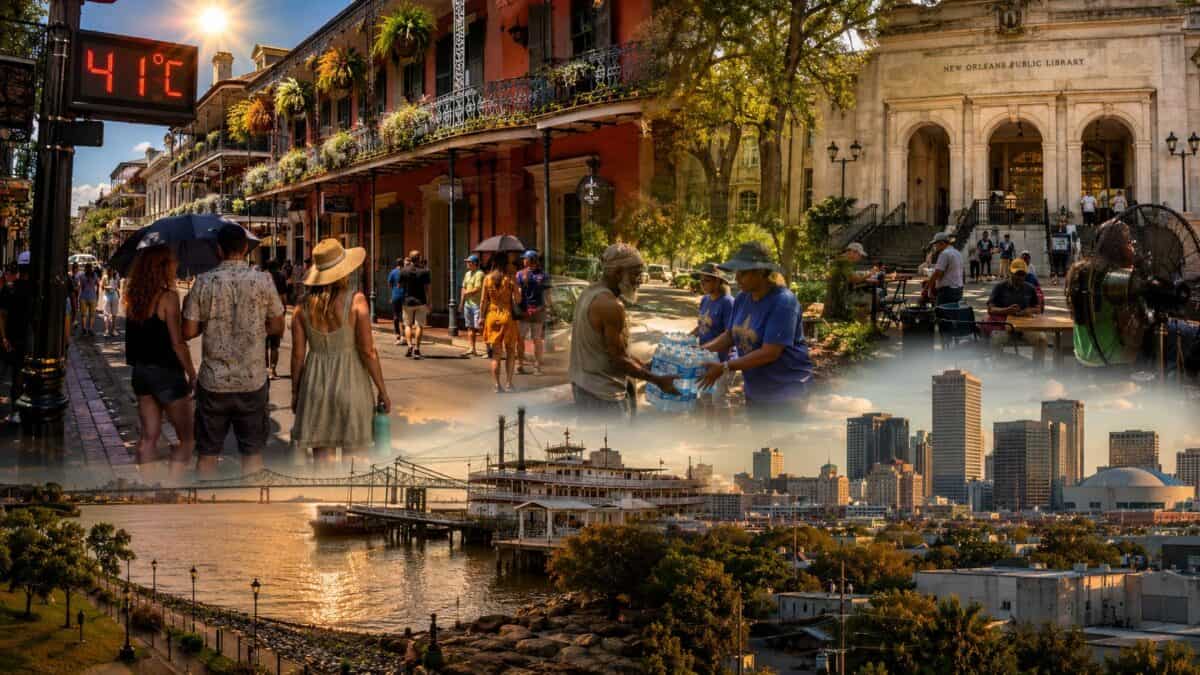
Image generated with Ai
The New Orleans heat wave has become far more than a local weather story, evolving into a wider public safety and travel issue as one of the United States’ most visited cultural destinations faces another spell of dangerous summer temperatures. Heat index values approaching 46°C (115°F) have heightened concerns across Louisiana, where emergency outreach teams, cooling centres and public agencies are expanding heat-relief measures while tourism operators, hospitality businesses and local authorities monitor conditions affecting residents and visitors alike. Although the city’s iconic attractions, festivals and hospitality sector continue operating, the combination of rising humidity, warmer overnight temperatures and increasing exposure for vulnerable populations is placing unprecedented pressure on urban infrastructure during one of the busiest travel seasons.
For the travel industry, the unfolding situation illustrates how extreme weather and climate adaptation are becoming central considerations in destination management worldwide. New Orleans attracts millions of domestic and international visitors annually, drawn by its music, cuisine, heritage architecture and year-round events. However, persistent heat waves now present additional operational challenges for hotels, walking tours, outdoor attractions, transport providers and public health authorities. At the same time, growing concerns over homelessness, shelter capacity and urban resilience are influencing broader discussions around visitor safety, sustainable tourism and emergency preparedness. As Louisiana prepares further climate adaptation measures, the city’s experience highlights the increasingly close relationship between tourism, public health and long-term urban planning.
Advertisement
Advertisement
Extreme Heat Places New Orleans Under Growing Pressure
New Orleans has long been recognised for its subtropical climate, but recent summers have demonstrated that the city’s weather patterns are becoming increasingly challenging. This year’s prolonged period of exceptional heat has reinforced scientific concerns that climate change is intensifying both daytime temperatures and overnight heat retention across much of the Gulf Coast.
Meteorological conditions have become especially demanding because of Louisiana’s persistently high humidity. Unlike dry heat experienced in western parts of the United States, the moisture-rich air significantly limits the body’s natural cooling process through evaporation. As a result, even relatively short periods outdoors can become physically demanding for residents, outdoor workers and tourists exploring the city’s historic districts.
Advertisement
Advertisement
The National Weather Service has repeatedly issued heat advisories as temperatures and humidity combine to produce dangerous heat index values capable of causing heat-related illnesses within a relatively short period of exposure.
Advertisement
Advertisement
For travellers, the situation extends beyond simple discomfort. Walking through popular destinations such as the French Quarter, Jackson Square, the Garden District or the Mississippi River waterfront now requires careful planning, particularly during afternoon hours when thermal stress peaks.
Why Rising Overnight Temperatures Matter for Travellers
One of the less visible aspects of the New Orleans heat wave is the steady increase in overnight temperatures.
Climate researchers have observed that mornings across southern Louisiana are warming faster than many previous decades. These warmer nights reduce the body’s opportunity to recover from daytime heat exposure, particularly for individuals without access to reliable air conditioning.
For visitors staying in hotels, recovery is generally possible through climate-controlled accommodation. However, for people experiencing homelessness or sleeping outdoors, the absence of cooler nighttime temperatures substantially increases health risks.
From a destination management perspective, this trend also influences tourism operations.
Advertisement
Advertisement
Hotels experience greater demand for continuous cooling, increasing energy consumption throughout the night.
Outdoor hospitality venues face longer periods of thermal discomfort.
Morning sightseeing tours begin under warmer conditions than in previous decades.
Walking tourism—which represents one of New Orleans’ most important visitor experiences—requires revised scheduling throughout summer.
These evolving weather patterns demonstrate how climate adaptation is becoming increasingly important across every segment of the visitor economy.
Advertisement
Advertisement
New Orleans’ Tourism Economy Faces Emerging Climate Challenges
New Orleans remains among America’s most recognised leisure destinations.
Tourism contributes billions of dollars annually to Louisiana’s economy while supporting thousands of businesses across accommodation, restaurants, entertainment, transportation and cultural attractions.
Although major visitor attractions remain open during heat advisories, tourism professionals are increasingly adapting operations to changing environmental conditions.
Hotels are extending hydration facilities.
Tour operators are adjusting departure schedules.
Advertisement
Advertisement
Museums and indoor attractions are receiving greater visitor demand during afternoon hours.
Restaurants with shaded outdoor seating continue investing in cooling systems.
These operational adjustments reflect a broader shift occurring across global tourism destinations where climate resilience is becoming an essential business consideration rather than a seasonal concern.
Table: Key Heat and Homelessness Indicators Affecting New Orleans
| Indicator | Latest Situation |
|---|---|
| Peak Heat Index | Approximately 46°C (115°F) |
| Current Summer Ranking | Around the 16th hottest since 1946 |
| Estimated Homeless Population (Orleans & Jefferson Parishes) | Approximately 1,563 individuals |
| Estimated Unsheltered Population | Slightly over one-quarter of total |
| Heat-Related Deaths in Southeast Louisiana Since 2023 | 98 |
| Share of Louisiana Heat Deaths | More than half of statewide total |
| Planned Urban Tree Planting | 40,000 trees by 2030 |
| Public Cooling Centres | Libraries, recreation centres and emergency facilities |
Homelessness Highlights Wider Urban Resilience Questions
The ongoing heat emergency has also drawn renewed attention to homelessness across the New Orleans metropolitan area.
Although public agencies continue distributing bottled water, operating cooling centres and conducting outreach programmes, shelter capacity remains under pressure during periods of extreme weather.
Advertisement
Advertisement
The challenge extends beyond temporary accommodation.
Urban planners increasingly emphasise that long-term housing solutions remain essential to reducing vulnerability during severe weather events. Emergency shelters provide immediate relief during dangerous heat episodes, yet they represent only one component of a much broader housing strategy.
For tourism stakeholders, these developments are also relevant because visitor perceptions increasingly reflect wider urban conditions. Travellers today are more aware of social sustainability, public health preparedness and destination resilience than ever before.
Cities demonstrating effective emergency response often strengthen visitor confidence during climate-related events.
Climate Change Is Reshaping Visitor Experiences Across Louisiana
Extreme heat is no longer viewed solely as an environmental issue.
Advertisement
Advertisement
Instead, it has become a strategic consideration for destination marketing organisations, convention planners and travel operators.
Louisiana’s tourism calendar includes major festivals, sporting events, culinary experiences and cultural celebrations that attract visitors throughout the year.
Many of these experiences involve extended periods outdoors.
Walking tours.
Music festivals.
Advertisement
Advertisement
Street performances.
Historic cemeteries.
Riverfront attractions.
Neighbourhood exploration.
As temperatures continue increasing, organisers are gradually incorporating additional shade structures, hydration stations, medical support services and revised scheduling into event planning.
Advertisement
Advertisement
This evolving operational model mirrors trends already visible across destinations in southern Europe, the Middle East and parts of Australia where climate adaptation has become a permanent feature of tourism management.
Public Agencies Expand Heat Response Across the City
Municipal authorities have expanded several measures designed to reduce heat-related health risks during periods of extreme temperatures.
Cooling centres remain available through selected public libraries and recreation facilities during official heat advisories. These facilities provide temporary relief for residents, visitors and vulnerable populations needing access to air-conditioned environments.
In parallel, outreach teams continue distributing drinking water and essential cooling supplies across areas where unsheltered populations are known to gather.
The city’s broader climate adaptation strategy also includes significant investment in urban forestry.
Advertisement
Advertisement
Officials aim to increase tree canopy coverage through an ambitious programme targeting 40,000 additional trees by 2030. Expanded tree cover is expected to reduce surface temperatures, improve pedestrian comfort, mitigate urban heat island effects and strengthen neighbourhood resilience during future heat waves.
These initiatives complement the city’s developing Heat Action Plan, which seeks to coordinate emergency preparedness, infrastructure improvements, public health measures and long-term climate resilience strategies.
Table: How the Heat Wave Affects Different Traveller Segments
| Traveller Category | Potential Impact | Practical Consideration |
|---|---|---|
| Leisure Tourists | Heat exhaustion during sightseeing | Plan outdoor activities early morning |
| Cruise Passengers | Warm embarkation and excursions | Carry water and lightweight clothing |
| Business Travellers | Reduced outdoor mobility | Use indoor transport where possible |
| Families | Greater risk for children | Schedule frequent cooling breaks |
| Senior Travellers | Higher vulnerability to heat | Avoid afternoon outdoor activity |
| Event Visitors | Longer exposure during festivals | Stay hydrated and monitor advisories |
Extreme Weather Is Becoming a Global Tourism Planning Priority
Across the international travel industry, destination competitiveness increasingly depends not only on attractions and accessibility but also on climate resilience.
Major tourism cities worldwide are investing in cooling infrastructure, green urban spaces, emergency response systems and public information campaigns designed to protect both residents and visitors during increasingly frequent heat events.
For New Orleans, the current heat wave represents another reminder that future tourism growth will depend as much on adaptation and public health preparedness as on its internationally renowned culture, music and hospitality. As climate conditions continue evolving, the city’s ability to safeguard both vulnerable residents and millions of annual visitors will become an increasingly important measure of its long-term resilience and appeal.
Advertisement
Advertisement
How the New Orleans Heat Wave Changes Travel Planning
For visitors, the New Orleans heat wave is not expected to halt tourism, but it is changing how travellers experience the city. Summer has traditionally been regarded as New Orleans’ quieter tourism season compared with spring and autumn, yet the city still welcomes substantial numbers of domestic holidaymakers, international tourists, cruise passengers and business delegates attending conventions.
The current conditions reinforce the importance of adapting itineraries to weather realities. Early morning and evening remain the most comfortable periods for walking tours through the French Quarter, Magazine Street, the Garden District and City Park. Conversely, prolonged outdoor exposure during mid-afternoon significantly increases the likelihood of heat exhaustion, particularly for visitors unfamiliar with Louisiana’s combination of high temperatures and exceptionally high humidity.
Hotels across the city continue providing air-conditioned accommodation, while museums, galleries, restaurants, shopping centres and cultural institutions offer opportunities to enjoy New Orleans without prolonged exposure to extreme heat.
Travellers are also encouraged to monitor local weather advisories throughout their stay, particularly when planning outdoor excursions, river cruises or festivals.
Cooling Centres Become an Increasingly Important Urban Resource
Unlike temporary emergency responses seen during isolated weather events, New Orleans has gradually incorporated cooling centres into its broader public health strategy.
Advertisement
Advertisement
Public libraries, recreation centres and designated municipal facilities provide climate-controlled spaces during periods of dangerous heat. These locations primarily support vulnerable residents but are also available to anyone requiring temporary relief from extreme temperatures.
The approach reflects an emerging trend among cities increasingly exposed to prolonged heat waves.
Rather than responding solely through emergency services, municipalities are integrating public buildings into climate resilience strategies.
The model has gained attention across North America as urban temperatures continue rising.
For visitors, these facilities provide reassurance that safe indoor spaces remain accessible throughout periods of excessive heat.
Advertisement
Advertisement
Shelter Capacity Remains Part of a Wider Housing Challenge
The current heat emergency has also renewed discussion surrounding homelessness across Orleans and neighbouring Jefferson Parish.
Recent estimates indicate that approximately 1,563 people experience homelessness across the two parishes, with slightly more than one-quarter living without permanent shelter.
Although emergency accommodation, outreach services and cooling facilities remain available, demand frequently exceeds available capacity during severe weather.
Housing specialists increasingly argue that emergency shelters alone cannot resolve long-term homelessness. Instead, permanent housing pathways, supportive services and stable accommodation remain central to reducing vulnerability during both summer heat waves and winter cold spells.
This broader conversation has gained additional attention ahead of the implementation of Louisiana’s Act 788, which will prohibit public sleeping statewide from early 2027. While state authorities have indicated that emergency warming and cooling services will continue, homelessness advocates have expressed concerns that enforcement could complicate outreach efforts and discourage vulnerable individuals from engaging with public services.
Advertisement
Advertisement
For tourism professionals, these policy discussions are significant because destination reputation increasingly encompasses social sustainability alongside visitor experience.
Urban Greening Emerges as a Tourism Investment
Beyond emergency responses, New Orleans is investing in long-term environmental improvements designed to reduce urban temperatures.
One of the city’s most ambitious initiatives involves planting 40,000 additional trees by 2030, helping restore shade lost following Hurricane Katrina, which removed an estimated 200,000 trees from the metropolitan landscape.
Urban forestry provides benefits extending well beyond environmental protection.
Expanded tree canopies improve pedestrian comfort.
Advertisement
Advertisement
Neighbourhoods become more walkable.
Surface temperatures decline.
Stormwater management improves.
Public spaces become more attractive for visitors.
These outcomes align closely with broader tourism objectives, particularly as travellers increasingly value sustainable and climate-resilient destinations.
Advertisement
Advertisement
The city’s forthcoming Heat Action Plan is expected to complement these initiatives by coordinating public health preparedness, emergency communication, infrastructure improvements and long-term adaptation measures.
Table: Climate Adaptation Measures Supporting Visitors and Residents
| Initiative | Purpose | Tourism Relevance |
|---|---|---|
| Cooling Centres | Temporary relief during heat advisories | Safe air-conditioned spaces for visitors and residents |
| Water Distribution | Prevent dehydration | Supports vulnerable populations and outdoor workers |
| Urban Tree Planting | Reduce urban heat island effect | Improves walking comfort across tourist districts |
| Heat Action Plan | Coordinate emergency preparedness | Strengthens destination resilience |
| Public Health Outreach | Reduce heat-related illnesses | Enhances visitor confidence during extreme weather |
Climate Resilience Is Becoming a Competitive Tourism Advantage
Around the world, tourism authorities increasingly recognise that climate resilience influences destination competitiveness.
Mediterranean destinations have introduced extensive shade infrastructure following successive heat waves.
Several Gulf cities continue investing heavily in climate-controlled public transport and pedestrian spaces.
Australian tourism authorities have expanded heat-health communication strategies for visitors during summer.
Advertisement
Advertisement
New Orleans now finds itself among a growing number of internationally recognised destinations adapting tourism management to increasingly challenging climate conditions.
Rather than treating heat as an occasional disruption, authorities are integrating resilience into long-term destination planning.
This evolution is expected to influence tourism investment, event scheduling, infrastructure development and visitor communications over the coming decade.
What Travellers Should Know Before Visiting During Extreme Heat
Visitors planning trips to New Orleans during summer should remain aware that most attractions continue operating despite elevated temperatures. Nevertheless, sensible preparation significantly improves both comfort and safety.
Hydration remains essential throughout the day, particularly when exploring outdoor historic districts. Lightweight clothing, broad-brimmed hats and high-SPF sunscreen reduce prolonged exposure, while regular breaks inside air-conditioned venues minimise heat stress.
Advertisement
Advertisement
Travellers with cardiovascular conditions, respiratory illnesses or mobility limitations should exercise additional caution and consult healthcare professionals where appropriate before travelling during periods of extreme heat.
Families travelling with young children and older visitors should similarly avoid prolonged outdoor activities during peak afternoon temperatures.
Monitoring official weather forecasts remains advisable throughout any visit, especially when planning festivals, walking tours or outdoor cultural experiences.
Table: Practical Advice for Summer Visitors to New Orleans
| Travel Consideration | Recommendation |
|---|---|
| Sightseeing | Schedule outdoor attractions before 10:00 am or after 6:00 pm |
| Hydration | Carry refillable water bottles and drink frequently |
| Clothing | Wear light-coloured, breathable fabrics |
| Transport | Consider trams, taxis or ride-share during hottest hours |
| Accommodation | Select hotels with reliable air conditioning |
| Health | Recognise symptoms of heat exhaustion and seek shade immediately |
A Defining Test for Destination Resilience
The New Orleans heat wave represents more than another spell of challenging summer weather. It demonstrates how climate resilience, public health preparedness and social policy are becoming increasingly interconnected with tourism.
The city continues welcoming visitors to its world-renowned music venues, culinary experiences, historic neighbourhoods and cultural attractions. However, the growing intensity of extreme weather is reshaping how destinations manage visitor safety, public infrastructure and vulnerable populations.
Advertisement
Advertisement
Investment in urban greening, expanded cooling infrastructure and coordinated emergency planning illustrates an increasingly proactive response to climate challenges. At the same time, debates surrounding homelessness, housing capacity and future public sleeping legislation underline the complex social dimensions accompanying environmental change.
For the global travel industry, New Orleans provides an important case study in balancing visitor experience with community resilience. As destinations worldwide confront more frequent heat waves, the city’s evolving strategies may offer valuable lessons in climate adaptation, sustainable tourism management and public health preparedness.
Advertisement
