
Albania Follows Romania and Emerging European Markets as Affordable Destinations Draw Cost-Conscious Travellers

Published
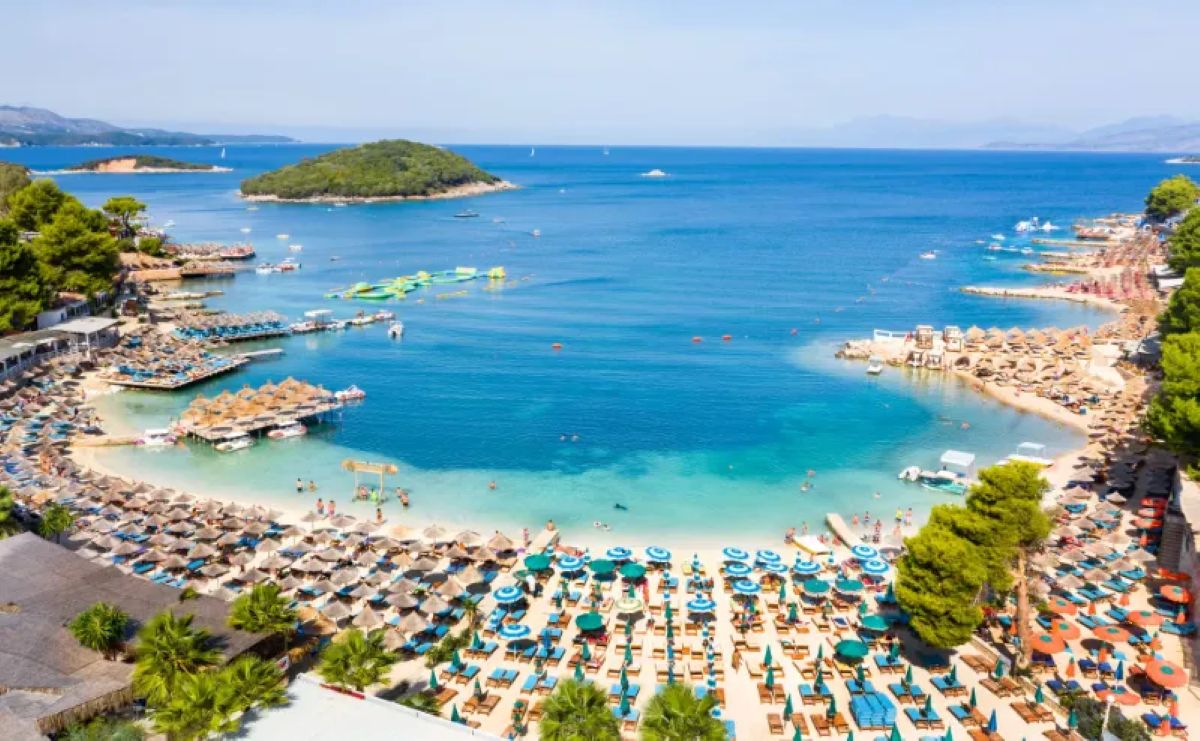
Europe’s tourism map is shifting as travellers scrutinise the cost of accommodation, transport and everyday spending. Albania welcomed 12.47 million foreign visitors in 2025, while Slovenia recorded almost 7 million tourist arrivals. Montenegro registered 2.73 million arrivals, and Romania recorded 13.9 million arrivals at tourist accommodation establishments. Yet the four markets tell very different stories about value, demand and connectivity. Albania combines low accommodation prices with rapidly expanding air access, while Montenegro remains heavily concentrated on its Adriatic coast. Slovenia commands higher visitor spending, and Romania combines relatively low consumer prices with a vast air network. The comparison reveals where European travel value remains resilient and where rising demand is beginning to change the equation.
Europe’s Value Equation Is Changing
The question facing travellers is no longer simply where Europe is cheapest. Increasingly, the calculation involves accommodation costs, flight availability, destination congestion, length of stay and the amount visitors spend locally.
Advertisement
Advertisement
That distinction matters because a country can have low national prices but expensive coastal hotels during peak season. Conversely, a destination with higher prices can offer stronger transport links, richer infrastructure and more compact sightseeing. Value therefore depends on the entire travel basket, rather than the room rate alone.
Eurostat comparative price-level data offers a useful starting point. With the European Union average set at 100, Albania recorded an overall household-consumption price level of 72.6 in 2025. Montenegro stood at 66.1, Romania at 65.1 and Slovenia at 89.3. The gap becomes sharper for restaurants and accommodation services, where Albania recorded an index of just 53.3.
Advertisement
Advertisement
| 2025 Price-Level Indicator | Index, EU27=100 |
|---|---|
| Albania — household consumption | 72.6 |
| Montenegro — household consumption | 66.1 |
| Romania — household consumption | 65.1 |
| Slovenia — household consumption | 89.3 |
| Albania — restaurants and accommodation | 53.3 |
These figures do not represent the price of a specific hotel room. Instead, they compare broad national price levels. Travellers should therefore use them as a structural guide, not as a booking quote.
Albania Combines Scale With Lower Costs
Albania provides the clearest example of a rapidly expanding destination where affordability and accessibility are developing simultaneously. The country recorded 12,466,038 foreign visitors in 2025, an increase of 6.6% from the previous year.
Advertisement
Advertisement
Tourism spending rose even more sharply. Albania’s tourism ministry reported more than €5.7 billion in tourism revenue, representing a 15% increase year on year. That divergence matters because visitor growth alone does not reveal whether a destination is generating greater economic value.
The visitor figure also needs careful interpretation. Albania’s border-arrival methodology counts entries into the country, meaning one individual can generate multiple entries during a year. INSTAT explicitly defines arrivals as entries through air, sea and land border points.
Nevertheless, the scale is significant. The country’s expanding airport network is helping transform Albania from a predominantly regional market into a much broader European tourism proposition.
Tirana International Airport handled around 67,000 flights during 2025, averaging approximately 185 flights daily. The airport reported connections with 106 destinations, while 11-month passenger traffic reached around 10.8 million. London, Milan-area airports and Rome were among the strongest international markets.
The airport’s own 2025 traffic report recorded more than 11.6 million scheduled and charter passengers combined. That scale provides travellers with something that low prices alone cannot deliver: greater choice in departure points and travel dates.
Montenegro Offers Adriatic Value With A Caveat
Montenegro presents a different proposition. Its compact coastline, historic towns and mountain scenery have made it a strong Adriatic alternative, but tourism remains intensely concentrated around coastal resorts.
Advertisement
Advertisement
The country’s official statistics recorded 2,728,564 tourist arrivals and 15,367,166 overnight stays in 2025. Foreign visitors generated 95.8% of all overnight stays, demonstrating how dependent the market is on international demand.
More strikingly, 92.6% of overnight stays occurred in seaside resorts. Mountains accounted for 2.8%, while Podgorica accounted for 2.7%. That concentration creates both commercial strength and vulnerability.
| Montenegro Tourism Indicator | 2024 | 2025 |
|---|---|---|
| Tourist arrivals | 2.61m | 2.73m |
| Overnight stays | 15.59m | 15.37m |
| Foreign share of overnight stays | 96.1% | 95.8% |
| Seaside share of overnight stays | 93.8% | 92.6% |
The comparison produces an important insight. Arrivals increased while overnight stays declined, meaning headline visitor growth does not necessarily translate into longer holidays. Montenegro therefore illustrates why travellers and tourism businesses should examine nights spent, rather than arrivals alone.
Air connectivity remains strong enough to support the coastal market. Podgorica and Tivat airports handled 3.09 million passengers in 2025, with Podgorica accounting for 1.75 million and Tivat 1.34 million.
For travellers, the practical implication is straightforward. Montenegro can offer attractive value outside the peak coastal period, but July and August demand can significantly change accommodation economics.
Slovenia Shows Why Value Is Not Always Cheap
Slovenia complicates the affordability narrative. It recorded its strongest tourism year yet in 2025, with 6,993,930 arrivals and 17,843,311 overnight stays. Foreign arrivals increased 8.3%, while foreign overnight stays rose 8.1%.
Advertisement
Advertisement
The destination’s appeal extends across mountains, lakes, spa resorts, the coast and Ljubljana. Mountain resorts generated 5.5 million overnight stays, while Ljubljana recorded 2.84 million. Hotels alone accounted for 7.75 million overnight stays.
Slovenia is therefore better understood as a value-through-experience market rather than a budget market.
Official research found that foreign hotel visitors spent an average €214 per person per day in April and May 2025. Accommodation represented €122, or 57%, while the remainder covered food, drinks, transport, leisure, shopping and other activities.
| Slovenia Spending Indicator | April–May 2025 |
|---|---|
| Average daily spend | €214 |
| Accommodation | €122 |
| Other expenditure | €92 |
| Ljubljana average | €253 |
| Seaside municipalities | €132 |
| Health municipalities | €140 |
The seasonal comparison is equally revealing. In September and October, average daily spending fell to €197, while Ljubljana reached €283. Seaside municipalities averaged €149.
That suggests travellers seeking value should not automatically eliminate Slovenia because its national price level is higher. Season and location can alter the economics substantially.
Romania Brings Scale And Connectivity
Romania provides perhaps the strongest counterpoint to the idea that visitor growth alone defines an emerging destination.
Advertisement
Advertisement
Accommodation establishments recorded 13.9 million arrivals in 2025, down 2.4% from 2024. Overnight stays declined 1.7% to 29.685 million, while the average stay remained 2.1 days. Foreign visitors represented only 18.6% of total arrivals.
Yet aviation tells a different story. Romanian airports handled 28.48 million passengers in 2025, up 9.5% year on year. Bucharest Henri Coandă was the largest gateway, while Cluj-Napoca and Iași also recorded substantial passenger volumes.
International access is broad. London Luton, Milan Bergamo, Munich, Brussels Charleroi, Istanbul, Rome, Vienna, Paris Beauvais and Madrid were among the leading international airport markets.
The wider route network reinforces that advantage. IATA recorded 366 scheduled routes in Romania in 2025, almost double the 2015 figure. The organisation also found that 47 routes differed from those operating a decade earlier.
| Romania Indicator | 2025 |
|---|---|
| Accommodation arrivals | 13.9m |
| Change in accommodation arrivals | -2.4% |
| Overnight stays | 29.685m |
| Average stay | 2.1 days |
| Airport passengers | 28.48m |
| Scheduled routes | 366 |
Romania therefore demonstrates an important travel-market paradox. Greater air connectivity does not automatically produce equivalent growth in accommodation demand. Domestic travel conditions, consumer confidence, destination awareness and length of stay also influence performance.
Four Markets, Four Different Value Models
Putting the four destinations together reveals a more nuanced European tourism landscape.
Advertisement
Advertisement
| Destination | Tourism signal | Price signal | Connectivity signal | Traveller proposition |
|---|---|---|---|---|
| Albania | 12.47m foreign visitors, +6.6% | Low | Rapidly expanding | Coastal, cultural and value-led |
| Montenegro | 2.73m arrivals | Low nationally | Strong seasonal air access | Adriatic and resort travel |
| Slovenia | 6.99m arrivals, +6.2% | Higher | Smaller but growing | Nature, wellness and city breaks |
| Romania | 13.9m accommodation arrivals, -2.4% | Low | 366 scheduled routes | City, culture, road trips and regional travel |
The comparison shows why a single “cheapest destination” label can mislead. Albania has a particularly low restaurants-and-accommodation price index, while Romania combines low general prices with extensive connectivity. Montenegro offers low national price levels but has considerable coastal concentration. Slovenia commands higher spending while recording broad-based tourism growth.
What Travellers Should Watch
For travellers, the most useful lesson is to compare total trip economics, not just hotel prices. A €70 room does not necessarily represent better value if the flight is expensive, airport transfers are costly and peak-season demand inflates restaurants and attractions.
Timing is equally important. Slovenia’s spending data shows how sharply expenditure varies between destinations and seasons. Montenegro’s coastal concentration creates a similar pattern, while Albania’s rapid growth could put further pressure on accommodation in its best-known seaside areas.
Travellers should also distinguish between border arrivals and genuine tourist stays. Albania’s foreign-entry figure counts border crossings, while Romania’s headline figure counts arrivals at accommodation establishments. Those numbers cannot be treated as equivalent measures of tourism demand.
The same caution applies to spending data. Albania’s €5.7 billion figure represents tourism-related revenue, while Slovenia’s €214 figure measures average daily expenditure among foreign hotel visitors during a specific period. Different statistical definitions can produce very different impressions of destination value.
Air Access Is Becoming A Decider
The next phase of competition among Europe’s emerging destinations will increasingly depend on connectivity.
Advertisement
Advertisement
Albania’s rapid expansion demonstrates how low-cost and network-carrier access can widen a destination’s catchment area. Romania’s 366-route network shows the advantages of scale. Slovenia’s nearly 1.6 million airport passengers demonstrate a smaller aviation footprint, while Montenegro relies heavily on two airports serving a concentrated coastal tourism economy.
For travellers, this means airfare should be examined alongside accommodation. A destination that looks inexpensive on the ground may become less compelling after flights, baggage, transfers and peak-season surcharges are included.
That is particularly relevant as European tourism becomes more sensitive to value. The European Travel Commission has identified value considerations as an important influence on travel behaviour, while growing demand also increases pressure on popular destinations.
The Value Map Is Still Moving
The four markets ultimately reveal different stages of tourism development rather than a single migration away from Western Europe.
Albania is expanding rapidly while retaining a pronounced price advantage. Montenegro continues to benefit from powerful coastal demand but remains geographically concentrated. Slovenia is proving that higher visitor spending can coexist with strong growth. Romania shows that extensive connectivity can expand even while accommodation demand softens.
For travellers, that creates a more useful decision framework than a simple list of cheap European destinations. The real question is whether price, access, seasonality and experience align for a particular journey.
Advertisement
Advertisement
As accommodation markets mature and airlines add routes, today’s value advantage can narrow. The destinations that remain compelling will be those that convert growing accessibility into broader tourism seasons, stronger regional dispersal and better visitor experiences.
That makes Albania, Montenegro, Slovenia and Romania important markets to watch. They are not interchangeable alternatives to Western Europe, but they collectively show how Europe’s tourism economy is becoming more geographically diverse. The next phase will depend on whether their affordability survives the very demand that is making them increasingly visible.
Frequently Asked Questions
Which European destinations are attracting travellers seeking better value?
Albania, Montenegro, Slovenia and Romania are attracting growing international attention, but each offers a different value proposition. Albania and Montenegro have lower overall price levels, Slovenia combines higher spending with strong tourism growth, while Romania pairs relatively low consumer prices with extensive air connectivity.
Is Albania one of Europe’s most affordable destinations?
Albania has a particularly low price level for restaurants and accommodation. Its 2025 index was 53.3 against the EU average of 100, although individual resort prices can rise considerably during the summer peak.
How many foreign visitors did Albania receive in 2025?
Albania recorded approximately 12.47 million foreign arrivals in 2025, representing growth of 6.6% from the previous year. Tourism revenue exceeded €5.7 billion, according to Albanian official data.
Is Montenegro still cheaper than Western European destinations?
Montenegro’s overall household-consumption price level was 66.1 against the EU average of 100 in 2025. However, accommodation around popular Adriatic resorts can become substantially more expensive during July and August.
How did Montenegro’s tourism industry perform in 2025?
Montenegro recorded approximately 2.73 million tourist arrivals and 15.37 million overnight stays in 2025. Arrivals increased, but overnight stays declined slightly, highlighting shorter or differently distributed visits.
Advertisement
