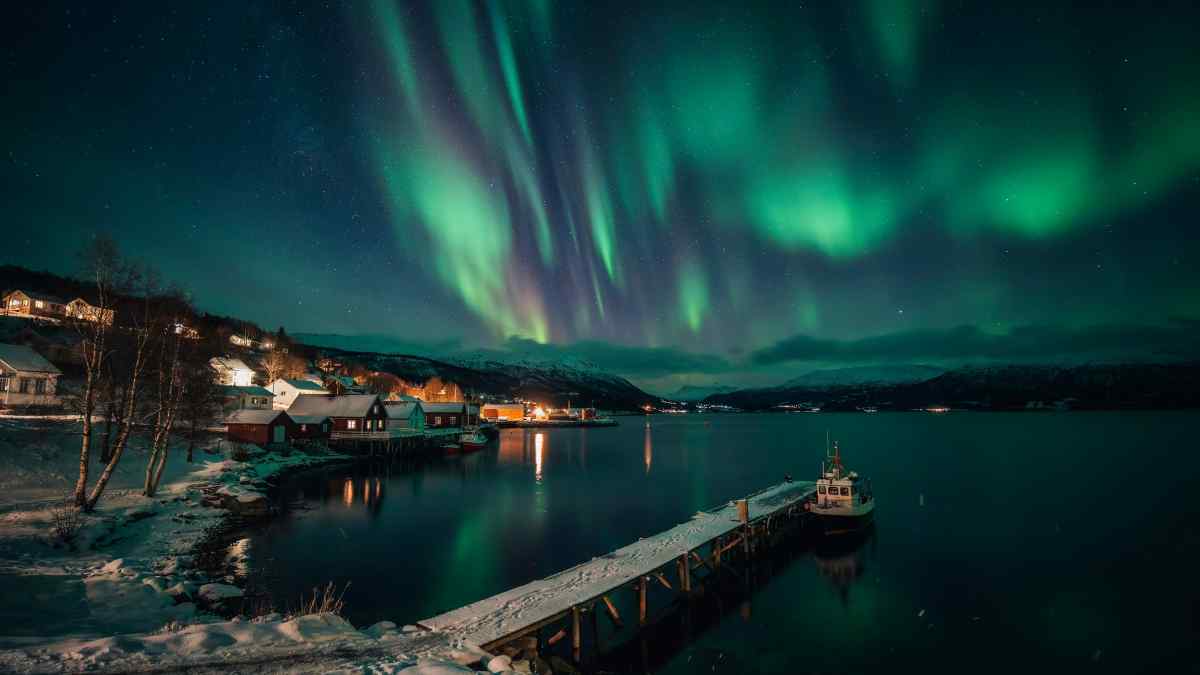
Image generated with Ai
Copenhagen, Stockholm, Oslo, Helsinki, Reykjavik, Tromsø and Lapland are emerging as some of the biggest winners in global tourism as social media transforms from a travel inspiration tool into a powerful force that directly shapes where people go, how they travel and what they do when they arrive. Across the Nordic region, changing digital habits, viral trends and algorithm-driven discovery are influencing tourism patterns at a pace rarely seen before.
Now, here comes the question quietly reshaping the global travel industry.
Advertisement
What if travellers are no longer choosing destinations based on guidebooks, travel agencies or even traditional tourism campaigns?
What if a 30-second TikTok video, an Instagram reel showing Arctic mist rolling over a Norwegian fjord or a creator sipping coffee inside a remote Finnish glass cabin is now making the decision instead?
Advertisement
Advertisement
The numbers suggest exactly that.
Nearly half of travellers now select destinations based primarily on social media, while more than a third actively use social platforms to research and organise entire trips.
And nowhere is this shift more visible than in the Nordic countries.
Let’s start with the trend everyone in tourism is talking about.
Advertisement
Advertisement
Coolcations.
A few years ago, social media feeds were dominated by Mediterranean beaches, crowded coastal resorts and endless summer content.
Now?
Something has changed.
Scroll through travel platforms, and you’ll increasingly find dramatic Norwegian fjords, Icelandic waterfalls, Arctic coastlines and mist-covered Swedish forests.
Why?
Because travellers are increasingly searching for cooler destinations.
Rising temperatures across parts of Southern Europe have accelerated interest in northern alternatives, and social media has amplified the trend.
Instead of posting heatwave holidays, creators are showcasing crisp mountain air, glacier views and dramatic Nordic landscapes.
The result is a major shift in tourism demand.
Airlines serving Northern Europe have reported increased interest in routes connecting travellers from Southern Europe and North America to Nordic destinations.
And honestly, the visual contrast is social media gold.
Now let’s talk about one of the biggest winners.
Norway.
Specifically, the country’s famous fjords.
For years, they have attracted travellers seeking natural beauty.
But social media has introduced them to entirely new audiences.
A drone shot gliding over Geirangerfjord.
A kayak disappearing into a misty waterway.
A train journey through dramatic mountain scenery.
These images are now circulating globally in ways traditional tourism campaigns could never achieve.
And here’s the fascinating part.
Travellers aren’t just visiting Norway.
They’re recreating specific moments they’ve seen online.
The destination remains the same.
The traveller behaviour has changed completely.
Now here’s a trend that would have sounded strange just a few years ago.
People are travelling to do less.
Seriously.
Welcome to the era of the quietcation.
Social media users increasingly report fatigue from constant stimulation, endless scrolling and hyper-connected lifestyles.
So naturally, travel trends are responding.
And guess which region happens to be perfectly positioned?
The Nordics.
Suddenly, videos featuring silence, forests, lakes and remote cabins are generating millions of views.
No nightclub.
No festival.
No crowded attraction.
Just a crackling fireplace in Finland.
Or a snow-covered cabin surrounded by pine forests.
Or a solitary Swedish lake at sunrise.
And people cannot stop watching.
Now let’s zoom in on Finland.
One of the most interesting changes in tourism planning involves accommodation.
Traditionally, travellers chose a destination first and then selected where to stay.
Social media has flipped that process.
Increasingly, travellers discover a unique property online and build an entire trip around it.
A glass igloo in Lapland.
An off-grid lakeside retreat.
A design-focused forest cabin.
The accommodation becomes the attraction.
And suddenly the surrounding destination benefits from exposure it may never have received otherwise.
For tourism operators, this represents a significant shift in marketing dynamics.
Sweden is also benefiting from changing digital behaviour.
Particularly through growing interest in wellness, nature recovery and outdoor experiences.
Social media users are increasingly engaging with content focused on forest walks, lakeside retreats and digital detox experiences.
And here’s where things become particularly interesting.
Instead of promoting packed itineraries, many creators are promoting slower travel.
Less movement.
Longer stays.
Deeper engagement.
This trend aligns closely with Sweden’s existing strengths in nature tourism and sustainable travel.
Now, let’s talk about a trend that tourism boards are watching very carefully.
Destination dupes.
In simple terms, travellers are searching for alternatives.
Cheaper alternatives.
Less crowded alternatives.
Smarter alternatives.
And social media loves this concept.
Instead of paying premium prices to visit heavily crowded destinations, travellers are increasingly seeking places offering similar visual appeal with fewer tourists and lower costs.
The Nordics have become major beneficiaries.
Norwegian coastal towns such as Bergen and Stavanger are increasingly appearing in content promoting alternative European experiences.
The message is straightforward.
Why compete with overcrowded destinations when equally dramatic scenery exists elsewhere?
For budget-conscious travellers, the appeal is obvious.
Now let’s discuss one of the most important tourism developments of the decade.
The blending of work and travel.
Remote work is no longer an experiment.
For many professionals, it’s simply normal life.
And social media is actively promoting that lifestyle.
Videos showing remote workers beginning the day in a Copenhagen café before spending the evening cycling through the city.
Creators working from Oslo before heading into nearby forests.
Digital professionals balancing work calls with Arctic adventures.
These stories resonate strongly with younger travellers.
And the Nordic countries possess a major advantage.
Reliable infrastructure.
Fast internet.
High-quality public spaces.
Strong transport systems.
Everything required for extended stays.
Notice something interesting.
Social media increasingly promotes destinations as lifestyles rather than places.
Copenhagen isn’t simply a city.
It’s a way of living.
Stockholm isn’t just a capital.
It’s a balance between urban life and nature.
The content focuses on everyday experiences rather than traditional sightseeing.
Coffee culture.
Cycling.
Public waterfronts.
Local markets.
Work-life balance.
This shift is particularly powerful because it encourages longer visits.
Travellers aren’t merely ticking attractions off a list.
They’re imagining themselves living there.
Now here comes the biggest technology shift affecting tourism.
Artificial intelligence.
Social media inspires the idea.
AI builds the trip.
That’s increasingly how modern travel planning works.
A traveller sees a video about Tromsø.
Then, immediately ask an AI travel planner for the best Northern Lights itinerary.
Another user watches content from Lapland.
Moments later, AI tools identify optimal travel dates, accommodation options and seasonal recommendations.
The process is becoming almost instantaneous.
Discovery and planning are merging into a single experience.
Here’s another major shift.
Travellers increasingly trust local voices.
Instead of celebrity influencers, audiences are gravitating towards residents sharing authentic experiences.
Long-form travel vlogs.
Day-in-the-life videos.
Neighbourhood guides.
Local food markets.
Traditional sauna rituals.
Artisan workshops.
These “micro-drama” style narratives often generate stronger engagement than highly polished promotional content.
Why?
Because travellers increasingly want authenticity.
They want to understand how locals actually live.
And social media gives them direct access.
Now let’s step back.
What do all these trends have in common?
They’re changing how destinations compete.
Tourism marketing used to focus on attractions.
Now it focuses on emotions.
Atmosphere.
Lifestyle.
Identity.
The Nordic countries happen to align exceptionally well with current social media preferences.
Cool climates.
Nature.
Slow living.
Wellness.
Remote work.
Authentic local experiences.
And because these themes continue gaining momentum online, the region remains positioned for sustained tourism growth.
2024–2025
2025
2026
A coolcation is a holiday focused on destinations with cooler climates, often chosen as alternatives to hotter and more crowded tourism regions.
The region aligns with popular themes including nature tourism, wellness, slow living, digital detox experiences and remote work travel.
Travellers increasingly use AI tools to create itineraries, compare destinations, identify seasonal travel opportunities and organise trips after discovering destinations through social media.
Copenhagen, Stockholm, Oslo, Helsinki, Reykjavik, Tromsø and Lapland are becoming central players in a tourism transformation driven by social media, digital behaviour and evolving traveller expectations. From coolcations and quietcations to destination dupes, flexcations and AI-powered trip planning, the Nordic region is benefiting from trends that prioritise authenticity, nature, wellbeing and meaningful experiences. As social platforms increasingly influence not only where people travel but how they experience destinations, the Nordic countries are finding themselves perfectly positioned at the centre of tourism’s next chapter.
Advertisement
Advertisement
Advertisement













Saturday, September 5, 2026

Friday, September 4, 2026
Saturday, September 5, 2026
Saturday, September 5, 2026

Thursday, September 3, 2026

Wednesday, September 2, 2026

Saturday, September 5, 2026
Saturday, September 5, 2026


