
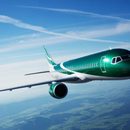
Image generated with Ai
Turkish Airlines Flight TK32 aboard a Boeing 787-9 Dreamliner from Hartsfield-Jackson Atlanta International Airport diverted and made an emergency landing at Dublin, Ireland, after a mid-Atlantic medical urgency, triggering a swift emergency response.
Turkish Airlines Flight TK32, operated by a Boeing 787-9 Dreamliner, departed Hartsfield-Jackson Atlanta International Airport for Istanbul before unexpectedly diverting and making an emergency landing at Dublin, Ireland, following a mid-Atlantic medical urgency. Consequently, the flight crew acted without delay after assessing the passenger’s condition and chose the nearest suitable airport capable of providing immediate medical assistance. Emergency responders were positioned on arrival, allowing medical teams to board the aircraft promptly. Although the diversion interrupted the scheduled journey, the swift decision prioritised passenger wellbeing and ensured the flight could later continue safely towards its intended destination.
Advertisement
A Turkish Airlines long-haul service travelling from Atlanta to Istanbul was forced to divert to Dublin Airport after a passenger suffered a medical emergency while the aircraft was crossing the Atlantic Ocean.
Flight TK32, operated by a Boeing 787-9 Dreamliner, departed Hartsfield-Jackson Atlanta International Airport at approximately 22:30 EDT on Saturday, 18 July 2026, for its scheduled overnight journey to Istanbul. Several hours into the flight, the flight crew declared a medical emergency and opted to divert to Ireland to ensure the affected passenger received urgent medical treatment as quickly as possible.
Advertisement
The aircraft landed safely in Dublin, where emergency responders were waiting on the ground to assist.
Medical emergencies remain among the most common reasons for long-haul aircraft diversions, particularly on transatlantic routes where immediate access to medical facilities is limited.
According to the available flight information, the emergency developed around seven hours after departure while the aircraft was over the North Atlantic. After assessing the situation, the cockpit crew determined that continuing to Istanbul would significantly delay medical treatment for the affected passenger.
The pilots therefore altered course towards Dublin Airport, one of Europe’s busiest diversion airports for transatlantic flights due to its strategic location and extensive emergency response capabilities.
Advertisement
Advertisement
The decision reflects standard aviation safety procedures, where passenger wellbeing takes precedence over schedule whenever a serious onboard medical issue arises.
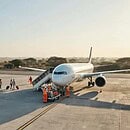
After Flight TK32 landed safely at Dublin Airport (DUB), emergency personnel were already positioned to receive the aircraft.
Dublin Airport Fire Service attended the arrival alongside local ambulance and emergency medical teams. Shortly after the aircraft reached its parking position, paramedics boarded the Boeing 787-9 to assess the passenger requiring immediate medical attention.
Following initial treatment onboard, the individual was transferred from the aircraft for further medical care at an appropriate healthcare facility.
At the time of reporting, neither Turkish Airlines nor local authorities had released information regarding the passenger’s identity, age or medical condition. The airline has also not disclosed the nature of the medical emergency, in line with normal privacy practices.
Following the medical evacuation, the aircraft remained on the ground while operational teams completed the necessary procedures before the journey could continue.
These included routine safety documentation, coordination with airport authorities and refuelling the aircraft before departure. Such procedures are standard following an unscheduled diversion, ensuring both regulatory compliance and operational readiness before passengers continue their journey.
Despite the interruption, the diversion was completed efficiently, minimising additional disruption for those travelling to Istanbul.
Once the emergency response had concluded and operational checks were completed, Turkish Airlines prepared Flight TK32 to resume its scheduled service.
The aircraft was expected to depart Dublin at around 12:00 local time, continuing onward to Istanbul. While the diversion inevitably extended the overall journey, passengers were expected to arrive in Türkiye later the same day with only a moderate delay compared with the original schedule.
Airlines generally aim to return diverted aircraft to their planned routes as soon as operational conditions allow, provided safety requirements have been fully satisfied.
Although diversions can inconvenience passengers and airline operations, they represent a vital element of commercial aviation’s commitment to safety.
Modern long-haul aircraft carry emergency medical equipment and cabin crews receive regular training to respond to illnesses occurring during flight. In many cases, cabin crew work alongside medically qualified passengers, if available, while maintaining communication with ground-based medical advisory services.
When a passenger’s condition is considered potentially life-threatening or requires urgent hospital treatment, pilots evaluate several operational factors before selecting the most suitable diversion airport. These include the aircraft’s position, available runway length, weather conditions, airport emergency capabilities and the proximity of advanced medical facilities.
Dublin frequently serves as a diversion point for flights operating between North America and Europe because of its geographical location along major transatlantic flight corridors.
The diversion of Turkish Airlines Flight TK32 highlights the aviation industry’s emphasis on protecting passengers when unexpected medical situations arise during long-haul travel.
While diversions can result in revised schedules, additional operational costs and temporary inconvenience for travellers, they ensure that urgent medical care is not unnecessarily delayed.
In this instance, the Boeing 787-9 landed safely, emergency responders reached the passenger promptly, and the flight was able to continue towards Istanbul after all required operational and safety procedures had been completed.
As of the latest available information, no further updates have been released regarding the passenger’s condition, while Turkish Airlines continues normal operations following the precautionary diversion.
The diversion was caused by a medical urgency involving a passenger during the transatlantic journey. As the aircraft crossed the Atlantic, the crew assessed that immediate medical attention was necessary and declared a medical emergency. Dublin was selected because it is one of Europe’s principal diversion airports for North Atlantic flights, offering extensive emergency medical services, long runways and efficient handling of unscheduled arrivals. Therefore, diverting to Ireland represented the safest and fastest option available. Once the aircraft landed, paramedics boarded immediately, treated the affected passenger and transferred them for further medical care before the flight resumed.
The diversion of Turkish Airlines Flight TK32 demonstrates how commercial aviation is designed to respond rapidly when unexpected medical situations arise thousands of kilometres from the intended destination. Although diversions inevitably extend travel times and affect airline schedules, they remain an essential safety measure that allows passengers requiring urgent treatment to receive professional medical care without unnecessary delay.
In this case, the Boeing 787-9 Dreamliner, which had departed Hartsfield-Jackson Atlanta International Airport, successfully diverted and made an emergency landing at Dublin, Ireland, after the crew identified a mid-Atlantic medical urgency. The pilots followed established aviation procedures, coordinating with air traffic controllers and emergency authorities to ensure the aircraft reached the nearest suitable airport safely. Upon arrival, airport fire services and medical personnel were already prepared to respond, enabling the affected passenger to receive prompt assistance.
Following the medical evacuation, operational teams completed refuelling, safety documentation and routine inspections before preparing the aircraft for its onward journey to Istanbul. The incident highlights the importance of continuous crew training, onboard emergency protocols and international cooperation between airlines, airports and emergency responders.
While no further details have been released regarding the passenger’s condition, the event underscores the aviation industry’s unwavering commitment to safety above all else. Every diversion decision balances operational efficiency with human wellbeing, and in situations involving serious medical concerns, protecting life always takes priority over maintaining schedules. The professional handling of Flight TK32 reflects internationally recognised best practices and illustrates why modern commercial aviation continues to maintain one of the world’s strongest safety records, even when unforeseen emergencies occur during long-haul international flights.
Advertisement
Advertisement
Advertisement












Tuesday, September 1, 2026

Tuesday, September 1, 2026
Tuesday, September 1, 2026
Tuesday, September 1, 2026

Tuesday, September 1, 2026

Tuesday, September 1, 2026

Tuesday, September 1, 2026

Tuesday, September 1, 2026



