
Australia and More Reshape South Pacific Tourism With Affordable Flights, Climate Resilience and New Investment

Updated
Published
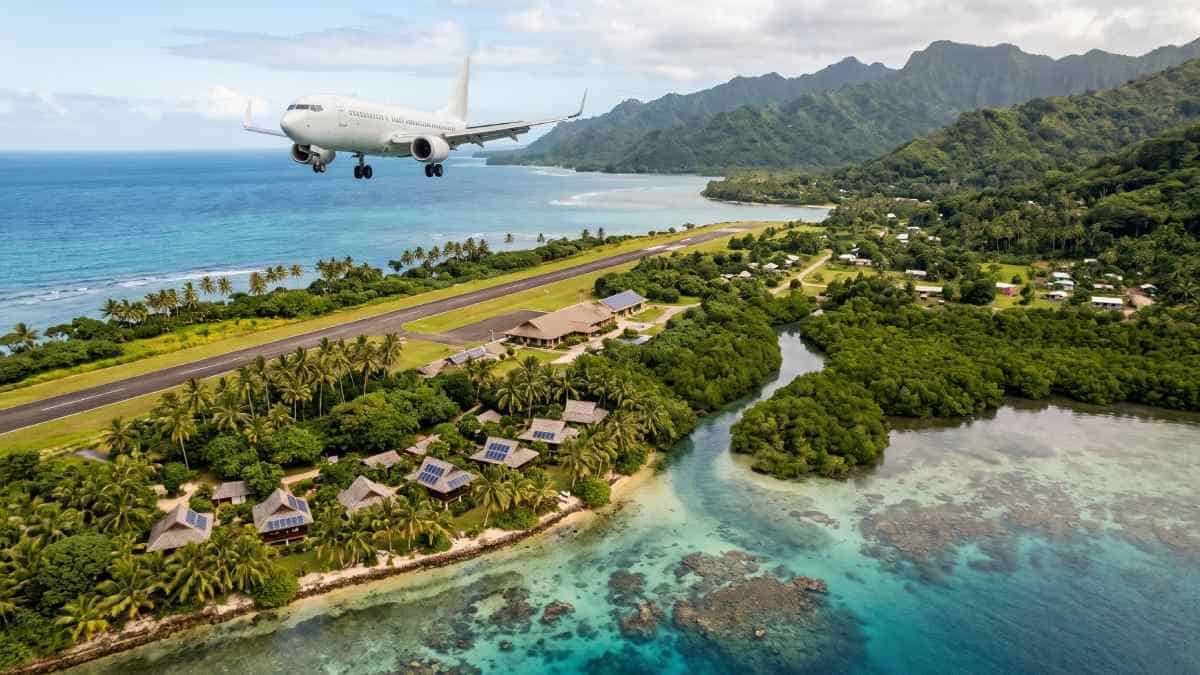
The post-pandemic economic growth of Oceania has revealed structural weaknesses along with business resilience in the region. Even though there has been some progress in terms of increased revenue generation by the tourism firms operating in the region, certain operational challenges remain. Geographic remoteness, market concentration, inadequate airline connections, lack of financing opportunities, and increasing climatic risks have continued to limit small island businesses. To overcome such structural barriers, the creation of a consolidated tripartite business model among Australia, New Zealand, and Fiji is essential. With strategic planning of capital deployment, policy harmonization, efficient airline connectivity, and financial instruments, sustained macroeconomic stability and self-sufficiency are being developed.
Macro-Structural Realities and the Tri-National Imperative
Measurable revenue growth over the preceding year was recorded by 47% of Pacific tourism operators, outperforming the wider regional merchandise export sector according to data compiled in the Pacific Islands Export Survey published by Pacific Trade Invest (PTI) Australia in collaboration with the Pacific Tourism Organisation (SPTO). Yet, deep operational vulnerabilities that threaten the region’s macroeconomic durability are masked by this top-line recovery. Compounding pressures are confronted by tourism and export businesses operating across archipelagic geography: limited international air connectivity is identified by 44% of operators as the primary barrier throttling their expansion, while restricted access to commercial debt capital is reported by over 50%, and escalating financial disruptions triggered by severe weather events are confronted by nearly two-thirds.
Extreme market concentration is demonstrated as a central vulnerability of the Pacific economy. Inbound travel flows are heavily reliant on three primary origin markets: approximately 77% of regional visitor volumes are accounted for by Australia, 58% is generated by New Zealand, and 55% across major transit routes is represented by the United States. Because regional economic vitality is tied directly to these external feeder markets, island balance sheets are directly reverberated through by any localized failure in route economics, airport physical infrastructure, or payment processing.
Moving beyond fragmented bilateral aid initiatives toward a unified, tri-national commercial architecture is required. The indispensable anchors of Oceania’s connectivity are formed by Australia, New Zealand, and Fiji. Substantial sovereign development financing and institutional credit capacity are provided by Australia. Critical aviation safety oversight, biosecurity expertise, and regulatory frameworks for cross-border financial surveillance and banking resilience are contributed by New Zealand. The physical, geographic, and aviation transshipment crossroad of the South Pacific is operated by Fiji, connecting Melanesia, Polynesia, and Micronesia through Nadi and Suva.
Advertisement
Advertisement
| Strategic Dimension | Regional Bottleneck in Oceania | Tri-National Policy Intervention | Target Economic Mechanism |
| Aviation Logistics | High seat costs, remote jet fuel premiums, and restricted runway capabilities. | Accelerated deployment of new-generation narrowbody aircraft and sovereign airstrip hardening. | Reduction in seat-kilometre operational expenditure and enhancement of all-weather reliability. |
| Financial Infrastructure | High foreign exchange spreads, correspondent banking de-risking, and rural payment isolation. | Interlinked Fast Payment Systems (FPS), digital eKYC protocols, and Low Earth Orbit (LEO) satellite point-of-sale rails. | Instant merchant settlement, sub-3% transaction costs, and elimination of rural payment blackouts. |
| Capital Mobilisation | Inability of MSMEs to satisfy commercial banking collateral mandates due to customary land tenure. | The PTI Australia–SPTO blended finance framework, credit guarantee reserves, and revenue-based lending. | De-risked private capital deployment bypassing the requirement for alienated freehold land collateral. |
| Climate Resilience | Lengthy loss-adjustment delays (6–18 months) associated with conventional indemnity insurance. | Actuarially calibrated parametric risk insurance pools underwritten via the Pacific Catastrophe Risk Insurance Company (PCRIC). | Rapid liquidity injections executed within 14 days of an objective satellite storm trigger. |
Modernising the Island Skyways: Aviation Route Economics and Fleet Renewal
Carrier Concentration, Capacity Bottlenecks, and Yield Management Dynamics
High carrier concentration defines the commercial aviation landscape linking Australia and New Zealand to the Pacific Islands. Scheduled passenger seat capacity across key corridors connecting Sydney, Melbourne, Brisbane, and Auckland to regional gateways—such as Nadi International Airport and Nausori International Airport in Fiji, Bauerfield International Airport in Vanuatu, and Faleolo International Airport in Samoa—is heavily concentrated among Qantas, Virgin Australia, Air New Zealand, and Fiji Airways.
Passenger seat pricing is influenced by this concentration through sophisticated yield management systems. Unlike high-density domestic routes within eastern Australia, where price discipline is provided by low-cost carriers, South Pacific routes are operated as specialized, medium-haul leisure and diaspora corridors. Lower-fare inventory is constrained during peak dry-season holidays and cultural migration periods through revenue management algorithms, with seat capacity allocated to premium point-to-point and long-haul interline connecting traffic.
Advertisement
Advertisement
These commercial dynamics are further compounded by severe supply chain surcharges on aviation turbine fuel and outer-island ground handling. No domestic refining infrastructure is possessed by Pacific island states, requiring imported refined petroleum products to be transported via intermediate maritime tankers from refining hubs in Singapore and South Korea. Fuel surcharges on trans-Pacific sectors are driven significantly above operational baselines by tanker charter rates, maritime demurrage penalties, and onshore storage amortization. Furthermore, heavy capital equipment, imported specialized vehicles, and ground power units must be amortised across limited daily aircraft turnarounds by remote island airport authorities, inevitably passing fixed costs onto airlines through elevated landing and terminal service fees.
Narrowbody Fleet Deployment: A321neo and Boeing 737 MAX Efficiencies
To break this high-fare cycle without saturating thin island routes with unsustainable widebody volume, fleet renewal has been focused on by regional carriers using modern, fuel-efficient narrowbody aircraft. Route economics across Oceania are being transformed by the integration of the Airbus A321neo and A321neo LR by Air New Zealand, alongside the full commercial deployment of the Boeing 737 MAX 8 across Fiji Airways’ regional network.
Advertisement
Advertisement
The economic advantage of these aircraft over previous-generation airframes centers on a substantial reduction in seat-kilometre operating expenses. A 15% to 20% reduction in specific fuel consumption per seat is delivered by advanced engine technology—notably the CFM International LEAP-1B powerplants on the Boeing 737 MAX 8 and the Pratt & Whitney PW1100G-JM and CFM LEAP-1A engines on the Airbus A321neo family. On a typical overwater medium-haul route, such as the sector between Sydney and Nadi or the stage between Auckland and Apia, multiple tonnes of kerosene per sector are saved by this performance.
Secondary point-to-point route viability is reshaped by this fuel burn efficiency. Previously, an operational dilemma was faced when thin routes into secondary island destinations were assessed: trip costs too high to break even without unsustainable passenger numbers were incurred by widebody twin-aisle jets, while the payload-range capability to handle overwater diversions with full passenger and cargo loads was lacked by older narrowbodies. The range and payload margins needed to bypass primary hubs are provided by the long-range capabilities of modern narrowbodies, enabling profitable point-to-point operations into secondary destinations while operating expenses are curtailed.
Upgrading Secondary Airstrips: AIFFP and MFAT Capital Financing
Corresponding upgrades to ground infrastructure are necessitated by fleet modernisations. The physical integrity, drainage, and instrument navigation technologies necessary to operate reliably during tropical rainfall and storm conditions have historically been lacked by secondary island runways across Oceania. In response, capital investments have been mobilized by sovereign development agencies, led by the Australian Infrastructure Financing Facility for the Pacific (AIFFP) and New Zealand Foreign Affairs & Trade (MFAT).
A central element of this regional upgrade is represented by the AIFFP’s capital facility with Fiji Airports. An AIFFP sovereign loan guarantee of AUD 96 million in partnership with ANZ Fiji is combined with a direct concessional loan of AUD 10 million within the financing structure. Dedicated capital is provided by this facility to modernise critical infrastructure across Fiji’s 15 commercial airports, focusing on outer-island facilities including Savusavu Airport and Labasa Airport on Vanua Levu. In parallel, an AUD 80 million financing framework was established by Australia with the Vanuatu Government to upgrade and climate-harden aviation facilities at Bauerfield International Airport on Efate and Pekoa Airport on Espiritu Santo.
Advertisement
Advertisement
Three primary engineering upgrades are funded through these sovereign facilities:
- Runway resurfacing using polymer-modified bitumen engineered to maintain shear strength and resist aggregate breakdown under tropical heat and heavy rainfall deluges.
- Autonomous, off-grid solar airfield lighting systems featuring self-contained LED runway edge and threshold fixtures powered by localized photovoltaic arrays and lithium storage, ensuring functionality is maintained during island-wide grid failures.
- Performance-Based Navigation (PBN) utilizing Global Navigation Satellite Systems (GNSS) paired with Automatic Dependent Surveillance-Broadcast (ADS-B) avionics, allowing precise, curved approaches through adverse weather and eliminating the necessity for expensive terrestrial radar infrastructure.
Digital Banking and LEO Satellite Payment Rails
Resolving Payment Isolation for Small Tourism Operators
The private tourism sector across Oceania consists primarily of micro, small, and medium-sized enterprises (MSMEs), with ten or fewer individuals being employed by over 80% of outer-island accommodations, marine charter operators, and village cultural tours. Substantial barriers to trade are presented to these small operators by traditional banking channels.
Merchant fees of 3.5% to 5.5% per swipe are frequently incurred when international tourist transactions are processed through legacy merchant acquirers, alongside foreign exchange retail markups often exceeding 4%. Furthermore, intermediary processing deductions and extended settlement periods lasting between three and seven business days are imposed on international cross-border transfers into Pacific commercial banks.
These payment inefficiencies are magnified by international bank de-risking, wherein correspondent banking services are withdrawn from Pacific jurisdictions by global financial institutions to reduce compliance overheads relative to transaction volume. In response, structural payment reforms have been accelerated by the Reserve Bank of Australia, the Reserve Bank of New Zealand, and the Reserve Bank of Fiji. Interoperable links between domestic real-time rails and Pacific payment systems are being developed through the Pacific Remittances Project alongside bilateral initiatives, supported by standardized electronic Know-Your-Customer utilities designed to lower compliance overheads for small merchants.
Off-Grid Point-of-Sale via Low Earth Orbit Satellite Connectivity
The physical vulnerability of terrestrial telecommunications networks has constituted a major logistical barrier for outer-island tourism enterprises. Terrestrial communications links are frequently disrupted by marine seismic events, storm surges, and cyclone winds, leaving remote lodges cut off from payment processing systems for days or weeks.
Remote payment operations have been transformed by the regulatory licensing and commercial deployment of Low Earth Orbit (LEO) satellite connectivity, led by Starlink’s entry into Fiji, Samoa, and Tonga. Operating licences integrating satellite broadband providers into universal service frameworks were granted by the Telecommunications Authority of Fiji, expanding digital connectivity across remote maritime areas. Low latency and reliable download speeds are offered by LEO satellites operating at orbital altitudes between 500 and 550 kilometres, avoiding the physical vulnerabilities of terrestrial communications towers.
Advertisement
Advertisement
Modern mobile Point-of-Sale (mPOS) terminals deployed at remote eco-resorts, diving outposts, and cultural homestays are supported by this satellite network. Instant payments using contactless smartcards and digital mobile wallets are facilitated for Australian and Kiwi tourists via terminals integrated with regional payment aggregators and Pacific commercial banks. To maintain operations during severe tropical weather that temporarily obscures satellite uplinks, encrypted offline batching is utilized. Transactions processed during outages are secured on device hardware chips and settled automatically once satellite connectivity is re-established, ensuring that sales are never lost by small operators due to network instability.
SME Capital Access and Blended Micro-Finance Solutions
The procurement of expansion capital remains a persistent challenge for small Pacific tourism operators. Between 80% and 90% of land is held communally under customary title in nations such as Fiji, Vanuatu, and Samoa. Because registered freehold real estate mortgages have traditionally been demanded as collateral by commercial lenders, indigenous tourism entrepreneurs cannot leverage their primary physical assets—ancestral land and marine concessions—to access business loans.
To address this financial bottleneck, a formal Memorandum of Understanding was executed between Pacific Trade Invest Australia and the South Pacific Tourism Organisation in October 2026, set to remain active until 31 December 2028. A blended micro-finance framework for the tourism sector is established through this partnership, converting survey findings into practical capital interventions.
Conventional real estate collateral requirements are replaced through three primary mechanisms:
- First-loss sovereign and philanthropic capital reserves funded by Australian and New Zealand development grants absorb the initial 15% to 20% of aggregate loan portfolio defaults, allowing credit risk margins to be lowered by commercial lenders.
- Loan repayments are tied to a predictable percentage (typically 4% to 8%) of daily transaction revenue through revenue-based financing contracts recorded via satellite-connected point-of-sale terminals, allowing repayment amounts to fluctuate naturally with seasonal visitor arrivals.
- Loans are secured against movable assets—such as solar microgrid hardware or modern outboard vessel engines—via peer-to-peer micro-lending platforms and equipment leasing facilities, supported by community performance covenants from local village councils rather than freehold mortgages.
Parametric Insurance and Climate-Hardened Hospitality
Parametric Disaster Risk Models: Rapid Liquidity Deployment
Continuing threats to island tourism infrastructure are posed by severe tropical cyclones, coastal storm surges, and extended El Niño droughts. Hundreds of millions of dollars in physical asset damage and extended business interruptions were caused across Fiji, Vanuatu, and Tonga between 2015 and 2025 by major cyclonic events.
Traditional indemnity insurance models have proven poorly suited to the needs of archipelagic island economies. On-site damage assessments by specialist loss adjusters flown from overseas are required under standard indemnity policies. Claims settlements routinely require 6 to 18 months of negotiation following major regional disasters, during which business cash flows cease, staff are laid off, and damaged facilities are deteriorated further by salt-air exposure.
Advertisement
Advertisement
In response, parametric disaster risk insurance is being adopted by regional tourism authorities and commercial operators, coordinated through the Pacific Catastrophe Risk Insurance Company (PCRIC) and regional underwriting syndicates. An entirely different settlement mechanism is relied upon: payouts are determined by objective, independently verified scientific metrics rather than subjective post-disaster physical loss adjustments. Payout tiers are activated upon certified satellite observations of sustained surface wind speeds exceeding predetermined thresholds (such as 120 km/h or 160 km/h) or cumulative 24-hour rainfall measurements exceeding calibrated triggers (such as 200 mm or 300 mm).
Because trigger verification relies entirely on objective meteorological data, parametric policies are disbursed within a maximum of 14 calendar days following an event. Payout funds are transferred directly into commercial accounts as unrestricted liquid working capital, allowing resort managers to clear flight strips, repair solar facilities, retain core hospitality staff, and secure building materials before market shortages emerge. Dedicated parametric coverage frameworks for private tourism operators were finalized by the Tonga Ministry of Tourism and PCRIC in October 2026, establishing a model for private-sector catastrophe pooling across Oceania.
| Feature | Conventional Indemnity Insurance | Parametric Disaster Risk Insurance |
| Claim Settlement Basis | Subjective, post-event physical damage and business interruption assessments. | Pre-agreed, objective environmental triggers (wind speed, rainfall, earthquake intensity). |
| Liquidity Disbursement Speed | 6 to 18 months following site inspections and loss negotiations. | Direct capital transfer within 14 days of trigger verification. |
| Verification Requirements | On-site inspections by certified loss adjusters flown in from overseas. | Independent satellite observation data and certified meteorological monitoring arrays. |
| Use of Payout Funds | Strictly restricted to replacing verified damaged physical assets. | Unrestricted working capital for payroll, emergency repairs, and supply logistics. |
| Administrative Costs | High due to legal fees, adjusting expenses, and protracted claims disputes. | Low, transparent underwriting with minimal administrative overhead. |
Engineering Standards for Climate-Hardened Island Hospitality
Specialized engineering standards are required for physical assets across island resorts to withstand cyclonic wind forces, storm surges, and freshwater shortages. Acute vulnerabilities during extreme weather events are introduced by over-reliance on centralized, fossil-fuel power grids and fragile municipal infrastructure.
Modernized island resilience engineering is focused on three integrated systems:
- Hybrid Solar Microgrids with Battery Energy Storage Systems (BESS): Diesel generators are being replaced at remote resorts with distributed bifacial solar photovoltaic arrays mounted on structural steel frames certified to withstand high-velocity cyclonic winds. These systems are paired with utility-scale Lithium Iron Phosphate battery banks, providing microgrid stability and extended off-grid operational endurance during prolonged cloudy periods.
- Seawater Reverse Osmosis (SWRO) Desalination: Island freshwater security during drought periods is maintained through modular, containerized SWRO desalination systems equipped with energy-recovery isobaric pressure chambers. Power consumption is kept low, with electricity drawn directly from daytime solar arrays rather than expensive diesel generators.
- Soft-Engineering Coastal Defenses: Structural failure is often suffered by rigid concrete sea walls due to wave scour and backfill erosion during storm surges. Nature-based coastal stabilization systems are increasingly being adopted by Fijian resorts. Submerged artificial reef units that dissipate the majority of deep-water wave energy are combined with dense plantings of mangrove trees, whose root structures trap sand and mitigate beachfront erosion.
Oceania Blue Carbon Travel Corridors
Sovereign Blue Carbon Travel Corridors are being coordinated by Australia, New Zealand, and Fiji to fund long-term coastal and marine conservation. Frameworks linking travel-related emissions directly to certified coastal wetland and marine restoration projects in the South Pacific are being established by regional tourism boards, including Tourism Australia, Tourism New Zealand, and Tourism Fiji, rather than directing offset funds into distant, unverified registries.
Under this regional framework, voluntary traveler offset contributions are directed into coastal ecosystems, including mangrove replanting, seagrass meadow protection, and coral nursery cultivation. Carbon is sequestered by coastal wetland habitats at rates significantly higher per hectare than terrestrial tropical rainforests, while vital nursery habitats are concurrently provided for local fisheries and storm surges are dampened.
Advertisement
Advertisement
Clear tracking of the specific marine ecosystems protected by offset contributions is received by visitors through verifiable public registries linking trans-Tasman passenger journeys to certified coastal carbon projects. Importantly, up to 70% of project funds are disbursed directly to customary landowning clans as conservation stipends, providing local communities with sustainable economic returns that encourage ecosystem preservation over commercial development.
Capturing Demand: AI Marketing and the Slow Travel Transition
AI-Driven Direct Marketing for Small Operators
Reliance was placed by small-scale tourism businesses across Oceania on major global Online Travel Agencies (OTAs) for international visibility for decades. High commissions on gross bookings are routinely extracted by these intermediary platforms while proprietary control over customer data is maintained, restricting the profit margins needed by operators to invest in infrastructure resilience.
Direct distribution channels are being constructed through the adoption of accessible Artificial Intelligence (AI) tools alongside shared marketing resources by Pacific enterprises. Targeted digital toolkits and regional data platforms assisting small operators in expanding digital reach have been delivered through the collaboration between PTI Australia and the SPTO. Online bookings are now generated by 95% of Pacific tourism operators according to the Pacific Islands Export Survey, with direct engagement predominantly driven by social media channels.
Automated customer enquiry engines, real-time dynamic room pricing adjusted to flight availability, and targeted marketing campaigns across major metropolitan source markets can be deployed by small enterprises using accessible generative AI tools. High intermediary fees and generic listings are bypassed, enabling boutique eco-lodges and family-run homestays to directly reach travellers interested in cultural and nature-based tourism.
The Consumer Shift Toward Slow Travel and Authentic Cultural Immersion
A parallel shift in travel behavior among Australian and New Zealand visitors is observed alongside this transition toward direct booking channels. An expanding preference for slow travel, environmental conservation, and deep cultural immersion over standard, enclosed resort vacations is revealed by outbound consumer data.
Community-centered experiences offering genuine engagement with local traditions are increasingly sought out by visitors. In response, promotional messaging has been updated across regional campaigns, including Tourism Fiji’s global platforms. The primary focus has transitioned from generic tropical scenery to authentic cultural exchange, highlighting community life, traditional cooking methods, and indigenous stewardship of marine protected areas.
Advertisement
Advertisement
Decentralized outer-island operators are directly benefited by this consumer shift. Because greater value is placed on authentic experiences and environmental integrity, longer, higher-value stays with locally owned lodges are increasingly booked by travellers, generating the economic returns needed to support investments in satellite payment connectivity and climate-hardened infrastructure.
Conclusion
Systematic operational weaknesses in Oceania are being addressed effectively via the tri-national collaboration of Australia, New Zealand, and Fiji. Through the modernization of aviation corridors, introduction of satellite-based fintech technologies, and creation of disaster liquidity pools, economic sustainability and environmental protection are achieved successfully for island nations within the Pacific.
Advertisement
