
California Unites With Washington to Revolutionize Passenger Rail Departure Alerts

Published
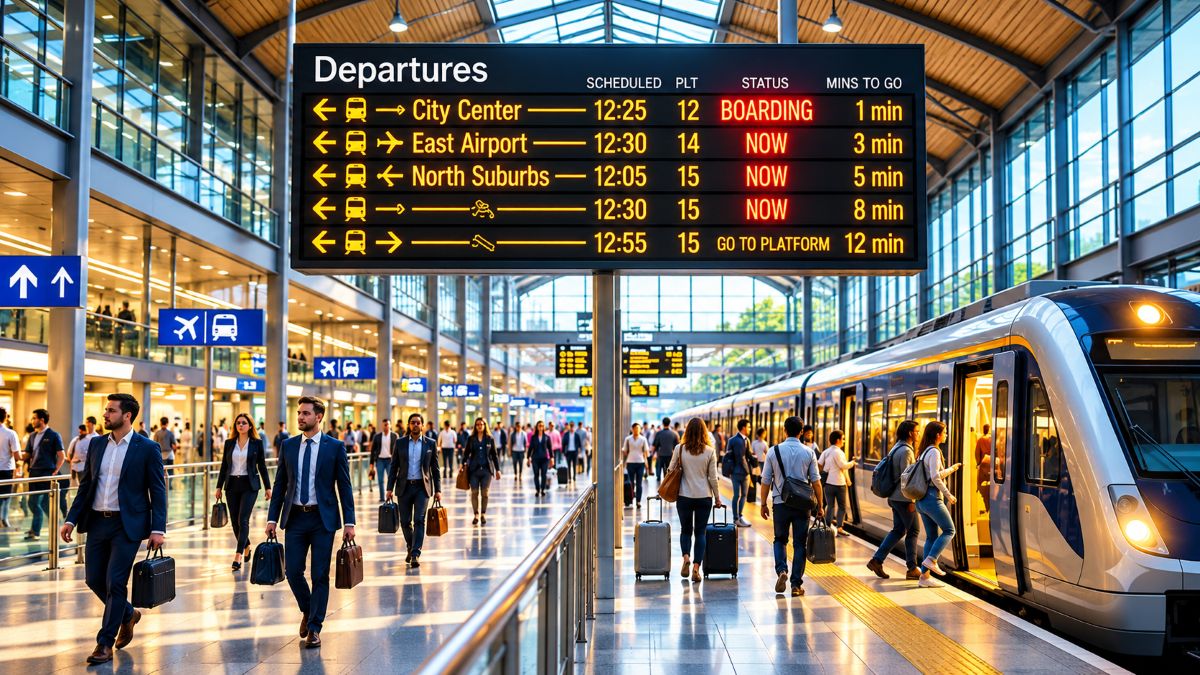
Modern intercity and commuter rail networks across the American West are entering an ambitious era of synchronized digital operations. Under a newly established interstate passenger mobility initiative, transit authorities are overhauling legacy station displays to deliver precise, micro-timed departure warnings directly to waiting riders. For decades, terminal displays across domestic rail corridors have provided basic schedules, occasional delay notifications, and gate numbers. However, travelers rushing through bustling multi-modal hubs have often faced uncertainty during the critical minutes preceding final boarding, leading to congested platforms, delayed departures, and heightened passenger stress.
State transportation planners are standardizing how train operators communicate imminent departures, borrowing visual operational models long proven across premier European rail systems. The collaborative effort integrates unified platform timers, dynamic boarding countdowns, and real-time corridor tracking across busy western regional lines. By coordinating technical protocols and procurement standards, the participating transportation departments aim to eliminate platform bottlenecks, improve on-time operational reliability, and elevate passenger safety. The modernization introduces an intuitive visual language designed to help travelers make split-second movement choices with complete confidence.
Advertisement
Advertisement
Modernizing Visual Communication Across High-Volume Regional Terminals
Navigating high-density multimodal terminals often forces passengers to balance platform navigation with incidental terminal stops. Under the revised regional standards, primary concourse departure monitors now incorporate visual operational cues that reflect real-time platform conditions rather than static timetable expectations. Station authorities are phasing out ambiguous boarding announcements in favor of visible, universal digital alerts that signal exactly how much boarding time remains.
The updated display methodology centers on an intuitive visual hierarchy. When a scheduled departure enters its critical boarding window, designated geometric symbols appear alongside the route information. An open ring visual confirms that the train is prepared for general boarding, giving passengers approximately five minutes to clear concourse corridors and reach their platform. Once that indicator shifts to a pulsating indicator, gate crews are preparing to secure train doors within three minutes, signaling that immediate movement is required.
Advertisement
Advertisement
Synchronizing Multi-State Transit Corridors for Operational Reliability
Coordinating passenger flow across adjacent jurisdictions requires rigorous hardware synchronization and centralized data feeds. Regional railway systems function best when riders experience uniform wayfinding whether navigating metropolitan centers in the Pacific Northwest or transferring between urban lines across the Golden State. Disjointed station signage historically caused confusion among business commuters, regional tourists, and long-distance riders transitioning between connecting carriers.
By aligning dispatch telemetry with station signage software, participating regional authorities ensure that departure warnings account for real walking times between main halls and subterranean or elevated tracks. If a specific boarding gate requires a four-minute trek down escalators and through fare barriers, the display algorithms adjust the alert threshold accordingly. This dynamic calibration prevents dangerous platform rushes while protecting aggregate corridor schedules from avoidable dwell-time creep.
Advertisement
Advertisement
| Departure Indicator | Active Display Threshold | Operational Passenger Directive | Typical Platform Status |
| Standard Timetable Text | Greater than 7 minutes | Normal movement through terminal concourse | Train positioning or cleaning underway |
| Steady Open Circle | Approximately 5 minutes | Proceed directly to designated platform stairs | Active passenger boarding initiated |
| Pulsing Solid Dot | Approximately 3 minutes | Immediate platform arrival and boarding required | Door closure preparation sequence active |
| Flashing Gate Closed | Departure imminent | Boarding concluded; advance to next service | Platform barriers and vestibules secured |
Elevating Platform Safety and Eliminating Congestion Bottlenecks
Station platform overcrowding represents one of the most persistent safety hazards in heavy-rail operations. When hundreds of travelers congregate at platform edges prematurely, they create serious crowd-control challenges for operations personnel and increase the risk of accidental track incursions. Conversely, late-arriving runners descending stairwells at the final whistle introduce collision risks that frequently delay departures.
The synchronized visual alerts resolve this dilemma by keeping passengers comfortably distributed throughout main station concourses until active boarding commences. Retail zones, dining halls, and concourse waiting lounges remain functional gathering spaces right up until the automated displays trigger movement. Field trials indicate that dynamic countdown indicators reduce stairwell congestion by over twenty percent while practically eliminating the need for frantic platform announcements.
Long-Term Infrastructure Alignment and Future Corridor Expansion
The joint technical rollout establishes an adaptable framework capable of absorbing upcoming high-speed rail lines and expanding commuter networks. Transit commissions are investing capital modernization funds into unified software APIs that interface smoothly with existing legacy dispatch networks while remaining forward-compatible with next-generation cellular traveler notifications.
As clean-energy rail travel expands along the Pacific corridor, regional authorities anticipate broader adoption across neighboring mountain states and southwestern transit districts. Establishing an intuitive visual standard today guarantees that domestic passenger rail infrastructure will provide the seamless, predictable, and stress-free passenger environment required to compete effectively with regional air travel and highway transit.
Frequently Asked Questions
What is the primary goal of the multi-state passenger rail alert initiative?
The initiative standardizes digital station displays across regional transit networks to give passengers clear, visual countdown alerts for boarding and departures.
Advertisement
Advertisement
How do the new display indicators communicate boarding urgency?
Displays utilize distinct geometric symbols, such as open circles for five-minute warnings and pulsing dots for three-minute final boarding calls, showing travelers exactly when to move.
Do the visual warnings account for walking distance to specific platforms?
Yes, the underlying software calculates average transit walking times between concourses and individual platforms, adjusting the warning triggers dynamically.
Why are state transit departments moving away from purely audio announcements?
High ambient noise levels in busy terminals make audio announcements difficult to discern, whereas universal visual indicators provide instantaneous clarity for all travelers.
Advertisement
Advertisement
Which primary western corridors are implementing these unified standards?
The rollout focuses heavily on high-traffic passenger lines connecting major metropolitan hubs across the Pacific coast and connecting interstate transit pathways.
How does this technology improve overall train punctuality?
By eliminating last-minute passenger rushes and establishing predictable boarding windows, trains can close vestibule doors and clear blocks strictly on schedule.
Does the modernization require replacing all existing station display boards?
Most installations utilize software and firmware updates on existing modern digital monitors, reserving complete hardware replacements for outdated legacy systems.
Advertisement
Advertisement
How does concourse crowd distribution benefit station businesses?
Clear departure timing allows passengers to comfortably utilize concourse dining and retail amenities without fearing that they might unexpectedly miss their train.
Will the departure alert system integrate with mobile traveler applications?
The standardized application interfaces feed directly into regional transit mobile apps, delivering identical countdown data to smartphones alongside station monitors.
Are other passenger rail operators planning to adopt this visual model?
Federal transit observers and regional authorities across neighboring corridors are monitoring operational data to evaluate wider nationwide network deployment.
Advertisement
