
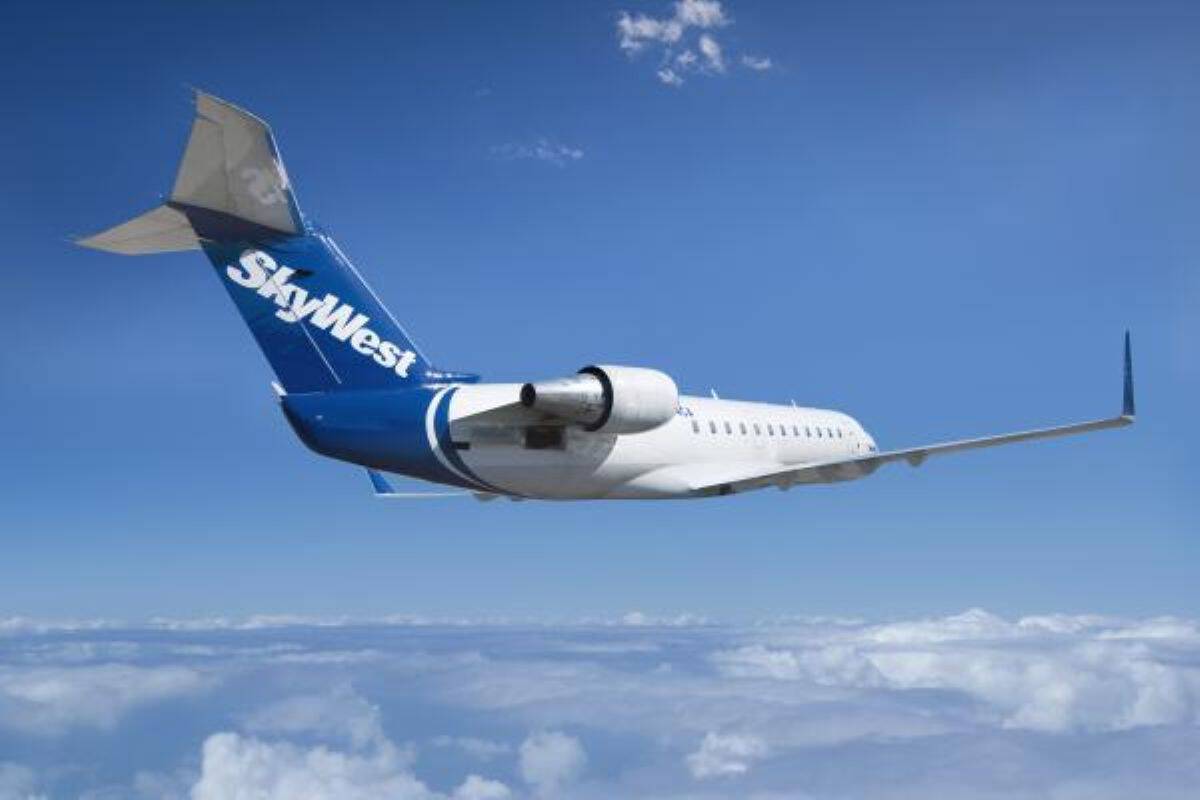
Skywest operated United Airlines Flight SKW6065 diverts to Laramie Regional Airport at 15:40 EST today! As part of a standard regional service, the flight crews were instructed to divert the aircraft mid-flight, causing the passengers to experience a significant change to their flight path as air traffic control instructed the aircraft to avoid its originally planned place of destination. Confirmations of operational updates indicated that the flight successfully landed on the alternative airfield. Aviation authorities ensured full compliance with safety regulations during the operations control of this unplanned flight activity. Passengers will have to wait for new schedules to be issued, as the flight will most likely have to be rescheduled and new arrangements made for the continuation of the planned journey.
The regional journey designated as Skywest flight SKW6065 experienced an immediate change of plans when flight crews elected to redirect the aircraft away from its original destination. Severe convective atmospheric conditions and active air traffic holding patterns in the regional hub forced dispatchers and pilots to assess alternative airfields nearby.
Flight crews operating Skywest service SKW6065 maintained continuous communication with regional controllers while evaluating total remaining fuel endurance limits and local weather radar forecasts. The proactive decision prioritized passenger safety, ensuring the regional jet bypassed heavy storm cells and landed without further incident.Field Detail Carrier / Flight Skywest / SKW6065 Aircraft Type Bombardier CRJ-200 Regional Jet Planned Destination Denver International Airport (DEN) Actual Landing Facility Laramie Regional Airport (LAR) Operational Cause Convective Weather Holds & Air Traffic Control 
The regional journey designated as Skywest flight SKW6065 experienced an immediate change of plans when flight crews elected to redirect the aircraft away from its original destination. Severe convective atmospheric conditions and active air traffic holding patterns in the regional hub forced dispatchers and pilots to assess alternative airfields nearby. Atmospheric turbulence combined with heavy cloud cover made continuing along the initial flight corridor undesirable for the flight crew.
Advertisement
Advertisement
Flight crews operating Skywest service SKW6065 maintained continuous communication with regional controllers while evaluating total remaining fuel endurance limits and local weather radar forecasts. The proactive decision prioritized passenger safety, ensuring the regional jet bypassed heavy storm cells and landed without further incident. Modern commercial aviation relies heavily on these real-time evaluations to maintain flawless safety records across complex airspace sectors.
Severe weather patterns frequently develop with remarkable speed over mountainous regional terrain, creating unexpected hazards for incoming air traffic. Flight dispatchers monitoring Skywest journey SKW6065 recognized that the storm activity near the primary hub would not clear quickly enough to allow a smooth landing. Consequently, choosing an alternate destination became the most responsible choice for the flight deck personnel.
Aviation regulations strictly govern how regional carriers manage fuel reserves when facing prolonged aerial holding patterns over busy metropolitan hubs. When the operating crew on Skywest journey SKW6065 calculated their holding time against mandatory reserve margins, diverting became the most prudent operational strategy. Commercial aircraft must always retain sufficient fuel to reach an alternate airfield and complete standard landing procedures comfortably.
Selecting Laramie Regional Airport provided the flight crew on Skywest mission SKW6065 with a reliable, immediate runway solution situated clear of the main storm system. Ground personnel at the local facility coordinated swift landing clearances to accommodate the unexpected arrival of the regional jet. The transition from cruise altitude to the alternate approach path was executed with complete precision by the experienced flight crew.
Air traffic controllers constantly track regional traffic density to ensure that alternate facilities do not become overcrowded during widespread weather disruptions. The seamless arrival of Skywest flight SKW6065 at the backup facility highlights the efficiency of regional traffic management networks during unexpected operational shifts. Every maneuver performed followed strict regulatory guidelines designed to protect passengers and crew.
Once the aircraft operating under the Skywest callsign SKW6065 arrived at the designated diversion field, ground support teams initiated standard passenger management procedures. Operational teams worked diligently to provide real-time updates regarding onward travel arrangements, refuelling schedules, and revised departure clearance windows. Ground staff focused on maintaining clear communication with all affected travelers inside the terminal facility.
Passengers aboard Skywest service SKW6065 remained safely within the terminal area while flight coordinators assessed atmospheric developments at the primary destination airport. Local ground crews facilitated necessary terminal services while dispatch teams filed updated flight plans to resume the journey once conditions cleared. Coordinating logistics during an unplanned stop requires close cooperation between local airport staff and airline dispatchers.
Refuelling the regional aircraft and verifying flight crew duty time limits are essential steps before any diverted flight can resume its journey. The management team overseeing Skywest flight SKW6065 ensured all mechanical inspections and administrative requirements were thoroughly completed before planning the next segment. Passenger comfort and security remained the primary focus during the entire waiting period.
Skywest Operated United Airlines Flight SKW6065 Diverts at Laramie Regional Airport STA- 15:40 EST due to tactical holding and regional weather delays. The primary answer behind this operational shift is flight path safety. Controllers diverted the jet to Laramie Regional Airport because severe atmospheric conditions affected the primary arrival corridor. Furthermore, fuel management guidelines required the crew to execute a safe regional touchdown rather than remain in extended aerial holding patterns. Thus, pilot adherence to safety protocols ensured all passengers landed securely at the alternate regional terminal without further incident.
Advertisement
Advertisement
Advertisement













Saturday, September 5, 2026

Saturday, September 5, 2026
Saturday, September 5, 2026

Saturday, September 5, 2026
Saturday, September 5, 2026

Thursday, September 3, 2026

Saturday, September 5, 2026

Saturday, September 5, 2026


