
US Airports Reach New Heights as Minneapolis, Tampa and Charleston Lead North America Passenger Satisfaction Rankings in 2026

Published
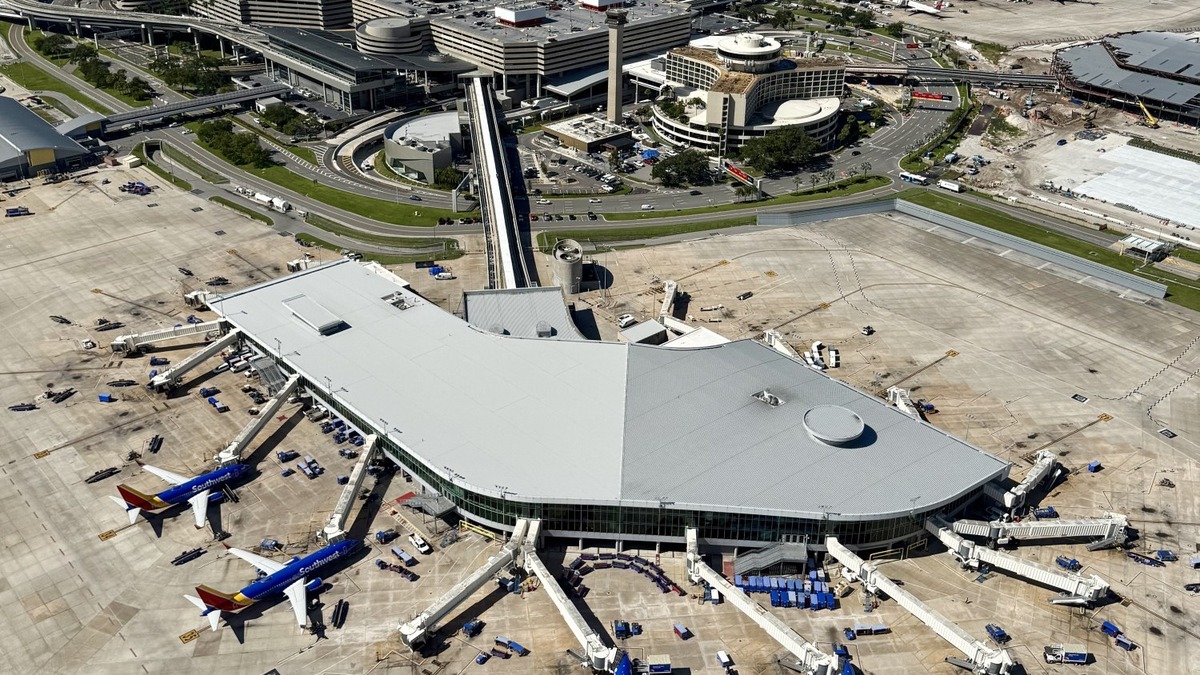
A recent J.D. Power survey reveals Minneapolis-St. Paul, Tampa and Charleston airports as the best in North America for customer satisfaction. The study surveyed more than 24,000 passengers and assessed over 100 airports in North America. The study recognized the greatest investments in customer experience and how airports are evolving to improve the customer journey.
This year’s study shows the maximum level of connection and convenience remain the foremost considerations for travelers when evaluating an airport, yet secondary considerations include the overall design and aesthetic of the facility, as well as the selection and experience of dining and retail establishments. According to J.D. Power, the study assessed North American airports of all sizes and classified them as mega, large or medium. The report is intended to provide insight on how the greatest and most evolved investments in customer experience are evolving the world of aviation.
J.D. Power 2026 Airport Rankings Highlight Passenger Experience Improvements
The 2026 J.D. Power North America Airport Satisfaction Study measured passenger satisfaction across seven major areas:
| Evaluation Area | Passenger Experience Focus |
|---|---|
| Ease of travel through airport | Navigation, movement and convenience |
| Trust with airport | Confidence in airport operations |
| Terminal facilities | Comfort, design and infrastructure |
| Airport staff | Service quality and assistance |
| Departure experience | Access, check-in and pre-flight journey |
| Food beverage and retail | Dining, shopping and amenities |
| Arrival experience | Baggage collection and airport exit process |
The study found that passenger satisfaction has improved despite continued pressure from high passenger volumes. Airports that completed major infrastructure upgrades recorded stronger results, showing that modern terminals, improved layouts and better amenities are becoming key drivers of traveller approval. The findings also demonstrate that airport size alone does not determine passenger satisfaction. Smaller and regional airports are increasingly competing successfully by offering smoother journeys, simpler navigation and personalised services.
Advertisement
Advertisement
Minneapolis Saint Paul International Airport Leads North America Mega Airports
Minneapolis Saint Paul International Airport (MSP) secured the top position among North America’s mega airports, achieving a score of 684 points out of 1,000. The Minnesota airport maintained its leadership position for the third consecutive year, reinforcing its reputation as one of the strongest large-scale aviation gateways in the region.
Mega airports in the J.D. Power study are defined as airports handling 33 million or more passengers annually. These airports face some of the greatest operational challenges because of high passenger numbers, complex terminal movements and increased demand for efficient services. MSP’s continued success reflects the impact of passenger-focused development. The airport has invested in terminal improvements, accessibility, passenger comfort and service enhancements to create a smoother experience for both domestic and international travellers.
Advertisement
Advertisement
The top three mega airport rankings were:
| Rank | Airport | Location | Score |
|---|---|---|---|
| 1 | Minneapolis Saint Paul International Airport | Minnesota, USA | 684 |
| 2 | Detroit Metropolitan Wayne County Airport | Michigan, USA | 663 |
| 3 | Phoenix Sky Harbor International Airport | Arizona, USA | 642 |
Detroit Metropolitan Wayne County Airport and Phoenix Sky Harbor International Airport followed MSP, showing strong passenger satisfaction among some of North America’s busiest aviation hubs. The ranking highlights that travellers increasingly value airports that provide efficient movement, clear information, comfortable facilities and reliable services.
Advertisement
Advertisement
Tampa International Airport Becomes Top Large Airport in North America
Tampa International Airport (TPA) achieved the highest ranking among large airports in the 2026 study, scoring 715 points. The Florida airport’s performance reflects its continued focus on passenger convenience, terminal design and customer experience. Large airports are classified as facilities handling between 10 million and 32.9 million passengers annually. These airports play a major role in regional tourism because they connect popular destinations with domestic and international markets.
Tampa International Airport has developed a strong reputation for its passenger-friendly layout, efficient movement and range of travel amenities. The ranking demonstrates how airports can strengthen competitiveness by improving every stage of the passenger journey.
The large airport category results highlight the growing importance of:
- Simple terminal navigation
- Comfortable waiting areas
- Efficient security processes
- Quality dining and retail choices
- Helpful airport staff
- Reliable passenger services
J.D. Power research shows that airport improvements have a direct connection with satisfaction levels. Recently completed capital projects across North America have helped airports modernise facilities and improve traveller experiences.
Advertisement
Advertisement
Charleston International Airport Leads Medium Airport Category
Among medium-sized airports, Charleston International Airport (CHS) in South Carolina achieved the highest position with a score of 712 points. The airport category includes facilities handling between 4.5 million and 9.9 million passengers annually. The performance of Charleston International Airport highlights the increasing importance of regional airports in tourism development. Smaller airports often provide travellers with shorter distances, easier navigation and less complicated passenger flows.
Regional airports are becoming essential gateways for destinations seeking stronger visitor connectivity. Their ability to provide efficient arrival and departure experiences can influence traveller satisfaction and destination perception. The medium airport category demonstrates that passenger experience is not limited to major international hubs. Airports with focused investment and efficient operations can achieve high satisfaction levels despite handling fewer passengers.
Airport Modernisation Becomes Central to Aviation Competitiveness
The 2026 rankings reveal that infrastructure development remains one of the strongest factors influencing passenger satisfaction.
Across North America, airports have been investing in:
- Terminal expansions
- New passenger facilities
- Digital technology systems
- Improved security areas
- Enhanced dining and retail spaces
- Better accessibility features
These developments are changing the role of airports within the tourism industry. Modern airports are increasingly designed as complete visitor environments where passengers spend time before flights rather than simply passing through. The study also highlights the importance of local identity. Airports that create a stronger connection with their surrounding destinations can improve passenger perceptions and create a more memorable travel experience. Previous J.D. Power research has shown that airports creating a stronger sense of place can achieve significantly higher satisfaction results.
Lower Ranked Airports Face Pressure to Improve Facilities
While leading airports achieved strong results, the rankings also revealed challenges facing airports dealing with ageing infrastructure and limited passenger amenities. Philadelphia International Airport remained among the lowest-performing large airports, highlighting ongoing concerns linked to passenger experience and infrastructure limitations.
Advertisement
Advertisement
Oakland San Francisco Bay Airport also ranked near the lower end of the large airport category, placing 20th out of 24 airports with a score of 628 points. The airport has been working on improvements, including terminal upgrades and enhanced passenger facilities. These results demonstrate the growing pressure on airport operators to modernise facilities and respond to rising passenger expectations. As global aviation becomes increasingly competitive, airports must balance capacity expansion with service quality improvements.
North America Airport Rankings Reflect Future Travel Priorities
The J.D. Power 2026 North America Airport Satisfaction Study reveals that passengers care most about the experience at an airport and how well the staff there is able to handle their baggage. The best of the best, Minneapolis-Saint Paul (MSP), Tampa (TPA), and Charleston (CHS) airports, illustrate ways in which investing to maximize passenger convenience and reducing airport operational costs can improve profitability.
Improving the experience at an airport can potentially improve the travel experience to a given destination. This is especially true for airports that improve the first and last experiences of travel. The best airports of 2025 provide a wealth of information on how to improve efficiency and comfort for both passengers and staff. Airports focusing on maximizing the comfort of travelers, while minimizing travel times and wait times, will effectively gain competitive advantage and gain travelers’ loyalty.
Advertisement
