
France Tourism Faces a Booking Shock as Riots Rattle Paris Hotels and Unsettle International Travellers

Updated
Published
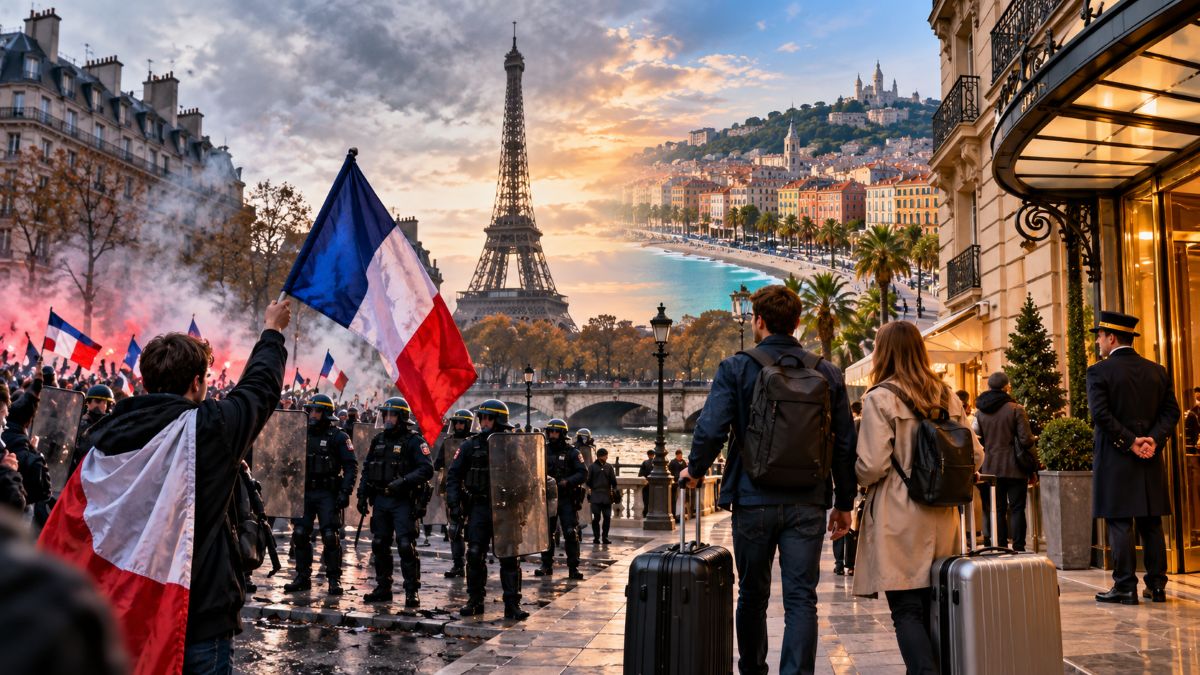
France’s tourism industry faces mounting uncertainty as riots and images of urban violence unsettle international visitors, weaken hotel booking momentum and raise concerns about travel safety. Paris, Nice and Lyon have emerged as focal points in the latest concerns, while industry representatives warn that prolonged unrest could deepen the economic impact. Hotel reservations in Paris, Lyon and Marseille have reportedly weakened, and Paris hotels have lost potential bookings for the coming six weeks. The scale of the eventual damage will depend on whether violence continues, according to industry assessments reported on 22 October 2026. With France welcoming around 100 million visitors annually, sustained disruption could threaten accommodation revenue, visitor spending and confidence in one of the world’s leading tourism destinations.
Hotel Booking Data Signals Early Pressure on Demand
The latest figures suggest that the immediate concern is slowing booking momentum rather than a confirmed collapse in tourism demand. Data from MKG Consulting showed a sharp reversal in Paris hotels’ booking advantage over the previous year. The change occurred between 19 and 20 October, as international coverage of the unrest intensified.
For stays scheduled between 20 and 29 October, Paris hotels’ booking position fell from 1.0 percentage point above the comparable 2025 level to just 0.2 percentage points higher. The shift was even more pronounced for stays between 20 and 25 October. Their advantage narrowed from 3.5 percentage points to 1.9 percentage points.
These figures require careful interpretation. They measure the difference against the previous year’s booking levels, not the absolute proportion of rooms sold. Paris hotels remained ahead of the comparable 2025 figures in both periods. Nevertheless, the rapid narrowing signals that the unrest may be eroding demand for immediate stays.
Advertisement
Advertisement
MKG Consulting also reported lost potential bookings for the following six weeks. The slowdown was particularly visible in near-term reservations and higher-end accommodation. This matters because premium hotels depend on travellers committing to relatively expensive stays, sometimes well before arrival.
The next few weeks will therefore be crucial. If visitors continue to book despite the disruption, hotels may recover much of their lost momentum. If cancellations increase and new reservations weaken, the pressure could extend into November and beyond.
Advertisement
Advertisement
France’s Tourism Economy Faces a Wider Risk
The potential damage extends beyond hotel occupancy. International visitors support restaurants, museums, transport operators, tour companies, retailers and regional attractions. A traveller who postpones a city break may also cancel restaurant reservations, guided excursions and shopping plans.
France entered this period from a position of considerable strength. According to Atout France, the country’s tourism development agency, France received an estimated 102 million international arrivals in 2025, compared with 100 million in 2024. International tourism receipts reached €77.5 billion in 2025, according to figures cited from the Banque de France.
Advertisement
Advertisement
These annual figures establish the sector’s scale, but they do not quantify the losses caused by the current unrest. It would be premature to attribute any change in national tourism revenue directly to the riots without updated, comparable data.
The immediate concern is that prolonged disruption could weaken the confidence that supports future bookings. France’s tourism industry depends on visitors believing they can enjoy cultural attractions, restaurants and public spaces without unexpected interruptions.
The consequences could spread unevenly. Hotels close to affected streets may experience cancellations, while properties elsewhere continue to operate normally. Businesses reliant on international visitors could also face greater pressure than those serving local customers.
What Industry Leaders Fear Most
Tourism representatives have stressed that the duration and frequency of the violence will determine its commercial consequences. Their warnings distinguish between a short-lived disturbance and repeated incidents that sustain negative international coverage.
Advertisement
Advertisement
Christelle Cassagne, head of ADN Tourisme, the body representing France’s institutional tourism organisations, described the violence in major city centres as catastrophic. In comments reported by AFP on 22 October 2026, she questioned the appeal of a holiday spent confined to a hotel.
Her concern reflects a fundamental feature of city tourism. Visitors book destinations to explore neighbourhoods, attend cultural events, dine out and experience local life. When unrest restricts those activities, even an otherwise unaffected hotel may struggle to deliver the experience guests expected.
Didier Arino, head of Protourisme, offered a more measured assessment of the immediate financial effect. He estimated that a day of rioting and urban violence in central Paris produced cancellations equivalent to around 1% of the monthly total in the following days, with similar effects in subsequent weeks.
Arino said the figure was not substantial against a forecast of 42 million hotel nights for 2026. However, he warned against underestimating the cumulative effect of repeated incidents.
Laurent Abitbol, chairman of Selectour’s executive board, also distinguished between temporary and sustained unrest. In remarks reported on 22 October, he warned that disruption lasting several months could prove catastrophic for the sector.
These comments are industry assessments, not confirmed forecasts of national losses. Their common message is that the duration of the unrest matters more than a single day’s disruption.
Advertisement
Advertisement
Travel Advisories Add to Booking Anxiety
The tourism downturn coincides with a series of government warnings about demonstrations and public safety. The United States, China and Germany were among the countries identified in industry reporting as issuing advice to their nationals.
Such advisories do not automatically constitute travel bans. Their wording and severity vary, and travellers should consult the latest notice issued by their own government before departing.
The UK’s Foreign, Commonwealth & Development Office updated its France guidance on 22 October 2026. It warned of an increased likelihood of demonstrations and advised visitors to avoid large crowds and areas with a significant police presence. It also highlighted possible disruption to local transport and the introduction of localised curfews.
Australia’s Smartraveller guidance, current on 21 October, similarly advised visitors to exercise a high degree of caution. It warned that demonstrations could continue and that local curfews or other public safety measures might be introduced.
For the travel trade, these notices create a further challenge. Tour operators and corporate travel planners must distinguish between official restrictions, localised disruption and wider perceptions of danger. Clear, location-specific updates can help travellers make informed decisions without treating an entire country as uniformly affected.
The distinction is particularly important for multi-city itineraries. A disruption in one city may not affect every destination on a planned French tour. However, road closures, rail changes or restrictions around major attractions can alter travel schedules at short notice.
Advertisement
Advertisement
How Travellers Should Review Existing Plans
The latest developments do not, by themselves, establish that every destination in France is unsafe or that all visitors should cancel their holidays. Instead, travellers should assess the specific locations on their itineraries, the timing of their visits and the latest instructions from local authorities.
For visitors already in France, the priority is to avoid demonstrations and areas where police are managing crowds. Travellers should also check whether transport services, museums and scheduled tours remain operational before setting out.
Those planning to travel from India or other long-haul markets should review their bookings particularly carefully. A long journey involves greater expenditure on flights, accommodation and advance reservations. Consequently, an unexpected change can carry higher financial costs than a short domestic trip.
The following table summarises the main considerations for visitors and travel planners.
| Travel consideration | What visitors should check | Recommended action |
|---|---|---|
| Demonstrations | Local authority notices and affected streets | Avoid protest areas and large gatherings |
| Hotel reservations | Cancellation deadlines and amendment fees | Contact the property before cancelling |
| Public transport | Service notices, diversions and closures | Allow additional time and confirm routes |
| Museums and attractions | Official opening updates and entry restrictions | Reconfirm tickets before departure |
| Travel insurance | Cover for disruption, cancellations and additional expenses | Read exclusions and contact the insurer |
| Multi-city itineraries | Connections between Paris, Lyon, Marseille and other stops | Check each destination separately |
| Emergency assistance | Local emergency procedures and consular contacts | Keep essential contact details accessible |
These measures are precautions, not evidence that every listed service is disrupted. Conditions can change quickly, and the latest official information should guide individual decisions.
Travellers should also avoid assuming that every cancellation qualifies for reimbursement. Civil unrest, government advisories, transport interruptions and voluntary changes can receive different treatment under airline, hotel and insurance policies. The applicable terms will determine the available options.
Advertisement
Advertisement
Previous Protests Offer a Cautious Comparison
France’s tourism industry has experienced reputational pressure during earlier episodes of unrest. The Yellow Vest protests of December 2018 provide a useful comparison because demonstrations affected central Paris and attracted extensive international media coverage.
The current concerns also echo a recurring challenge for major city destinations. Visitors often make booking decisions weeks or months before arrival. Consequently, the effects of negative coverage can continue after the streets become calmer.
However, the two episodes should not be treated as identical. The scale, duration, geographical distribution and commercial consequences of each event require separate assessment. The available information does not establish that the current disruption will produce losses comparable with 2018.
The distinction between short-term volatility and lasting damage is particularly important for hotel operators. A temporary fall in booking momentum may be recoverable through later reservations. Repeated incidents, by contrast, could discourage future travel and force businesses to revise pricing or revenue forecasts.
For tourism boards, the challenge is to communicate reliable information without minimising legitimate safety concerns. For hotels and tour operators, transparent cancellation policies and timely customer updates can help preserve trust while conditions remain uncertain.
Tourism Statistics Put the Risks in Perspective
The available figures offer an initial view of the industry’s exposure. They also show why booking indicators need to be interpreted alongside annual arrivals, tourism receipts and hotel performance.
Advertisement
Advertisement
| Indicator | Reported figure | What it indicates |
|---|---|---|
| International arrivals in France, 2025 | 102 million | Estimated annual inbound visitor volume |
| International arrivals in France, 2024 | 100 million | Previous-year comparison |
| International tourism receipts, 2025 | €77.5 billion | Revenue generated by international tourism |
| Forecast hotel nights for 2026 cited by Protourisme | 42 million | Industry estimate referenced in the reporting |
| Paris booking lead for 20–29 October | Narrowed from 1.0 to 0.2 percentage points | Rapid loss of booking momentum relative to 2025 |
| Paris booking lead for 20–25 October | Narrowed from 3.5 to 1.9 percentage points | Stronger movement in the near-term booking window |
| Estimated cancellation impact cited by Protourisme | Around 1% of the monthly total following a day of unrest | Industry estimate, not a confirmed national cancellation rate |
The figures reveal two different aspects of the situation. France’s annual tourism base remains substantial, while short-term hotel booking indicators have deteriorated. Neither measure alone can establish the eventual effect on full-year revenue.
For a more complete assessment, the industry will need updated hotel occupancy figures, cancellation data, international arrivals and spending trends. Regional comparisons will also help distinguish the impact on affected urban areas from performance elsewhere in the country.
France’s Tourism Outlook Depends on Stability
The immediate outlook for France’s visitor economy hinges on whether the unrest remains limited or becomes a recurring feature of the coming weeks. Paris hotels have already experienced weaker booking momentum, while tourism representatives warn that persistent violence could discourage international visitors and undermine spending.
Nevertheless, the available data do not establish a nationwide collapse in demand. Paris’s booking position remained above comparable 2025 levels in the periods examined, and France entered the disruption with substantial international visitor numbers and tourism receipts. The distinction between temporary hesitation and lasting reputational damage will become clearer as fresh data emerge.
For travellers, the prudent approach is to monitor official advice, verify individual reservations and assess destinations separately. For the industry, transparent communication and sustained public safety will be essential to protecting visitor confidence.
FAQs About France Tourism and the Impact of Riots
1. How Are Riots Affecting Tourism in France?
Riots are unsettling international visitors, weakening hotel booking momentum and raising concerns about travel safety. Tourism representatives warn that prolonged unrest could further affect visitor spending and business confidence.
Advertisement
Advertisement
2. Are Paris Hotel Bookings Declining Because of the Unrest?
Paris hotels have reported weaker booking momentum. Between 19 and 20 October 2026, their booking advantage over comparable 2025 levels narrowed from 1.0 to 0.2 percentage points for stays between 20 and 29 October.
3. Which French Cities Are Facing Tourism Concerns?
Paris, Lyon, Nice and Marseille feature prominently in reports about the unrest and its potential tourism impact. However, the extent of disruption varies by location, so travellers should check local conditions before visiting.
4. Have Foreign Governments Issued Travel Advisories for France?
Yes. The United States, China and Germany were among the countries reported to have issued travel advisories. Travellers should consult their own government’s latest guidance before departure.
5. Should Tourists Cancel Their Trips to France?
Not necessarily. Travellers should assess their destinations, check official safety advice and confirm transport and accommodation arrangements. Cancellation decisions should also account for booking conditions and insurance coverage.
6. How Could Prolonged Riots Affect France’s Tourism Revenue?
Extended unrest could reduce hotel occupancy, restaurant spending, shopping expenditure and demand for guided tours. The impact would depend on the duration and geographical spread of the disruption, as well as how quickly visitor confidence recovers.
7. How Important Is Tourism to France’s Economy?
France recorded an estimated 102 million international arrivals in 2025, compared with 100 million in 2024. International tourism receipts reached approximately €77.5 billion in 2025, highlighting the sector’s economic importance.
8. What Should Travellers Check Before Visiting France?
Visitors should monitor official travel advisories, local demonstration updates, public transport notices and attraction opening information. They should also review hotel cancellation policies and travel insurance terms before changing their plans.
Advertisement
