
Southeast Asia’s Budget Travel Promise Puts the True Cost of Senior Holidays in Focus

Updated
Published
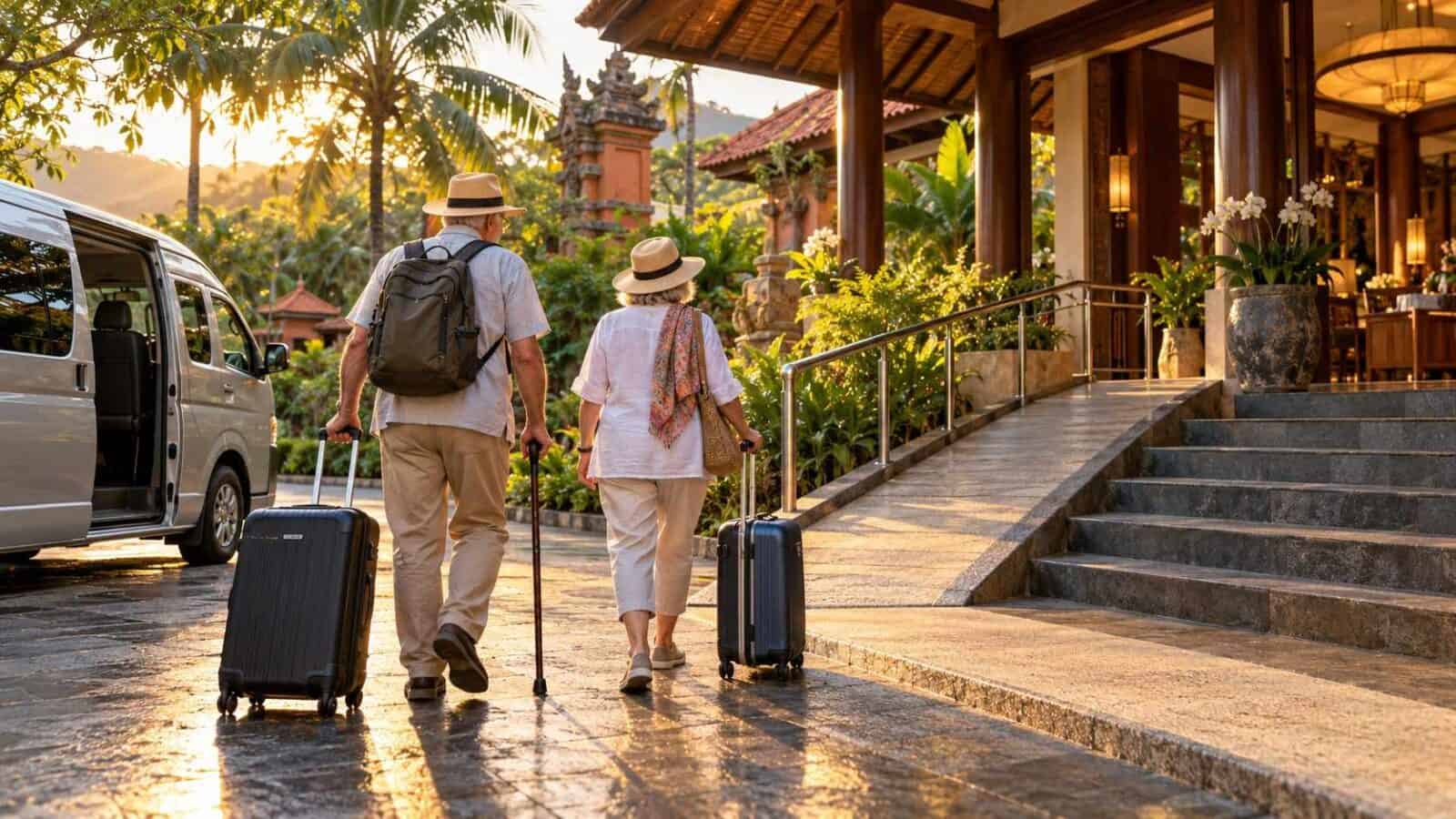
Southeast Asia’s budget travel appeal depends on more than cheap flights and hotel rooms for older tourists. Visitors who need accessible transfers, suitable bathrooms or personal assistance must assess the full journey before booking. In October 2026, new airline benefits and regional tourism commitments bring that calculation into focus. Thai AirAsia has introduced free senior privileges, while ASEAN’s tourism strategy prioritises accessible journeys. Yet these measures cover different parts of a holiday. For travellers and businesses, the pressing issue is whether affordable bookings deliver usable experiences, without additional arrangements that change the final cost or limit a visitor’s independence abroad.
The price that matters is the usable holiday
A discounted room offers limited value if its bathroom cannot accommodate the guest. An inexpensive flight also needs a workable connection between the aircraft, airport exit and accommodation.
Advertisement
Advertisement
That creates a practical question for older travellers: what will the complete, suitable holiday cost?
There is no verified regional figure in the official sources reviewed showing how much extra older visitors pay for accessibility. Nor do those sources establish that Southeast Asia is losing senior bookings because of additional costs.
Advertisement
Advertisement
The evidence supports a narrower finding. Assistance policies differ, some services are free, and travellers need to distinguish included support from arrangements they must organise separately.
Free airline assistance changes the calculation
Vietnam Airlines states that its wheelchair service carries no charge. It also says passengers’ own wheelchairs are transported without counting towards the free baggage allowance.
Advertisement
Advertisement
Its published wheelchair assistance policy therefore challenges any assumption that passengers must automatically purchase premium airport services to receive mobility support.
However, booking requirements matter. The airline requests contact through its offices or contact centre at least 24 hours before departure, or registration through its online form at least 36 hours beforehand.
Advertisement
Advertisement
The policy also distinguishes mobility assistance from personal care. Cabin crew cannot provide help with feeding, personal toileting or administering medication. Passengers with wheelchairs
Travellers needing those services must plan accordingly. A wheelchair booking should never be treated as confirmation that every assistance requirement has been covered.
Thailand adds benefits without an extra charge
On 2 September 2026, Thai AirAsia announced Silver Care for passengers aged 60 and above travelling on its domestic Thailand services.
The official company announcement lists priority check-in, priority baggage handling and a service allowing eligible travellers to sit with a companion, subject to standard-seat availability.
Advertisement
Advertisement
These benefits carry no additional charge. Eligible passengers must present valid identification at check-in, and the privileges extend to one travel companion. Asia Aviation
For passengers comparing fares, that is a useful distinction. Paying more should follow an identified need, rather than uncertainty about what the basic booking already includes.
Budget travel needs a complete cost checklist
The following checklist identifies questions to resolve before payment. It does not imply that providers impose these charges.
| Booking element | What to confirm | Why it affects the budget |
|---|---|---|
| Airport assistance | Included services and booking deadline | Helps avoid purchasing unnecessary extras |
| Ground transport | Boarding method, wheelchair space and full fare | Establishes whether the quoted vehicle is suitable |
| Accommodation | Confirmed room category and bathroom layout | Reduces the risk of needing a different room |
| Excursions | Steps, walking distances and assistance provided | Shows whether additional arrangements are needed |
| Personal support | Tasks covered by staff or a companion | Separates mobility assistance from personal care |
Ask providers to confirm the actual service in writing. Labels such as “senior-friendly” should lead to specific answers about facilities and support.
Singapore shows why public infrastructure matters
Public transport can be central to the affordability calculation.
Singapore’s Ministry of Transport, on a page updated on 25 August 2026, states that all public buses and trains are wheelchair accessible. It also reports barrier-free routes at every train station and bus interchange, and almost all bus stops.
Advertisement
Advertisement
Its inclusive transport guidance describes clearer signs, supportive seating and other features intended to accommodate different needs. All new buses procured from 2024 onwards will have automated ramps. Ministry of Transport
For trip planning, the implication is straightforward: compare accommodation and transport together. A room near a usable public transport route deserves a different assessment from one requiring separate transfers.
This is a budgeting principle, rather than proof that one destination is cheaper overall.
Tourism’s economic scale raises the stakes
Malaysia’s Department of Statistics reports that internal tourism expenditure reached RM236.9 billion in 2025, increasing 15.2%. Employment in tourism-related industries reached 3.7 million people, representing 22.1% of national employment.
These are national tourism measures covering a broad market. They do not isolate older visitors, accessibility spending or losses associated with unsuitable facilities. dosm.gov.my
Their significance is the scale of the businesses involved. Transport, accommodation and visitor services operate within a substantial tourism economy, making clear product information commercially relevant.
Advertisement
Advertisement
Hotels can make comparisons easier by publishing room measurements and bathroom photographs. Tour operators can explain walking demands and assistance limits before accepting payment.
These are practical recommendations, rather than newly announced legal requirements.
ASEAN’s strategy provides a direction
The ASEAN Tourism Sectoral Plan 2026–2030 places accessible and seamless travel alongside workforce development, digital transformation, resilience and sustainability.
The Asian Development Bank’s August 2026 explanation says the adopted roadmap aims to strengthen tourism’s contribution to growth, employment and environmental sustainability. It also identifies physical infrastructure and institutional capacity among the implementation challenges. Asian Development Bank
The plan establishes regional priorities. It does not confirm that every hotel, airport or attraction already meets an individual visitor’s requirements.
For businesses, the opportunity lies in turning those priorities into bookable services with clear conditions. For travellers, published strategies remain a starting point for checking the specific journey.
Advertisement
Advertisement
Traveller FAQs
Is wheelchair assistance always an extra airline charge?
No. Vietnam Airlines publishes a free wheelchair service. Check the operating airline’s conditions and request deadlines.
Does an accessible airport guarantee an accessible holiday?
No. Confirm onward transport, accommodation and excursions separately, including boarding arrangements and bathroom suitability.
What should older travellers request before paying?
Ask for written confirmation of essential facilities, assistance limits, the total price and cancellation conditions.
Affordability starts with certainty
Southeast Asia’s appeal to older tourists will depend partly on how clearly businesses explain the journey they sell. Free assistance and accessible public transport can support affordable holidays, but visitors still need reliable information about transfers, rooms and personal support. The official evidence does not establish a regional accessibility surcharge or prove that older travellers are leaving. It does show why headline prices deserve closer examination. For tourism providers, the practical response is clearer descriptions, confirmed assistance and transparent quotations. For travellers, the strongest booking decision compares the complete usable holiday, including essential support, before committing money to the trip.
Official Sources
- Department of Statistics Malaysia: https://www.dosm.gov.my/portal-main/release-content/tourism-satellite-account-2025
- Asian Development Bank: https://www.adb.org/news/videos/asian-impact-asean-tourism-sectoral-plan-2026-2030-bringing-resilience-amidst
Advertisement
