
Italy Echoes France in Severe European Mass Protests With Travel Disruption Stranding Commuters Throughout Belgium, Portugal and Turkey And Others

Published
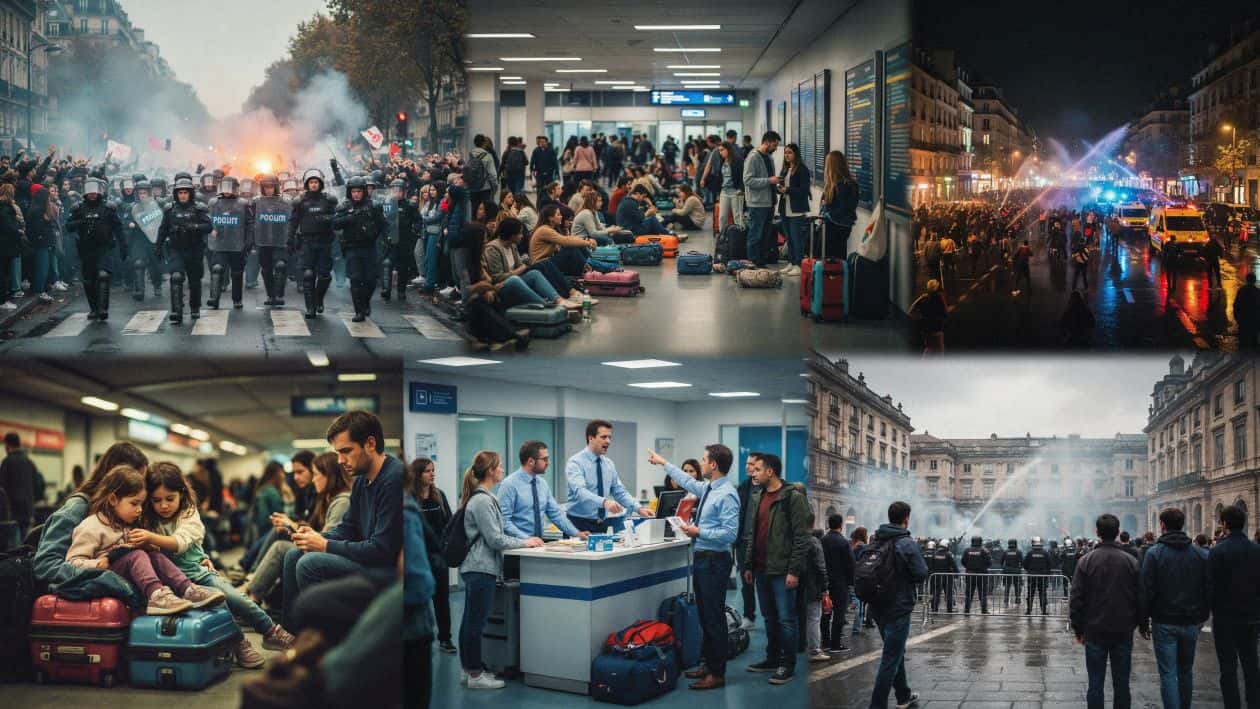
European mass protests travel disruption is gripping France, Italy, Belgium, Albania, Turkey, Austria, and Portugal. The rising cost of living and education reform are driving these demonstrations. The UN High Commissioner for Human Rights issued an official statement on October 20, 2026. The agency cited serious human rights and safety concerns across these nations. Civil unrest is significantly impacting regional stability. The European aviation network faces severe operational bottlenecks.
Travellers must prepare for immediate logistical challenges. Flights are facing widespread cancellations and delays. Major rail operators have heavily reduced their daily schedules. This report provides definitive guidance for navigating these disruptions. It relies entirely on official government and aviation authority sources.
Official government travel advisories update
Major sovereign governments have updated their official travel advisories. The ongoing civil unrest poses a severe risk to tourists. Global Affairs Canada told citizens to exercise a high degree of caution in France. The October 19 advisory explicitly cited demonstrations, local curfews, and looting.
The U.S. State Department issued a stern security alert. They warned that police might use water cannons and tear gas. They strongly advise citizens to avoid areas with significant police activity. Local authorities have enforced temporary nighttime curfews. These restrictions affect parts of Paris, Lyon, Lille, and Marseille.
Advertisement
Advertisement
Italy faces national transport strike action
The UK Foreign, Commonwealth & Development Office (FCDO) updated its Italy guidance. On October 21, they warned of violent riots and looting. The demonstrations have escalated across major northern Italian cities. Affected areas include Milan, Bologna, and Turin.
The FCDO noted an increased military and police presence in Milan. Travellers should prepare for a national transport strike. This severe industrial action is scheduled for October 30. The U.S. State Department cautions that unpredictable demonstrations can rapidly turn violent. Regional emergency services have already reported multiple injuries.
Advertisement
Advertisement
Education reform ignites Belgian riots
Belgium is experiencing fierce domestic pushback against education reform. Demonstrators in Brussels and Liège gathered on October 17. They actively protested deteriorating school conditions and rising education costs.
The Belgian Interior Minister, Bernard Quintin, officially addressed the crisis. He warned that the situation in Brussels escalated beyond mere protest. Police deployed water cannons and tear gas against the rioters. The violent clashes resulted in up to 195 arrests. Government ministries advise avoiding the European Quarter in Brussels entirely. Transit networks in the capital face intermittent closures.
Advertisement
Advertisement
Albania confronts higher educational costs
Albania is facing renewed civil unrest following earlier protests. The “Flamingo Revolution” occurred earlier this year over a luxury resort. A fresh wave of protests erupted across the nation on October 13. Students clashed violently with riot police in the capital.
They demanded immediate relief from higher educational costs. The protesters also targeted widespread government corruption. The Albanian Ministry of Interior has deployed additional security forces. The Australian Government’s Smartraveller service updated its official advisories. They advised citizens to exercise a high degree of caution in Albania.
Austria opposes higher education cuts
Austrian students are heavily mobilising against government austerity measures. On October 22, the Austrian National Union of Students organised mass demonstrations. Tens of thousands of participants gathered in Vienna.
They strongly oppose planned cuts to higher education funding. The protests have caused severe traffic disruptions in the city centre. The Austrian Ministry of the Interior has increased police patrols. Public transport authorities in Vienna have diverted multiple tram lines. The government urges tourists to monitor local media for real-time updates.
Advertisement
Advertisement
Turkey escalates severe social crackdowns
Turkey is experiencing widespread unrest as part of the regional narrative. However, recent October 2026 official records highlight targeted government crackdowns. The Justice Ministry launched the “My Family Is Safe” operation.
This strict operation aggressively targets the LGBTQI+ community. The government alleges they are violating public morality laws. International human rights organisations have strongly condemned these state actions. The Smartraveller service updated its official advisory for Turkey on October 20. The Australian government urged travellers to exercise a high degree of caution.
Passenger rights during extraordinary circumstances
The European aviation sector is experiencing severe operational strain. Travellers must understand their legal rights under EU Regulation 261/2004. Civil unrest and external strikes are classified as extraordinary circumstances.
Airlines must offer a full refund or re-routing if your flight is cancelled. They must also provide meals and overnight accommodation if necessary. However, extraordinary circumstances exempt airlines from paying fixed financial compensation. Internal airline staff strikes are not considered extraordinary circumstances. You can claim compensation if airline staff strike.
| Flight Distance | Minimum Delay | Potential EU261 Compensation |
| Under 1,500 km | 2 hours | €250 (unless extraordinary) |
| 1,500 km to 3,500 km | 3 hours | €400 (unless extraordinary) |
| Over 3,500 km | 4 hours | €600 (unless extraordinary) |
Managing European rail network disruptions
European rail networks are heavily impacted by the ongoing strikes. Train delays are a major consequence of the civil unrest. Passengers using the French TGV network have specific compensation rights.
Delays exceeding 30 minutes qualify for tiered financial compensation. The refund ranges from 25% to 75% of the ticket price. However, this refund is not issued automatically by the operator. Passengers must actively claim the compensation through official channels. The European Union Agency for Railways advises retaining all travel documents.
Advertisement
Advertisement
Avoiding preemptive travel cancellation errors
Many travellers panic and cancel their trips prematurely. Cancelling a trip out of fear does not entitle you to a refund. Standard travel insurance policies have strict exclusion clauses for fear-based cancellations.
Insurance does not cover cancellations based on personal concern. You must wait for a qualifying insured event or official mandate. The UK Civil Aviation Authority (CAA) provides clear guidance on this issue. Government advisories recommend contacting your airline or transport provider first. You should seek refunds or alternative arrangements before paying out-of-pocket.
Retaining vital disruption confirmation documents
Document retention is crucial for successful insurance and compensation claims. You must retain all receipts for alternative transport and accommodation. You must obtain written confirmation of the disruption from the transport provider.
This evidence is mandatory for processing EU261 and travel insurance claims. The International Air Transport Association (IATA) urges passengers to verify flight status. You should check status updates exclusively through official airline applications. Do not rely on third-party booking platforms for real-time operational data. They often lack direct API synchronisation during mass disruption events.
Immigration risks during transport strikes
Severe transport delays can create complex legal and immigration repercussions. Visa holders risk overstaying their permitted limits due to cancelled flights. The Schengen Area strictly enforces the 90/180-day short-stay visa rule.
Overstaying can result in heavy fines, deportation, or future entry bans. The European Border and Coast Guard Agency (Frontex) advises immediate action. Affected travellers must contact local immigration authorities immediately. They must request an official visa extension due to force majeure. Carry written proof of your cancelled outbound transportation at all times.
Advertisement
Advertisement
Hotel bottlenecks and insurance exclusions
The mass flight cancellations have created severe accommodation bottlenecks. Airport hotels in Paris, Milan, and Brussels are operating at maximum capacity. Airlines hold a duty of care to provide overnight accommodation.
However, they often struggle to secure rooms during massive regional disruptions. Passengers may need to book their own emergency accommodation. You can claim these reasonable expenses back from the airline later. You must ensure your expenses remain proportionate and well-documented. Luxury hotel bookings will likely be rejected by airline claims departments.
Essential strategies for stranded passengers
Stranded passengers must adopt clear strategies to navigate the chaos. Do not leave the secure transit area of the airport unnecessarily. Re-entering through security will subject you to massive queues.
Utilise airline customer service phone lines rather than airport desks. Telephone agents often have greater system access to reroute stranded passengers. The European Union Aviation Safety Agency (EASA) recommends downloading official apps. These applications provide the fastest access to digital rebooking systems. Always carry essential medication and basic provisions in your hand luggage.
Assessing insurance policy riot coverage clauses
Travel insurance policies contain highly specific clauses regarding civil unrest. Most standard policies explicitly exclude claims arising from illegal acts. Riots and civil commotion are often categorised as excluded peril events.
You must carefully review your policy wording regarding strike action. Some premium policies cover disruptions caused by unannounced strikes. Announced strikes, such as the October 30 Italian transport strike, are excluded. You cannot claim if you purchased insurance after the strike was announced. The Financial Conduct Authority (FCA) regulates these insurance terms in the UK.
Advertisement
Advertisement
Broader impact on regional tourism
The current crisis threatens to destabilise the European tourism economy. The World Travel & Tourism Council (WTTC) is closely monitoring the situation. A prolonged period of unrest will severely depress winter booking figures.
Small hospitality businesses in affected city centres face significant revenue losses. The recurring nature of these protests damages international consumer confidence. The travel industry requires urgent governmental intervention to restore operational stability. Governments must balance public order with the right to peaceful assembly. However, the immediate priority remains passenger safety and network resilience.
Final consumer utility analysis
Travellers must prioritise their personal safety above all logistical concerns. Always adhere strictly to the guidance of local law enforcement. Register your travel plans with your respective foreign affairs ministry.
Keep digital and physical copies of your passport and insurance documents. Maintain flexible travel itineraries to accommodate sudden transport schedule changes. Do not attempt to cross active protest zones or police barricades. The situation across the continent remains highly volatile and deeply unpredictable. You must remain incredibly vigilant regarding the European mass protests travel disruption.
Advertisement
