
European Countries Reveal Shocking Thanksgiving Secrets With Autumn Feasts and Forgotten Cultural Customs Today

Published
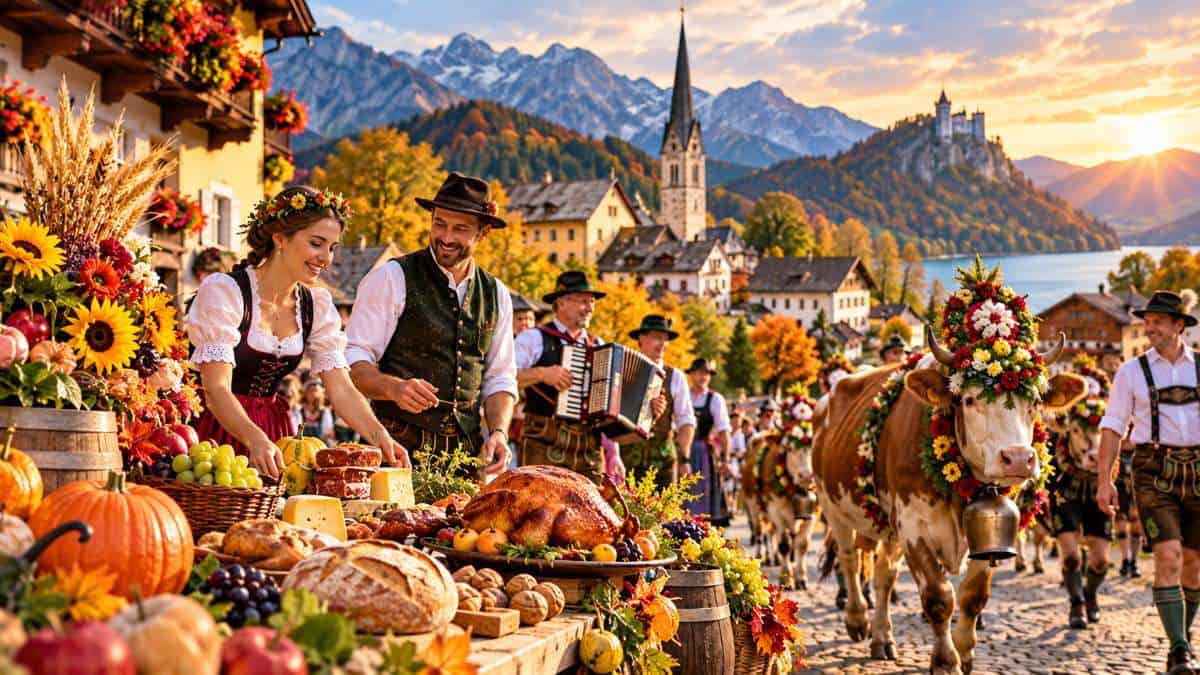
Across Europe, Thanksgiving takes on a fascinating meaning through autumn feasts, harvest celebrations, and cultural customs that have survived for generations. European countries reveal shocking Thanksgiving secrets through traditions that connect local communities with the land, seasonal food and the importance of gratitude. While the United States celebrates Thanksgiving with a famous annual feast, many European destinations offer their own remarkable ways to honour the harvest and welcome autumn. From colourful village festivals to traditional dishes prepared with seasonal ingredients, these celebrations reveal a lesser-known side of European culture. Moreover, forgotten cultural customs give travellers a chance to discover the stories, values, and local identities behind each celebration. Autumn feasts also bring families and communities together, creating memorable experiences beyond conventional sightseeing. Travel And Tour World urges readers to explore how European countries preserve these extraordinary traditions, uncover the history behind their celebrations, and discover why these cultural experiences deserve a place on every autumn travel list.
Germany, Austria, Italy and More: European Countries Where Harvest Festivals Capture the True Spirit of Thanksgiving
While Thanksgiving is widely associated with the United States, the values behind the celebration have deep roots across Europe. From Germany’s harvest thanksgiving ceremonies to Austria’s colourful Alpine cattle processions, European communities have long marked the changing seasons with food, gratitude and gatherings.
Advertisement
Advertisement
These traditions do not all share the same history, and most European countries do not observe American Thanksgiving as a national holiday. However, many celebrate the harvest, give thanks for agricultural abundance and bring communities together through traditional meals, religious services and local festivals.
Germany, Austria, Switzerland, the Netherlands, the United Kingdom and Italy offer some of the strongest examples. Poland and Czechia add rich harvest customs, while France and Hungary contribute seasonal food traditions associated with the arrival of winter. For travellers, these celebrations reveal a different side of Europe. Beyond its famous cities, historic landmarks and Christmas markets, the continent offers opportunities to explore rural life, traditional cuisine and the enduring relationship between people and the land.
Advertisement
Advertisement
Anup Kumar Keshan, Founder and Editor-in-Chief of Travel And Tour World, said, “Europe’s harvest traditions reveal that Thanksgiving is about far more than a single holiday. From Germany’s harvest celebrations to Italy’s agricultural customs, these experiences connect travellers with local culture, seasonal food, community spirit, and the enduring importance of gratitude.”
Germany Celebrates the Harvest Through Erntedankfest
Germany provides one of the clearest examples of a European tradition that reflects the spirit of Thanksgiving. Known as Erntedankfest, the country’s harvest thanksgiving celebration expresses gratitude for the year’s agricultural produce and the work involved in bringing food to the table.
Advertisement
Advertisement
Many communities observe the occasion in September or October. Some churches hold their celebrations on the first Sunday in October, although dates and programmes vary between locations.
Churches and public spaces may feature carefully arranged displays of fruit, vegetables, grain, flowers and other harvest produce. Religious services provide an opportunity to reflect on the importance of agriculture, while local celebrations bring residents together around regional food and community activities.
The tradition carries a meaning that extends beyond the harvest itself. It recognises the dependence of everyday life on farmers, favourable growing conditions and the natural environment.
For visitors, the experience can offer a more intimate understanding of German culture than a conventional sightseeing itinerary. Rather than concentrating exclusively on major cities, travellers can explore smaller communities where agricultural traditions remain visible in local life.
The celebration also highlights an important difference between European harvest thanksgiving and the American holiday. Germany’s observances often retain a strong connection to church services and agricultural customs, rather than centring on a single nationwide family meal.
Food sharing and charitable donations can also form part of local activities, reinforcing the idea that abundance carries a responsibility to help others.
Advertisement
Advertisement
Austria Combines Harvest Gratitude With Spectacular Alpine Traditions
Austria offers another compelling example through its harvest thanksgiving observances and the distinctive Alpine custom known as Almabtrieb.
Erntedank celebrations recognise the year’s agricultural bounty. They can include church services, harvest displays and community gatherings that acknowledge the work of farmers and the importance of the land.
Almabtrieb adds a striking visual dimension to the autumn season. The tradition marks the return of cattle from mountain pastures to their home villages after spending the warmer months grazing in Alpine meadows.
In participating communities, farmers decorate cattle with flowers, colourful ornaments and large bells. The animals move through villages in processions that can attract residents and visitors alike. Music, regional food and local festivities may accompany the occasion.
The celebrations take place at different times, depending on the region, weather conditions and local farming practices. September and October are particularly relevant months for travellers researching these traditions.
Although Almabtrieb is not itself a Thanksgiving holiday, its connection to agricultural life makes it an excellent example of the wider seasonal spirit. The safe return of livestock, the end of summer grazing and the preparation for winter all carry significance for farming communities.
Advertisement
Advertisement
Visitors can combine these cultural experiences with Alpine scenery, traditional villages and regional cuisine. This creates an autumn travel experience that brings together landscape, food and living heritage.
For travel planners, Austria demonstrates how a harvest-focused itinerary can offer more than a festival visit. It can also introduce travellers to the seasonal rhythms that have shaped rural communities for generations.
Switzerland Celebrates Autumn Through Food and Regional Customs
Switzerland approaches the harvest season through a varied collection of regional traditions. Its cultural diversity means that celebrations differ between cantons and language communities, giving travellers several distinct experiences within one country.
One notable example is Bénichon, a traditional celebration associated particularly with the French-speaking canton of Fribourg. The event combines communal dining, local customs and a festive atmosphere linked to agricultural life and the return of cattle from Alpine pastures.
Traditional Bénichon meals can be elaborate, with several courses and regional specialities. Food is central to the occasion, making the celebration an important expression of local identity as well as a gathering of families and communities.
Autumn also brings wine celebrations, chestnut events and seasonal markets to different parts of Switzerland. These activities reflect the variety of agricultural products associated with the country’s regions.
Advertisement
Advertisement
The connection with Thanksgiving lies in the shared emphasis on food, community and appreciation for the year’s produce. However, these customs have their own histories and should not be confused with a single national harvest thanksgiving holiday.
For travellers, the experience offers an opportunity to discover Switzerland beyond its well-known mountain resorts. Local markets, village gatherings and traditional meals provide a closer look at regional culture.
Seasonal food can also become a practical starting point for exploring different areas. Visitors can learn how local ingredients, farming practices and culinary traditions influence the way communities celebrate autumn.
The Netherlands Offers a Historical Connection to American Thanksgiving
The Netherlands brings a particularly interesting historical dimension to the story.
The city of Leiden has a connection to the English Pilgrims who lived there before travelling to North America. The community spent time in the Netherlands before the Mayflower voyage of 1620, making Leiden an important place in the wider history surrounding the development of the American Thanksgiving tradition.
A Thanksgiving gathering has been held at Leiden’s Pieterskerk, reflecting this historical relationship. The connection offers travellers a chance to explore the European background of a holiday now strongly associated with the United States.
Advertisement
Advertisement
The Netherlands also has a Protestant tradition known as Dankdag, or a day of thanksgiving. Traditionally observed on the first Wednesday in November in some church communities, it provides an opportunity to give thanks for crops, work and other blessings.
These customs are distinct from American Thanksgiving and are not equivalent to a nationwide public holiday. Nevertheless, they show how gratitude has found expression in Dutch religious and historical traditions.
For visitors, Leiden offers a different perspective on the relationship between Europe and North America. Historic streets, churches and cultural sites can help place the Pilgrims’ experience within its original European setting.
The city also provides a strong narrative for travel writers. Rather than treating Thanksgiving as an exclusively American creation, its history reveals the movement of people, religious ideas and traditions across the Atlantic.
The United Kingdom Keeps Harvest Festival Traditions Alive
Across the United Kingdom, Harvest Festival remains a familiar expression of gratitude for food and agricultural abundance.
Many churches and communities organise harvest services in late September or early October, although observances take place at different times. Decorations may include fruit, vegetables, grain and flowers, while donations of food can support local charities and people facing hardship.
Advertisement
Advertisement
The tradition reflects a simple idea: the harvest is not only a source of food but also an opportunity to recognise the work behind it and share its benefits with others.
In some communities, schools and local organisations participate in harvest activities. These gatherings help introduce younger generations to the importance of farming, seasonal food and community support.
The British tradition differs from the familiar American Thanksgiving meal. There is no equivalent nationwide holiday built around a single date and a standard menu. Instead, celebrations often centre on local churches, schools and community organisations.
For travellers, the appeal lies in discovering these customs within their local setting. Rural churches, historic villages, autumn markets and agricultural communities can provide insight into the country’s seasonal traditions.
The experience is also a reminder that harvest celebrations are not simply historical curiosities. In many places, they continue to offer a practical way to support others and acknowledge the importance of food security.
Italy Connects Agricultural Gratitude With Its Food Culture
Italy’s relationship with harvest traditions is closely connected to agriculture, regional food, and the cultural importance of the land.
Advertisement
Advertisement
The Giornata del Ringraziamento, or Day of Thanksgiving, is an agricultural thanksgiving observance associated with the Italian Catholic community. Traditionally linked to November, it provides an opportunity to reflect on farming, the year’s produce and the relationship between people and the natural environment.
The occasion is associated with church and agricultural communities rather than a nationwide public holiday comparable to American Thanksgiving. Local practices and programmes can differ.
Italy’s wider autumn calendar also offers a rich selection of food-related experiences. Depending on the region and timing, travellers may encounter grape harvest activities, olive harvesting, wine events and celebrations of seasonal produce.
These activities help explain why food has such an important place in Italian cultural identity. Ingredients are not merely part of a meal; they connect landscapes, farming traditions, family recipes and regional history.
For visitors, the agricultural side of Italy offers an alternative to itineraries focused entirely on major cities and famous monuments. Rural areas can reveal how seasonal work shapes local life and culinary traditions.
The Thanksgiving connection is therefore less about reproducing a particular holiday meal and more about recognising the people, land and labour that make food possible.
Advertisement
Advertisement
Poland Celebrates the Completion of the Harvest
Poland’s Dożynki is a traditional harvest festival that marks the completion of agricultural work, particularly the grain harvest.
The celebration has a strong community focus. Depending on the location, events may include decorated harvest wreaths, folk costumes, processions, music, dancing, and regional food.
Harvest wreaths are an important symbol. They represent the produce gathered from the fields and the effort required to bring the season’s work to completion.
Local and regional celebrations can differ considerably in scale and timing. Some take place in rural communities, while larger events may attract visitors interested in traditional music, crafts and agricultural heritage.
The meaning of Dożynki extends beyond the successful collection of crops. It also recognises cooperation between farming families and communities, making it a strong example of gratitude expressed through shared cultural practices.
Travellers interested in heritage can use these festivals to discover aspects of Poland that may be overlooked on a conventional city break.
Advertisement
Advertisement
The celebrations also demonstrate that the values associated with Thanksgiving can be expressed through public festivities rather than a private family dinner. Music, symbolism and collective participation become ways to acknowledge the year’s work and celebrate the community.
Czechia Preserves Its Own Harvest Celebrations
Czechia has its own harvest traditions, including Dožínky, which marks the completion of the grain harvest.
Like related celebrations in neighbouring Central European countries, Dožínky can feature harvest wreaths, traditional clothing, folk music, dancing and regional food. Events vary between locations, reflecting local customs and the agricultural calendar.
The celebration recognises the end of an important period of work. Harvesting has historically demanded considerable effort and cooperation, making its completion a natural occasion for communities to gather.
For visitors, these festivals offer an opportunity to experience Czech cultural heritage outside the country’s best-known urban attractions.
Regional food and traditional performances can help travellers understand how agricultural life has influenced local customs. The setting may also introduce visitors to smaller towns and rural areas that receive less attention than Prague.
Advertisement
Advertisement
However, the timing and scale of individual celebrations should be checked locally before planning a visit. Dožínky is not one uniform national event with a single date.
Its relevance to the wider Thanksgiving story comes from the shared emphasis on agricultural achievement, gratitude and community participation.
France and Hungary Add Seasonal Feasts to the Story
France and Hungary provide another perspective through traditions associated with Saint Martin’s Day, celebrated on 11 November.
In parts of Europe, the feast has historical links to rural life, seasonal food and the transition towards winter. Its customs differ by country and locality, so it is important not to describe every observance as a harvest thanksgiving festival.
In France, Saint Martin’s Day traditions in some regions are associated with seasonal celebrations, food and wine. These customs offer an opportunity to explore how the agricultural calendar has influenced local festivities.
Hungary has a particularly recognisable culinary connection to the occasion. Saint Martin’s Day is associated with goose dishes and wine, and traditional meals play an important part in the seasonal celebration.
Advertisement
Advertisement
For travellers, both countries offer a food-led way to explore autumn culture. Local restaurants, regional specialities and seasonal events can reveal how communities respond to the changing weather and the approach of winter.
The connection to Thanksgiving is broader than a direct historical equivalence. Shared meals and seasonal abundance provide common themes, while each country’s customs retain their own religious, cultural and culinary meanings.
This distinction is important when comparing European traditions. Not every autumn feast is a thanksgiving festival, but many offer insight into the values of hospitality, community and appreciation for food.
Why These Traditions Matter to Autumn Travel
The growing appeal of cultural and food-focused travel makes European harvest traditions an interesting subject for autumn itineraries. They allow visitors to explore local identity through experiences that go beyond sightseeing.
Germany and Austria offer clear examples of harvest gratitude and rural customs. Switzerland provides regional feasts and Alpine traditions. Leiden contributes a historical connection to the American holiday, while Britain and Italy demonstrate how thanksgiving can remain connected to religious observances and agriculture.
Poland and Czechia add folk celebrations that place the harvest at the centre of community life. France and Hungary offer further opportunities to explore seasonal food and traditions associated with November.
Advertisement
Advertisement
However, travellers should remember that these events are not available everywhere throughout the autumn. Dates, activities and public access vary, and some celebrations are intended primarily for local communities.
Checking official tourism information and local event calendars before travelling is therefore essential. Visitors should also respect religious ceremonies and community customs rather than assuming that every gathering is a tourist attraction.
The most rewarding itineraries may combine a festival with nearby villages, regional markets, local food producers and cultural landmarks. This approach creates a broader understanding of the region instead of reducing the experience to a single event.
Europe’s Own Expressions of Gratitude
Thanksgiving may have a particularly strong association with the United States, but the values behind the holiday are not confined to one country.
Across Europe, harvest celebrations, religious observances, seasonal feasts and rural customs provide different ways to recognise agricultural abundance and bring people together.
Some traditions centre on churches and charitable giving. Others feature decorated cattle, harvest wreaths, folk music or elaborate regional meals. Their histories differ, but they share an appreciation for food, community and the work that sustains everyday life.
Advertisement
Advertisement
For travellers, these customs offer a meaningful reason to explore Europe during autumn. They reveal how local communities preserve their heritage while continuing to adapt to changing seasons and modern lifestyles.
The result is a richer picture of the continent, where gratitude is expressed not through one universal holiday but through a diverse collection of traditions that remain closely tied to the land, the table and the people who gather around it.
Advertisement
