
Poreč Teams Up With Mallorca and More as Global Travellers Discover Europe’s Ultimate Mix of Crystal Waters, Culture and Luxury

Published
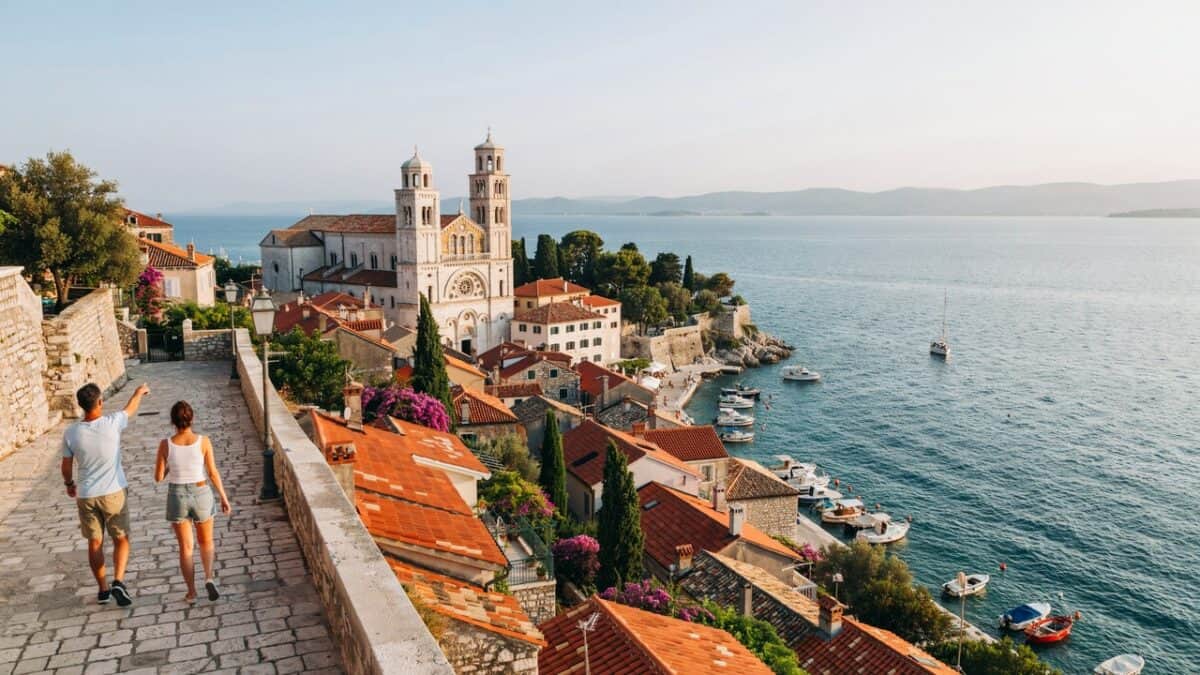
Image generated with Ai
Poreč teams up with Mallorca and more as global travellers discover Europe’s ultimate mix of crystal waters, culture and luxury. Across Europe, Poreč, Mallorca and more coastal destinations are attracting global travellers seeking crystal waters, rich culture and memorable luxury. Moreover, these destinations bring together beautiful beaches, local flavours, historic attractions and refined stays. As a result, travellers can experience far more than a traditional beach holiday. Travel And Tour World explores how Poreč teams up with Mallorca and more to showcase Europe’s crystal waters, culture and luxury. From coastal escapes to cultural discoveries, this story reveals why these European destinations deserve attention now. Read on.
European Beach Resorts Beyond Pical Resort Croatia: Detailed Visitor Data, Resort Comparisons and Traveller Guide
Pical Resort Croatia has entered Poreč’s tourism landscape at a time when European beach destinations are attracting travellers who want more than a conventional seaside break.
The new five-star Pical Resort has 514 accommodation units, indoor and outdoor pools, landscaped beaches, cycling routes, sports facilities and a year-round wellness and spa centre. It is only a short walk from Poreč’s historic centre.
Its development is particularly significant because the resort connects accommodation with public infrastructure, gastronomy, recreation and cultural experiences.
Advertisement
Advertisement
The project was announced as a €139 million investment, with more than 700 new jobs planned during its development. Earlier project information described 513 accommodation units, while the current official Istrian tourism portal lists 514 units.
The resort therefore fits into a wider European movement toward integrated coastal holidays.
Advertisement
Advertisement
Travellers can spend time on the beach, but also explore historic centres, cycling trails, restaurants, wellness facilities and regional food.
That model can be compared with several established European coastal destinations, including Mallorca, Algarve, Crete and Cyprus.
Advertisement
Advertisement
Pical Resort Croatia by the numbers
| Indicator | Pical Resort / Poreč | Traveller significance |
|---|---|---|
| Resort category | 5-star | Premium coastal accommodation |
| Accommodation units | 514 | Large-scale resort inventory |
| Restaurants | 8 listed by current Istrian portal | Broad dining choice |
| Bars | 10 | Multiple leisure and social spaces |
| Wellness | Year-round | Supports shoulder-season travel |
| Swimming facilities | Indoor and outdoor pools | Useful beyond peak beach weather |
| Beach facilities | Landscaped beaches | On-site seaside access |
| Cycling | Dedicated cycling routes | Active holiday option |
| Historic centre | Walking distance | Easy culture-and-beach combination |
| Signature fine dining | Harry’s Piccolo Poreč | High-end culinary experience |
| Istrian destination | Poreč | Gateway to wider Istria |
The official Istrian tourism portal says the resort has eight restaurants and ten bars, while its 2026 magazine describes an expanded food-and-beverage concept.
For travellers, the important point is not simply the number of facilities.
The combination allows visitors to construct different types of holidays without changing accommodation.
Families can prioritise pools and beaches.
Advertisement
Advertisement
Couples can combine wellness with fine dining.
Active travellers can use cycling and walking routes.
Culture-focused visitors can walk into Poreč and explore its historic attractions.
Poreč tourism statistics show the destination’s scale
Poreč was already one of Croatia’s most important coastal destinations before the new resort opened.
Croatia’s national statistics office recorded 3.3 million tourist nights in Poreč during 2025, placing it third nationally behind Rovinj and Dubrovnik for total realised tourist nights. Poreč’s total was approximately 2.2% higher than in 2024.
Foreign visitors accounted for approximately 3.1 million of those Poreč nights, showing the destination’s strong international orientation.
Advertisement
Advertisement
The official Istrian tourism authority reported 3,457,090 tourist nights and 642,543 arrivals in Poreč during 2023. Nights increased by around 1% from 2022, while arrivals increased by about 5%.
The earlier 2021 figures demonstrate the speed of the post-pandemic recovery.
Croatia’s statistical office recorded 2.4 million Poreč tourist nights in 2021, while the national tourism ministry reported approximately 431,000 arrivals.
Poreč five-year tourism comparison
| Year | Poreč tourist arrivals | Tourist nights | Key observation |
|---|---|---|---|
| 2021 | ~431,000 | ~2.4m | Strong pandemic-era recovery |
| 2022 | — | ~3.42m* | Major recovery year |
| 2023 | 642,543 | 3.457m | Arrivals +5%; nights +1% |
| 2024 | — | ~3.2m | National statistics recorded 3.2m commercial nights |
| 2025 | — | ~3.3m | Nights +2.2% year on year |
*2022 figure is derived from the official 2023 Poreč statement reporting 3,457,090 nights as approximately 1% above 2022. The commercial-accommodation series published by Croatia’s national statistics office uses a different coverage from Poreč’s eVisitor destination series.
This distinction matters.
The Poreč Tourist Board’s eVisitor data can include commercial and non-commercial tourism activity, while Croatia’s national commercial-accommodation statistics have their own coverage.
Advertisement
Advertisement
Travellers and publishers should therefore avoid mixing the two series without explaining the methodology.
How Poreč compares with other major European beach destinations
The following destinations are comparable examples rather than a ranking.
They illustrate how different European coastal markets combine beaches, accommodation, food, culture and outdoor activities.
Mallorca, Spain: A large island market with exceptional international demand
Mallorca represents a substantially larger tourism market than Poreč. Eurostat recorded 51.2 million international tourist nights in Mallorca in 2024, the highest figure among EU NUTS 3 regions. In 2023, the comparable figure was 47.2 million. Eurostat had already recorded 44.4 million international nights in 2022 and 19.3 million in 2021. The island is suited to travellers who want a combination of beaches, mountain landscapes, historic towns and food. Palma works particularly well for travellers interested in architecture and urban culture, while Sóller, Deià and the Tramuntana area provide a different landscape. Beach travellers can explore the bays around Alcúdia, Cala d’Or and the southwest coast. Food should include Mallorcan specialities such as pa amb oli, tumbet, sobrasada and fresh seafood. A practical seven-day itinerary could begin with two nights in Palma, followed by three nights around the northern or eastern coast and two nights around the Tramuntana area. Travellers should allow additional time for driving because Mallorca’s attractions are widely dispersed. The official Balearic statistics system also shows how strongly seasonal the market remains, with visitor volumes rising sharply during spring and summer. For 2025, IBESTAT’s FRONTUR operation recorded 13,557,606 tourists whose main destination was Mallorca, up 1.35% from 2024. The same official dataset recorded 19,053,592 tourists across the Balearic Islands in 2025. Mallorca therefore remains an enormous international beach destination, but its scale also means travellers should plan accommodation and transport well ahead during the busiest months. For visitors seeking quieter conditions, May, early June, late September and October can provide a different experience, although weather and individual attraction schedules should always be checked before departure.
Mallorca tourism data
| Year | International tourist nights | Other official indicator |
|---|---|---|
| 2021 | 19.3m | Eurostat international nights |
| 2022 | 44.4m | Eurostat international nights |
| 2023 | 47.2m | Eurostat international nights |
| 2024 | 51.2m | Eurostat international nights |
| 2025 | — | 13.56m main-destination tourist arrivals |
The 2021-2024 series is directly comparable because it uses Eurostat’s international tourist-night measure. The 2025 figure uses IBESTAT/INE’s FRONTUR visitor-arrival measure and should not be mathematically compared with the earlier night figures.
Algarve, Portugal: A beach destination built around coast, food and longer stays
The Algarve provides another useful comparison because its tourism economy combines beaches with golf, food, nature and extensive accommodation infrastructure. Official Portuguese tourism data show 10.87 million tourist nights in 2021, followed by 19.16 million in 2022. The region then recorded approximately 20.38 million nights in 2023, 20.7 million in 2024 and 20.8 million in 2025. The latest 2025 data also recorded around 5.3 million guests, while foreign visitors generated approximately 16 million nights, or 76.8% of the regional total. Travellers can base themselves in Lagos, Albufeira, Vilamoura, Tavira or smaller coastal communities depending on the type of holiday they want. Lagos works well for dramatic cliffs, beaches and boat excursions. Tavira offers a quieter cultural atmosphere and access toward the eastern Algarve. Albufeira provides a larger visitor infrastructure, while Vilamoura is strongly associated with marina life and golf. Local food is an important part of the experience. Visitors can try grilled sardines, cataplana seafood, octopus dishes, regional cheeses and almond-based desserts. A seven-day trip could divide the stay between western and eastern Algarve. Three nights around Lagos or Portimão can cover beaches and coastal excursions, while two nights around Albufeira or Vilamoura can focus on leisure facilities. The final two nights around Tavira allow visitors to experience a quieter eastern coastline. The official Algarve tourism sustainability report also recorded a reduction in seasonality from 44.0% in 2022 to 40.8% in 2025. RevPAR increased from €64.10 in 2022 to €78.50 in 2025. For travellers, this suggests that the Algarve increasingly supports travel beyond the classic peak summer period.
Advertisement
Advertisement
Algarve five-year tourism comparison
| Year | Tourist nights | Additional data |
|---|---|---|
| 2021 | 10.87m | 2.73m guests |
| 2022 | 19.16m | 4.77m guests |
| 2023 | 20.38m | 5.13m guests |
| 2024 | 20.7m | 5.2m guests |
| 2025 | 20.8m | 5.3m guests |
The Portuguese data are based on tourist accommodation statistics and are not directly equivalent to Mallorca’s FRONTUR visitor-arrival series.
Crete, Greece: A beach holiday combined with archaeology and local food
Crete offers a different interpretation of the European beach resort model because its coastline is closely connected with archaeology, mountain landscapes, villages and food traditions. Regional government information states that tourist arrivals exceeded 6.2 million in 2025, representing a 5.8% increase from 2024. Official Greek tourism statistics show the wider country’s recovery clearly: July tourist-accommodation arrivals increased from 3.765 million in 2021 to 5.507 million in 2022, 6.105 million in 2023, 6.286 million in 2024 and 6.389 million in July 2025. Nights during those July periods rose from 16.706 million to 27.445 million, 29.461 million, 30.501 million and 31.042 million respectively. For a Crete holiday, travellers can divide their time between beaches, archaeological attractions and food experiences. Heraklion provides access to the Palace of Knossos and major museums. Chania offers a historic Venetian harbour and nearby beaches. Rethymno provides another historic base, while the south coast gives travellers access to a quieter landscape. Food should include dakos, Cretan cheeses, grilled seafood, lamb, vegetables cooked with olive oil and local herbs. A seven-day plan can begin with two nights in Heraklion, followed by three nights in western Crete around Chania, then two nights around Rethymno or the southern coast. Travellers interested in hiking can add the Samaria Gorge, subject to seasonal access and local safety information. Crete is considerably larger than a conventional resort zone, so choosing a base carefully can reduce unnecessary driving. The island also demonstrates why travellers increasingly combine beach time with culture and food. Its tourism offer can work for families, couples, active travellers and visitors interested in archaeological heritage.
Crete data snapshot
| Measure | Latest documented figure |
|---|---|
| 2025 arrivals | More than 6.2m |
| 2025 change | +5.8% versus 2024 |
| Crete coastline | About 1,040 km |
| 2023 tourist arrivals in one tourism study using official source data | 6.327m |
| 2023 overnight stays in same source series | 34.34m |
| 2024 overnight stays in same source series | 46.71m |
The final two years in the lower section come from a research publication using official tourism data, so they should be kept separate from the regional government’s 2025 arrival statement.
Cyprus: A Mediterranean resort island with strong international demand
Cyprus offers another model for travellers considering a European beach holiday. Official Cypriot statistics recorded 4,534,073 tourist arrivals in 2025, compared with 4,040,200 in 2024, an increase of 12.2%. Tourism revenue reached an estimated €3.696 billion in 2025, compared with €3.209 billion in 2024. Average expenditure per tourist was €815.16. Holidays accounted for 79.8% of tourist trips. Paphos and Limassol work well for travellers interested in combining seaside stays with culture, while Ayia Napa and Protaras are particularly associated with beaches and resort facilities. Larnaca offers a useful alternative for visitors wanting a mixture of urban life, waterfront areas and heritage. Cypriot cuisine is another reason to explore beyond the hotel. Travellers can try halloumi, souvlaki, mezze, fresh fish and traditional sweets. A seven-day itinerary could include three nights in Paphos, two nights around Protaras or Ayia Napa and two nights in Larnaca or Limassol. Paphos can provide the cultural component, including archaeological sites and harbour areas. The eastern coast can then focus on beaches and swimming. The final section of the trip can be dedicated to food and city exploration. Cyprus is also useful for travellers wanting a resort holiday that does not require remaining inside one property. Official statistics show that 96.8% of traveller arrivals and departures in 2025 were by air, highlighting the importance of aviation access to the island.
Cyprus five-year tourism context
| Year | Key official tourism measure |
|---|---|
| 2021 | Pandemic-recovery year |
| 2022 | Strong recovery in tourism activity |
| 2023 | International accommodation nights continued recovering |
| 2024 | 4,040,200 tourist arrivals |
| 2025 | 4,534,073 tourist arrivals |
Eurostat reported that Cyprus recorded a 20% increase in tourism nights in 2023 compared with 2022, while the Cypriot Statistical Service provides the latest official arrival and revenue data for 2024 and 2025.
Croatia’s wider Adriatic coast provides several alternatives
Travellers considering Pical Resort Croatia should also look beyond Poreč.
Advertisement
Advertisement
Croatia’s national statistics show that Rovinj recorded 4.2 million tourist nights in 2025, matching Dubrovnik’s total.
Poreč followed with 3.3 million, while Split recorded 3.2 million.
This gives travellers several different coastal options within one country.
| Croatian destination | 2025 tourist nights | Travel character |
|---|---|---|
| Rovinj | 4.2m | Historic Istrian coast |
| Dubrovnik | 4.2m | Heritage and Adriatic scenery |
| Poreč | 3.3m | Beaches, family travel, gastronomy |
| Split | 3.2m | City, islands and coastal excursions |
| Medulin | 2.5m | Beaches and outdoor recreation |
| Umag | 2.5m | Istrian coast and active holidays |
Poreč’s 2024 result was approximately 3.2 million nights, while the 2025 result reached 3.3 million.
What travellers can eat around Poreč
Pical Resort gives visitors access to a sophisticated dining programme, but travellers should also explore Istrian cuisine outside the property.
The region is particularly associated with olive oil, seafood, truffles, wine, local pasta and seasonal produce.
Advertisement
Advertisement
Harry’s Piccolo Poreč is the resort’s high-profile fine-dining addition.
The official Istrian tourism authority says the restaurant is connected with chefs Matteo Metullio and Davide De Pra, whose Trieste restaurant has two Michelin stars.
Its concept combines Croatian, Italian and Slovenian culinary influences.
For a more complete Istrian food itinerary, travellers can look for:
- Fresh Adriatic fish
- Istrian truffles
- Local olive oil
- Fuži pasta
- Istrian prosciutto
- Local sheep’s cheese
- Malvazija wine
- Teran wine
- Seasonal vegetables
- Traditional Istrian desserts
Detailed seven-day Poreč and Istria travel plan
| Day | Morning | Afternoon | Evening |
|---|---|---|---|
| Day 1 | Arrive in Poreč | Resort and beach | Waterfront dinner |
| Day 2 | Historic centre | Euphrasian Basilica area | Local Istrian cuisine |
| Day 3 | Beach and swimming | Wellness and spa | Fine dining |
| Day 4 | Cycling route | Countryside exploration | Regional wine experience |
| Day 5 | Boat or coastal excursion | Adriatic swimming | Sunset meal |
| Day 6 | Istrian food experience | Nearby town exploration | Resort leisure |
| Day 7 | Slow breakfast | Beach and final walk | Departure |
The official Poreč tourism portal identifies the historic town, Euphrasian Basilica, cycling, water-based activities and Pical Resort among the destination’s major experiences.
When should travellers visit Poreč?
Summer is the obvious season for swimming and beach activities.
Advertisement
Advertisement
However, Poreč’s tourism model is increasingly designed around year-round activity.
The Pical Resort includes a year-round wellness and spa centre, while the wider destination promotes sport, gastronomy, culture and events beyond the main beach season.
For travellers wanting warm-weather beach conditions, the main summer months remain the logical choice.
For cycling, sightseeing, food and wellness, shoulder seasons can provide a different experience.
The official Istrian tourism calendar lists cultural and seasonal events across Poreč throughout 2026.
Pical Resort Croatia versus other European beach destinations
The following table brings the main information together.
Advertisement
Advertisement
| Destination | Country | Main official 2025 measure | 2024 measure | Core travel strengths | Suitable trip length |
|---|---|---|---|---|---|
| Poreč | Croatia | 3.3m tourist nights | 3.2m commercial nights | Beach, gastronomy, culture, cycling | 5–7 days |
| Mallorca | Spain | 13.56m main-destination arrivals | 51.2m international nights | Beaches, heritage, mountains, food | 7–10 days |
| Algarve | Portugal | 20.8m nights | 20.7m nights | Beaches, golf, food, cliffs | 7–10 days |
| Crete | Greece | >6.2m arrivals | ~5.9m arrivals | Beaches, archaeology, food | 7–10 days |
| Cyprus | Cyprus | 4.53m arrivals | 4.04m arrivals | Beaches, heritage, food | 7–10 days |
The indicators are not directly interchangeable. Poreč and Algarve figures here primarily use accommodation nights, while Mallorca and Cyprus include visitor-arrival measures. This distinction is important when interpreting the table.
Five-year statistical comparison at a glance
| Destination | 2021 | 2022 | 2023 | 2024 | 2025 |
|---|---|---|---|---|---|
| Poreč – tourist nights | 2.4m | ~3.42m | 3.457m | ~3.2m | ~3.3m |
| Mallorca – international nights | 19.3m | 44.4m | 47.2m | 51.2m | 13.56m arrivals* |
| Algarve – tourist nights | 10.87m | 19.16m | 20.38m | 20.7m | 20.8m |
| Crete – arrivals | — | — | 6.327m** | ~5.9m** | >6.2m |
| Cyprus – tourists | — | — | — | 4.04m | 4.53m |
* Mallorca’s 2025 figure is FRONTUR arrivals, not international nights.
** Crete figures use different official-source-based series and should not be treated as perfectly identical measures.
The pandemic years make comparisons particularly important.
Eurostat recorded 1.83 billion EU tourist-accommodation nights in 2021, compared with 2.75 billion in 2022, 2.94 billion in 2023, 3.02 billion in 2024 and 3.14 billion in 2025.
This provides a useful continental context for the destination-level recovery.
What the statistics mean for global travellers
The numbers show that Europe’s coastal tourism market is not built around a single holiday formula.
Advertisement
Advertisement
Poreč offers a smaller-scale Adriatic experience with access to a historic town.
Mallorca operates at a much larger island-tourism scale.
The Algarve combines beaches with golf, food and nature.
Crete connects beaches with archaeology and mountain landscapes.
Cyprus combines resort tourism with heritage and Mediterranean cuisine.
For travellers, the practical choice therefore depends on the type of trip they want to build.
Advertisement
Advertisement
A visitor wanting a compact resort-and-town combination can use Poreč.
A traveller wanting a larger island with many different coastal bases can consider Mallorca.
A longer beach-and-golf holiday can be structured around the Algarve.
Crete works for travellers who want archaeology and beaches within one trip.
Cyprus offers another island-based combination of beaches, heritage and resort infrastructure.
Pical Resort Croatia gives Poreč a new travel proposition
Pical Resort Croatia arrives with an unusually broad collection of facilities for Poreč.
Advertisement
Advertisement
Its 514 accommodation units, beaches, pools, wellness centre, cycling facilities, restaurants and bars create a substantial resort environment.
Yet its location near the historic centre is equally important.
The traveller does not have to choose between a resort holiday and a cultural city break.
The two can be combined.
Poreč’s established tourism statistics also show that the resort is entering a destination with an existing international visitor base.
In 2025, Poreč recorded around 3.3 million tourist nights, according to Croatia’s national statistics office.
Advertisement
Advertisement
That makes the new resort part of a much larger Adriatic tourism story.
For global travellers, the most useful takeaway is simple.
Pical can be treated as a starting point rather than an endpoint.
A well-planned visit can combine Adriatic swimming, Istrian cuisine, historic Poreč, cycling, wellness, local wine and wider coastal excursions.
That combination places the resort within the broader evolution of European beach travel, where the holiday increasingly extends beyond the hotel and into the destination itself.
Conclusion
Poreč teams up with Mallorca and more to highlight the remarkable diversity of Europe’s coastal escapes. From crystal waters and sunlit beaches to culture, cuisine, wellness and luxury, these destinations offer travellers many ways to experience the continent. Poreč adds a distinctive Istrian character, while Mallorca, the Algarve, Crete and Cyprus bring their own coastal experiences. Together, they show that a European beach holiday can extend far beyond the shoreline. For global travellers planning their next escape, these destinations provide plenty of inspiration for combining relaxation with discovery. Travel And Tour World continues to bring travellers closer to the destinations shaping Europe’s evolving tourism landscape.
Advertisement
