
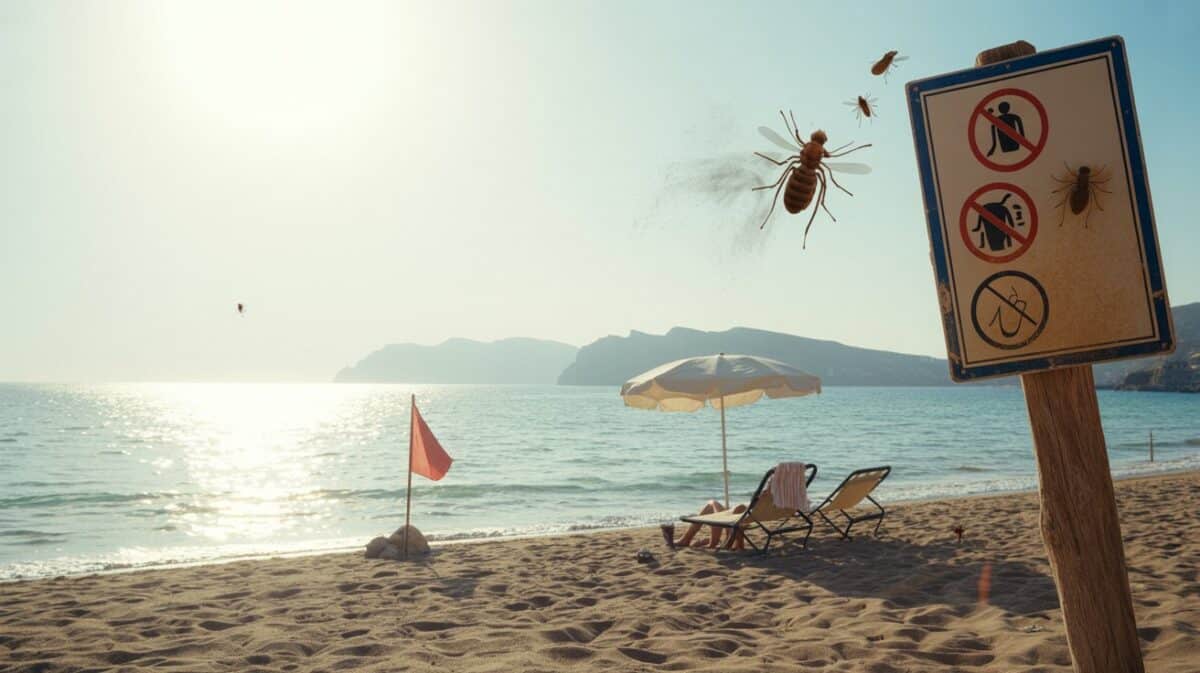
Image generated with Ai
Europe’s prolonged heatwaves are reshaping summer travel conditions as Infection Risks linked to mosquitoes, ticks, food and coastal waters increase across Greece, Italy, Spain and other European countries. Longer periods of extreme heat support mosquito activity, extend tick seasons, accelerate bacterial growth in food and warm coastal waters. As a result, Europe summer escapes now require greater health awareness, especially during beach holidays, hiking trips, festivals, camping and outdoor excursions. However, these developments do not indicate a new pandemic or an immediate threat to European tourism.
Official European surveillance has identified locally acquired West Nile virus infections across Greece, Italy and Spain during 2026. Greece recorded the fastest recent increase, while Italy reported the broadest geographical spread by mid-July. Spain confirmed local transmission alongside separate tick-borne infections. No new passport, visa, vaccination, health certificate or quarantine requirement has followed these warnings. Travellers can continue visiting Europe, but they should monitor destination-specific health alerts and take suitable precautions.
Climate-sensitive infections have affected Europe for many years, but their surrounding environmental conditions are changing. Higher temperatures can lengthen mosquito breeding seasons and expand their potential geographical range. Milder springs and autumns can keep ticks active for longer periods. Meanwhile, extreme heat increases bacterial growth when food receives inadequate refrigeration or preparation. Warm coastal waters can also support naturally occurring Vibrio bacteria, particularly where freshwater and seawater mix.
The European Centre for Disease Prevention and Control identified four priority areas on 29 July 2026. These include foodborne illness, vibriosis, mosquito-borne infections and tick-related diseases. The agency connected the risks with sustained warming and longer summers rather than one isolated weather event. Its assessment also found that only around half of European Union countries maintain national climate adaptation plans. Existing plans may not always contain dedicated measures addressing health pressures from extreme weather.
Advertisement
Advertisement
Image generated with Ai
Official surveillance shows that West Nile virus affected Greece, Italy and Spain differently during the 2026 transmission season. Greece experienced the fastest reported rise in serious cases. Italy recorded the widest geographical spread, while Spain reported fewer infections across a smaller number of affected areas. These figures only include diagnosed and officially reported infections. Around 80 per cent of infected people develop no symptoms, making the actual scale difficult to measure.
The findings do not suggest that every region within these countries faces the same risk. West Nile transmission often remains localised because mosquito populations, temperatures, rainfall and bird movements vary considerably. Authorities are therefore using regional surveillance, mosquito testing and public warnings to identify emerging hotspots. These measures also support blood-safety procedures and targeted mosquito control without introducing travel restrictions.
Image generated with Ai
Greece recorded 21 confirmed human West Nile virus infections by 22 July 2026. Fourteen cases emerged during the previous week, marking the sharpest recent increase among the three countries. Twenty patients developed neuroinvasive disease, including meningitis or encephalitis, while 13 remained hospitalised. The high proportion of serious reported cases requires careful interpretation because mild and symptomless infections often remain undiagnosed. Nevertheless, the figures demonstrate active local transmission during the peak summer tourism season.
The national response combines weekly case reporting with enhanced mosquito surveillance. Mosquito traps have been placed across different regions, with captured insects tested for West Nile virus. Health authorities share positive findings with regional administrations, allowing them to intensify mosquito control and public information campaigns. Medical facilities also maintain heightened awareness for compatible symptoms. Travellers should use insect repellent, cover exposed skin and reduce outdoor exposure around dawn and dusk.
Image generated with Ai
Italy recorded the broadest geographical distribution among the three destinations during July. By 15 July, 21 confirmed cases had been identified across 17 separate areas. European surveillance later reported 46 locally acquired infections, placing Italy ahead of other reporting countries at that stage. By 22 July, 20 Italian areas had been identified as affected. The spread across multiple locations means travellers should follow regional updates instead of assuming that risk remains uniform nationwide.
Italy is addressing the issue through integrated monitoring of people, mosquitoes, birds and horses. This approach helps authorities detect viral activity before or alongside human infections. Confirmed risk areas can trigger stronger mosquito-control measures and additional public guidance. European blood-safety rules also require temporary donor deferral or individual testing after exposure to affected areas. Local measures may include reducing mosquito breeding sites, monitoring stagnant water and advising residents and visitors about personal protection.
Image generated with Ai
Spain reported locally acquired West Nile virus transmission in two affected areas by 15 July 2026. Its reported West Nile burden remained lower than those recorded in Greece and Italy. However, Spain also confirmed two locally acquired Crimean-Congo haemorrhagic fever cases during the same year. Those infections were associated with areas where the virus and its tick vectors already circulate. The risk to the general population remains low, but exposure increases during hiking, hunting, forestry and animal-related activities.
Spain is continuing seasonal surveillance for both mosquito-borne and tick-borne infections. Authorities track human cases and monitor areas where relevant mosquitoes or ticks can support transmission. European surveillance reports will continue recording Crimean-Congo haemorrhagic fever cases until November 2026. Public guidance focuses on repellents, protective clothing and careful tick checks after outdoor activities. These measures support early detection while allowing tourism, beach holidays and countryside travel to continue.
The following table presents the recorded health situation across Greece, Italy and Spain. It also explains how each country is responding and what travellers should understand.
Country Recorded health situation Scale of reported impact How authorities are responding What travellers should know Greece West Nile virus transmission increased rapidly during July 2026 Greece recorded 21 confirmed cases by 22 July. Fourteen emerged during the previous week. Twenty patients developed serious neurological illness, while 13 remained hospitalised Authorities publish weekly reports and conduct enhanced mosquito surveillance. Mosquito traps support early detection. Regional administrations receive alerts for targeted control and public-awareness measures Travellers should use repellent, wear covering clothing and limit exposure around dawn and dusk. Serious fever, rash or neck stiffness requires medical attention Italy West Nile virus affected the widest geographical area among the three countries Italy confirmed 21 cases across 17 areas by 15 July. Later surveillance reported 46 locally acquired infections. Twenty affected areas had been identified by 22 July Authorities monitor infections in people, mosquitoes, birds and horses. Risk areas may receive stronger mosquito controls, public guidance and blood-donation safety measures Risk varies between regions. Travellers should follow local alerts, remove stagnant water and use screens, nets or air conditioning where available Spain West Nile transmission remained lower, but separate tick-borne infections increased the outdoor health concern Spain reported West Nile transmission in two affected areas. It also confirmed two locally acquired Crimean-Congo haemorrhagic fever cases Seasonal surveillance covers mosquito-borne and tick-borne infections. Authorities monitor known transmission areas and issue preventive guidance for outdoor exposure The general risk remains low. Hikers, campers and rural visitors should wear protective clothing, use repellent and check carefully for ticks All three countries Longer heat and warmer seasons create favourable conditions for mosquitoes and extend tick activity Reported cases do not reveal every infection because around 80 per cent of West Nile infections cause no symptoms National systems share case information through European surveillance. Weekly and monthly updates identify affected areas and support targeted responses No travel ban, quarantine, health certificate or new entry requirement applies. Visitors should monitor destination-specific health alerts
The comparison shows that Greece has experienced the fastest recorded increase in serious West Nile cases, while Italy has faced the broadest geographical spread. Spain has recorded fewer West Nile infections but faces an additional tick-related concern. These differences make regional information more useful than broad national warnings.
Travellers do not need to avoid Greece, Italy or Spain solely because of these reports. However, they should treat mosquito and tick protection as part of normal summer travel planning. Local health alerts should also be checked before hiking, camping, attending outdoor events or visiting rural areas.
West Nile virus creates the clearest documented mosquito concern across Greece, Italy and Spain. Mosquitoes usually acquire the virus after feeding on infected birds. They can then transmit it to people and other animals through bites. Everyday contact between people does not spread the virus. Most European cases occur between July and September, although the wider mosquito season can continue from late spring into autumn.
Approximately 80 per cent of infections cause no symptoms. Some people develop fever, headache, fatigue, body aches or a skin rash. Roughly one in 150 infections can affect the central nervous system and become life-threatening. Europe has no licensed human West Nile vaccine or specific antiviral treatment. Medical care focuses on symptom management, while severe cases may require hospital treatment.
Ticks present another consideration for travellers visiting forests, grasslands, parks and rural areas. Spain’s two 2026 Crimean-Congo haemorrhagic fever cases occurred within the expected seasonal pattern. European assessment considers general public risk low in known Spanish circulation areas. However, exposure rises during hiking, forestry, hunting, animal surveillance and other activities involving tick habitats. Ticks elsewhere in Europe can also transmit Lyme disease and tick-borne encephalitis.
Food and coastal risks operate through different routes. Heat allows bacteria to multiply faster in poorly stored food. This creates concern at restaurants, markets, festivals, temporary food stands and facilities with inadequate refrigeration. Vibrio bacteria occur naturally in warm coastal waters, especially brackish environments. Infection may follow wound exposure or consumption of contaminated raw seafood. Vibriosis remains relatively uncommon in Europe, but warmer water can increase environmental suitability.
The latest warnings do not advise travellers to cancel holidays in Greece, Italy or Spain. They also do not introduce national travel bans or destination-wide closures. Instead, the evidence points towards greater reliance on regional surveillance. Conditions can vary between neighbouring provinces, coastal areas and islands. A local mosquito alert or bathing advisory should not automatically be interpreted as a warning against visiting an entire country.
Beach tourism could encounter changing local guidance when water conditions favour bacterial growth. Bathing notices may affect swimming or water-based excursions in specific locations. Visitors with open wounds face a greater risk from contaminated coastal water. Raw or undercooked shellfish also creates a possible transmission route. However, the principal European Vibrio risk areas usually include the Baltic Sea, Black Sea, parts of the North Sea and river estuaries.
Outdoor holidays carry more direct implications across the three Mediterranean countries. Hikers, campers and festival visitors may spend extended periods around mosquitoes or tick habitats. Evening dining, rural accommodation and open-air entertainment can also increase mosquito exposure. Hotels may need stronger insect controls, while tour operators may adjust activities during extreme heat. These responses would represent preventive destination management, not tourism restrictions.
Hospitals and emergency services may face greater pressure when heat-related illness and seasonal infections occur together. Visitors requiring urgent care could encounter busy services during extreme weather periods. Tourism businesses must therefore communicate official guidance clearly without overstating the danger. Accurate notices can help travellers make informed decisions while protecting destination confidence.
Travellers do not need new documents because of the health warning. Normal passport, visa and Schengen requirements continue to apply. No authority has introduced a heatwave-related vaccination certificate, quarantine condition or border health form. Nevertheless, travellers should include local health checks within their normal planning process.
These measures apply most strongly during outdoor travel and periods of sustained heat. People with chronic liver disease, diabetes or weakened immune systems face greater risks from severe vibriosis. Older travellers and people with underlying health conditions may also experience serious West Nile complications. They should seek individual medical advice before departure.
European authorities will continue publishing weekly West Nile updates throughout the main transmission period. Surveillance maps and tables will receive regular updates until November 2026. Monthly assessments will also combine human cases with infections detected among birds and horses. This approach can identify geographical changes and support regional health responses.
The 2026 season will also bring continued monitoring of tick-transmitted Crimean-Congo haemorrhagic fever. European authorities expect to publish weekly information until November. Spain’s two confirmed cases do not indicate widespread community danger. However, authorities will continue tracking circulation because the relevant tick species already exist across parts of southern and eastern Europe.
Coastal surveillance will continue through the European bathing season. The updated Vibrio monitoring system uses sea temperature and salinity information from European satellite and marine datasets. It produces daily environmental estimates and a five-day forecast. The model covers the Mediterranean, Baltic Sea, Black Sea, Atlantic-Iberian coast and north-western European waters.
The tool identifies environmental suitability rather than confirmed bacterial contamination at every beach. Travellers should therefore read its results alongside local bathing notices. A high suitability score signals a need for caution, especially among people with exposed wounds. It does not automatically mean that authorities will close beaches or stop marine excursions.
Longer-term progress will depend on national climate adaptation and cross-border health planning. Around half of European Union members already maintain national climate adaptation plans. However, official assessment says stronger measures remain necessary across health, environmental and animal sectors. Improved surveillance, hospital preparedness and public communication will become central parts of that response.
For Greece, Italy and Spain, the immediate outlook involves continued monitoring rather than travel restrictions. Case totals and affected areas may change during the remaining mosquito season. Travellers should watch destination-specific alerts, particularly between July and September. The new reality does not make Mediterranean holidays unsafe by definition. It makes informed planning, timely precautions and attention to local conditions increasingly important.
Advertisement
Tags: Coastal Threats, Europe, greece, Heatwaves, infection risks
Advertisement
Advertisement













Saturday, September 5, 2026

Friday, September 4, 2026

Saturday, September 5, 2026

Friday, September 4, 2026

Thursday, September 3, 2026

Wednesday, September 2, 2026

Saturday, September 5, 2026