
Croatia Aligns with Slovenia and Austria as Alps-Adriatic Tourism Push Unlocks New Cross Border Travel

Published
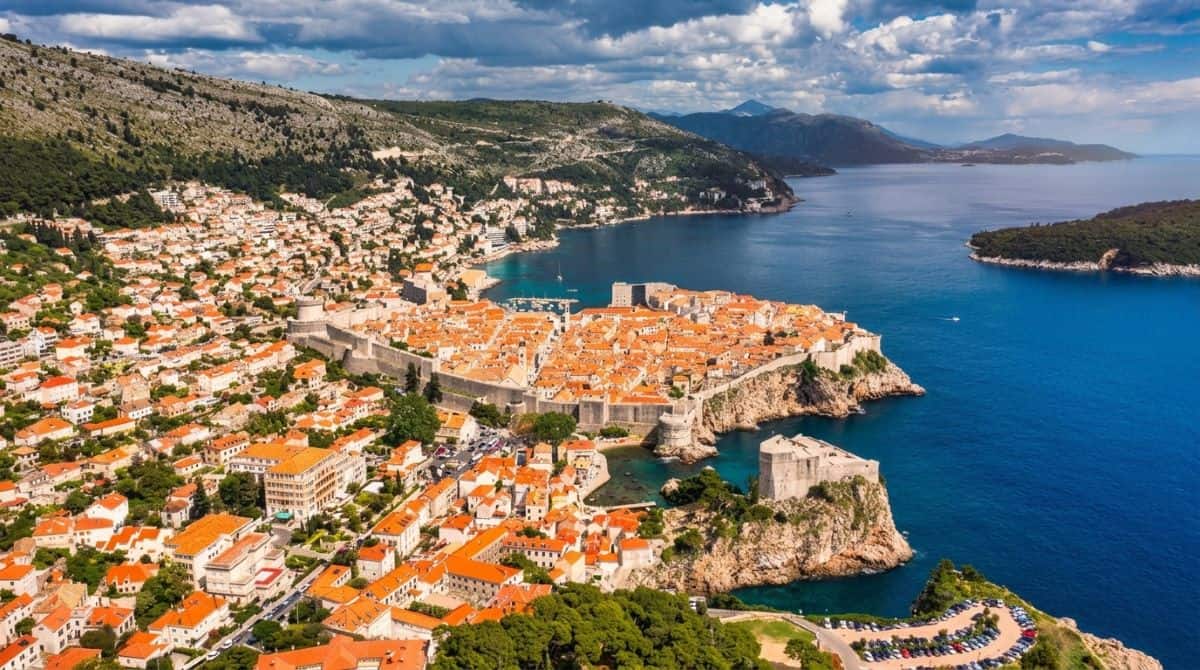
Croatia, Slovenia and Austria are joining forces to make one of Europe’s most scenic cross-border regions easier to explore in a single trip. Their expanding Alps-Adriatic tourism partnership connects Alpine peaks, Adriatic coastlines, hiking and cycling routes, historic towns, local cuisine and cultural experiences across all three countries. Now entering its third year and supported by the European Travel Commission, the initiative was showcased at the Adventure Travel World Summit 2026 in Québec City. For travellers, the big draw is choice: Austria’s mountains, Slovenia’s outdoor escapes and Croatia’s coast can now fit naturally into one diverse European journey.
Why the Alps-Adriatic Tourism Push Matters for Travellers Now
The real strength of the Croatia-Slovenia-Austria partnership is not simply that three tourism boards are sharing promotional space. It is that they are trying to make the region easier to understand and sell as one connected experience.
Advertisement
Advertisement
Under the “Alps. Adriatic. Amazing.” concept, the three countries are promoting active and experience-led travel built around:
- hiking and walking holidays;
- cycling and outdoor adventures;
- nature-based travel;
- gastronomy and local culture;
- sustainable tourism experiences;
- multi-country itineraries.
That gives travellers a broader way to design a European holiday. Instead of choosing between mountains and the sea, the region allows both in a relatively compact geographic area.
Advertisement
Advertisement
The strategic shift is important because long-haul travellers increasingly want more value from a single international journey. Combining several destinations can make one European trip feel more diverse without requiring multiple long-haul flights.
Advertisement
Advertisement
Québec City Puts North American Travel Demand in the Spotlight
The Adventure Travel World Summit 2026, held in Québec City from 14 to 17 September, gave the partnership direct access to an estimated 800 adventure-travel professionals, including tour operators, agents, destination specialists and international media.
North America is particularly important to the strategy.
Slovenia recorded strong growth from both the United States and Canada between January and July 2026.
Advertisement
Advertisement
| Market | Arrivals | Overnight stays | Arrival growth | Overnight growth |
|---|---|---|---|---|
| United States | 133,747 | 297,809 | +23.3% | +20.5% |
| Canada | 29,466 | 65,488 | +30.1% | +27.3% |
The Slovenian Tourist Board describes the United States as its most important long-haul tourism market, while Canada is showing particularly rapid growth.
For travellers, this matters because stronger demand can encourage tour operators to build more structured Alps-Adriatic packages rather than selling Slovenia, Croatia and Austria only as separate destinations.
Advertisement
Advertisement
New York-Ljubljana Flights Could Change How North Americans Enter the Region
One of the most important developments for future cross-border travel is the planned nonstop Newark-Ljubljana air service beginning on 12 May 2027.
The route is expected to operate four times weekly during the seasonal programme. It gives Slovenia something it has long lacked: a direct transatlantic link capable of positioning Ljubljana as more than a standalone city gateway.
That could have wider regional implications.
A traveller arriving in Ljubljana could potentially continue towards:
- the Slovenian Alps;
- southern Austria;
- Zagreb and northern Croatia;
- the Adriatic coast;
- wider Central European touring routes.
The flight does not automatically create a ready-made Alps-Adriatic package. However, it improves the commercial logic for North American operators considering multi-country itineraries.
Advertisement
Advertisement
That distinction is important. The tourism partnership creates the narrative and product framework. Airlines, railways, road connections and tour companies determine how easily travellers can turn that framework into a real trip.
Croatia Adds Major Tourism Scale to the Cross-Border Strategy
Croatia gives the partnership enormous tourism weight.
Official eVisitor figures show that Croatia recorded 17.5 million tourist arrivals and 90.5 million overnight stays between January and August 2026. Both indicators were 1% higher than during the same period in 2025.
The Adriatic coast generated 86.7 million of those overnight stays.
That matters because Croatia offers something that Austria and Slovenia cannot replicate at the same scale: a vast Mediterranean coastal tourism product with islands, seaside towns, beaches and established summer demand.
Advertisement
Advertisement
For a traveller planning an Alps-Adriatic holiday, Croatia therefore becomes the natural coastal extension of an itinerary that may begin in mountainous or inland Europe.
The deeper opportunity lies in making that transition part of the experience rather than treating it as a separate holiday.
Slovenia Provides the Natural Bridge Between Alps and Adriatic
Slovenia has perhaps the most strategically interesting role of the three countries because of its geography.
It sits between Austria and Croatia and combines Alpine terrain, lakes, forests, wine regions, cultural centres and a short Adriatic coastline within a small area.
That makes Slovenia a natural connector.
Advertisement
Advertisement
The country recorded almost 5.2 million tourist arrivals and 13.6 million overnight stays during the first eight months of 2026, with both measures approximately 6% higher year on year.
Mountain destinations are particularly relevant to the partnership. During the first half of 2026, Slovenia registered nearly 3 million tourist arrivals and more than 7 million overnight stays. International travellers accounted for more than 5.2 million nights, equal to 71% of the total.
For travellers, the country’s value lies less in sheer size and more in route flexibility. Slovenia can work as the point where an Alpine itinerary turns south towards the Adriatic.
Austria Brings a Powerful Alpine Tourism Base
Austria strengthens the partnership from the opposite direction.
Between January and July 2026, Austria recorded 96.46 million overnight stays, an increase of 1.8% year on year. Between May and July alone, the country generated 41.87 million nights, the strongest result for that part of the summer season since electronic records began in 1973.
Advertisement
Advertisement
July was especially strong, producing 19.46 million overnight stays and 5.97 million arrivals.
For Alps-Adriatic tourism, Austria contributes mature mountain infrastructure, established hiking and cycling markets, extensive accommodation capacity and a globally recognised Alpine identity.
This creates a useful three-part journey structure:
Austria: high-Alpine experiences and mountain culture
Slovenia: nature, lakes, food, active travel and geographic connection
Croatia: Adriatic coast, islands and Mediterranean experiences
That sequence is likely to be one of the most intuitive ways international travellers understand the partnership.
Advertisement
Advertisement
Existing Slovenia-Croatia Travel Shows the Region Is Already Interconnected
The Alps-Adriatic idea is not being built from scratch.
Official Croatian statistics show that Slovenian travellers already generate substantial demand in Croatia. In July 2026 alone, visitors from Slovenia produced about 2.7 million overnight stays in commercial accommodation.
That represented 11.5% of all foreign tourist nights in Croatia during the month, placing Slovenia behind only Germany among international source markets.
Across January to July, Slovenian travellers accounted for 11.1% of foreign tourist nights.
This is significant because it shows that cross-border tourism is already embedded in everyday regional travel behaviour. The new campaign is attempting to extend that logic to international visitors who may not yet think of the three countries as one itinerary.
Advertisement
Advertisement
Different Peak Seasons Could Make Multi-Country Trips More Attractive
One of the most overlooked advantages of the partnership is seasonality.
Eurostat data for short-term accommodation booked through major platforms show very different summer concentrations across the three countries in 2025:
| Destination | Share of annual platform nights in July-August |
|---|---|
| Croatia | 57% |
| Slovenia | 45% |
| Austria | 25% |
This difference creates an opportunity for travellers who want to avoid the most crowded periods.
A spring or early-autumn itinerary could combine mountain walking in Austria, cycling or gastronomy in Slovenia and warmer coastal travel in Croatia. That can broaden the appeal of the region beyond the traditional July-August peak.
It could also support a more balanced tourism model by dispersing demand across more months, although the partnership alone cannot guarantee that outcome.
Advertisement
Advertisement
What Travellers Should Know Before Building an Alps-Adriatic Itinerary
The region is geographically compact, but cross-border travel still needs practical planning.
Travellers should consider:
- Border controls: Austria currently maintains temporary checks at its land border with Slovenia. Travellers should carry valid documents and allow additional time.
- Transport gaps: the countries are connected by road and rail, but not every tourism hotspot has a simple direct public-transport connection.
- Seasonal differences: mountain conditions, coastal demand and accommodation availability can vary sharply by month.
- Car travel: self-drive itineraries can offer greater flexibility, particularly for rural, Alpine and coastal combinations.
- Trip length: a rushed three-country itinerary can dilute the experience. Fewer bases with longer stays may provide better value.
- Entry points: Vienna, Ljubljana, Zagreb and other regional gateways can each support different route designs.
The most effective Alps-Adriatic trip is therefore unlikely to be about collecting three countries quickly. It is about using borders to connect complementary experiences.
In conclusion, Croatia aligns with Slovenia and Austria as the Alps-Adriatic tourism push unlocks new cross border travel in a way that feels genuinely useful for travellers. The appeal is easy to understand: One trip takes you from Austria’s mountains through trails, towns and lakes in Slovenia and then to the Adriatic coast of Croatia. This combination provides visitors greater choice, but does not make the holiday a complex multi-stop affair. It also helps to strengthen the common identity of the region on the basis of nature, food, culture and outdoor activities. But as cooperation continues, the Alps-Adriatic region is becoming easier to understand, ease of planning and value of exploration.
Advertisement
