

Austria Expands into Germany and More Unveiling Danube Heritage Across Historic Aggstein Fortress

Published
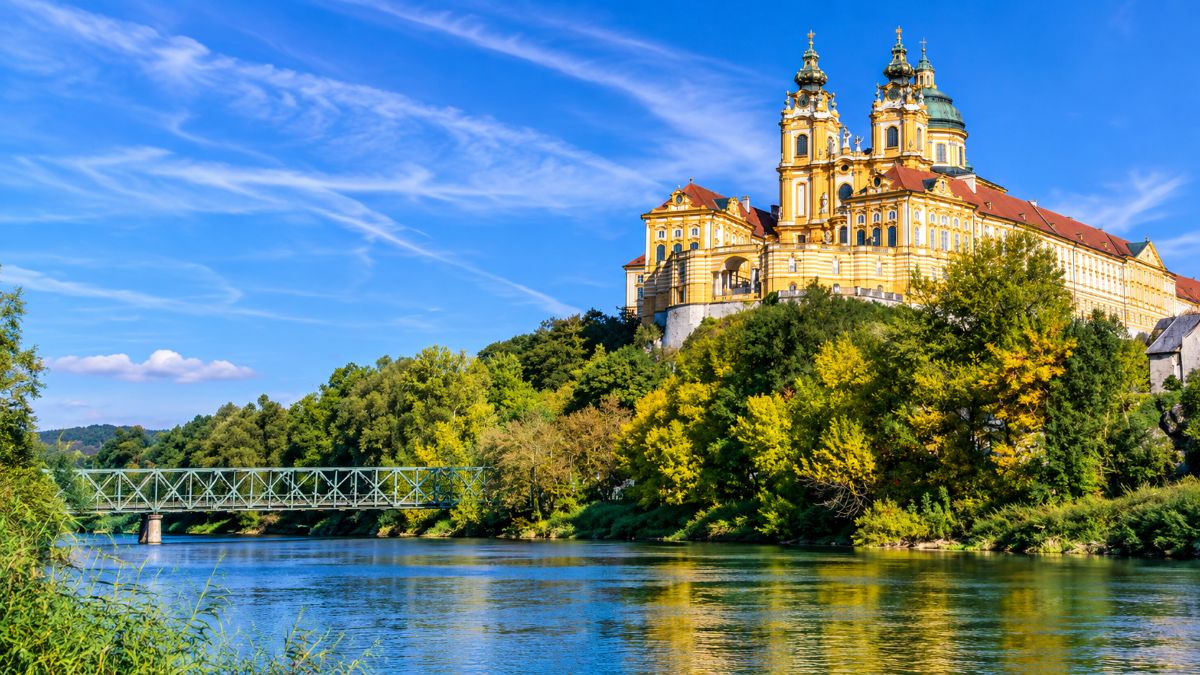
Constructed during the early twelfth century by the Kuenring dynasty, this cliffside fortification served as both an impenetrable stronghold and a fearsome tollgate. The site’s commanding presence over river traffic eventually gave rise to the notorious phenomenon of river piracy, shaping European medieval commerce for generations. As modern explorers follow in Robson Green’s footsteps along the cliffside paths, they step directly into an extraordinary chapter of Alpine history. Here, breathtaking architectural preservation meets thrilling legends of daring escapes, iron chains stretched across international waterways, and the ruthless feudal figures whose exploits coined the enduring historical concept of robber barons.
Robson Green Explores the Dramatic Heights of Aggstein
Robson Green’s expedition to the Wachau Valley places the spotlight on the raw, tactile reality of navigating medieval fortresses. Modern visitors ascending the winding pathway from the riverbank village of Aggsbach Dorf experience the same sheer, windswept terrain that deterred siege engines eight hundred years ago. Walking along the restored timber hoardings and climbing the craggy ramparts, Green explored the multi-tiered defense courtyards, subterranean cellars, and the Gothic chapel that somehow survived centuries of armed warfare and harsh Alpine winters.
Advertisement
Advertisement
The actor’s journey highlights how the fortress integrates seamlessly into its craggy granite outcrop. Unlike decorative romantic palaces constructed in later centuries, Aggstein remains an authentic, unvarnished war machine designed to withstand long encirclements. Green documented the panoramic visual control the structure afforded its occupants, demonstrating why any merchant craft attempting to navigate the bend in the Danube had no chance of evading detection from the watchtowers above.
The Ruthless Feudal Rulers of the Danube Trade Route
The defining epoch of Aggstein occurred during the fifteenth century, an era dominated by lawless feudal lords who exploited political unrest across the Holy Roman Empire. The most infamous of these figures was Jörg Scheck von Wald, an imperial officer granted control of the castle in 1429 by Duke Albert V to restore order along the waterway. Instead of pacifying the trade corridor, von Wald fortified the citadel and transformed it into a devastating base for river piracy, using heavy iron chains stretched across the Danube to trap merchant barges laden with textiles, wine, and precious metals.
Advertisement
Advertisement
Von Wald earned the chilling moniker Schreckenwald, or Terror of the Forest, owing to his remorseless extortion methods. Captured merchants who refused to yield their goods or arrange ransom were imprisoned under horrific conditions. Scheck von Wald was not alone in this predatory trade, following the footsteps of earlier Kuenring overlords who similarly exploited their geographic dominance. Their systemic extraction of wealth from vital arterial waterways cemented the archetype of robber barons in regional folklore and historiography, permanently linking Aggstein with an era of aristocratic banditry.
| Castle Feature | Historical Era | Defensive or Practical Function |
|---|---|---|
| Craggy Quartz Foundation | 12th Century Origin | Natural vertical barrier precluding heavy battering rams |
| Danube Chain Barrier | 15th Century | Stretched across the riverbed to halt trade vessels |
| Gothic Chapel Ruins | 15th Century Rebuild | Spiritual sanctuary established following structural sieges |
| The Rose Garden Projection | Medieval Legend | Bare stone cliff shelf used for psychological prisoner torture |
| Restored Upper Parapets | Contemporary Conservation | Observation walkway providing complete Wachau Valley views |
Architectural Ingenuity High Above the Wachau Crags
Architecturally, Aggstein Castle exemplifies military adaptation across four distinct centuries. The core structure sits atop a narrow spur that drops precipitously on three sides, leaving only a slender eastern approach vulnerable to direct infantry attack. Successive builders compensated for this vulnerability by constructing three outer bailey gates, deep dry moats cut directly into solid bedrock, and a drawbridge system that isolated the inner keep from hostile forces.
Advertisement
Advertisement
The most notorious architectural curiosity within the ruins is the Rosengärtlein, or the Little Rose Garden. Contrary to its poetic name, historical legend recounts that this feature was a sheer, narrow stone ledge jutting out over an abyss outside the castle walls. Prisoners were forced onto this exposed outcropping by their captors, given the agonising choice between dying of dehydration or plunging to their deaths on the rocky crags hundreds of metres below. While modern historians debate the literal truth of this legend, the harrowing precipice remains one of the most chilling viewpoints for travellers examining the fortress masonry today.
Navigating the Wachau Valley Cultural Landscape
A visit to Aggstein Castle offers travellers direct access to the broader cultural tapestry of the Wachau, a dramatic fifty-kilometre stretch of the Danube celebrated as a world heritage site. The region pairs medieval military history with centuries of viticulture, where steep hillsides produce world-renowned Grüner Veltliner and Riesling wines. Hiking the Wachau World Heritage Trail allows modern wanderers to link fortress ruins such as Aggstein and Dürnstein with peaceful waterside villages, historic inns, and monastic landmarks.
Advertisement
Advertisement
Robson Green’s exploration underscores how historical immersion complements active outdoor recreation in Lower Austria. Whether arriving by scenic river cruiser, road cycle along the Danube Cycle Path, or woodland trekking routes, visitors can explore the fortress grounds, inspect authentic medieval tools in the castle tavern museum, and absorb panoramic views extending toward the foothills of the Bohemian Massif. The landmark represents an essential stop for any journey across Austria’s historic river valleys.
Frequently Asked Questions
Where is Aggstein Castle located?
Aggstein Castle sits on a rocky cliff three hundred metres above the right bank of the Danube River in the Wachau Valley of Lower Austria, near the municipality of Schönbühel-Aggsbach.
Who was the most famous robber baron associated with Aggstein?
Advertisement
Advertisement
The most notorious figure was Jörg Scheck von Wald, a fifteenth-century knight nicknamed Schreckenwald who seized merchant ships, extorted ransoms, and terrorised Danube river trade.
What is the legend of the Little Rose Garden at the castle?
The Rosengärtlein legend describes a narrow, bare stone ledge over a sheer precipice where prisoners were trapped and forced to endure exposure, dehydration, or a fatal leap.
How did medieval robber barons halt boats travelling along the Danube?
Castles like Aggstein coordinated lookouts who dropped heavy iron chains anchored across the Danube waterway, physically blocking merchant vessels until excessive tolls were surrendered.
Can tourists visit Aggstein Castle today?
Advertisement
Advertisement
Yes, the castle ruins are fully open to the public between spring and late autumn, offering self-guided heritage trails, courtyard dining, and museum exhibitions.
How does one travel to Aggstein Castle from Vienna?
Travellers can take a regional rail journey from Vienna to Melk or Krems, followed by a public bus or scenic river ferry to Aggsbach Dorf, with walking paths leading up the crag.
Which English presenter filmed an expedition at Aggstein Castle?
English actor and television presenter Robson Green visited Aggstein Castle while filming travel documentaries exploring hidden European river treasures and historic fortifications.
What type of architecture is visible at the Aggstein ruins?
Advertisement
Advertisement
The fortress displays Romanesque foundations integrated with extensive fifteenth-century Gothic fortifications, defensive dry moats, gatehouses, and elevated stone battlements.
What is the best time of year to explore the Wachau fortress ruins?
The optimal visiting window runs from late April through October, when trail conditions are clear, river ferries run full schedules, and regional vineyards are in peak season.
Are there hiking trails connecting Aggstein to other regional landmarks?
Yes, the castle forms an elevated stage along the Wachau World Heritage Trail, a scenic network linking medieval keeps, riverside abbeys, and panoramic vineyard terraces.
Advertisement
