

Yemen Aligns With UAE And More Countries In Tensions As Aden Airport Drone Escalation Brings New Travel and Aviation Challenges

Updated
Published
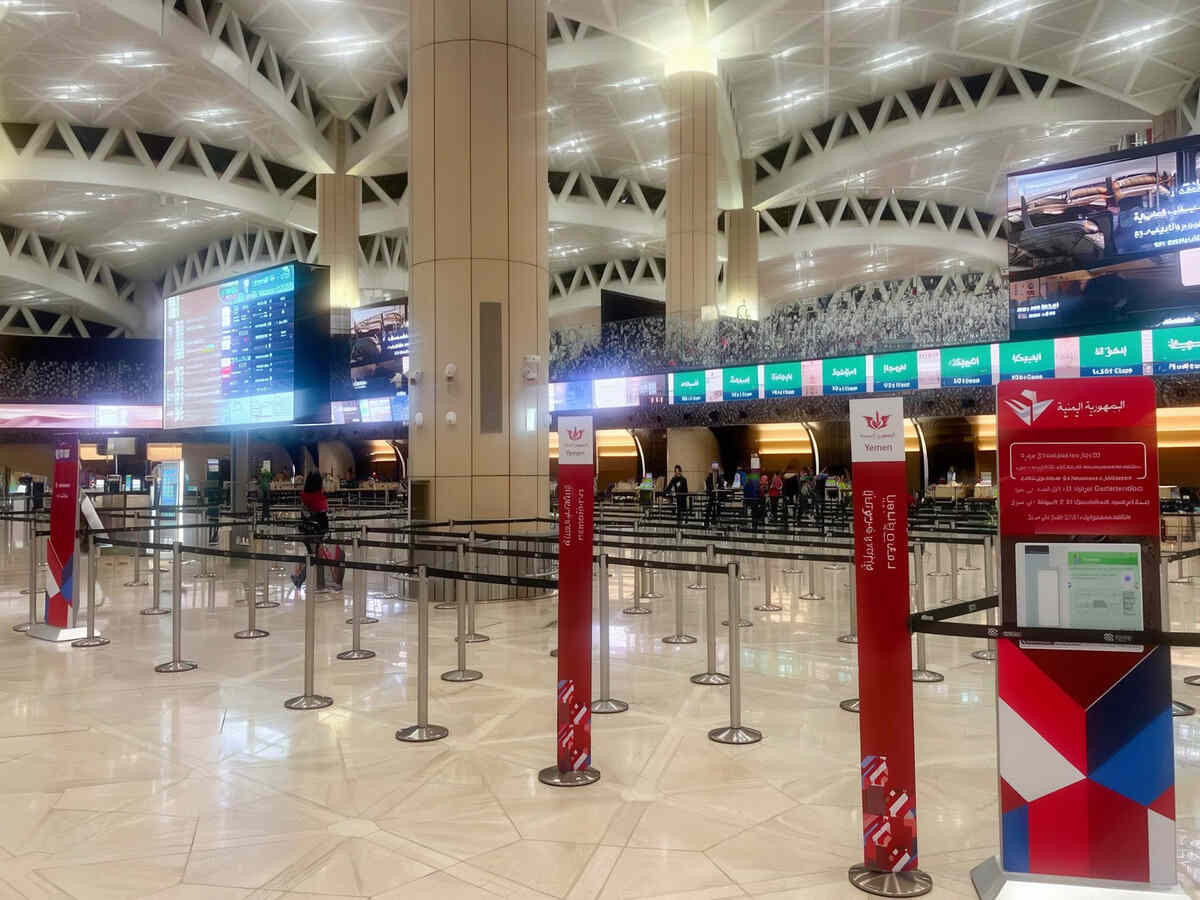
Aden Airport of Yemen’s drone attack poses new travel safety threats in the Middle East. Aden International Airport is now at the heart of newly emerging Middle East aviation concerns following the report by Yemeni authorities that ballistics missiles and bomb-carrying drones were seen near the airport on October 7, 2026. This occurred when the airport was operating civilian aviation activities.
Yemeni transport authorities said two ballistic missiles and several explosive-laden drones were involved. They said the runway and passenger terminal were threatened during the escalation.
The Houthis presented a different version, saying their missiles targeted the Badr military camp near Aden airport rather than civilian airport facilities.
This distinction remains important. However, whatever the intended target, the proximity of missile and drone activity to an operating international airport created a clear aviation safety problem.
Advertisement
Advertisement
Aden is one of Yemen’s important international gateways. Any sustained security deterioration around the airport could consequently affect passengers travelling for family visits, work, medical treatment and other essential journeys.
Cairo-Aden Flight Shows How Quickly Travel Can Change
One of the most important developments involved Yemenia Flight 603 from Cairo.
Advertisement
Advertisement
Yemeni transport authorities said a missile came down near Aden’s runway only minutes before the passenger aircraft was expected to arrive. Authorities cancelled the planned landing and redirected the aircraft towards Jeddah, Saudi Arabia.
The episode transformed a security development in Yemen into an international aviation incident involving three countries.
Advertisement
Advertisement
A flight originating in Egypt suddenly faced changing conditions in Yemen, while Saudi Arabia became the alternative destination.
It highlights an important reality for travellers. A flight can depart normally but encounter completely different security conditions before reaching its destination.
Airlines and aviation authorities therefore continuously evaluate airports, airspace, military activity and potential security hazards throughout a journey.
Passengers Inside Aden Faced Their Own Travel Disruption
The incoming Cairo flight was not the only passenger operation affected.
Advertisement
Advertisement
Travellers were reportedly inside Aden airport waiting for a flight scheduled to depart for Jeddah at around 3am. Airport workers and aviation crews were also present.
Authorities moved passengers and employees away from potentially exposed parts of the facility.
Two aircraft were reportedly on the ground. One was associated with Yemenia, while another belonged to Aden Airways. Authorities moved the aircraft from areas considered vulnerable while additional drones were reportedly being monitored above Aden.
No casualties were initially reported at the airport.
For aviation, that outcome is significant. A serious security incident can disrupt commercial operations even without causing casualties or major structural damage.
Yemen Bears the Greatest Immediate Travel Risk
Yemen remains the country facing the most direct travel consequences.
Advertisement
Advertisement
Aden International Airport provides an important international connection for communities living in areas controlled by Yemen’s internationally recognised government.
Commercial aviation options in the country are already restricted after years of conflict. This means disruption at one major airport can have consequences far greater than those at a destination served by several alternative international gateways.
Repeated missile or drone activity could potentially produce:
- Flight diversions when arriving aircraft cannot safely approach Aden.
- Departure delays while airport authorities assess airspace conditions.
- Temporary operational pauses following drone detection.
- Aircraft repositioning when parked planes are considered exposed.
- Passenger evacuation if parts of the terminal become unsafe.
- Schedule changes if airlines reassess the security environment.
Yemeni authorities have indicated that they want Aden to continue operating as a civilian aviation gateway. Therefore, heightened security should not automatically be interpreted as an indefinite airport closure.
Saudi Arabia Faces the Strongest Cross-Border Exposure
Beyond Yemen, Saudi Arabia has the clearest direct exposure to the current escalation.
Missile and drone activity involving Saudi territory has already increased security concerns around important cities and infrastructure.
Advertisement
Advertisement
Saudi authorities have reported threats involving locations such as Riyadh, Jazan and Najran, while the wider escalation has also placed attention on other strategic areas.
This matters enormously for tourism.
Saudi Arabia has spent heavily expanding international aviation, tourism infrastructure and airport capacity. Its aviation system supports international tourism, domestic travel, business movements and major religious journeys.
Security concerns affecting Saudi airspace can therefore have consequences extending far beyond the country’s borders.
Aircraft may need alternative routes when particular areas become sensitive. Airlines could also adjust schedules while authorities deal with aerial threats.
Saudi Arabia consequently remains one of the most important countries to monitor following the Aden escalation.
Advertisement
Advertisement
Riyadh Puts International Aviation Under the Spotlight
Riyadh gives the regional situation an additional international dimension.
Saudi-led forces reported intercepting a Houthi ballistic missile north of the capital around the period of the Aden developments. The Houthis also claimed drone activity involving King Khalid International Airport.
A claimed target should not be treated as proof of a successful impact. Nevertheless, activity involving missiles or drones around a major capital creates significant aviation-security considerations.
King Khalid International Airport connects Riyadh with destinations across Asia, Europe, Africa and the wider Middle East.
If surrounding airspace becomes temporarily restricted, airlines may need to:
- Change arrival corridors.
- Hold aircraft before landing.
- Delay departures.
- Reroute long-haul services.
- Increase flight times.
- Use alternative airports when necessary.
This explains why Riyadh developments matter well beyond Saudi Arabia.
Advertisement
Advertisement
Jeddah Gains Importance as an Alternative Aviation Gateway
Jeddah became directly connected to the Aden incident when the Cairo-origin aircraft was redirected towards Saudi Arabia.
Passengers at Aden were also waiting for a separate Jeddah-bound service.
This illustrates Jeddah’s importance within the regional aviation network.
The city is a major international gateway serving tourists, business travellers, residents and religious visitors. It can also provide an important connection point when operations elsewhere become difficult.
However, Saudi Arabia must simultaneously protect its own aviation network while responding to the consequences of instability across its southern neighbourhood.
That makes continued airport and airspace security particularly important.
Advertisement
Advertisement
UAE Faces Regional Airspace Risk Rather Than an Aden-Level Crisis
The United Arab Emirates faces a different type of exposure.
There is no basis from the Aden incident alone to conclude that Dubai or Abu Dhabi airports are facing the same immediate security conditions as Aden.
The UAE’s concern centres primarily on what could happen if regional escalation widens.
Dubai and Abu Dhabi are among the world’s most important international aviation hubs. Their location enables airlines to connect Europe, Asia, Africa and other Middle Eastern destinations efficiently.
That model relies on predictable regional airspace.
If airlines begin avoiding sensitive areas, flight paths may become longer. This can increase flying times, fuel requirements and operational complexity.
Advertisement
Advertisement
The key risks for the UAE would therefore include:
- Regional flight rerouting around sensitive airspace.
- Longer journeys on affected international routes.
- Schedule adjustments resulting from altered flight paths.
- Connection pressures when incoming services arrive late.
- Greater operational complexity if more regional airspace becomes restricted.
These remain potential spillover effects rather than confirmed consequences of the Aden incident.
Egypt Faces Both Aviation and Red Sea Concerns
Egypt enters the situation through two important transport channels: aviation and maritime connectivity.
The first became immediately visible when the Yemenia aircraft departed Cairo but could not complete its planned arrival at Aden.
There is no indication from that incident alone that Cairo airport faces the same direct threat as Aden.
Instead, Egypt’s aviation exposure comes from flights operating towards potentially unstable destinations and regional corridors.
Advertisement
Advertisement
Egypt’s second concern is considerably broader.
The country depends heavily on secure maritime movement through the Red Sea and Suez Canal. Yemen sits close to the southern entrance of this critical international transport system.
If instability around Yemen spreads into surrounding waters, the effects could extend towards shipping, cruise movements and Egypt’s wider transport economy.
Bab Al-Mandab Connects Yemen’s Tensions With Global Travel
The Bab al-Mandab Strait explains why Yemen’s security environment matters internationally.
The narrow maritime corridor links the Gulf of Aden and Red Sea, ultimately providing access towards the Suez Canal.
Its position makes it critical for international shipping.
Advertisement
Advertisement
Prolonged instability could affect several sectors simultaneously:
- Commercial shipping moving between Asia and Europe.
- Cruise itineraries using the Red Sea.
- Port activity around regional destinations.
- Airline routing above sensitive areas.
- Tourism confidence if regional tensions intensify.
For Egypt, the concern is particularly significant because safe navigation through the Red Sea supports traffic heading towards Suez.
The Aden airport incident therefore sits within a much larger geographical transport system.
Oman Watches Closely Because Geography Matters
Oman shares a border with Yemen, giving it another form of regional exposure.
Aden lies far from Oman’s principal tourism destinations and aviation centres. The airport incident should therefore not be interpreted as evidence that Muscat faces an identical threat.
The concern is what happens if Yemen’s security deterioration expands geographically.
Advertisement
Advertisement
Oman occupies an important position connecting the Arabian Peninsula with the Indian Ocean. Its airports also support routes linking the Gulf with South Asia, Africa and other international markets.
Possible concerns would emerge primarily through:
- Changes in regional airspace.
- Security deterioration closer to the Yemeni-Omani frontier.
- Airline rerouting.
- Maritime instability.
- Wider regional escalation.
For now, these are risks to monitor rather than confirmed travel disruptions resulting directly from Aden.
Drones Introduce a Complex Threat Around Airports
The drone element makes the Aden development particularly important for modern aviation.
Airports require tightly controlled airspace around runways.
Even an ordinary unauthorised drone can force authorities to halt flights because of collision concerns.
Advertisement
Advertisement
An explosive-laden drone creates a much greater problem.
Authorities may need to evacuate areas, stop arrivals, suspend departures or move aircraft away from exposed positions.
When ballistic missiles and drones appear within the same security environment, aviation authorities face an even more complicated challenge.
The Aden incident demonstrates that an airport does not need to suffer catastrophic damage before international travel is disrupted.
The threat itself can change flight operations.
The Regional Threat Is Not Equal Across Every Country
The Middle East should not be treated as one single risk zone following the Aden developments.
Advertisement
Advertisement
The exposure differs substantially:
- Yemen: Direct airport, missile and drone security challenge.
- Saudi Arabia: Strongest identifiable cross-border missile and drone exposure.
- UAE: Potential airspace and aviation-network spillover if escalation spreads.
- Egypt: Cairo flight connectivity plus strategic Red Sea and Suez concerns.
- Oman: Geographic exposure because of its border with Yemen.
- Jordan: Primarily indirect regional airspace and rerouting concerns.
This distinction is critical for travellers.
An incident in Yemen does not automatically mean airports across the UAE, Egypt, Oman or Jordan are experiencing disruption.
What Travellers Need to Watch Next
The next phase will determine whether Aden remains a geographically concentrated security event or develops into a wider Middle East aviation challenge.
Travellers and the tourism industry should particularly watch for:
- Changes to Aden International Airport operations.
- Yemenia schedule revisions or diversions.
- Further drone or missile activity around Saudi Arabia.
- Temporary airport or airspace restrictions.
- Airline rerouting across the Arabian Peninsula.
- Developments around Bab al-Mandab and the Red Sea.
- Changes affecting international connections through regional hubs.
The most reliable indication of practical travel disruption will come through confirmed airline schedule changes and aviation restrictions.
Advertisement
Advertisement
Aden Escalation Opens a Crucial Test for Middle East Travel
The Aden airport episode demonstrates how rapidly a security development can become an international travel story.
A passenger flight began its journey in Cairo, encountered deteriorating conditions at Aden and was redirected towards Jeddah. At the same time, Saudi Arabia faced its own missile and drone concerns.
Yemen therefore remains at the centre of the immediate crisis, while Saudi Arabia faces the clearest cross-border exposure.
Egypt must watch both aviation connections and Red Sea security. The UAE’s international hub system makes stable regional airspace particularly important. Oman must monitor developments because of its border with Yemen, while Jordan could face indirect effects if airlines increasingly reroute around sensitive airspace.
The next developments around Aden International Airport, Saudi airspace and Bab al-Mandab will be decisive.
If tensions remain contained, the wider Middle East may experience limited operational spillover. If missile and drone activity expands, however, airlines could face a far more complicated environment involving diversions, longer routes, altered schedules and increased uncertainty.
Advertisement
Advertisement
Yemen Aden airport drone attack heightens travel and aviation worries for the United Arab Emirates, Saudi Arabia, Egypt and entire Middle East region.
The most vital takeaway from the situation for any traveller is simple; regional conflict does not imply that all destinations in the Middle East face the same threat, but the globalized nature of aviation industry means that disturbances in one country affect several others as well.
Advertisement
