
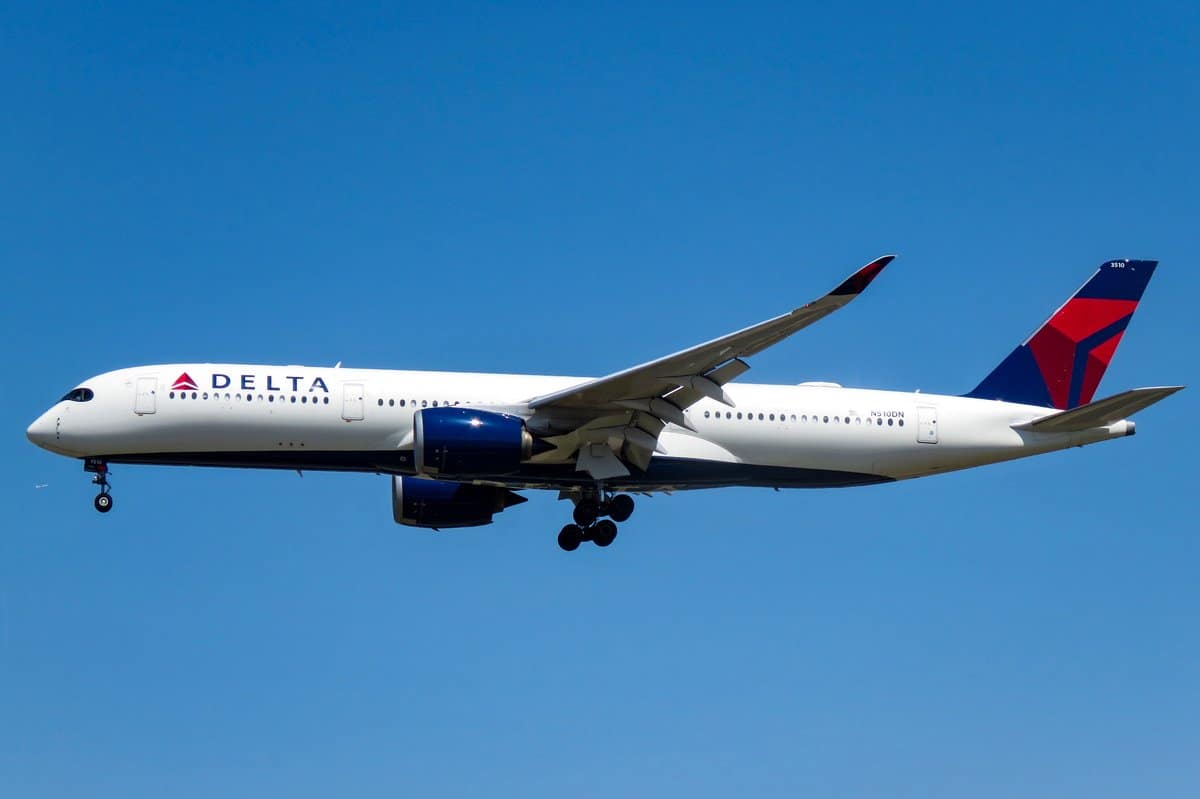
Image generated with Ai
Endeavor Air operated Delta Flight DL5462 from Fayetteville to Atlanta on August 4, but the journey took an unexpected turn. The Delta Flight, operated by Endeavor Air, was flying a Mitsubishi CRJ-900LR when it diverted from Atlanta to Columbus Metropolitan Airport, United States. Meanwhile, the Fayetteville-to-Atlanta service had been expected to follow its normal route. Instead, the diversion quickly raised questions about what happened during the flight. Although the exact reason remains unconfirmed, the unusual change has attracted attention. Travel And Tour World urges readers to read the entire story for the latest details, verified context, and important answers surrounding Flight DL5462.
The unexpected diversion changed the planned journey for passengers travelling from Fayetteville to Atlanta, turning what should have been a routine regional flight into an unusual aviation event. Although the aircraft was scheduled to arrive at Atlanta, the flight instead proceeded towards Columbus Metropolitan Airport, leaving passengers and observers seeking a clear explanation for the change.
Endeavor Air Operated Delta Flight DL5462 was scheduled to travel from Fayetteville Regional Airport to Hartsfield-Jackson Atlanta International Airport on August 4, 2026, using a Mitsubishi CRJ-900LR. The available flight information shows that the aircraft departed Fayetteville at approximately 10:37, shortly after its scheduled 10:35 departure, but did not continue to Atlanta as originally planned.
Instead, the flight was diverted to Columbus Metropolitan Airport, commonly identified by its airport code CSG, in Georgia. The available information therefore establishes the key sequence clearly: Fayetteville was the starting point, Atlanta was the intended destination, and Columbus Metropolitan Airport became the diversion airport. The diversion occurred while the aircraft was operating the scheduled service, rather than being announced as a pre-flight cancellation.
Advertisement
Advertisement
The precise reason for the Delta Flight DL5462 diversion remains unconfirmed in the information currently available, meaning it would be inaccurate to present one particular explanation as fact. Diversions can occur for several operational reasons, including adverse weather, aircraft-related concerns, medical situations, air-traffic restrictions, airport conditions or other safety considerations.
However, there is no sufficiently reliable evidence available here to establish that a mechanical problem, medical emergency or weather disruption specifically caused this flight to divert. That distinction is important because an aircraft changing its destination does not automatically mean that an emergency occurred. Airlines and flight crews can divert aircraft as a precaution whenever continuing towards the planned destination is considered less suitable than landing at an alternate airport.
Columbus Metropolitan Airport provided an alternative destination for the aircraft after it could no longer complete the planned Fayetteville-to-Atlanta journey as scheduled. Its location in Columbus, Georgia, makes it a practical regional airport for aircraft operating in the broader Atlanta area, particularly when circumstances affect normal operations at or around the planned destination.
For passengers, however, landing at Columbus rather than Atlanta can create a significant logistical difference, even though the two airports are within the same wider region. The diversion therefore does not necessarily indicate that the aircraft experienced a serious problem; instead, it demonstrates how airline operations can change quickly when the original flight plan cannot be completed. The crew ultimately has responsibility for selecting the safest available course of action.
Advertisement
Advertisement
The aircraft identified in the supplied flight information was a Mitsubishi CRJ-900LR, registration N311PQ, a regional jet type widely used for short and medium-length passenger services. Endeavor Air operates regional aircraft for Delta Connection, allowing Delta to serve numerous smaller and regional markets with aircraft suited to lower passenger volumes.
The CRJ-900 is designed for regional operations and is commonly deployed on routes linking smaller airports with major airline hubs. In this case, the aircraft was scheduled to connect Fayetteville with Atlanta, a major Delta hub. The aircraft’s diversion to Columbus Metropolitan Airport therefore represents a change in the planned operating sequence, but available information does not indicate that the aircraft suffered damage or that passengers were injured.
Weather is one possible explanation for any aviation diversion, particularly around major airports where thunderstorms, strong winds, reduced visibility or other conditions can affect landing capacity. Atlanta can experience significant summer thunderstorm activity, and such weather can disrupt aircraft movements even when conditions are not equally severe across the entire region.
Nevertheless, weather should not be described as the confirmed cause of the DL5462 diversion without an authoritative statement or stronger flight-specific evidence. A diversion can also result from operational considerations that are not immediately visible to passengers or observers, including air-traffic management decisions, aircraft considerations or airport restrictions. Therefore, the most responsible conclusion is that weather remains a possibility, not an established explanation.
For passengers aboard Delta Flight DL5462, the diversion meant that the planned arrival at Atlanta was interrupted and the aircraft instead landed at Columbus Metropolitan Airport. Such a change can result in delays, additional ground transportation requirements, revised connections and uncertainty, particularly for travellers who planned onward journeys through Atlanta.
The eventual passenger arrangements would depend on the circumstances surrounding the diversion and Delta’s operational response. Importantly, passengers should distinguish between a diversion and a cancellation because the aircraft can continue operating after landing at an alternate airport. Until the airline provides specific information about the incident, the most accurate report is that the flight diverted from its planned Atlanta destination and landed at Columbus Metropolitan Airport.
The August 4 diversion of Endeavor Air Operated Delta Flight DL5462 remains an aviation event where the flight path is clearer than the underlying cause. The Mitsubishi CRJ-900LR left Fayetteville for Atlanta but diverted to Columbus Metropolitan Airport, United States, instead of completing its scheduled journey.
At this stage, the available information does not justify claims about a mechanical failure, medical emergency, severe weather or any other specific cause. Further clarification from Delta Air Lines, Endeavor Air, the Federal Aviation Administration or another authoritative aviation source would be required before identifying the exact reason. Until then, the diversion should be reported as confirmed, while its cause remains unconfirmed.
Advertisement
Tags: Atlanta, August 4 2026, Columbus Metropolitan Airport, Delta flight diversion, Delta Flight DL5462
Advertisement
Advertisement













Friday, September 4, 2026
Friday, September 4, 2026

Friday, September 4, 2026

Friday, September 4, 2026

Thursday, September 3, 2026

Wednesday, September 2, 2026

Friday, September 4, 2026

Friday, September 4, 2026


