

UK Travel Shake-Up: Queen Anne Joins P&O in Major 2029 Cruise Fleet Shift

Published
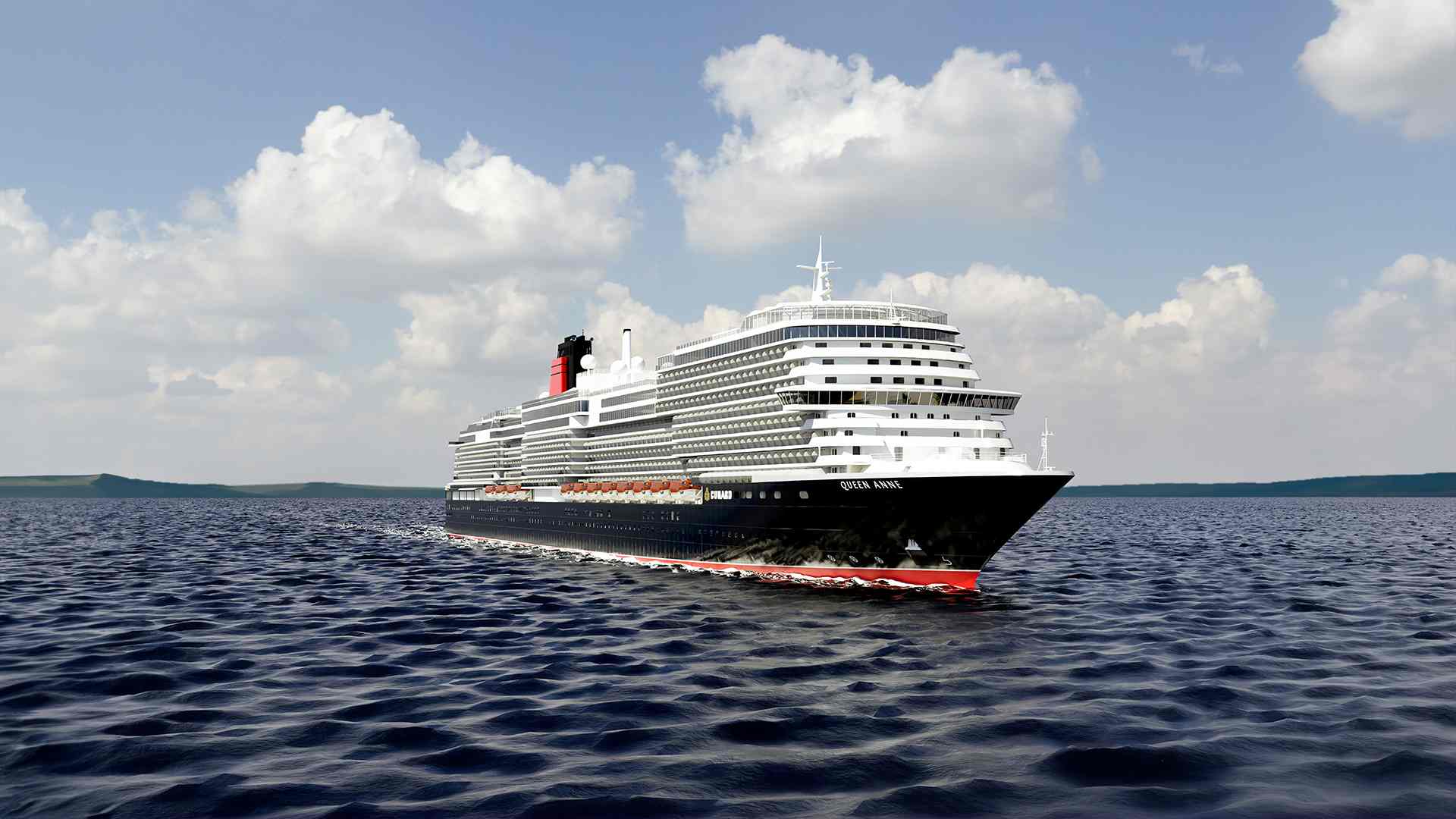
Image Credit: Queen Anne Cruise
The first thing one notices about the UK cruise travel industry is that there is going to be a revolution in the industry due to the movement of Queen Anne from Cunard to P&O Cruises before May 2029. This will cause an impact on the industry because Queen Anne is the latest cruise ship in the Cunard while it is getting shifted from Cunard to the company under the control of Carnival Corporation after working there for less than five years. Moreover, the cruise ship known as Arcadia of the P&O Cruises is also going to be transferred from its brand to the Holland America Line by the end of August 2029. However, it seems that this will not just be a mere shifting of ships to another brand, but Carnival is moving its ships wherever it gets the most benefits.
Advertisement
Advertisement
Why Southampton Changes the Entire Queen Anne Story
The Department for Transport’s final 2025 sea-passenger statistics provide perhaps the strongest evidence for viewing this announcement through a Southampton lens.
Britain recorded approximately 3.1 million international cruise passengers embarking or disembarking at UK ports in 2025.
Advertisement
Advertisement
Of those, approximately 2.6 million — 86% — passed through Southampton.
Dover recorded around 102,000 passengers, London approximately 131,000, Liverpool 70,000 and Portsmouth 61,000.
Advertisement
Advertisement
That means Southampton is not merely another convenient British homeport.
It dominates the country’s international turnaround cruise business.
Queen Anne’s move to P&O Cruises therefore matters because both brands have exceptionally strong relationships with Southampton.
The ship may change branding, interiors and customer proposition, but she could remain highly relevant to the same British cruise ecosystem.
Her future P&O deployment has not yet been announced, so Southampton operations after the transfer should not be presented as confirmed.
Nevertheless, the scale of P&O’s established Southampton business makes the British capacity implications impossible to ignore.
Advertisement
Advertisement
Carnival Is Moving Capacity Towards a Growing British Customer Base
Carnival’s latest SEC filing adds another dimension.
For the nine months ending 31 August 2026, Carnival Corporation generated total revenue of approximately $21.26 billion, compared with $20.29 billion during the equivalent 2025 period.
UK-sourced revenue increased from $2.276 billion to $2.472 billion.
European passenger-ticket revenue, meanwhile, climbed 6.1%, from approximately $4.9 billion to $5.2 billion.
The European increase came from several factors, including higher ticket prices, favourable currency movements and stronger occupancy.
This makes 2029 fleet planning especially interesting.
Advertisement
Advertisement
Carnival is not moving Queen Anne into P&O while demand is collapsing.
It is making the decision during a period when European ticket revenue and British-sourced revenue are growing.
That changes the interpretation.
Instead of retreating, Carnival appears to be repositioning a valuable existing asset towards the product and customer base where management believes it can perform most effectively.
Queen Anne Gives P&O More Capacity Without Adding Another Ship
This is arguably the most commercially important element.
Arcadia currently accommodates 2,094 guests, according to P&O Cruises’ published specifications. She has a gross tonnage of 83,781 and carries approximately 866 crew.
Advertisement
Advertisement
Queen Anne accommodates around 2,956 guests under Cunard’s published figures.
Replacing one with the other therefore produces a theoretical increase of 862 normal guest berths.
That is approximately 41% more passenger capacity.
The future P&O configuration may change during Queen Anne’s extensive redesign, so this should not be regarded as a final 2029 capacity figure.
Yet it demonstrates the strategic scale of the transfer.
P&O Cruises can potentially increase its berth inventory significantly without increasing its ship count.
Advertisement
Advertisement
For a cruise corporation managing large capital-intensive assets, that is a major distinction.
Queen Anne and Arcadia Reveal Carnival’s New Capacity Equation
| Indicator | Queen Anne | Arcadia | Strategic implication |
|---|---|---|---|
| Current operator | Cunard | P&O Cruises | Both Carnival Corporation brands |
| 2029 destination | P&O Cruises | Holland America Line | Capacity redistributed internally |
| Guest capacity | About 2,956 | 2,094 | Queen Anne has roughly 41% more |
| Gross tonnage | About 113,000 GT | 83,781 GT | P&O receives the considerably larger ship |
| Entered service | 2024 | 2005 | P&O receives a much younger asset |
| 2029 treatment | Extensive redesign | Holland America transformation | Both ships receive new brand positioning |
| Operational significance | New ship class for P&O | Vista-class platform familiar to HAL | Each vessel gains a different strategic role |
| Key transfer timing | May 2029 P&O entry | After 21 August 2029 | Changes happen within months of each other |
P&O’s own published itinerary data confirms Arcadia’s 2,094-guest capacity and shows the ship is still scheduled for Southampton voyages in 2029 before her departure.
This Is Capacity Engineering Rather Than Traditional Fleet Expansion
The traditional answer to strong cruise demand is straightforward: order more ships.
Carnival’s strategy demonstrates another method.
Move existing ships between brands.
Refit them.
Advertisement
Advertisement
Reposition their customer proposition.
Then allocate their capacity to markets where management expects stronger strategic returns.
That approach is particularly interesting because Queen Anne is not ageing tonnage approaching retirement.
She entered service in May 2024.
Moving such a young vessel between major brands shows just how flexible cruise-fleet management has become.
Carnival Corporation reported record third-quarter revenue, net yields and net income in September 2026 and said booking levels were providing a strong foundation for 2027.
Advertisement
Advertisement
The company therefore has greater incentive to optimise where ships operate rather than preserve an asset’s original brand identity indefinitely.
For travellers, that may become an increasingly important trend.
The ship they know under one cruise line today may not necessarily spend its entire operating life there.
Why P&O Cruises Could Benefit More From Queen Anne’s Size
P&O Cruises occupies a broad segment of the British holiday market.
Its fleet includes smaller and mid-sized vessels alongside far larger ships such as Iona and Arvia.
Queen Anne potentially fills an important space between these extremes.
Advertisement
Advertisement
She offers almost 3,000-passenger scale while remaining substantially smaller than the biggest contemporary resort-style ships.
That balance could eventually give P&O more itinerary flexibility.
It could also provide more inventory on sailings where a vessel such as Arcadia may be too small but where deploying one of P&O’s largest ships may not be commercially ideal.
None of those future routes has yet been officially confirmed.
But the mathematics alone explain why the ship could become valuable within P&O’s portfolio.
More cabins mean more potential ticket revenue.
Advertisement
Advertisement
More passengers mean more potential onboard expenditure.
And a comparatively new ship gives P&O a fresh product without waiting through an entire newbuild development cycle.
Arcadia Solves a Completely Different Problem for Holland America
P&O gains scale.
Holland America gains compatibility.
That distinction makes the two transfers much more sophisticated than they first appear.
Holland America confirmed on 6 October 2026 that Arcadia will increase its fleet to 12 ships, adding capacity for more than 2,000 guests.
Advertisement
Advertisement
More importantly, Arcadia shares Holland America’s Vista-class platform.
Oosterdam, Noordam, Westerdam and Zuiderdam use the same underlying ship family.
This means the incoming vessel is far less alien to Holland America’s fleet than her P&O identity might suggest.
The company specifically said Arcadia provides a faster route to growth and additional deployment flexibility.
That phrase deserves attention.
Buying or constructing a new cruise ship requires substantial capital and years of planning.
Advertisement
Advertisement
Moving Arcadia internally creates capacity much faster.
Arcadia Is Going Back to Her Architectural Roots
There is another unusual dimension.
Arcadia’s association with Holland America actually predates her P&O career.
The vessel was originally intended for Holland America during her development before corporate plans changed.
She later became associated with Cunard plans before ultimately entering service for P&O Cruises in 2005.
Her planned Holland America transfer therefore brings the vessel unusually close to her original fleet lineage.
Advertisement
Advertisement
But nostalgia is not driving the decision.
Fleet commonality is the more important factor.
Holland America is already undertaking its extensive Holland America Evolution programme, modernising Vista- and Signature-class ships.
The company says Arcadia will become another platform for that transformation.
Specific restaurants, cabins and public-space changes for Arcadia have not yet been announced.
Those decisions are expected later.
Advertisement
Advertisement
What Cunard Loses Is More Than 3,000 Berths
Cunard faces the most visible sacrifice.
Queen Anne’s 2024 arrival expanded Cunard to four ships.
Her departure will take the company back to three:
Queen Mary 2, Queen Victoria and Queen Elizabeth.
This creates a fascinating strategic question.
Is Carnival reducing Cunard’s growth ambitions, or sharpening its identity?
Advertisement
Advertisement
There is an argument for the second interpretation.
Queen Mary 2 remains one of cruising’s most distinctive vessels because of her ocean-liner role and regular transatlantic crossings.
Queen Victoria and Queen Elizabeth are already deeply established within Cunard’s traditional premium positioning.
Queen Anne represented a more contemporary evolution of that product.
Transferring her potentially leaves Cunard with a smaller but particularly recognisable three-ship identity.
Carnival says it will continue investing in Cunard, which makes it inappropriate to characterise the transfer automatically as a retreat.
Advertisement
Advertisement
Britain’s Cruise Numbers Explain Why Every Berth Matters
UK government statistics make the wider market significance difficult to dismiss.
The 3.1 million international cruise passenger movements recorded in 2025 were the highest total in the Department for Transport’s series.
Southampton alone accounted for 2.6 million.
Southampton City Council separately describes the city as Britain’s busiest cruise port and has noted strong recent growth in passengers using its terminals. Council documents cite roughly 2.7 million passengers starting or completing cruises there during 2024.
This creates a powerful backdrop for Queen Anne’s transformation.
Britain has a large cruise customer base.
Advertisement
Advertisement
Southampton dominates international embarkation and disembarkation.
Carnival is generating increased revenue from UK-sourced guests.
And P&O Cruises is fundamentally orientated towards the British holiday market.
Viewed together, those factors create a much clearer commercial narrative than the simple fact that one ship is changing brands.
Southampton’s Wider Travel Economy Also Has Something at Stake
Cruise ships do not operate in isolation.
Passengers use trains.
Advertisement
Advertisement
They book hotels.
They purchase transfers.
They eat in restaurants.
They take taxis.
They arrive through airports.
They sometimes extend a cruise into a land-based stay.
Advertisement
Advertisement
Southampton City Council says the city’s overall visitor economy is worth around £570 million. It has also cited analysis indicating substantial economic value from cruise turnaround activity.
That is why future P&O deployment decisions surrounding the renamed Queen Anne will matter beyond the cruise industry itself.
A vessel accommodating around 3,000 passengers can create sizeable passenger flows on turnaround days.
Repeated across dozens of departures, those movements influence accommodation demand, transport networks and local visitor spending.
No official post-transfer homeport has yet been confirmed for Queen Anne.
But if P&O deploys her heavily from Southampton, the ship could remain an important contributor to Britain’s largest cruise-port ecosystem despite losing her Cunard identity.
Advertisement
Advertisement
Why Queen Anne’s New Name Will Be More Than a Marketing Decision
One of the biggest unanswered questions concerns identity.
P&O Cruises has confirmed that Queen Anne will be extensively redesigned and renamed before entering service.
The future name remains undisclosed.
That transformation has major commercial implications.
Carnival must convert a vessel designed around Cunard’s highly recognisable visual language into something passengers accept as authentically P&O.
That involves much more than repainting a funnel.
Advertisement
Advertisement
Restaurants may change.
Entertainment concepts may change.
Public spaces may be repurposed.
Branding will change.
Service rituals could change.
The challenge will be retaining the advantages of a modern ship without creating the impression that P&O has simply inherited somebody else’s vessel.
Advertisement
Advertisement
The success of that transformation could therefore become one of Britain’s most closely watched cruise launches of 2029.
The 2028 Liverpool Gathering Has Suddenly Become More Historic
Queen Anne still has major Cunard milestones ahead.
She is expected to participate with Queen Mary 2, Queen Victoria and Queen Elizabeth in the Four Queens gathering in Liverpool in May 2028.
The event was already significant because of Liverpool’s historic association with Cunard.
The transfer announcement changes its meaning.
Instead of merely celebrating Cunard’s four-ship fleet, passengers will know they are witnessing a fleet configuration that will soon disappear.
Advertisement
Advertisement
That scarcity could increase traveller interest.
It may also strengthen demand for Queen Anne’s final Cunard voyages as passengers seek one last experience aboard the vessel before her transformation.
The final 2028–29 World Voyage could become particularly symbolic.
Existing Travellers Do Not Need to Abandon Their Plans
For consumers, one practical message matters.
The transfers do not mean Queen Anne or Arcadia will suddenly disappear from currently published schedules.
Queen Anne is due to complete her Cunard winter 2029 programme before joining P&O.
Advertisement
Advertisement
Arcadia’s farewell P&O season will continue until 21 August 2029.
P&O already lists Arcadia Southampton cruises in 2029, including a 21-night Western Europe sailing scheduled from 4 to 25 June.
Travellers should therefore rely on official cruise-line communications rather than speculation.
Several major details remain unknown, including Queen Anne’s new name, first P&O itinerary, post-conversion passenger capacity and complete onboard concept.
Arcadia’s eventual Holland America deployment has likewise not been disclosed.
Travel Analytics: The Real Number to Watch Is Not Fleet Size
The biggest mistake would be measuring the 2029 strategy simply by counting ships.
Advertisement
Advertisement
P&O loses one and receives one.
That appears neutral.
It is not.
Replacing a 2,094-passenger ship with one currently designed for roughly 2,956 guests potentially raises capacity by around 41% for that one-for-one exchange.
Holland America simultaneously expands to 12 ships.
Cunard contracts to three.
Advertisement
Advertisement
Carnival therefore changes three brands’ capacity profiles through the movement of only two vessels.
That is the analytical breakthrough in this story.
It shows how a multi-brand cruise corporation can grow or reshape individual businesses without necessarily relying entirely on additional newbuild deliveries.
The strategy becomes even more logical when paired with Carnival’s financial numbers.
UK-sourced revenue grew about 8.6% during the first nine months of 2026.
European passenger-ticket revenue increased 6.1%.
Advertisement
Advertisement
Group onboard and other revenue increased 7.4% to roughly $7.4 billion.
Every additional occupied berth therefore matters not only for the ticket price but also for potential onboard expenditure.
Editorial Perspective: Queen Anne’s Transfer Is Really a Bet on Where Capacity Earns More
However, the transfer of the Queen Anne from Carnival to P&O is not just a matter of the new vessels, but it is also a matter of the new strategic actions which were taken by Carnival in order to attract the British tourists. The relocation of the younger and bigger ship to P&O as well as the transfer of Arcadia to the Holland America line shows that the company attempts to place its ships in the way that would guarantee the biggest profit in the future. As a traveler, one can expect from this change the following: increase in the capacity of berths, new destinations, new experience onboard, as well as the new product positioning of the Cunard, P&O Cruises and Holland America lines. It also means that Southampton will gain even more importance for the British cruise tourism industry. As for the editor and traveler, it is all about the capacity. In 2029, be aware of the name announcement and schedule of the Queen Anne.
Advertisement
