
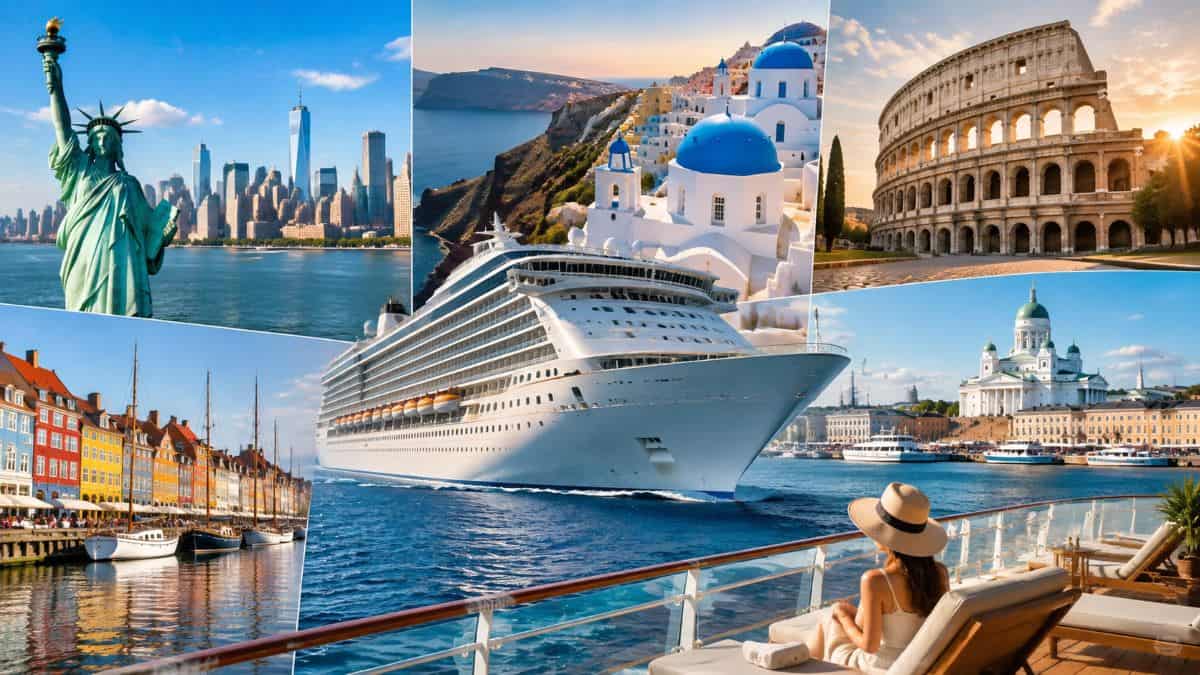
Image generated with Ai
The United States along with Greece and others are gaining new tourism opportunities as the 371 day luxury cruise boom transforms global travel patterns. This longer-than-ever Regatta voyage is pioneering a new model of extended exploration that unites the major cruise destinations in the USA, Greece, Italy, and Finland and Denmark. The voyage illustrates the heightened interest in long slow journeys combined with high-end travel and multi-country trips. With hundreds of destinations and ports, the cruise boom will provide strong coastal tourism and positively impact the local economy and change how travelers make their own path to discover the world.
The rise of ultra-long luxury cruises is changing the way high-value travellers explore the world. The record-breaking 371-day Regatta voyage represents a major shift from traditional short holidays towards extended global journeys where passengers spend nearly a full year discovering multiple continents, cultures and coastal destinations. The voyage will connect 62 countries and 220 ports, creating new opportunities for cruise destinations, local businesses and tourism economies. The growth comes as international tourism continues its strong recovery. UN Tourism data shows global travel demand remained strong in 2026, with international arrivals increasing during the first quarter.
Advertisement
The new generation of luxury cruises is creating demand for:
| Key Feature | Details |
|---|---|
| Cruise duration | 371 days |
| Ship | Regatta |
| Countries visited | 62 |
| Ports visited | 220 |
| Departure point | Rome, Italy |
| Alternative sailing | 367-day voyage from Australia |
| Travel category | Ultra-long luxury cruise |
The United States remains one of the world’s strongest cruise tourism markets because of its extensive coastline, major ports and diverse destinations. The 371-day global cruise route includes Alaska, bringing international visitors into one of America’s most valuable nature tourism regions.
Advertisement
Advertisement
Alaska’s cruise economy supports communities through passenger spending on excursions, restaurants, transport services, accommodation and cultural experiences. The United States National Travel and Tourism Office (NTTO) continues to track tourism as a major economic sector, with official data showing strong domestic and international travel activity.
The cruise impact for the United States includes:
| United States Cruise Impact Area | Tourism Benefit |
|---|---|
| Alaska | Wildlife and adventure tourism growth |
| Coastal ports | Passenger spending increase |
| Local businesses | More visitor-related income |
| Cultural tourism | Greater international exposure |
Greece remains one of Europe’s most important cruise destinations because of its islands, ancient heritage and Mediterranean location. The Regatta voyage includes destinations such as Santorini and other Greek islands, strengthening the country’s position in global luxury travel.
Tourism is a major contributor to Greece’s economy. European tourism data continues to show strong international demand across Mediterranean destinations. Eurostat identifies Greece among the important tourism economies of the European Union, where international travel remains a significant driver of accommodation demand and regional development.
The cruise expansion can support:
| Greece Cruise Tourism Area | Expected Travel Impact |
|---|---|
| Santorini | Luxury island tourism exposure |
| Greek islands | Visitor spending opportunities |
| Heritage sites | Cultural tourism growth |
| Local businesses | More international customers |
Italy plays a central role in the 371-day cruise journey because the voyage begins from Rome and includes destinations such as Naples. The country’s historic cities, coastal regions and Mediterranean ports make it one of Europe’s strongest cruise markets.
Italy has one of the largest tourism infrastructures in Europe. Eurostat data highlights Italy’s importance within European tourism, with the country among the leading destinations for accommodation capacity and international visitor activity.
The cruise journey creates opportunities for:
| Italian Cruise Tourism Advantage | Impact |
|---|---|
| Rome departure | Global travel gateway |
| Naples port | Cultural and coastal tourism |
| Historic attractions | Higher visitor engagement |
| Mediterranean location | Strong cruise connectivity |
Denmark’s inclusion in the global cruise itinerary highlights the growing importance of Northern Europe in luxury travel. Copenhagen is one of the region’s recognised cruise destinations, connecting international passengers with Scandinavian culture, architecture and maritime experiences.
The country benefits from cruise visitors through spending across transport, hospitality, attractions and local services.
Key benefits include:
| Denmark Tourism Benefit | Cruise Contribution |
|---|---|
| Copenhagen | International visitor gateway |
| Cultural attractions | Passenger experiences |
| Local economy | Visitor spending |
| Maritime sector | Cruise connectivity |
Finland is becoming an increasingly important part of Northern Europe’s cruise tourism network as international travellers search for longer and more diverse journeys. The inclusion of Helsinki in the 371-day Regatta global cruise highlights how smaller European destinations are gaining attention from premium travellers. Finland’s tourism sector benefits from its combination of coastal landscapes, Nordic culture, design, nature experiences and access to Baltic routes. Eurostat tourism data shows Finland remains one of the active tourism markets in the European Union, supported by international visitor demand and strong domestic travel activity.
The growth of extended cruise itineraries can support Finland through:
| Finland Cruise Tourism Advantage | Travel Impact |
|---|---|
| Helsinki port access | International visitor arrivals |
| Nordic culture | Premium tourism experiences |
| Nature attractions | Adventure and outdoor tourism |
| Baltic location | Regional cruise connectivity |
The record-setting voyage introduces a different model of luxury travel. Instead of short holidays focused on one region, the 371-day cruise creates a continuous global journey connecting Europe, Africa, Asia and the Americas. The Regatta voyage will travel through 220 ports across 62 countries, allowing passengers to experience hundreds of destinations without changing accommodation repeatedly.
The cruise represents the expansion of slow tourism, where travellers spend more time understanding local cultures, heritage sites and communities. Luxury travellers are increasingly looking for meaningful experiences rather than only traditional sightseeing.
The voyage will provide:
| Cruise Feature | Details |
|---|---|
| Ship | Regatta |
| Journey length | 371 days |
| Countries covered | 62 |
| Ports visited | 220 |
| Travel style | Ultra-long luxury cruise |
The global cruise begins in Rome, Italy, creating a major European gateway for international travellers. Rome’s position as a global cultural destination makes it an ideal starting point for a journey covering multiple continents.
The route connects Mediterranean tourism with Northern Europe, Africa, Asia and the Americas. This creates a wider tourism network where ports that may not traditionally receive large numbers of international visitors can gain exposure among high-value travellers.
The cruise route structure supports:
| Route Region | Tourism Opportunity |
|---|---|
| Mediterranean | Heritage and coastal tourism |
| Northern Europe | Cultural and city tourism |
| Africa | Nature and island experiences |
| Asia | Cultural discovery |
| Americas | Adventure and coastal travel |
The growth of ultra-long cruises is changing the economic role of ports. Cruise passengers often contribute to local economies through excursions, shopping, dining, transportation and cultural attractions.
According to cruise industry economic research, cruise tourism supports employment and spending across port cities, including tourism services, transport providers and hospitality businesses. The cruise sector continues expanding globally as travellers seek experience-focused journeys.
For destinations included in long global itineraries, benefits can include:
| Economic Area | Cruise Tourism Effect |
|---|---|
| Hospitality | More visitor demand |
| Transport | Increased local mobility services |
| Retail | Passenger spending |
| Attractions | Higher visitor numbers |
| Employment | Tourism-related jobs |
The 371-day Regatta voyage reflects a major change in the luxury travel market. Wealthy travellers are increasingly choosing longer journeys that combine transportation, accommodation and experiences into one complete travel product.
Traditional holidays usually involve visiting one or two destinations. Ultra-long cruises allow travellers to explore dozens of countries while maintaining a consistent travel environment.
The trend is supported by rising demand for:
The cruise tourism market continues expanding globally, with industry forecasts showing strong growth driven by demand for experiential and premium travel.Future Luxury Travel Trend Impact Longer journeys More destination spending Premium cruises Higher-value tourism Multi-country routes Wider economic benefits Experience travel Stronger cultural tourism
The 371-day cruise connects destinations with different tourism strengths. The United States offers Alaska’s wilderness experiences. Greece provides Mediterranean islands and heritage tourism. Italy delivers historic cities and cultural attractions. Denmark and Finland bring Nordic experiences and Baltic connectivity.
Together, these destinations demonstrate how cruise tourism can distribute visitors across different regions.
The biggest opportunities include:
| Country | Main Cruise Tourism Strength |
|---|---|
| United States | Alaska adventure tourism |
| Greece | Islands and heritage |
| Italy | Historic cities and Mediterranean ports |
| Denmark | Scandinavian culture |
| Finland | Nordic nature and Baltic tourism |
The 371-day Regatta journey represents a significant development in the future of international tourism. It shows how cruise travel is moving beyond traditional holiday patterns and becoming a complete global lifestyle experience.
Long-duration luxury cruises can create new opportunities for destinations by bringing international visitors to multiple regions over an extended period. Ports, islands and coastal communities can benefit from increased visibility, visitor spending and international connections.
The future of cruise tourism will likely focus on:
The 371 day luxury cruise boom is reshaping global travel by creating a new era of extended exploration, connecting destinations and opening fresh tourism opportunities worldwide. The USA along with Greece and others are becoming more important as the longer voyage demonstrates the high level of interest in slow travel and high-end cruise experiences. By connecting the major destinations spanning continents, the voyage is altering the international cruise travel patterns and the role of ports, islands, and coastal towns. The boom of luxury cruises is creating a new emphasis on longer cultural stays and high Travel experiences and economically changing the way tourism is developed across various countries.
Advertisement
Tags: 371 day luxury cruise, global cruise tourism, Luxury Travel Boom, United States Greece Italy tourism, world longest cruise
Advertisement
Advertisement













Friday, September 4, 2026

Friday, September 4, 2026

Friday, September 4, 2026

Friday, September 4, 2026

Thursday, September 3, 2026

Wednesday, September 2, 2026

Friday, September 4, 2026
Friday, September 4, 2026


