
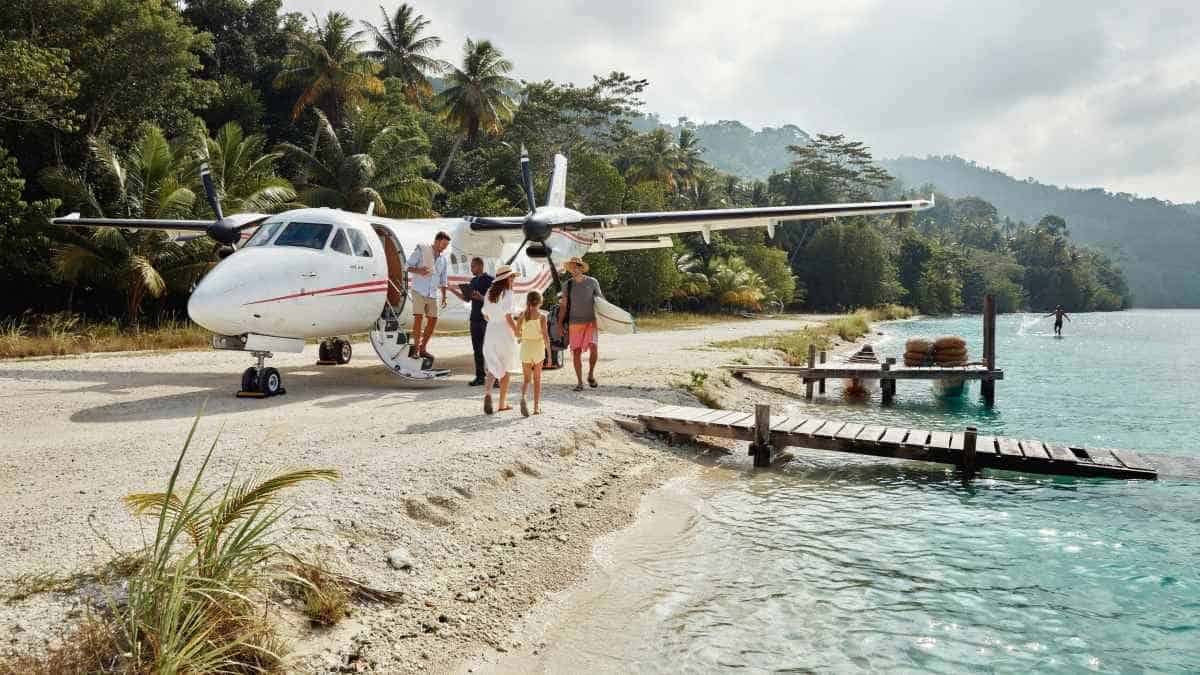
Image generated with Ai
The number of international visitors visiting the tourism sector in Solomon Islands has almost attained pre-COVID levels as a result of the recovery of the Solomon Islands due to an increase in the demand for leisure visits, improved air travel services, and a rise in eco-adventure tours. As per the statistics from the government’s tourism sector, the number of international visitors is 28,548, just 382 fewer than 28,930 in 2019. This is a significant achievement in the international tourism development of the country. Holiday or vacation tourists have risen substantially by 34.3% as a result of increasing leisure travel that is important in international tourism. The Solomon Islands are made up of more than one hundred islands in the South Pacific.
Honiara, located on Guadalcanal, serves as the country’s principal urban centre and an important gateway for international visitors. The capital provides accommodation, restaurants, transport services, cultural attractions and access to excursions across Guadalcanal.
For many international travellers, Honiara forms the starting point for exploring the wider Solomon Islands. Visitors can combine a stay in the capital with journeys to coastal areas, villages, historical sites and marine destinations.
Guadalcanal also has a significant connection to Second World War history. Battlefield sites, memorials and historical locations provide an additional tourism segment alongside the country’s beaches and natural attractions.
Advertisement
The 34.3% increase in holiday and vacation arrivals highlights the role of leisure tourism in the Solomon Islands’ recovery. The country’s tourism offer includes diving, snorkelling, surfing, fishing, hiking, wildlife experiences and marine excursions.
The archipelago’s extensive coastline and surrounding waters provide opportunities for visitors seeking ocean-based activities. Coral reefs, lagoons and tropical marine environments contribute to the destination’s appeal for diving and snorkelling holidays.
Eco-adventure tourism also provides opportunities for visitors to explore natural environments through guided activities and outdoor excursions. These experiences can be incorporated into itineraries alongside cultural and historical attractions.
Improved aviation connections across the Pacific corridor are contributing to the accessibility of the Solomon Islands for international travellers. Air connectivity is particularly important for an island destination where international visitors depend on scheduled flights to reach Honiara before connecting with domestic transportation where required.
Greater connectivity allows tourism operators to serve visitors arriving from regional Pacific markets as well as longer-haul international destinations. Flight schedules also influence how easily travellers can combine the Solomon Islands with other destinations within a wider Pacific itinerary.
The continued development of air services provides an important foundation for maintaining international tourism growth as visitor numbers approach the country’s previous peak.
The Solomon Islands offers tourism experiences that extend beyond conventional beach holidays. Nature-based and adventure activities provide opportunities to explore forests, coastlines, reefs and islands.
Diving remains an important tourism activity, with marine environments providing access to coral reefs, underwater landscapes and World War II-era wreck sites. Snorkelling and fishing also form part of the wider marine tourism offering.
On land, visitors can explore tropical landscapes through hiking and guided excursions. These activities connect tourism with the country’s natural environment while creating opportunities to travel beyond Honiara.
The combination of marine and terrestrial experiences enables travellers to create itineraries based on outdoor exploration rather than relying solely on resort-based holidays.
Cultural tourism is another part of the Solomon Islands visitor economy. Traditional communities, local customs, handicrafts, music and village experiences provide opportunities for international visitors to learn about Melanesian culture.
Travellers can incorporate cultural experiences into itineraries alongside nature and adventure activities. Visits outside the capital can provide access to communities and landscapes that differ from the urban environment of Honiara.
The country’s many islands also create opportunities for visitors to explore different regional environments and communities, although transportation requirements vary between destinations.
Planning travel within the archipelago requires consideration of domestic transportation and island geography. Honiara provides the primary entry point, while visitors continuing to other islands may need additional air or sea connections.
Accommodation options range from hotels and guesthouses in urban areas to tourism properties serving visitors seeking more remote experiences. Availability can vary significantly between the capital and outer islands.
Travellers planning multi-destination holidays therefore need to coordinate international flights with domestic transportation, accommodation and excursions.
With international arrivals standing at 28,548, the Solomon Islands is now only 382 short of achieving its 2019 high point. The number shows that the tourism sector of the nation is near its previous international arrival levels prior to the pandemic period, even as a major growth in vacationers shows that there is an increasing demand for vacation experiences. This recovery is being boosted through the efforts of improved aviation connectivity, international vacation demand, and the country’s eco-adventure tourism product. Honiara remains the gateway, while Guadalcanal and the other islands offer prospects of marine, nature, cultural, and historic tourism. With international arrivals closing in on the 2019 record, the Solomon Islands are re-establishing themselves as a travel destination in the Pacific region.
Advertisement
Advertisement
Advertisement













Friday, September 4, 2026

Friday, September 4, 2026
Saturday, September 5, 2026
Friday, September 4, 2026

Thursday, September 3, 2026

Wednesday, September 2, 2026
Friday, September 4, 2026



