
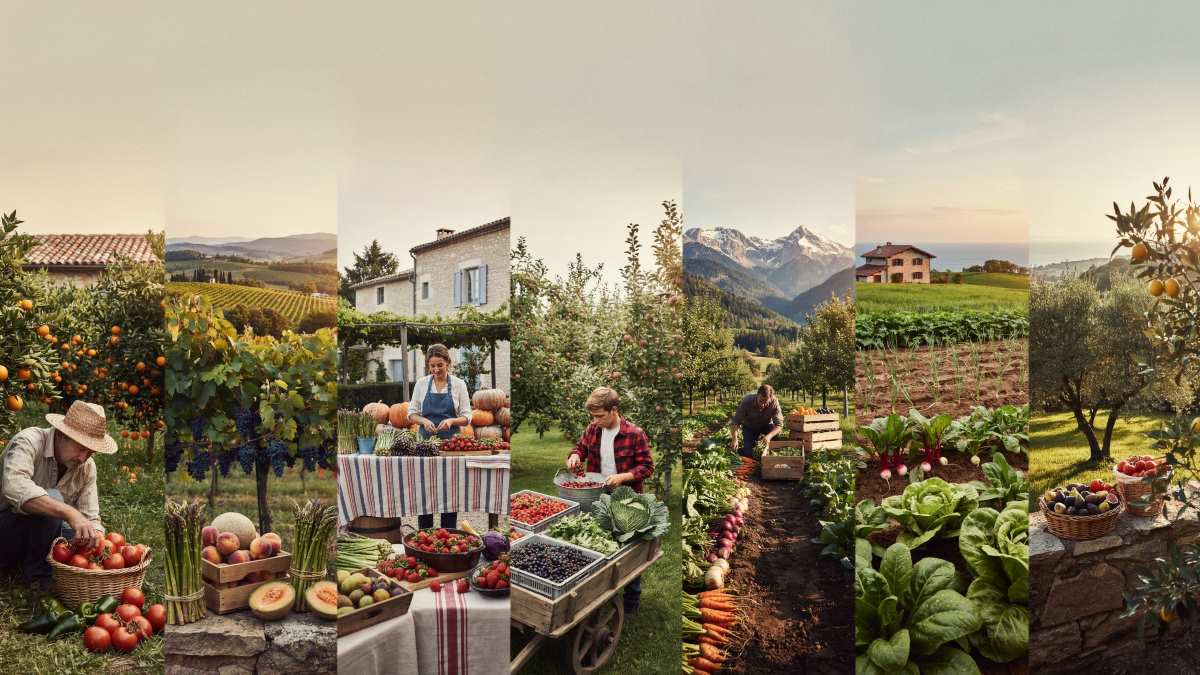
Image generated with Ai
Spain, France, and Italy have put the fruit, berry, and vegetable harvest in Europe under the spotlight. Being major farming states, they provide Europe with a great diversity of fresh produce. Moreover, their harvest reflects the power of the connection between food and nature. The harvest in Spain is marked by powerful fruit and vegetable production. The warm climate allows growing a variety of plants on the territory of Spain. The other major player is Italy, where fruit, berries, and nuts make up an essential part of the European harvest. The role of France cannot be overestimated either. There are diversified farms producing various seasonal crops. Together, the mentioned states create the map of global food production. Their farms experience the growth of asparagus and strawberries in spring, peaches and melons in summer, grapes and apples in autumn, and citrus and vegetables in winter. Thus, there is a new harvest story in each season. Nonetheless, it is not just the list of products. It is the exploration of farms, climate, and culture of Europe that powers the food. Travel And Tour World asks its readers to follow the story to learn how these epic harvests change the food picture of Europe.
Europe changes its menu with the seasons. As spring arrives, fresh asparagus, radishes, lettuce and strawberries appear. Then summer brings tomatoes, peaches, cherries, melons and berries. Autumn follows with grapes, apples, pears, pumpkins and nuts. Winter turns to hardy vegetables and citrus fruits. This changing food cycle tells a bigger story about Europe’s farms, climate and food culture. The seasonal harvests of European countries vary from the warm Mediterranean south to the cooler central and northern regions. Yet every season has something special to offer. Official agricultural sources from countries such as France, Italy, Spain, Poland, Austria and Slovenia show how strongly local production follows the agricultural year. The timing can change by region, weather and crop variety. Still, the pattern is clear. Europe moves from tender spring crops to rich summer produce, powerful autumn harvests and winter staples. For travellers, food lovers and curious readers, this creates a delicious way to explore Europe. The journey from earth to table starts long before a meal reaches the plate.
“Europe’s seasonal harvests offer travellers a deeper way to experience each destination. From Italy’s vineyards and Spain’s fruit farms to Poland’s apple orchards, food connects visitors with local land and traditions. These harvests turn ordinary journeys into meaningful experiences, where every season brings a fresh story to the table,” said Anup Kumar Keshan, Founder and Editor-in-Chief, Travel And Tour World.
Spring is when Europe’s fields begin to wake up. Farmers start bringing fresh green crops to markets, and the food calendar quickly becomes brighter. France lists asparagus, radishes, broad beans, carrots, lettuce and strawberries among its spring produce. Slovenia also highlights asparagus, lettuce, radicchio, spinach, chard, young onions and radishes during spring. Italy’s official seasonal calendar adds asparagus and strawberries to the spring picture. These crops have a short and valuable window in many areas. The change matters because spring produce often arrives after months of winter vegetables and stored food. Suddenly, markets become filled with tender leaves, crisp roots, and bright berries. The European harvest calendar therefore begins with freshness. It is Europe’s first big agricultural signal that warmer days have arrived.
Advertisement
Advertisement
| Leading country | 2026 / latest official production indicator | Key harvest strength | What it means for the article |
|---|---|---|---|
| Spain | 23.8% of EU vegetable production | Vegetables, fruit and nuts | Europe’s leading vegetable producer |
| Italy | 27.8% of EU fruit, berries and nuts production | Fruit, berries, nuts and vegetables | Europe’s leading fruit producer |
| France | 20.8% of EU cereals and rice production | Cereals, fruit and vegetables | Major agricultural power across several seasons |
| Poland | 2026: 3.4m tonnes tree fruit; 458,000 tonnes berries | Apples, berries and vegetables | Major temperate-fruit and berry producer |
| Greece | 7.1% of EU fruit, berries and nuts production | Mediterranean fruit | Important southern European fruit producer |
| Austria | 2025: 350,152 tonnes fruit; 726,842 tonnes vegetables | Apples, vegetables and orchard crops | Strong central European seasonal producer |
France has one of Europe’s most varied seasonal food calendars. Government guidance shows how quickly the country’s produce changes as temperatures rise. Spring brings strawberries, asparagus, artichokes, radishes, broad beans, carrots and lettuce. These foods give French markets a colourful start after winter. The strawberry season can run from around March to July, depending on the variety and growing conditions. That long window gives French consumers several months to enjoy the fruit. France’s seasonal pattern also reveals how climate shapes food. The country stretches across different agricultural regions, so harvest timing can vary. This makes France an important example of seasonal produce in Europe. Its food story is not fixed to one month. Instead, it moves gradually from one harvest to another, keeping markets active throughout the year.
Italy brings a distinctly Mediterranean flavour to Europe’s spring harvest. The country’s official food calendar shows asparagus and strawberries among the produce associated with this period. Spring is especially important because it creates a bridge between winter staples and the heavy fruit harvests of summer. Fresh asparagus arrives first, followed by strawberries and other crops as temperatures climb. The Italian calendar also shows why seasonal eating cannot be reduced to a simple national timetable. Different crops mature at different speeds, and regional conditions can affect their availability. That regional diversity is one of Italy’s greatest agricultural strengths. Northern, central, and southern areas can experience different growing conditions. So, when spring reaches Italy, the table begins to change. Green vegetables and early fruit take their place beside traditional dishes, creating a food scene shaped by the land itself.
Slovenia offers a clear example of how governments encourage people to eat local and seasonal food. Its agriculture ministry has highlighted spring produce such as asparagus, lettuce, radicchio, spinach, chard, young onions and radishes. These crops may look simple. Yet they show how closely food can follow the farming calendar. Spring vegetables also provide a strong contrast with the heavier foods associated with colder months. Fresh leaves, crisp radishes, and tender asparagus bring a lighter character to meals. The Slovenian example matters for another reason. Seasonal food is not only about taste. It connects consumers with local farms and helps them understand what their region can produce at different times. That makes Slovenia a useful stop on any exploration of the seasonal harvests of European countries.
Then comes summer, and Europe’s agricultural landscape changes dramatically. Warm temperatures help many fruits and vegetables reach their peak. Government seasonal guidance from France highlights tomatoes, aubergines, cucumbers, green beans, melons, watermelons, peaches, nectarines, apricots and figs during the warmer months. Italy follows a similar Mediterranean rhythm. Melons become important in June and July, while peaches and nectarines are especially prominent in July and August. Spain also benefits from long, warm growing conditions. Its government seasonal calendar includes important windows for apricots and cherries, among other fruits. Summer therefore becomes one of the busiest periods in the European harvest cycle. Markets fill quickly, farms work at full pace, and consumers gain an enormous choice of fresh food. The continent’s fields are suddenly overflowing.
Advertisement
Advertisement
French summer produce creates one of the most recognisable seasonal food pictures in Europe. Tomatoes, aubergines, cucumbers and green beans arrive alongside melons, peaches, nectarines, apricots, figs and other fruits. The French government describes summer as a particularly rich period for fruit and vegetables. This abundance reflects both climate and agricultural diversity. Peaches and nectarines, for example, generally appear from June through September. Apricots also occupy an important summer window. The result is a dramatic change from the spring basket. Green leaves and early vegetables give way to juicy fruit and sun-loving crops. For travellers, this is when French food markets become especially tempting. Yet the real story sits behind the stalls. Each product reflects a particular growing period, region and set of farming conditions.
Spain occupies a major place in Europe’s Mediterranean agricultural story. Government material shows a broad seasonal calendar covering fruits and vegetables across the year. Apricots and cherries feature strongly during warmer months. Avocados have a much longer availability window, while persimmons become especially important during autumn and winter. Spain’s geography adds another layer to the story. Growing conditions differ between Mediterranean areas, inland regions and the north. Therefore, harvest timing is not identical across the entire country. This matters when reading any national food calendar. A crop can be ready earlier in one area and later in another. Spain’s strength comes from this combination of climate, regional diversity and agricultural production. It helps explain why Spanish markets can offer an impressive range of fresh produce across a long part of the year.
Poland brings a different flavour to Europe’s summer harvest. Its cooler, temperate climate supports major production of berries and orchard fruits. The country’s agriculture ministry identifies strawberries, raspberries, blackcurrants, cherries, blueberries, gooseberries and apples among important fruit crops. Poland is also a major European producer of cherries, raspberries and currants. Summer is especially exciting because many soft fruits have relatively short harvest windows. Farmers must pick and handle them quickly to protect quality. Poland’s agricultural importance goes far beyond berries. Vegetables such as cabbage, carrots and onions also form a major part of production. The country’s harvest story shows that Europe does not need Mediterranean sunshine everywhere to produce remarkable fruit. The temperate north and centre have their own agricultural stars.
Italy’s summer harvest is packed with colour and sweetness. Its official seasonal calendar includes apricots, cherries, peaches, nectarines, melons, watermelons, figs and plums. These crops arrive as spring vegetables begin to fade from the centre of attention. The result is a sharp seasonal shift. Grapes also become increasingly important as summer moves towards autumn. This transition is particularly significant for Italy because grapes connect agriculture with the country’s long-standing wine culture. Yet the seasonal calendar is not just about famous products. It demonstrates how Italian food changes naturally as crops mature. A plate prepared in early summer can look very different from one served in late autumn. The ingredients follow the fields. That simple relationship between farm and kitchen remains one of the strongest features of Italian food culture.
Autumn changes Poland’s agricultural story. The focus moves from soft summer berries towards orchard fruits and vegetables. Poland’s agriculture ministry reports that apples account for around 80% of the country’s tree-fruit production. That makes apples a defining part of its agricultural identity. The country’s wider fruit sector is also substantial. Cherries, raspberries, currants, strawberries and blueberries add depth to the harvest calendar. Autumn is when orchard production becomes especially visible. Apples move into the centre of markets and food processing, while vegetables such as cabbage, carrots and onions become increasingly important. Poland’s story shows how one season can hand the baton to another. Summer berries do not disappear from the broader agricultural picture. Instead, apples and storage-friendly vegetables begin to dominate the seasonal table.
Austria provides another important Central European example. Its federal agriculture ministry identifies apples as the country’s leading fruit crop, while onions occupy the largest vegetable-growing area. Carrots and green peas are also important field crops. Government figures show the scale of Austrian vegetable production, with hundreds of thousands of tonnes harvested across field and garden production. Austria’s agricultural calendar reflects its cooler Central European setting. Instead of relying mainly on Mediterranean fruits, its farms focus strongly on orchard fruit and field vegetables. This creates a different seasonal rhythm. Summer brings fresh field produce, while autumn strengthens the role of apples and vegetables that can be stored. The result is a food system designed around both fresh harvests and longer-lasting crops. Austria therefore shows how geography can quietly shape what appears on European plates.
Autumn gives France an entirely different agricultural personality. The country’s government seasonal guidance identifies grapes, plums, walnuts, pumpkins, squash, mushrooms, apples, pears, kiwis and pomegranates among autumn produce. This is the season of abundance before winter tightens its grip. Grapes are especially important because their harvest connects agriculture with France’s famous wine-producing regions. Apples and pears also become major autumn fruits, while pumpkins and squash add heavier vegetables to the table. The colour of the landscape changes too. Summer’s bright produce gives way to deeper autumn shades. The French autumn basket therefore feels richer and more substantial. It also shows why the seasonal harvests of European countries are closely connected with local traditions. Food does not merely follow the calendar. It follows the rhythm of rural life.
Italy’s official seasonal calendar becomes especially rich in autumn. Grapes, persimmons, chestnuts, apples and pears become important as summer fades. Grapes hold a special place in the autumn story. Their harvest marks a major agricultural moment across many Italian wine regions. Chestnuts add another seasonal layer. Persimmons bring bright colour and sweetness, while apples and pears provide dependable orchard produce. The change is easy to understand. Summer crops need warmth and long days. Autumn favours fruits and vegetables that mature as temperatures begin to fall. Italy’s calendar therefore tells a story of transition. The country does not suddenly leave summer behind. Instead, one harvest gradually gives way to another. That slow handover keeps Italian markets active and varied well into the cooler months.
Spain’s autumn harvest highlights the country’s ability to produce fruit well beyond the peak summer months. Government seasonal material places persimmons strongly within the autumn and winter period. This is significant because it challenges the simple idea that Mediterranean agriculture is mainly about summer fruit. Spain’s long growing season allows several crops to remain important as temperatures fall. Avocados also have an extended availability period, while other fruits move in and out of season. Regional differences remain important. Spain’s varied climate means that harvest periods can differ from one agricultural area to another. That makes the Spanish calendar a useful example of why national harvest dates should be treated as guides rather than strict rules. The country’s autumn table can still look remarkably colourful, proving that Europe’s harvest story does not fade when summer ends.
Winter may look quiet in the fields, but Europe’s food calendar keeps moving. Hardy vegetables, stored crops and winter fruit become more important. France’s government seasonal guidance includes leeks, kale, endives, beetroot and citrus fruits among winter produce. Italy’s official calendar highlights oranges, mandarins and kiwis, alongside fruits such as apples and pears. This season depends more heavily on crops that can tolerate colder conditions or remain available through storage. That difference matters. Not every food eaten in winter was harvested a few days earlier. Some crops were gathered earlier and stored carefully. The winter calendar therefore tells a story about farming, storage, and food planning. Europe’s fields may appear less dramatic under winter skies, but the journey from earth to table continues without pause.
French winter produce demonstrates how farmers and consumers adapt to colder months. Leeks, kale, endives and beetroot become important choices, while citrus fruits add freshness. These crops contrast sharply with summer tomatoes and melons. Their strength lies in their ability to perform during cooler conditions or remain available through established supply systems. Winter also highlights the value of seasonal eating. Consumers can still enjoy a broad range of produce without relying entirely on summer crops. The French government promotes seasonal consumption as part of a broader food approach. Its calendar helps consumers understand which products are naturally associated with different periods. The message is simple. A European food market does not need summer sunshine to stay interesting. Winter has its own cast of characters.
Italy brings colour to the colder months through oranges and mandarins. Its official seasonal calendar places these citrus fruits strongly within the winter period. Kiwis also feature during the colder season, while apples and pears can remain available for longer periods. This shows how Mediterranean climates create a useful contrast with central and northern Europe. When some countries rely heavily on stored root vegetables and hardy greens, warmer southern regions can continue producing fresh citrus. Yet storage still plays a major role. Some fruits remain available beyond their immediate harvest because farmers and supply chains preserve them. Italy’s winter calendar therefore combines fresh harvests with careful food management. The result reaches consumers as a colourful reminder that Europe’s agricultural year never truly stops.
The biggest lesson from European agriculture is simple: there is no single European harvest season. Mediterranean countries such as Italy and Spain can support long growing periods for many fruits and vegetables. Central European countries such as Austria and Poland have stronger seasonal contrasts. That difference shapes local markets. A warm southern region may harvest citrus in winter, while a cooler region relies more on stored apples, cabbage, carrots and onions. Regional geography matters just as much. Mountains, rainfall, temperature, and local farming practices can change harvest timing. Even within one country, different regions can follow different schedules. The European harvest calendar should therefore be viewed as a broad guide. It shows patterns rather than rigid dates. Nature, as farmers know better than anyone, does not read spreadsheets.
Harvest seasons are not fixed forever. Weather can affect when crops mature, how much farmers produce and how long a harvest lasts. Government agricultural sources make this clear. Italy’s CREA describes its seasonal calendar as an orientation guide because maturation periods can change. This is an important detail for anyone writing about seasonal food. Saying that a crop is always harvested in one exact month can create a misleading picture. Temperature, rainfall, regional conditions, crop varieties and farming methods all matter. The same fruit may therefore appear earlier in one year or later in another. A warm spring can speed up development, while poor weather can delay it. Europe’s harvest calendar is best understood as a living system. The dates move because the land moves.
The journey from earth to table is more than a farming process. It shapes what people cook, buy and celebrate. Spring encourages lighter vegetables and early fruit. Summer creates an explosion of fresh produce. Autumn brings orchard fruits, grapes, pumpkins and nuts. Winter turns attention towards hardy vegetables, citrus and stored crops. This rhythm appears across Europe, although every country has its own version. Seasonal food can also strengthen the connection between consumers and farmers. When people know what grows nearby and when it is harvested, food becomes easier to understand. For travellers, this offers another way to experience Europe. A local market can reveal the season before a guidebook does. The food on the plate becomes a map of the landscape outside the window.
Europe’s famous food traditions did not develop in a vacuum. They grew alongside local agriculture. Grapes support major wine regions in France and Italy. Apples dominate important parts of Poland and Austria. Mediterranean countries produce large quantities of warm-season fruits and vegetables. Seasonal produce also affects recipes. Ingredients that arrive for only a short period often become highly valued. That relationship gives European food its sense of place. A dish can tell you something about the climate, soil and farming traditions of its region. The seasonal harvests of European countries are therefore not just an agricultural subject. They are part of Europe’s cultural identity. From a Polish berry field to an Italian vineyard and a French vegetable market, the same principle appears again and again: what grows on the land eventually shapes what appears on the table.
Europe’s farms continue to balance tradition with changing conditions. Seasonal calendars remain useful because they show consumers what local agriculture can offer during different periods. France moves from spring strawberries to summer peaches and autumn grapes. Italy shifts from asparagus to melons, grapes, chestnuts, and winter citrus. Spain benefits from a long Mediterranean growing season. Poland shines with berries and apples, while Austria combines orchard crops with major vegetable production. Slovenia puts spring vegetables firmly in the local spotlight. These patterns reveal a continent linked by agriculture but divided by climate. The most exciting part is that the story changes every year. Weather can move the clock. Regional harvests can surprise consumers. New growing methods can change availability. And that means Europe’s journey from earth to table is never quite the same twice.
Spain, France, and Italy demonstrate how seasonal agriculture plays an important role in creating Europe’s food identity. The fruits, berries, and vegetables that grow on their lands add color and variety to the menu of many people in Europe. What is more, every season provides an opportunity for exploring new regional markets, agricultural production, meals, and culinary traditions. The cycle of crop harvests allows travelers to become closer to the regions that they travel through. Nevertheless, weather changes might affect when crops will be ready every year. This is why the narrative never stops. Travel And Tour World encourages its readers to find their way through Europe’s seasonal produce and to uncover its rich food stories.
Advertisement
Advertisement
Advertisement












Friday, September 4, 2026

Friday, September 4, 2026

Friday, September 4, 2026

Friday, September 4, 2026

Thursday, September 3, 2026

Wednesday, September 2, 2026

Friday, September 4, 2026

Friday, September 4, 2026


