

Now, Germany Alongside Japan, UK & Australia to Converge on Bangkok as Travelers Hit Suvarnabhumi Airport Immigration Delays as Thai Airways, Emirates & China Southern Flights Trigger Severe Arrival Bottleneck Amid Tourism Surge Pressure

Published
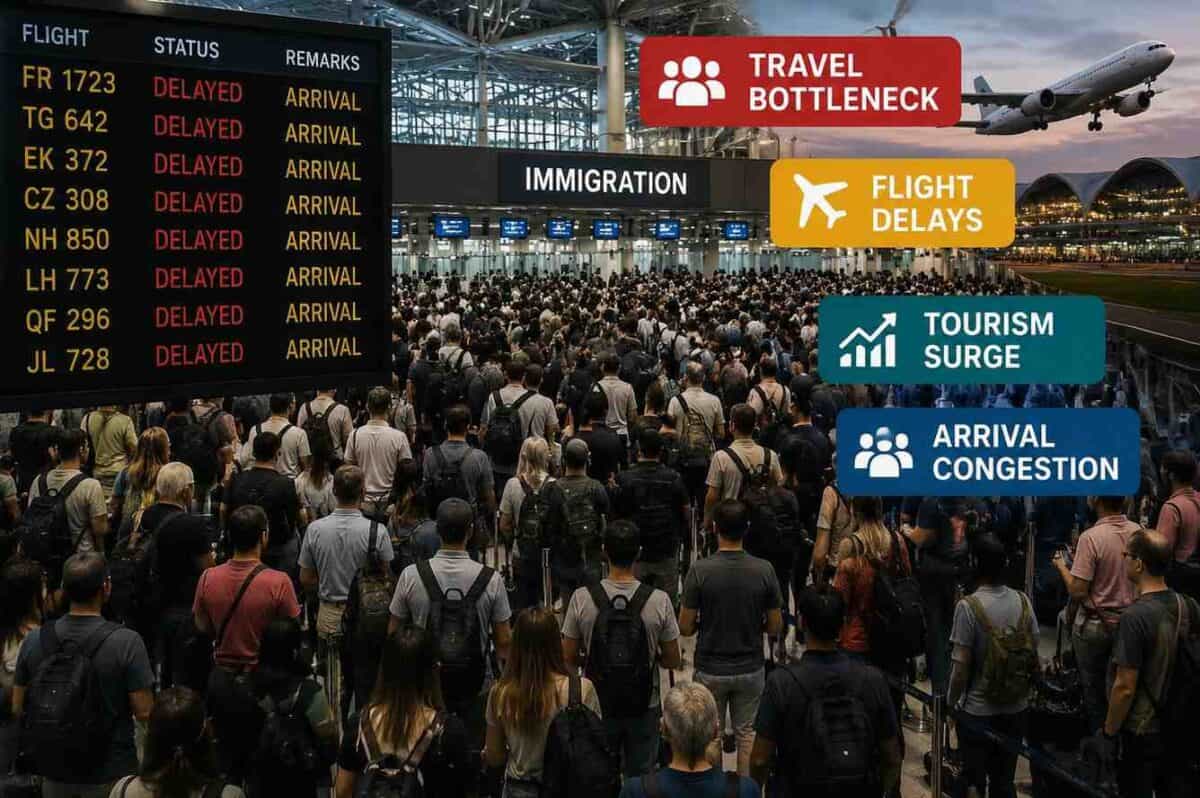
The Suvarnabhumi Airport immigration delays in 2026 has the international arrival check in at Bangkok’s airports severely congested. There are reports of German, Japanese, UK and Australian patrons waiting up to two hours during peak travel times. Analyzing the delays in 2026, it’s clear that this is an operational issue that needs to be addressed. The influx of international travelers to Thailand has been massive since the COVID-19 pandemic restrictions were lifted. The delays are particularly bad due to the large number of international flights from Thai Airways, Emirates and China Southern that are arriving at almost the same time. The delays are especially bad for long travel customers that connect from one international flight to another.
Bangkok Airport Immigration Delays 2026: What Is Happening Now
The Suvarnabhumi Airport immigration delays 2026 issue is centred on overcrowded arrival halls during peak international flight banks. Tourists have reported heavy congestion immediately after landing, with immigration counters struggling to absorb simultaneous wide-body arrivals.
Advertisement
Advertisement
The situation is most visible during:
- Evening long-haul flight arrivals from Europe
- Morning inbound waves from East Asia
- Multi-airline clustered landing schedules
Passengers describe the arrival experience as slow, with extended queues before passport clearance.
Advertisement
Advertisement
Why Suvarnabhumi Airport Immigration Delays 2026 Are Increasing
The core reason behind Suvarnabhumi Airport immigration delays 2026 is rapid tourism recovery in Thailand combined with infrastructure strain.
Key contributing factors:
Advertisement
Advertisement
- Sharp rebound in international arrivals post-pandemic recovery cycle
- Simultaneous landing of multiple full-capacity international flights
- Limited immigration counter expansion relative to passenger growth
- Peak-season clustering of European and Asian inbound traffic
- High dependency on manual passport verification processes
This combination creates a “queue shock effect” during peak arrival windows.
Germany Alongside Japan, UK & Australia: Key Traveller Impact Zones
Travellers from multiple long-haul markets are most affected by Suvarnabhumi Airport immigration delays 2026.
Advertisement
Advertisement
Key affected origin markets
- Germany
- Japan
- United Kingdom
- Australia
These markets typically arrive via long-haul routes with high passenger density per aircraft, increasing pressure on immigration processing.
Airline Pressure Behind Arrival Bottlenecks
Airline scheduling plays a major role in Suvarnabhumi Airport immigration delays 2026, particularly during peak arrival clusters.
Thai Airways International
Thai Airways operates dense regional and long-haul arrival banks into Bangkok, often arriving within short intervals, increasing immigration load.
Emirates
Emirates long-haul services from Europe and the Middle East bring wide-body aircraft with high passenger volumes, contributing to arrival surges.
Advertisement
Advertisement
China Southern Airlines
China Southern adds multiple inbound flights from East Asia, often aligned with similar arrival windows, intensifying queue pressure.
Airline Arrival Impact Snapshot (Operational Pattern Overview)
| Airline | Operational Role at Bangkok | Passenger Impact Factor |
|---|---|---|
| Thai Airways | Domestic + international hub carrier | High density arrival waves |
| Emirates | Long-haul Europe/Middle East routes | High passenger volume per flight |
| China Southern Airlines | East Asia feeder traffic | Frequent clustered arrivals |
Tourism Surge Pressure: Thailand’s Double-Edged Growth
The Suvarnabhumi Airport immigration delays 2026 issue reflects Thailand’s strong tourism recovery momentum.
Key trend factors:
- Rising European long-haul arrivals
- Increasing East Asian travel demand
- Strong seasonal tourism inflows
- Bangkok’s role as a primary ASEAN hub
However, immigration capacity has not expanded at the same speed as inbound demand, creating operational strain.
Traveller Experience: Why Delays Feel Worse in 2026

Passengers report that Suvarnabhumi Airport immigration delays 2026 feel more severe due to expectation gaps.
Main traveller concerns:
Advertisement
Advertisement
- Long-haul fatigue after 10+ hour flights
- Lack of fast-track clarity for general tourists
- Congested arrival hall visibility
- Slow queue movement perception
The emotional impact is amplified because Bangkok is marketed as a premium tourism destination.
What Travelers Should Do
If you are flying into Bangkok, here are practical steps to manage Suvarnabhumi Airport immigration delays 2026:
- Check flight arrival timing clusters before booking connections
- Use early-seat deplaning strategies if possible
- Keep documents ready to reduce processing time
- Avoid tight onward domestic flight connections
- Monitor airport peak arrival windows (evening banks are busiest)
- Consider airport fast-track services where available
These steps help reduce stress during peak congestion periods.
Broader Aviation Impact: Why This Matters Globally
The Suvarnabhumi Airport immigration delays 2026 situation is not isolated. It reflects a wider aviation trend:
- Airports worldwide are experiencing post-pandemic capacity pressure
- Immigration systems are under strain from tourism recovery
- Long-haul travel growth is outpacing border processing expansion
Bangkok remains one of Asia’s most important aviation gateways, making delays highly visible globally.
FAQs: Suvarnabhumi Airport Immigration Delays 2026
Q1: Why are immigration queues so long at Bangkok Suvarnabhumi Airport?
Queues are long due to simultaneous arrival of multiple international flights and limited immigration counter capacity during peak tourism periods.
Advertisement
Advertisement
Q2: Which travellers are most affected?
Long-haul passengers from Germany, Japan, the UK, and Australia are most impacted due to concentrated flight arrival timings.
Q3: Can travellers avoid delays?
Delays cannot be fully avoided, but passengers can reduce impact by avoiding peak arrival hours and preparing documents in advance.
The Suvarnabhumi Airport immigration delays 2026 issue is intensifying as Thailand’s main gateway faces severe congestion during peak international arrivals.
Author’s Observation
The Suvarnabhumi Airport immigration delays 2026 issue highlights a structural gap between Thailand’s rapid tourism growth and airport processing capacity. While demand signals remain strong and beneficial for the economy, passenger experience risks becoming a competitive disadvantage if infrastructure upgrades do not keep pace. Improving immigration efficiency will be essential for sustaining Thailand’s position as a leading global tourism hub.
Advertisement
