
San Francisco Ignites U.S. Food Tourism Revolution With Thousands Of Top-Rated Restaurants Packed Together

Published
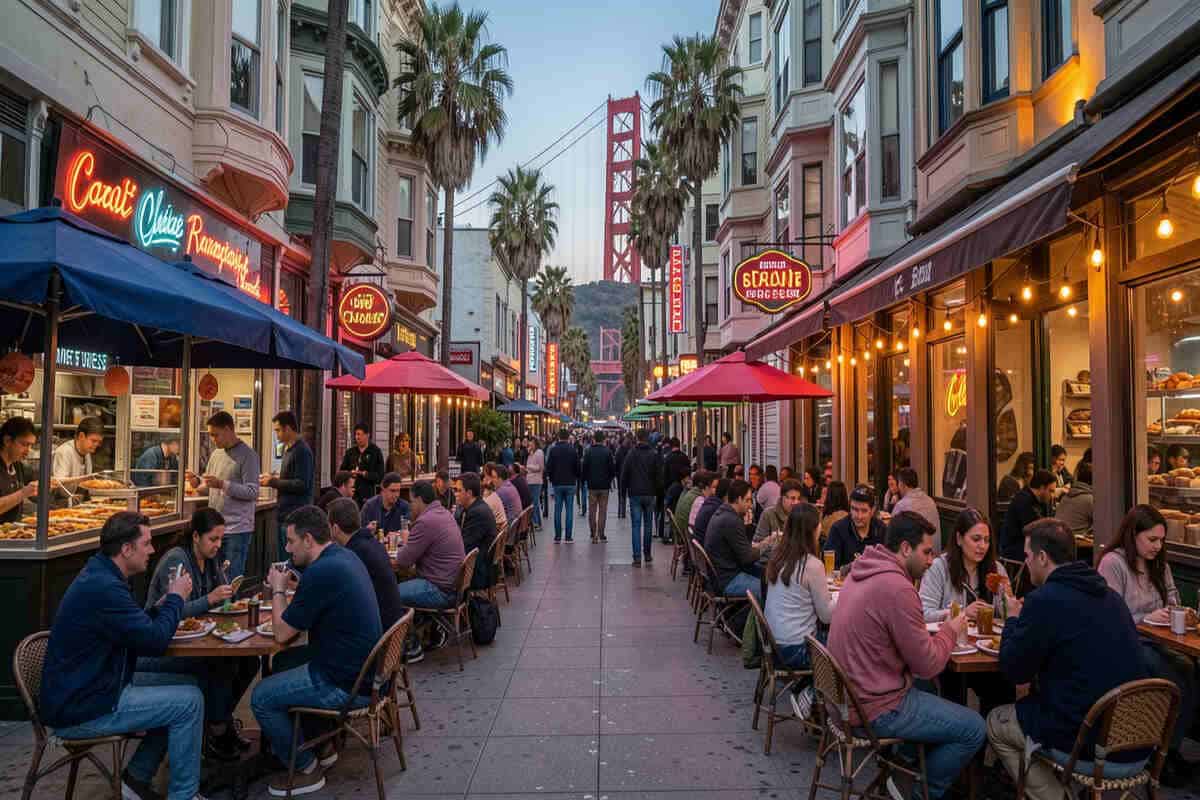
Image generated with Ai
San Francisco boasts more top restaurants than any other city in the U.S. because of its density. It’s not easy to find good eats in all American cities. Some places make you drive around town to find good dining, while others place great dining options around nearly every block with a restaurant scene in which travelers have access to dozens of critically acclaimed restaurants in a short distance.
A recent analysis of restaurant ratings and city land areas has revealed which major US cities offer the highest concentration of top-rated restaurants. The study examined four-star restaurant listings on TripAdvisor across the 50 largest cities in the United States and compared the number of highly rated dining establishments with each city’s geographical size.
Advertisement
Advertisement
The results show that several major food destinations are leading the country, while some surprising cities are outperforming traditional culinary giants. The ranking highlights where travellers can enjoy the greatest variety of highly rated restaurants without travelling long distances.
San Francisco and Miami Lead America’s Most Crowded Dining Markets
San Francisco and Miami have emerged as the strongest restaurant hotspots in the United States, offering some of the highest concentrations of highly rated dining options.
Advertisement
Advertisement
San Francisco secured the top position with more than 2,100 four-star restaurants located within a relatively compact urban area. The city’s dense neighbourhood structure, strong culinary culture and diverse international food scene have created an environment where travellers can discover premium dining experiences across many districts.
Advertisement
Advertisement
Miami followed closely behind with more than 1,500 highly rated restaurants. The city’s combination of luxury tourism, international communities and vibrant hospitality industry has helped transform it into one of America’s most competitive dining destinations.
Boston also performed strongly, ranking among the top three cities for restaurant concentration. Although Boston has fewer total four-star restaurants than larger cities such as New York, its smaller geographical footprint means visitors can find highly rated dining options much more easily.
The findings show that restaurant competition is not only about the number of venues available. Location and urban density play a major role in creating a concentrated dining experience.
Boston Surprises Travellers With Greater Restaurant Density Than New York
New York City is globally recognised as one of the world’s greatest food capitals, with thousands of restaurants representing almost every cuisine imaginable. However, the latest ranking shows that sheer numbers do not always translate into the highest restaurant concentration.
New York has more than 5,500 four-star restaurants, making it one of the largest dining markets in the country. However, the city’s enormous size spreads those restaurants across a much wider area.
Advertisement
Advertisement
Boston, by comparison, has a smaller number of highly rated restaurants but places them within a much more compact urban environment. This creates a situation where travellers can move between top-rated restaurants more easily.
The difference demonstrates how city size can dramatically influence the dining experience. A visitor in Boston may encounter several acclaimed restaurants during a short walk, while travellers in larger cities may need to cover greater distances to explore similar options.
For food-focused travellers, this means smaller but densely packed cities can sometimes provide a more convenient culinary adventure than larger metropolitan areas.
The Gap Between America’s Best and Worst Restaurant Cities Is Huge
The difference between the highest-ranked and lowest-ranked cities is significant. While cities such as San Francisco, Miami and Boston offer dense clusters of highly rated restaurants, some destinations require travellers to cover much greater distances between top dining choices.
Jacksonville, Florida, recorded a much lower concentration despite having hundreds of four-star restaurants. The city’s larger land area means visitors may need to travel considerably farther to move between highly rated venues.
Advertisement
Advertisement
Other cities appearing near the bottom of the ranking include Oklahoma City, Memphis, Kansas City and Fort Worth. These destinations still offer strong restaurant scenes, but their dining options are distributed across wider areas.
The comparison highlights an important trend in urban tourism. Travellers increasingly value destinations where attractions, restaurants and entertainment options are located close together. Compact dining districts create easier experiences for visitors exploring a city on foot.
World Cup Host Cities Become Major Food Destinations
Several cities ranked among America’s strongest restaurant markets are also preparing to welcome international visitors for major sporting events.
San Francisco, Miami, New York, Seattle and Las Vegas all appear in the top 10 for restaurant concentration. These cities will attract global travellers during upcoming FIFA World Cup matches, bringing millions of visitors who will explore local food scenes alongside sporting events.
For international tourists, these destinations offer more than stadium experiences. They provide access to some of the most diverse and competitive restaurant markets in the country.
Advertisement
Advertisement
Visitors arriving for major events will face a unique challenge: not finding a good restaurant, but deciding which one to choose among hundreds of highly rated options.
The combination of global tourism, cultural diversity and strong hospitality infrastructure is expected to further strengthen these cities as leading culinary destinations.
Top US Cities With the Highest Concentration of Four-Star Restaurants
| Rank | City | Four-Star Restaurants |
|---|---|---|
| 1 | San Francisco | 2,143 |
| 2 | Miami | 1,516 |
| 3 | Boston | 1,123 |
| 4 | New York City | 5,507 |
| 5 | Seattle | 1,513 |
| 6 | Washington, D.C. | 1,083 |
| 7 | Las Vegas | 2,203 |
| 8 | Chicago | 3,141 |
| 9 | Minneapolis | 605 |
| 10 | Portland | 1,414 |
America’s Restaurant Hotspots Show Changing Travel Trends
The ranking reveals how modern travellers are changing the way they experience cities. Food has become a major reason for choosing destinations, with visitors increasingly searching for places that offer variety, convenience and memorable dining experiences.
Cities with dense restaurant networks provide travellers with more flexibility. Visitors can explore neighbourhoods, discover new cuisines and enjoy premium dining without spending large amounts of time travelling between locations.
The results also show that traditional assumptions about food capitals are changing. While famous cities continue to dominate in total restaurant numbers, smaller and more compact destinations are becoming powerful competitors because of their accessibility and concentration.
Advertisement
Advertisement
For travellers planning future US trips, these cities represent some of the strongest culinary destinations in the country. Whether exploring coastal flavours, international cuisine or innovative dining concepts, visitors will find that America’s best restaurant experiences are often concentrated in places where every street can lead to a new discovery.
Advertisement
