
Europe’s Hidden Islands Hydra and More Turn Car-Free Travel Into a High-Value Coolcation Boom

Published
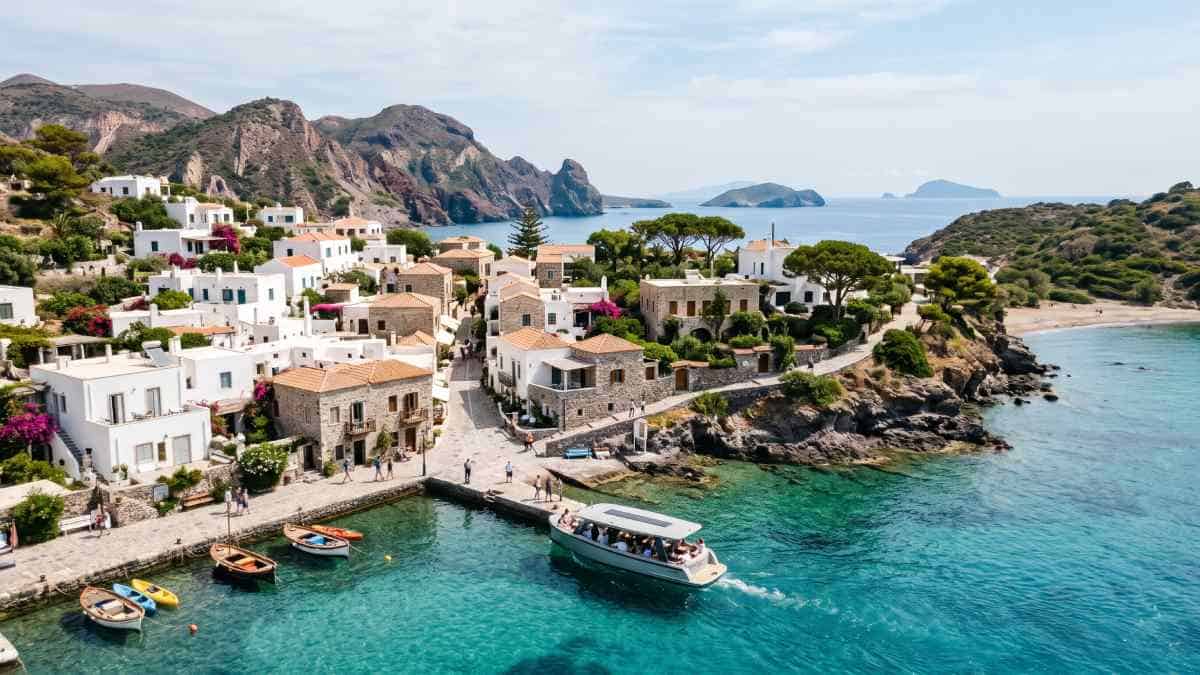
Throughout isolated European island clusters, a unique form of structural revolution is altering the economics of tourism, with mass-scale cruise expansion plans being spurned by sensitive coastal destinations in favor of aggressive conservation efforts. As the number of visitors was traditionally maximized regardless of the costs involved through huge airport expansions in popular Caribbean vacation spots, a new development paradigm is being created in isolated European coastal communities. By creating carrying capacities and zero-emission transit zones, along with selective point-to-point transportation, premium travelers are attracted while sensitive ecosystems are protected from destruction. It is clearly demonstrated that strategic friction can indeed become an effective tool for protecting local ecosystems.
Macroeconomic Realignments in European Island Governance
The Carrying Capacity Reckoning Across Fragile Enclaves
An inflection point has been reached in global tourism economics, where direct collisions between conventional volume-driven growth and tangible ecological thresholds are observed. International visitor arrivals have expanded across Europe, by which structural bottlenecks along Mediterranean coastlines and historic archipelagos have been intensified. Destination sustainability and infrastructure resilience are underscored by international economic forums as primary drivers of long-term economic competitiveness. With historic baselines for crowding indices and visitor density metrics being exceeded across continental territories, the operational vulnerability of fragile insular geographies has been brought into sharp focus.
Within this macroeconomic climate, the paradigm of open-ended physical throughput is being rejected by remote European municipalities. Instead, institutional carrying capacity management across physical, ecological, and psychological parameters is being codified by these jurisdictions:
- Physical Carrying Capacity: Absolute spatial limits of human occupancy within finite settlement footprints are dictated.
- Ecological Carrying Capacity: Non-negotiable boundaries are established so that the irreparable degradation of benthic meadows, dune ecosystems, and groundwater reserves is prevented.
- Social and Psychological Carrying Capacity: The acoustic peace and civic well-being that define island heritage are preserved.
Geographic boundaries are no longer treated as logistical impediments; rather, sovereign regulatory firewalls have been erected, through which physical constraints are actively transformed into instruments of high-yield destination management.
Advertisement
Advertisement
Reversing the Mass-Market Caribbean Tourism Model
For several decades, regional development playbooks established by Caribbean hubs were mirrored across developing island territories. The continuous expansion of jumbo-capable runways, extensive multi-lane road networks, liberalised bilateral aviation agreements, and high-density deep-water berths capable of mooring post-Panamax cruise vessels was prioritised. Although substantial gross passenger arrivals were generated, considerable economic leakages, severe seasonal vehicular congestion, and extensive ecological damage to sensitive coastal environments were systematically introduced.
In marked contrast, a reverse framework is being pursued by Europe’s remote archipelagos across the Atlantic Ocean, Tyrrhenian Sea, Baltic Sea, and North Sea. It is recognised by municipal authorities that immediate structural paralysis is caused whenever continental transit models are replicated on micro-islands. Land that would otherwise support indigenous agriculture, endemic biodiversity, or historic architectural streetscapes is directly consumed when space is allocated to automotive parking facilities, fuel depots, and multi-lane asphalt roads. Consequently, infrastructural bottlenecks are purposefully maintained. By eliminating vehicular transport, replacing hub-and-spoke multi-leg transit with point-to-point eco-corridors, and capitalising on climate shifts toward cooler latitudes, an exclusive and regenerative model for sustainable island tourism is being pioneered.
Advertisement
Advertisement
Radical Pedestrian Mobility and Combustion Engine Bans
The legislative prohibition of private internal combustion vehicles forms the foundational pillar of Europe’s micro-island strategy. By replacing automobiles, delivery lorries, and motorbikes with human-powered freight, pack equines, and zero-emission electric maritime shuttles, delicate settlements are protected from structural vibrations, urban emissions are eliminated, and authentic digital-detox sanctuaries are offered to visitors.
Silba and Unije: The Adriatic Karići Protocol and Marine Caps
In the northern waters of the Zadar Archipelago in Croatia, one of the most unspoiled maritime biospheres in the central Adriatic is maintained across the island of Silba. This pristine environment is directly sustained through a comprehensive municipal decree whereby motor vehicles are banned across the entire road network.
A total prohibition is mandated by municipal authorities regarding private motor vehicles, motorbikes, and commercial lorries. Crucially, bicycles are also prohibited during the peak summer months, by which Silba is rendered a pure pedestrian mobility zone. The only motorised machinery permitted within the settlement boundaries are the island postman’s moped and authorised municipal utility vehicles utilised exclusively for emergency water distribution.
Internal freight logistics rely entirely on a traditional logistical conveyance known as the karić (plural: karići), a two-wheeled wooden cargo cart pulled by hand. When incoming catamarans berth at western or eastern harbours, commercial freight, grocery supplies, and passenger luggage are unloaded by hand and transferred directly onto these wooden carts. Narrow stone corridors are traversed by local hospitality operators and porters wheeling the karići to reach village apartments and secluded coastal coves.
This human-scale transit mechanism is strictly reinforced by regional maritime policy. Scheduled passenger-only catamaran services are operated from continental ports, while roll-on/roll-off vehicular ferries are purposefully excluded. By this access bottleneck, the volume of luggage, freight, and foot passengers is effectively capped to the maximum seating capacity of incoming catamarans, insulating fragile municipal infrastructure from overtourism. A parallel dynamic is observed on nearby Unije, where a pristine agricultural sanctuary centred on artisanal olive oil production, local fisheries, and low-density ecotourism has been fostered by the total absence of asphalt motor corridors.
Hydra: Presidential Decrees, Equine Freight, and Thalassia Taxi Corridors
In the Saronic Gulf of Greece, one of the world’s most rigorously maintained car-free island territories is represented by Hydra. The architectural and transport framework of the island is governed by strict statutory heritage protections enacted via a landmark Presidential Decree, under which the entire island is legally classified as an untouchable national monument and protected historical settlement.
Advertisement
Advertisement
An absolute ban on all wheeled motorized transport is enforced across the island. Motor vehicles, motorcycles, and bicycles are entirely prohibited, ensuring that the acoustic environment is defined exclusively by pedestrian steps and equine hoofbeats. Furthermore, it is required by municipal planning laws that all building repairs conform to neoclassical stonemasonry techniques, while the construction of swimming pools is barred so that the exhaustion of limited freshwater cistern networks is prevented.
Internal freight operations are sustained by a registered working herd of equines and pack mules. Every commodity required for daily life—including luggage, provisions, furniture, and heavy construction materials—is transported across steep marble steps and rugged mountain tracks via pack saddles. For perimeter mobility and coastal transit, a fleet of licensed commercial water taxis (thalassia taxi) is operated from the central harbour, allowing transportation to be channelled around perimeter sea routes so that interior slopes are preserved from road scarring and soil erosion.
Île des Embiez: Private-Public Stewardship and Electrified Shuttles
An integrated private-public governance framework for insular sustainability is illustrated by the Île des Embiez, situated off the French Côte d’Azur. An uncompromising ban on private visitor motor vehicles is strictly enforced. Continental automobile traffic is intercepted at the mainland harbour, where cars are deposited in secure perimeter car parks prior to embarkation.
Passenger connectivity across the lagoon is provided by a continuous low-emission maritime shuttle service. Internal island operations are rigorously managed: small fleets of electric utility buggies and electric bicycles are utilised by staff, while marked pedestrian trails are traversed by visitors. The island’s transport framework is coordinated with active environmental conservation initiatives, including the operations of the Paul Ricard Oceanographic Institute and designated bird sanctuaries. To prevent habitat degradation across shallow marine passages, wading or swimming across the Grand Gaou channel from the mainland is strictly banned by regional authorities, by which fragile intertidal beds are shielded from human trampling.
Volcanic Terroirs and Point-to-Point Eco-Air Corridors
The second pillar of Europe’s micro-island model pairs natural isolation with luxury ecotourism through targeted point-to-point transit corridors. Rather than routing visitors through congested continental hubs and multi-leg ferry networks, direct air links and regulated marine mooring reserves are introduced to connect high-yield travellers directly to protected landscapes.
Pico Island: Direct Aviation Links and UNESCO Basalt Vineyards
The transformation of a marginal agrarian island into a premier ecotourism hub via targeted regional aviation infrastructure is demonstrated by Pico Island in Portugal’s Azores archipelago. Direct scheduled flight services into Pico Airport from Lisbon and Ponta Delgada have been established, allowing multi-leg transit delays to be bypassed by eco-travellers and wine enthusiasts.
Advertisement
Advertisement
This air corridor feeds directly into the UNESCO-designated Paisagem da Cultura da Vinha da Ilha do Pico. Endemic grapevines are shielded from Atlantic gales by an extensive grid-like network of dry-stone basalt walls known as currais. Visitors are channelled into curated, high-value experiences, such as basalt-cellar tastings and strictly regulated ascents of Mount Pico. Access to the volcanic mountain is controlled through a dedicated base station, where statutory carrying-capacity ceilings are enforced and mandatory GPS tracking transponders are issued to hikers so that trail density can be monitored and deviation from marked routes into fragile alpine habitats can be prevented.
Capraia Island: Tuscan Archipelago Marine Sanctuary Zoning and Posidonia Protection
Management of nautical tourism through marine conservation zoning is exemplified by the Italian volcanic island of Capraia, situated within the Parco Nazionale Arcipelago Toscano. Capraia’s surrounding waters are divided into graduated conservation zones, including integral marine reserves where navigation, swimming, diving, and fishing activities are strictly prohibited.
The primary ecological safeguard is directed toward the management of private boat anchoring, by which meadows of Posidonia oceanica are protected from chain scouring. Regulated eco-buoy mooring fields (campi boe) tethered to the seabed via low-impact helical screws have been established in designated anchorages. Visiting vessels are required to reserve berths in advance and moor exclusively to these eco-buoys, by which nautical carrying capacity is capped while vital carbon sinks and fish nurseries are preserved.
The Northern European Coolcation Boom and Dune Sanctuaries
A notable geographical shift is reflected in the rise of coolcation travel, whereby temperate coastal archipelagos across the Baltic and North Seas are increasingly sought out over southern European regions exposed to intense summer heatwaves. Micro-islands along Europe’s northern fringe are capturing this demand by pairing mild summer climates with clean transport networks and protected coastal environments.
Saaremaa: Baltic Mud Spas and Hybrid-Electric Maritime Links
Estonia’s largest island, Saaremaa, has transformed its historic curative sea-mud balneology and coastal heritage into an international retreat. Multimodal decarbonisation is maintained via direct turboprop air connections alongside battery-hybrid passenger ferries operating across the Suur Strait corridor. Diesel consumption, emissions, and underwater acoustic noise are significantly reduced by hybrid propulsion systems, ensuring that passenger connectivity is maintained while the surrounding shallow marine biosphere is protected.
Spiekeroog: East Frisian Tidal Logistics and Wadden Sea Rail Carts
In Lower Saxony, Germany, the East Frisian barrier island of Spiekeroog operates within the strict natural boundaries set by the Lower Saxony Wadden Sea National Park. Spiekeroog is maintained as an entirely car-free island; private combustion motor vehicles are banned, requiring visitor cars to be parked at mainland garages.
Advertisement
Advertisement
Ferry operations are strictly tide-dependent, as navigation channels become impassable at low water. Visitor throughput is naturally regulated because crossings can only be conducted during high-tide windows dictated by lunar cycles. On the island, luggage and freight are transferred onto hand-drawn trolleys, electric utility tractors, and a historic narrow-gauge rail trolley line. Strict statutory conservation mandates (Ruhezone I) require visitors to remain on designated boardwalks, ensuring that seal haul-out grounds and shorebird nesting areas remain undisturbed.
Styrsö and Vrångö: Gothenburg Archipelago Electrified Transit and Flakmopeder
In western Sweden, the integration of car-free island communities into a metropolitan mobility grid is illustrated by the southern Gothenburg archipelago. Private passenger cars are banned across islands such as Styrsö and Vrångö. Regular passenger ferry services operated by electric and low-emission vessels are fully integrated into the regional public transit network.
Internal logistics are managed via the flakmoped—a traditional three-wheeled cargo moped fitted with a front load-bearing flatbed. Fleets of these mopeds have been widely converted to electric powertrains and paired with electric cargo bicycles. All freight handling, luggage transfers, and maintenance operations are conducted with zero direct emissions, preserving an undisturbed pedestrian environment.
Structural Comparisons of European Micro-Island Frameworks
| Territory & Nation | Statutory Jurisdiction | Mainland Transit Gateways | Internal Mobility Systems | Conservation & Capacity Mechanisms | Primary Ecotourism Assets |
| Silba & Unije (Croatia) | Municipal Pedestrian Statutes; City of Zadar | Passenger-only catamarans from Zadar | Hand-drawn wooden carts (karići); summer bicycle ban | Exclusion of vehicular Ro-Ro ferries; seating capacity caps | Unspoiled Adriatic dive sites; zero-engine acoustic tranquility |
| Hydra (Greece) | Municipality of Hydra; Presidential Decree | Passenger catamarans and hydrofoils from Piraeus | Registered pack equines; licensed water taxis (thalassia taxi) | Absolute wheeled transport ban; pool prohibitions; masonry codes | Neoclassical architectural preservation; car-free historic harbour |
| Île des Embiez (France) | Six-Fours-les-Plages; Société Paul Ricard | Electric maritime shuttle from Le Brusc | Pedestrian footpaths; electric utility buggies and e-bikes | Natura 2000 lagoon; LPO reserve; channel crossing prohibited | Oceanographic Institute; coastal trails; certified eco-marina |
| Pico Island (Portugal) | Regional Azores Government; Natural Park Directorate | Direct flights to PIX; regional passenger ferries | Light service vehicles; designated basalt vineyard trails | Mountain hiker quotas; mandatory GPS tracking transponders | UNESCO basalt vineyard currais; Mount Pico volcanic trekking |
| Capraia Island (Italy) | Parco Nazionale Arcipelago Toscano | Scheduled passenger ferries from Livorno | Designated walking trails; regulated municipal transit | Integral marine reserves; mandatory eco-buoy mooring (campi boe) | Marine diving routes; protected Posidonia seabed meadows |
| Saaremaa (Estonia) | Saaremaa Municipality; Regional Affairs Ministry | Kuressaare Airport (URE); hybrid-electric ferries | Hybrid buses, bicycles, and pedestrian corridors | Fleet electrification; acoustic underwater noise reduction | Curative sea-mud balneology; Kuressaare Castle; geosites |
| Spiekeroog (Germany) | Nationalparkverwaltung Niedersächsisches Wattenmeer | Tide-dependent passenger ferries from Neuharlingersiel | Hand luggage carts, electric baggage tugs, rail trolley | Lunar tide scheduling; Ruhezone I seal and avian sanctuaries | Car-free North Sea dune retreats; mudflat hiking; wildlife viewing |
| Styrsö & Vrångö (Sweden) | City of Gothenburg; Västtrafik Authority | Integrated electric and low-emission catamarans | Electric cargo mopeds (flakmopeder); cargo e-bikes | Private car prohibition; public transit electrification | Nordic coastal culture; granite nature reserves; car-free hamlets |
Economic Realignment: Yield Curves, Municipal Budgets, and Labour Dynamics
Measurable economic shifts are created by the implementation of vehicle bans, carrying-capacity ceilings, and point-to-point transit networks. Rather than depressing commerce, the revenue structure of insular economies is fundamentally altered.
Elevating the Yield Curve Through Artificial Scarcity
Upward shifts in local hospitality yield curves are induced through artificial scarcity when physical access and bed counts are restricted. Accommodation capacity is strictly constrained by historic building envelopes and conservation decrees. Because vehicular ferries are excluded or maritime operations are restricted by tidal windows, high-volume day-trippers are filtered out.
Consequently, the visitor base is dominated by high-yield ecotourists and extended-stay travellers who generate higher Average Daily Rates (ADR) and Revenue Per Available Room (RevPAR). Commercial viability is achieved by boutique accommodations, heritage stone villas, and farm-to-table dining establishments without the expansion of bed inventories or the overtaxing of municipal utility grids.
Advertisement
Advertisement
Municipal Fiscal Restructuring in Non-Automotive Jurisdictions
Local public expenditure is reshaped when private motor vehicles are eliminated. In conventional mainland destinations, substantial proportions of annual municipal budgets must be allocated to road resurfacing, vehicular accident management, traffic policing, and multi-storey parking facilities.
On micro-islands, these capital and operational outlays are virtually eliminated. Public funds are redirected by municipal councils toward quayside infrastructure maintenance, water desalination systems, waste recycling facilities, and ecological conservation programmes. Because heavy vehicular traffic is removed, negligible physical wear is experienced by historic stone lanes and pedestrian corridors, reducing recurring roadway repair expenditures to nominal figures.
Mitigating Demographic Hollowing via Specialised Island Logistics
Resilient local employment ecosystems are established by non-motorised transit mandates, counteracting the demographic hollowing frequently observed across rural coastal regions. In conventional mass-tourism models, road transport is dominated by automated car-rental platforms or external transport operators that generate minimal local employment.
On micro-islands, everyday freight transit requires dedicated local labour. Skilled and well-compensated positions are held by porters, karići handlers, registered muleteers, electric cargo drivers, and water taxi captains. Because these specialised roles cannot be offshored or automated, stable year-round employment is provided, encouraging young working families to remain on the islands and sustaining essential civic institutions beyond the primary tourist season.
Regulatory Challenges: Real Estate Escalation and Equity Pressures
Distinct operational and socio-economic challenges are encountered despite ecological and fiscal successes. Higher daily living costs can be created by the logistical complexity of operating a non-motorised economy. When building materials, provisions, and retail merchandise are transported via passenger catamarans, pack animals, or handcarts, freight handling surcharges are incurred, elevating local consumer prices.
Furthermore, property values are frequently inflated by external real estate demand as micro-islands gain international prominence as exclusive eco-retreats. The risk of local working families being priced out of property markets is heightened when historic residences are acquired by affluent external buyers, which can convert permanent settlements into seasonal enclaves. To mitigate these pressures, planning rules that safeguard long-term residential housing, restrict short-term holiday rentals, and allocate tourism tax revenues to municipal affordable housing initiatives are being introduced by local councils.
Advertisement
Advertisement
Future Outlook: The Institutionalisation of Carrying-Capacity Governance
A global benchmark for environmentally sensitive destinations is being established as micro-island carrying-capacity frameworks mature toward unified, digitally managed systems.
Predictive Algorithm Allocation and Unified Bimodal Corridors
The integration of automated digital platforms will increasingly govern visitor access. Unified reservation architectures are being developed by regional transport authorities and park directorates:
- Integrated Multi-Modal Ticketing: Transport tickets for inbound flights or catamarans will be issued simultaneously with digital access permits that account for daily carrying capacities.
- Dynamic Dispersion Controls: Daily visitor quotas will be adjusted by municipal management platforms utilizing real-time environmental sensor data regarding trail erosion, water reserves, and wildlife nesting patterns.
- Automated Perimeter Enforcement: Regulated mooring fields will be overseen by satellite-based vessel monitoring systems to identify and penalise unauthorized anchoring over protected seagrass beds.
Complete Fleet Electrification and Automated Environmental Protection
Full operational decarbonisation across island maritime corridors is being accelerated. Supported by European climate frameworks, hybrid Baltic vessels and electric Scandinavian passenger fleets serve as operational templates for the total electrification of regional sea routes. Greenhouse gas emissions and underwater acoustic disruptions are eliminated by battery-electric propulsion systems, ensuring comprehensive protection for surrounding marine habitats. Long-term regional resilience is demonstrated to be achieved not through the accommodation of greater volume, but through the rigorous safeguarding of environmental thresholds.
Sustainable destination resilience is achieved by Europe’s secluded archipelagos through strict environmental limits rather than uncontrolled tourism growth. By establishing combustion-free zones, deploying electrified point-to-point transit corridors, and enforcing carrying capacities, vulnerable biospheres are shielded from degradation, setting an enduring global standard for high-yield, conservation-led regional economic development.
Conclusion
The change in direction in terms of strategy by the islands of Europe shows that sustainability in terms of destination longevity involves effective ecological management and not endless passenger growth. Through ensuring that there are no vehicles allowed and the use of eco-friendly routes by sea and air, as well as basing the identity of the region on climate change resilience, the islands ensure that the vulnerable ecosystems are safeguarded from overtourism. The increasing trend among discerning travelers is towards temperate and unpolluted regions and not busy continental destinations, thereby confirming the viability of the economic model.
Advertisement
