
Oslo Shines After Dark as Fjord Oslo Brings Free Light Art to Norway’s Waterfront
Published
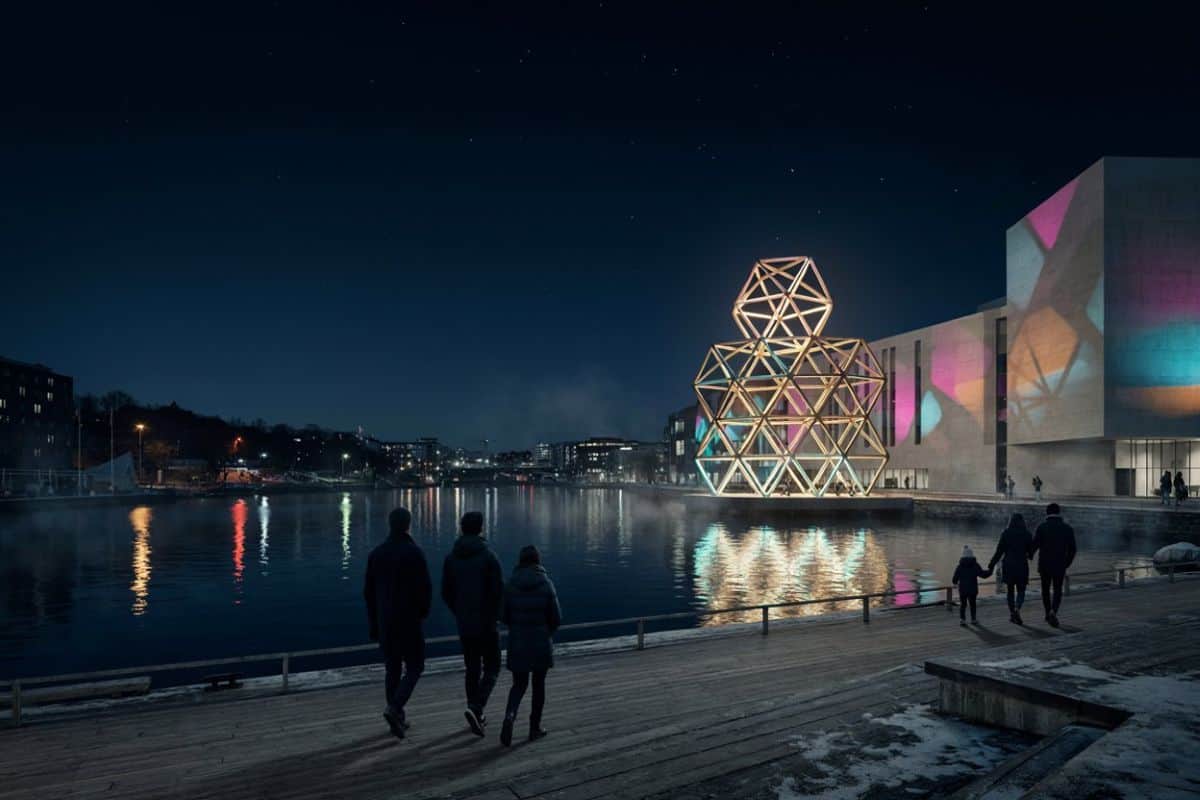
Oslo will glow in a new way this November as the Fjord Oslo Festival of Light Art returns to the Norwegian capital. From 5 to 8 November 2026, the city’s famous waterfront will become a large outdoor art space after dark. The event is free for everyone. Visitors can walk through light installations, projections, sculptures and digital artworks without buying a ticket.
The festival will run each evening from 6pm to 11pm. It will spread across Tjuvholmen, Aker Brygge, Rådhusplassen and Akershusstranda. These are some of Oslo’s best-known waterfront areas. They connect museums, restaurants, public spaces, historic sites and fjord views.
Fjord Oslo gives travellers a strong reason to visit Norway in November. The days are shorter. The air is crisp. The city becomes darker earlier. This festival turns that darkness into an advantage. Light becomes the main attraction.
A Free Festival with a Powerful Peace Message
The 2026 Fjord Oslo Festival of Light Art will follow the theme “Imagine Peace”. The theme asks visitors to think about peace in a simple but meaningful way. It looks at hope, memory, shared responsibility, nature and human connection.
This is not only a festival of bright colours and dramatic pictures. The works will also explore serious ideas. Some will show how people recover after conflict. Some will ask visitors to reflect on their own place in the world. Others will use light to create moments of calm and wonder.
The organisers say peace is not simply the end of conflict. It is something people must build, protect and imagine together. This message gives the festival a strong cultural value. It also makes the event different from a normal city light show.
Fjord Oslo is part of a wider European project called Imagine Peace. The project connects light festivals in Norway, Denmark, Germany, Italy and Croatia. This international link brings more artists and ideas to Oslo. It also helps the festival place Norway within a wider European conversation about culture, sustainability and peace.
Advertisement
Advertisement
Ten Artworks Will Transform Oslo’s Harbour Promenade
The 2026 programme includes ten works by artists and studios from eight countries. Each artwork will sit in a different part of the waterfront. Visitors can walk between them and create their own evening route.
One major work is Divine Geometry at the Astrup Fearnley Museum in Tjuvholmen. The installation comes from Latvian collective Those Guys Lighting. Thousands of fine light rays will form changing shapes around visitors. People can walk inside the work and become part of the scene. A 30-minute sound composition will add another layer to the experience.
At Aker Brygge, Norwegian artist Anastasia Isachsen will present Eclipse. This work uses a projection on a water screen. Light, mist and sound will come together beside the fjord. The piece looks at darkness in a new way. It suggests that light may still exist even when people cannot see it clearly.
French studio Luminariste will bring Heliotrope to Tjuvholmen. The work takes inspiration from sunflowers turning towards the sun. It uses light to explore the human wish for energy, renewal and hope. It will stand at Olav Selvaags Plass, a public square near the water.
Artworks Give Visitors a Journey Through Hope and Memory
Several works will bring the festival’s peace theme closer to real people. Ukrainian artist Julia Shamsheieva will present Voice of Ukraine at City Hall Square. The digital installation uses animation, traditional musical ideas and symbols from Ukrainian mythology. It reflects on strength, loss, protection and hope.
Norwegian design studio Void will show Nadir at the same area. The light sculpture takes the shape of an upside-down pyramid. It will use reflected light to create changing patterns. The work invites visitors to think about peace as something shared rather than distant.
At the Nobel Peace Center, German artist Claudia Reh will present Fractions. This work is especially important because it asks visitors to take part. Reh will use analogue overhead projectors to build a changing mosaic of light. Guests can add their own visual thoughts about peace. The work will grow as people contribute to it.
Danish artist Eva Esmann Behrens will bring Walking Towards Peace to City Hall Square. Her work uses movement, history, nature and old textile patterns. It shows peace as a journey that people take step by step. The message is easy to understand. Peace needs action. It does not simply appear by itself.
Advertisement
Advertisement
Tjuvholmen and Akershusstranda Will Become Outdoor Galleries
Italian artist Alessandro Lupi will show Identity in Tjuvholmen allé. The installation uses a reflective tetrahedron. It will mirror the people and spaces around it. As visitors move closer, their reflections will change. The work asks people to look beyond themselves and think about how they live with others.
Croatian artist Petar Šćulac will present Stairs Between Wars at Tjuvholmen allé. The work includes five sculptures made from wood, wire mesh and concrete. Projections will throw light and shadows across the wall of the Astrup Fearnley Museum. The piece shows that memories of conflict can remain even when people move towards peace.
At Akershusstranda, Croatian collective Visualia Studio will show Pallets. The installation will use reused wooden pallets and projected words. People from different places will share what peace means to them. Their voices will appear together in one public artwork. The project also supports the festival’s sustainability aims.
Easy Travel, Free Access and a Strong Oslo City Break
Fjord Oslo is designed to be easy to explore. All installations are free. The organisers say the sites are accessible to all visitors. The festival route can be reached by train, metro, tram, bus and ferry.
Nationaltheatret is the nearest main rail and metro station. Tram stops at Aker Brygge and Kontraskjæret also sit close to the festival route. Visitors arriving by ferry from Nesodden can reach Aker Brygge directly.
The festival encourages guests to walk, cycle or use public transport. It uses existing city spaces and energy-efficient lighting technology. It also works with local cafés and restaurants instead of creating a large separate food area. This helps reduce waste.
Fjord Oslo will make the capital’s dark November evenings feel alive. It combines art, travel, culture and public space in one walkable waterfront experience. For travellers seeking something beyond museums and shopping, Oslo will offer a bright new reason to visit.
Advertisement
Advertisement
Advertisement
