
Ozamiz and More Drive Asia’s Agri-Ecotourism Boom to Combat Farm Losses and Infrastructure Delays

Updated
Published
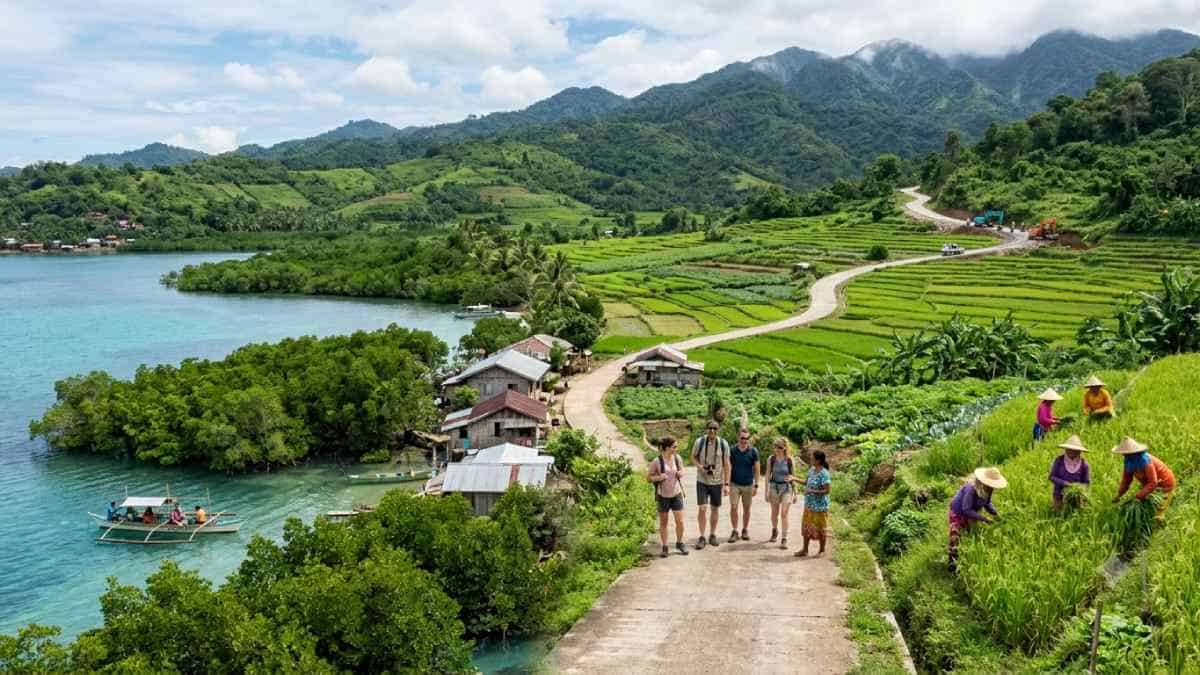 Image generated with Ai
Throughout Asia, secondary municipal districts are confronted with compounded economic fragility due to disruptions to agriculture, epidemics among livestock, and delays in infrastructure development projects. To shield local economies from any impact that yield reduction and road development delays may have on their stability, agri-ecotourism belts are being developed by provincial planners. Through the strategic linkage of coastal marine parks with highland agriculture loops, instant service industry income is earned by peripheral locations to compensate for agricultural declines. Based on macroeconomic surveillance and strict biosecurity measures, rural areas become robust economic zones through these coordinated tourism belts.
Macroeconomic Context and Background: Vulnerability in Asian Secondary Corridors
Systemic macroeconomic fragility has long been experienced by peripheral provincial economies across East and Southeast Asia. Predominantly relying on primary agriculture, smallholder aquaculture, and localized livestock rearing, these rural corridors are acutely exposed to biosecurity failures, extreme climate events, and external market slumps. When transboundary animal diseases such as African Swine Fever or Foot-and-Mouth Disease are swept through rural hinterlands, economic consequences extending far beyond immediate herd losses are suffered. Catastrophic capital wipes are experienced by smallholders, local market supply chains are collapsed, and municipal tax bases are contracted rapidly.
Advertisement
Advertisement
This agricultural distress is frequently compounded by structural bottlenecks in public infrastructure delivery. In developing Asian economies, major civil works—such as national highway widening, coastal embankment construction, and riverine flood-control projects—are routinely subjected to extended review periods, fiscal reallocations, or engineering audits. When national public works projects are stalled, critical transport arteries connecting agrarian production zones to urban port hubs are congested or rendered impassable. Consequently, a double burden is faced by rural communities: shrinking agricultural output combined with restricted physical access to primary commercial markets.
To overcome these structural vulnerabilities, agri-ecotourism corridors are being implemented by regional development authorities as an adaptive macroeconomic strategy. By linking coastal marine conservation zones with interior mountain farming circuits, diversified economic ecosystems are created by secondary municipal corridors. Rather than treating agriculture and travel services as isolated sectors, sustainable leisure travel is leveraged by this integrated framework to generate non-farm service income. Daily liquidity from visitor spending is acted upon as a vital financial buffer during farm downtime, while biosecure farm-stay operations are utilized to protect agrarian assets. Guided by sub-national statistical tracking and proactive spatial planning, a proven pathway toward sustainable regional tourism and long-term economic insulation is offered by these corridors.
Advertisement
Advertisement
Cross-Regional Comparative Analysis: Asian Coastal-Mountain Corridor Models
The deployment of coastal-mountain tourism loops has been established as a successful regional strategy across diverse Asian geographic contexts. By pairing urban entry gateways with peripheral rural municipalities, economic shocks are balanced across complementary ecosystems by regional authorities.
Country & Region Major Gateways & Peripheral Loop Towns Summary
| Country & Region | Major Gateways & Peripheral Loop Towns | Primary Agricultural & Infrastructure Friction Points | Integrated Agri-Ecotourism Solution |
| Philippines (Northern Mindanao) | Hubs: Ozamiz City, Oroquieta City Loop Towns: Lopez Jaena, Plaridel, Baliangao, Sapang Dalaga, Concepcion, Calamba | African Swine Fever livestock losses; Department of Public Works and Highways flood-control project delays affecting road links. | Coastal-mountain eco-tourism loop combining marine reserves with cool mountain circuits. |
| Vietnam (Mekong Delta to Highlands) | Hubs: Can Tho, Da Lat Loop Towns: Ben Tre, Tra Vinh, Bao Loc | Coastal salinity intrusion affecting fisheries; coffee crop rust and market price volatility. | River-to-Ridge corridor linking sustainable coconut and fruit farming with highland agro-forestry visits. |
| Thailand (Northern & Upper Gulf) | Hubs: Chiang Mai, Hua Hin Loop Towns: Mae Chaem, Sam Roi Yot, Pran Buri | Upland seasonal haze, drought, crop seasonality, and livestock biosecurity risks. | Gastronomic trails linking coastal fisheries directly with biosecure highland organic farm stays. |
| Indonesia (East Java Circuit) | Hubs: Malang, Probolinggo Loop Towns: Batu, Lumajang, Pasuruan | Foot-and-Mouth Disease in dairy herds; volcanic sediment transport hazards on transit routes. | Volcanic soil farm-to-table trails backed by strict veterinary hygiene and livestock movement regulations. |
Deep-Dive Pillar 1: Agricultural Recovery and Advanced Biosecurity Protocols
Working agricultural landscapes are opened to public travel during disease outbreaks, presenting significant biological risks if managed incorrectly. Advanced biosecure travel standards are utilized to turn active farm properties into resilient leisure assets while preventing pathogen transmission.
Advertisement
Advertisement
Institutionalising Biosecure Travel Standards
To prevent human vector transmission of transboundary pathogens such as African Swine Fever or Foot-and-Mouth Disease, strict farm access controls are enforced by regional agricultural departments and international health agencies. In accordance with guidelines, physical bio-barriers are instituted by participating model farms:
- Automated Vehicle Disinfection Corridors: All tourist transport vehicles entering agricultural perimeter zones are required to pass through automated chassis-spraying arches and tire disinfection baths containing broad-spectrum virucidal solutions.
- Pedestrian Sanitation Barriers: Calcium hydroxide footbaths and sanitized footwear stations are utilized by visitors entering farm premises. Sanitized outer boots or footwear covers are provided to guests before stepping into agricultural zones.
- Zonation and Environmental Surveillance: Farm areas are strictly zoned into public hospitality reception areas and restricted livestock production sectors. Under official recovery protocols, sentinel animal placement and environmental surveillance must be used to prove zero pathogen presence before full herd restocking is authorized.
Generating Agri-Tourism Financial Buffers for Smallholders
When primary crop yields are collapsed or livestock depopulation occurs, essential financial buffers are provided by agri-tourism. Traditional farming returns are tied to seasonal harvest schedules, leaving smallholders vulnerable during crop failures or mandatory farm downtime. Household budgets are stabilized through immediate daily cash flows:
- Farm Entry and Experiential Tour Fees: Daily liquidity to purchase feed, fertilizers, or biosecurity supplies is generated by charging modest entry fees for guided agricultural tours.
- Direct Farm-Gate Produce Sales: Full retail value is captured by farmers through direct sales of processed jams, organic vegetables, honey, and handicrafts to visitors, bypassing middleman markups.
- On-Farm Culinary Workshops and Homestays: Agricultural routines are transformed into high-value hospitality services by offering immersive cooking classes and cool-climate farm stays.
Securing Farm-to-Table Supply Chain Protection
To shield smallholders from market price drops, farm-to-table supply chain protection is established by provincial tourism boards. Direct procurement agreements between luxury hotels and boutique resorts in primary entry hubs and rural agricultural cooperatives along peripheral loops are brokered by local authorities. Guaranteed price floors and fixed procurement volumes for organic vegetables, poultry, seafood, and dairy are set by these contracts. Smallholders are embedded directly into institutional hotel supply chains, thereby securing stable farm incomes even during broader macroeconomic slumps.
Deep-Dive Pillar 2: Infrastructure Synchronization and Transit Resilience
Transit connectivity is recognized as vital for rural travel corridors. However, secondary provincial regions are frequently confronted with road network disruptions caused by public works delays or severe weather events. Travel connectivity is maintained through structural engineering solutions alongside municipal agility.
Mitigating Public Works Construction Friction
In peripheral destinations, large-scale civil works managed by national infrastructure agencies—such as flood-control dikes, river revetments, and highway widening—are rendered susceptible to administrative delays. When national agencies pause construction for engineering reviews or contractor audits, primary roads can be severely bottlenecked. Comprehensive reviews of flood-control projects, for instance, were noted to have temporarily slowed road improvements along primary arterial highways, directly impacting travel times between urban entry ports and peripheral eco-tourism destinations.
Deploying Local Government Unit Micro-Infrastructure Solutions
To prevent public works delays from paralyzing rural tourism, temporary, decentralized micro-infrastructure solutions are built by Local Government Units:
Advertisement
Advertisement
- Solar-Lit Municipal Access Roads: Paved, solar-illuminated secondary bypass routes around delayed national highway sites are constructed by Local Government Units to maintain connectivity to remote attractions.
- Community-Built Bamboo Bridges and Boardwalks: Locally sourced, resilient materials are utilized by municipal teams to construct pedestrian boardwalks across wetlands and riverways, keeping natural sites accessible without heavy capital expenditure.
- Localized Boat Shuttles and Maritime Loops: In coastal and riverine areas, organized water shuttles are operated by municipalities, turning waterways into primary transit channels when roads are impassable.
Engineering Climate-Proofed Tourism Arteries
Mountain-to-coast corridors in tropical Asia are subjected to heavy monsoon rainfall, flash floods, and landslips. Year-round transit is ensured through specialized slope and drainage engineering:
- Bio-Engineered Slope Protection: Steep mountain cuts along roads linking highland destinations to coastal loops are stabilized by planting deep-rooting vetiver grass alongside geotextile matting.
- Permeable Paving and High-Capacity Drainage: Aquifer recharge is enhanced and surface run-off during heavy monsoon downpours is reduced by utilizing permeable interlocking pavers in rural parking zones and eco-resorts.
- Pre-Cast Modular Culverts and Elevated Bridges: Washed-out road links are repaired by municipal engineering teams within hours through the installation of pre-cast modular drainage structures, maintaining infrastructure resilience across the corridor.
Deep-Dive Pillar 3: Data-Driven Tourism Economics and Macro-Metrics
Modern regional administration is reliant upon data-driven policymaking to evaluate sectoral shifts, reallocate municipal budgets, and foster inclusive growth. Sub-national economic metrics are utilized by local planners to measure the precise economic buffer provided by tourism during agricultural downturns.
Integrating Provincial Product Accounts
Detailed sub-national economic performance metrics are provided through the implementation of Provincial Product Accounts by national statistical bodies. Regional Gross Domestic Product is disaggregated into Gross Value Added across Agriculture, Forestry, and Fishing, Industry, and Services through this analytical framework.
An analytical framework of this nature was demonstrated during statistical data dissemination forums. Official reports indicated that positive overall economic growth was achieved despite contractions experienced in agriculture and construction, anchored primarily by a surge in the services sector. Underlying factors and root causes behind the decline in the agriculture sector were emphasized for examination, and dedicated focus along with proper interventions were called for by provincial planning coordinators.
Adaptive Budgeting and Targeted Reallocation
Adaptive budgeting is practiced by municipal finance boards through the tracking of Provincial Product Accounts metrics. When services are expanded while agriculture is contracted, increased local tax revenues from hotel stays, dining, and eco-tour fees are captured by municipal governments. Agricultural recovery is funded by reallocating these service revenues through provincial boards, which purchase veterinary disinfectants, provide direct raiser subsidies, and support community biosecurity training.
Measuring Inclusivity via Real-Time Dashboards
Real-time statistical dashboards are built by regional authorities in alignment with official statistical month themes. Visitor flows and merchant participation are monitored by aggregated data platforms. Critical indicators are tracked by these dashboards:
Advertisement
Advertisement
- Local Economic Yield per Visitor: Direct expenditure retained within peripheral loop towns versus leakages to external operators is measured.
- Micro-Merchant Integration Rate: The number of registered smallholders, local boat captains, and homestay hosts active along travel loops is tracked.
- Biosecurity Compliance Index: Farm adherence to vehicle spraying, footbath maintenance, and livestock disease reporting is evaluated.
Strategic Implementation Blueprint: A Three-Phase Action Plan
Sustainable regional tourism along peripheral corridors is established by local governments and industry stakeholders through a structured, three-phase implementation blueprint.
Actionable Implementation Phases
- Phase 1: Establishing Biosecure Agri-Ecotourism Zones
- Coastal and mountain corridors are classified into risk zones based on livestock health data.
- Vehicle disinfection arches, pedestrian footbaths, and slaked lime perimeters are installed at zone entry points.
- Dual-role hospitality and biosecurity management are trained into municipal leaders and farm operators.
- Phase 2: Developing Multi-Municipality Route Architecture
- Coastal attractions are seamlessly bundled with mountain circuits.
- Local transport operator schedules between urban gateways and peripheral loop towns are synchronized.
- Micro-infrastructure bypasses, solar-lit access roads, and bamboo boardwalks are built around delayed public works sites.
- Phase 3: Macro-Economic Feedback Loops
- Annual statistical data are monitored to evaluate service sector offsets against agricultural dips.
- Hotel tax surcharges and service fees are reallocated directly into smallholder farm subsidies and biosecurity equipment.
- Direct hotel-cooperative procurement contracts are enforced to guarantee price floors for rural farm produce.
Future Outlook and Policy Implications
Biosecurity, micro-infrastructure resilience, and data-driven economics are integrated along Asian coastal-mountain corridors to offer a scalable model for regional economic stability. As climate volatility is increased and transboundary biological risks are persisted, traditional reliance on single-sector agricultural production is rendered insufficient for secondary provincial economies.
Long-term stability must be maintained by provincial governments through the establishment of permanent cross-ministerial task forces uniting departments of tourism, agriculture, public works, and national statistical agencies. Biosecurity vigilance is maintained, investments in climate-proofed micro-transit are made, and tourism revenues are dynamically reallocated into rural recovery, enabling peripheral Asian destinations to effectively protect local livelihoods from external shocks while driving inclusive economic development.
Biosecure, multi-municipality travel corridors are established to provide Asian secondary regions with a proven framework against macroeconomic vulnerability. As demonstrated across Northern Mindanao, East Java, Central Vietnam, and Northern Thailand, local service economies are coupled with rural production chains to buffer smallholders against biological outbreaks and public works bottlenecks. Real-time statistical metrics, strict biosecurity enforcement, and micro-transit innovations are supported to transform localized sectoral slumps into opportunities for long-term regional prosperity.
Conclusion
The integrated agri-ecotourism corridors have been formed to present a transformative strategy for the secondary destinations of Asia that can provide resilience from any kind of shock related to agriculture and infrastructure delay. As is clear from the cases in Misamis Occidental, East Java, Central Vietnam, and Northern Thailand, the protection of marine resources in the coastal region is linked with the agriculture in the highlands to safeguard the small farmers from economic shock. The real time data, biosecurity measures, and innovations of micro-transit have been facilitated in order to help the regional governments turn their economic problems into opportunities for growth.
Advertisement
