
Cambodia and Cuba Sign Tourism MoU to Boost New Cooperation and Latin America Connections

Published
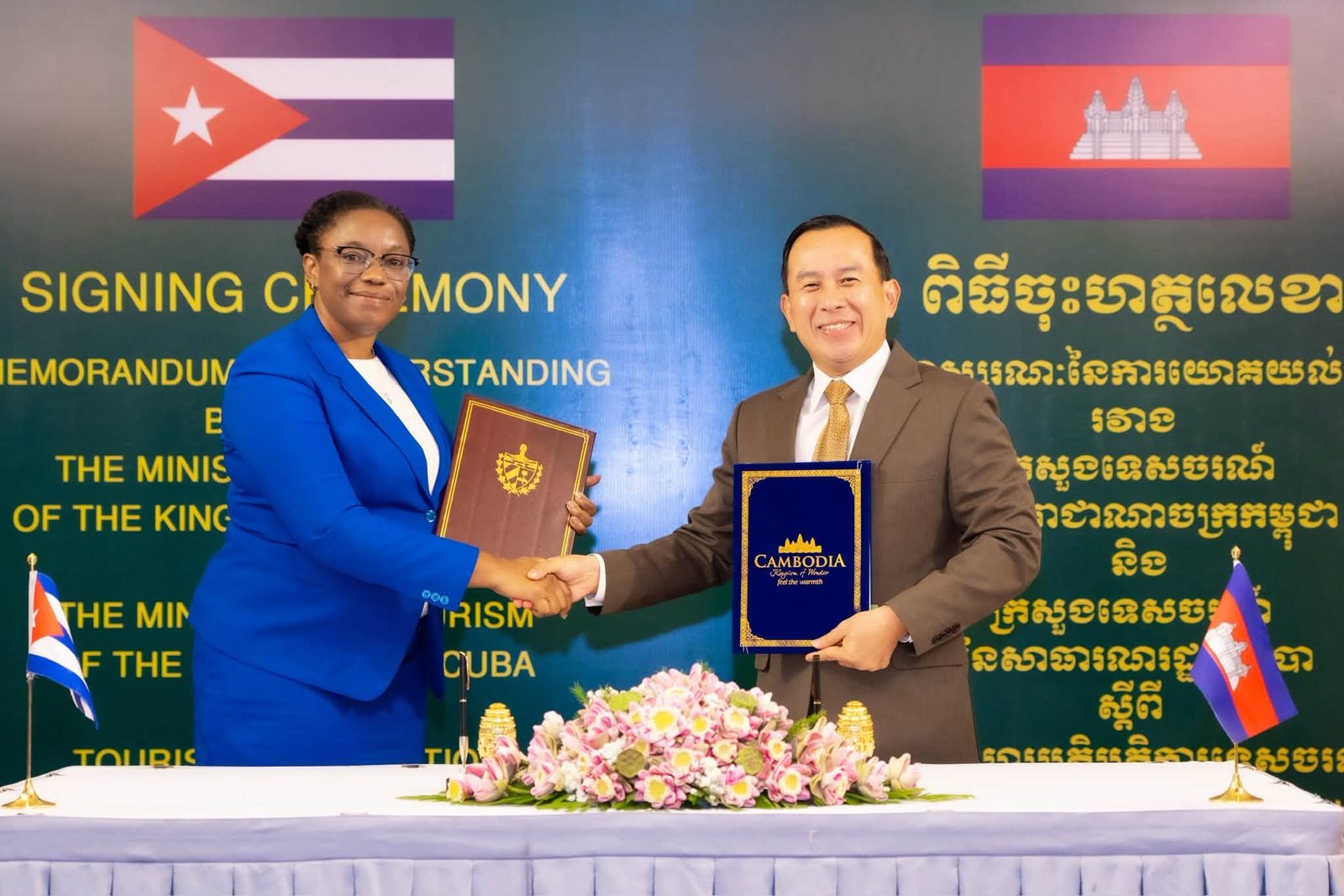
The relations between the two countries have been strengthened through the signing of an MoU to enhance cooperation, knowledge sharing and creation of more opportunities for tourism development in the two countries. The MoU was signed in Siem Reap Province by H.E. HUOT Hak, who is the Minister of Tourism of the Kingdom of Cambodia, and H.E. Ms. Milena Caridad Zaldívar Piedra, the Ambassador Extraordinary and Plenipotentiary of the Republic of Cuba to Cambodia, representing the Ministry of Tourism of Cuba.
Having been approved by the Royal Government of Cambodia, the MoU sets out the basis for future cooperation between the two tourism agencies. The collaboration will be geared towards enhancing tourism development, knowledge sharing and diversification of international tourism markets for Cambodia, especially in Latin America.
New Agreement Creates Framework for Tourism Development and Knowledge Exchange
The Cambodia-Cuba tourism cooperation agreement focuses on developing stronger links between the two countries’ tourism sectors. Key areas of cooperation include:
- Exchange of tourism knowledge and experience
- Promotion of tourism development initiatives
- Sharing of industry best practices
- Expansion of tourism market opportunities
- Strengthening bilateral tourism relations
The MoU is based on principles of equality and mutual benefit, with both countries seeking to create opportunities that support sustainable tourism growth. For Cambodia, the partnership provides another pathway to increase international tourism connections beyond traditional visitor markets. For Cuba, cooperation with Cambodia creates opportunities to strengthen cultural and tourism exchanges with Southeast Asia.
Advertisement
Advertisement
Cambodia Expands Tourism Outreach Toward Latin American Markets
One of the important objectives of the agreement is supporting Cambodia’s efforts to diversify its tourism source markets. While Cambodia has strong tourism relationships with Asian markets, the country is increasingly exploring opportunities to attract visitors from regions including Latin America. Tourism diversification can help destinations build greater resilience by reducing dependence on individual markets and encouraging broader international participation.
Cambodia’s tourism strengths, including:
Advertisement
Advertisement
- Angkor Wat and ancient heritage sites
- Cultural traditions
- Natural landscapes
- Local cuisine
- Community-based experiences
This provide opportunities to attract travellers seeking unique cultural journeys. Stronger international partnerships can help increase awareness of Cambodia among travellers from new regions.
Siem Reap Provides Strategic Setting for Tourism Cooperation Agreement
The MoU signing took place in Siem Reap Province, one of Cambodia’s most important tourism destinations.
Advertisement
Advertisement
Known globally as the gateway to Angkor Archaeological Park, Siem Reap represents Cambodia’s cultural identity and heritage tourism potential. Hosting the agreement in Siem Reap highlights the province’s importance as a centre for international tourism cooperation. The destination continues developing new tourism products beyond traditional heritage visits, including:
- Cultural experiences
- Local community tourism
- Nature-based activities
- Creative tourism programmes
The new partnership aligns with Cambodia’s broader efforts to strengthen tourism connections and promote diverse visitor experiences.
Cambodia and Cuba Celebrate Decades of Diplomatic Friendship
The tourism agreement builds upon a long-standing diplomatic relationship between Cambodia and Cuba. The two countries established diplomatic relations in 1960, and by 2026, they have shared 66 years of friendship and cooperation. Over the decades, Cambodia and Cuba have maintained relationships across various areas, including political, cultural and economic cooperation.
The new tourism partnership adds another dimension to this relationship by encouraging greater people-to-people connections. Tourism serves as a platform for cultural understanding, allowing visitors from both countries to discover each other’s heritage, traditions and communities.
Advertisement
Advertisement
Tourism Cooperation Supports Cultural Exchange Between Two Nations
Beyond economic benefits, the Cambodia-Cuba tourism agreement highlights the role of travel in strengthening cultural connections. Tourism allows countries to share their identities through:
- Heritage sites
- Traditional arts
- Food culture
- Local communities
- Historical experiences
Cambodia and Cuba both possess rich cultural traditions and internationally recognised heritage assets. Through increased tourism cooperation, both countries can promote greater awareness of their unique cultural offerings. The exchange of tourism knowledge can also help both destinations improve visitor experiences and develop stronger tourism services.
International Partnerships Strengthen Cambodia’s Tourism Future
The agreement with Cuba reflects Cambodia’s continued efforts to build international tourism partnerships. As global tourism evolves, cooperation between countries has become increasingly important for sharing expertise, improving connectivity and developing new markets.
Tourism partnerships can support:
- Destination promotion
- Investment opportunities
- Industry innovation
- Sustainable tourism development
Cambodia has been actively expanding cooperation with international partners to strengthen its position as a competitive tourism destination. The Cuba agreement adds another important relationship to Cambodia’s growing network of global tourism collaborations.
Cambodia and Cuba Open New Chapter in Tourism Collaboration
The signing of the MoU on tourism cooperation is a critical move towards improving relations between Cambodia and Cuba through the exchange of knowledge in the process of tourism development and diversification of the market. With regard to Cambodia, the collaboration offers chances to increase international tourist outreach and to establish a connection with Latin American countries. With respect to Cuba, it allows establishing tourism cooperation with countries of Southeast Asia. The more both nations will develop diplomatic relations, the more important the role of tourism will become.
Advertisement
Advertisement
Advertisement
