
Massachusetts Draws Global Rowing Stars as Boston Riverbanks Explode With October Energy

Published
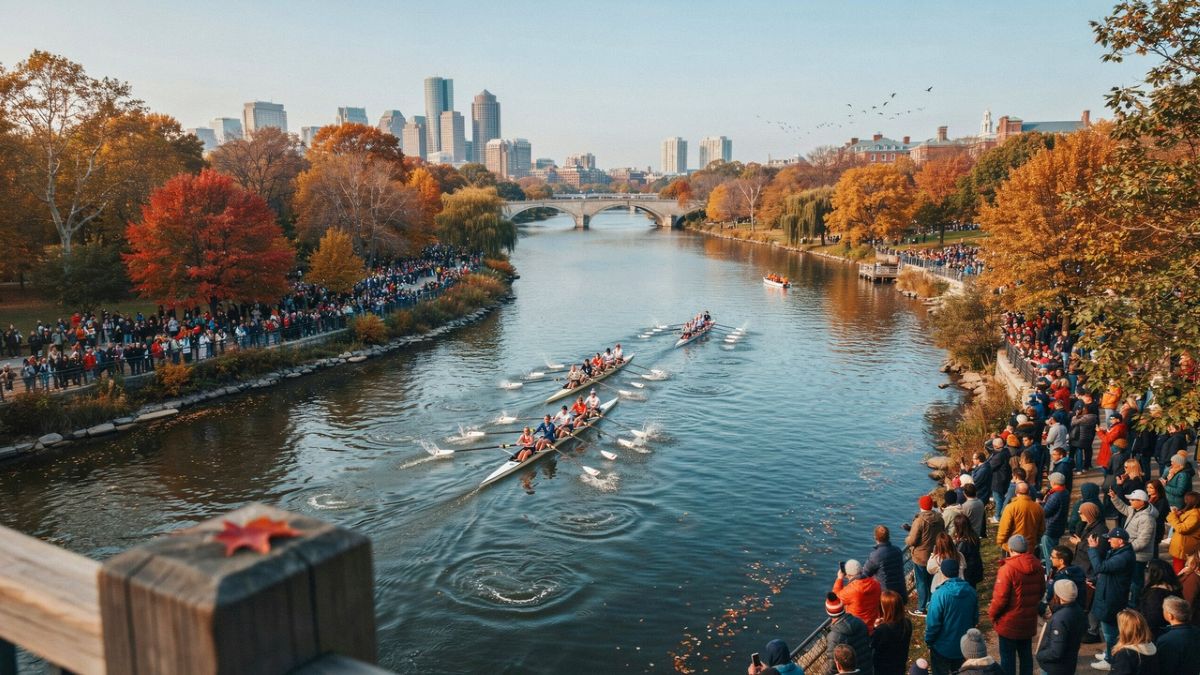
Image generated with Ai
For one October weekend, the Charles River becomes the centre of the rowing world. Boston and Cambridge welcome athletes, coaches, families, alumni and fans from many parts of the world for the Head of the Charles Regatta. The 2026 event will take place from 16 to 18 October. It is not a small local race. It is a huge sporting gathering that gives the river, parks, paths, bridges and nearby streets a new energy. The event brings global sport into the heart of Massachusetts. It also gives visitors a reason to see Boston during its bright autumn season. Rowers race on water. Supporters line the banks. Food stalls open. Shops, hotels and restaurants welcome more guests. For three days, the river becomes a moving stage for a famous race.
From a Small Race to a Global Event
The Head of the Charles began on 16 October 1965. The first event had nearly 100 scullers. It was created by members of Cambridge Boat Club, with help from rowing coach Ernest Arlett. He wanted to bring the British-style head race tradition to the Charles River. In a head race, crews start one after another. They race against the clock instead of lining up side by side from one starting gun. This style makes the race exciting for spectators. Boats appear in small gaps. Each crew must find clean water, steer well and race hard.
Advertisement
Advertisement
The event has grown greatly since then. Organisers now describe it as the world’s largest three-day rowing event. More than 12,000 athletes are expected, alongside more than 325,000 spectators. These are organiser figures, but they show the scale of the weekend. The event welcomes many types of rowers. University teams, school crews, rowing clubs, masters athletes and elite competitors all come to test themselves on the Charles.
Why the Charles River Course Is So Special
The race course is around three miles long. It starts near Boston University’s DeWolfe Boathouse and ends close to Eliot Bridge in Cambridge. This is not an easy straight route. The Charles River bends. It has bridges. It has narrow racing lines. Crews need strong bodies, sharp minds and good steering.
Advertisement
Advertisement
Coxswains play a very important role. They guide the boat and tell rowers when to push harder. A small mistake can cost valuable seconds. A crew must choose the right bridge arch and avoid busy areas of the river. The turn near Weeks Footbridge is especially famous. It asks crews to stay calm while moving quickly. These challenges give the Head of the Charles its strong identity. Winning here is not only about power. It is also about control, timing and teamwork.
Boston and Cambridge Become One Visitor Zone
The regatta connects Boston and Cambridge in a special way. Both cities share the Charles River, and both become part of the visitor experience. Boston offers views around Boston University Bridge and the start area. Cambridge provides important points near Harvard, Memorial Drive, Cambridge Boat Club and Eliot Bridge.
Advertisement
Advertisement
Visitors do not need to stay in one place all day. They can follow the course, watch different crews and enjoy the river from several points. Some people gather near the start. Others choose bridges, park paths or the finish area. Harvard Square and Central Square are also close enough to support the weekend with cafés, restaurants and local shops.
This wide layout helps make the event feel bigger than a normal sports competition. The race reaches into the city. It creates activity across neighbourhoods instead of keeping fans behind stadium gates. It also helps visitors see parts of Greater Boston that they may not explore on a normal weekend.
Advertisement
Advertisement
More Than a Sporting Competition
The Head of the Charles offers more than race viewing. The Weld Exhibition gives visitors food, merchandise and a lively meeting place. The Rowing and Fitness Expo near the finish area adds another layer to the weekend. The Riverbender brings fans together near the second half of the course. Premium hospitality areas, including the Eliot Bridge Enclosure and Directors’ Lounge, offer a closer and more comfortable way to watch the racing.
This mix gives the regatta a festival mood. A visitor may come for rowing but leave with a fuller picture of Boston and Cambridge. Families can watch boats, eat local food and walk beside the river. Alumni can support old teams. First-time visitors can discover rowing in a simple and exciting setting. The event also creates a visible link between sport, local culture and autumn travel.
A Major Test for Transport and Planning
A gathering of this size needs careful planning. Parking is limited near the course. Parts of Memorial Drive can close during race weekend. Visitors are strongly encouraged to use public transport, walk or cycle. Harvard and Central stations on the Red Line are useful for Cambridge-side access. BU Central on the Green Line is useful for Boston-side viewing. Several bus routes also serve the wider area.
The planning work starts long before October. More than 2,400 volunteers help deliver the event. They manage many jobs, including river control, registration, athlete support and spectator guidance. This large volunteer effort shows that the regatta is not only a race. It is a major community operation.
Advertisement
Advertisement
Massachusetts has also recognised its public-safety needs. State funding has supported safety costs connected with the 60th Head of the Charles Regatta. This matters because the weekend brings heavy footfall to river paths, roads and public spaces.
Why the Regatta Matters for Massachusetts Tourism
The Head of the Charles gives Massachusetts a powerful autumn travel story. It brings people to Boston and Cambridge at a time when the city already looks its best. The riverbanks, historic bridges and changing leaves create a memorable setting. Athletes often travel with coaches, friends, relatives and club supporters. That means the visitor impact reaches beyond the race itself.
Hotels, restaurants, transport services and local businesses all benefit from the extra activity. Yet the event’s deeper value is its global identity. It shows Boston as a city of sport, education, history and river life. For one October weekend, the Charles River does not just divide Boston and Cambridge. It brings them together as one of the world’s great rowing destinations.
Advertisement
