
Georgia Along With Many Other Countries Spotlight 5 Phenomenal Global Birdwatching Bottlenecks

Published
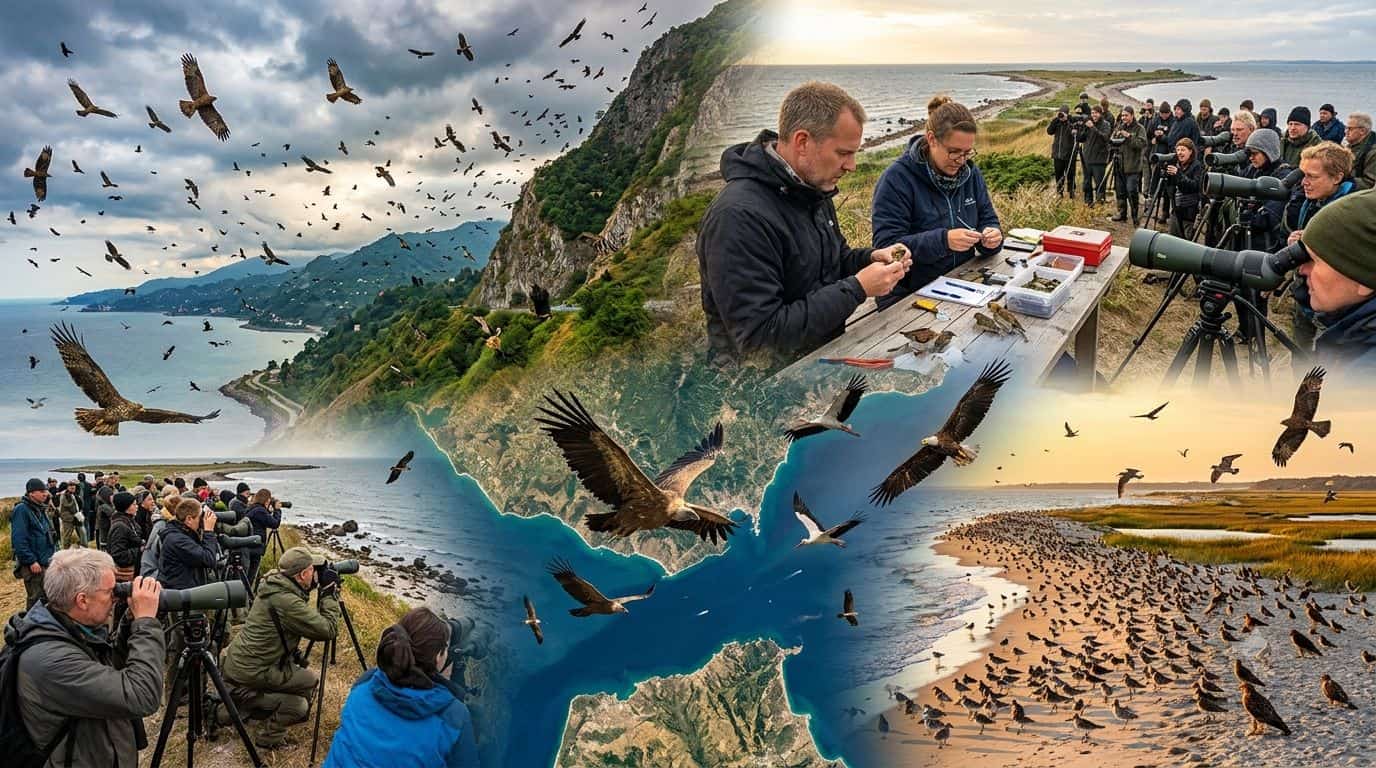
Image generated with Ai
Natural funnels in Georgia, Sweden, Spain, USA and Israel, such as the Strait of Georgia and the Strait of Gibraltar, concentrate large numbers of birds prior to birds crossing large water bodies. These funnels are usually restricted areas of land. The World Tourism Organization of the United Nations has documented these ecological phenomena.
Bird migration creates significant ecological and economic impact. Migratory bird peaks are best viewed during birding festivals. Birding festivals are organized by the local administration. Visiting bird watchers should plan their trip during these birding festivals for an enchanting and memorable experience.
Georgia: The Batumi Bottleneck
The Batumi Bottleneck sits securely in western Georgia. It borders the eastern edge of the vast Black Sea. The Lesser Caucasus mountains frame this remarkably narrow corridor. The Georgian National Tourism Administration actively monitors this site. Over one million birds of prey cross here. This phenomenal aerial movement occurs every single autumn season. Data from local authorities highlights 35 unique raptor species. It is a premier raptor migration site globally.
Birdwatchers flock to this specific region annually. The local economy benefits greatly from this tourist influx. According to government figures, tourism revenue has surged recently. Specialised observation programmes operate continually throughout the autumn. These programmes ensure safe and strictly organised viewing. Conservation groups work alongside state tourism boards.
Advertisement
Advertisement
| Metric | Official Figure | Source Authority |
|---|---|---|
| Annual Raptors | Over 1,000,000 | Georgian Tourism Board |
| Recorded Species | 35 | Batumi Environment Ministry |
| Peak Season | Autumn | Regional Wildlife Authority |
The Georgian Civil Aviation Agency issues special regional guidelines. These strict rules protect migratory routes from low-flying aircraft. The Georgian Ministry of Environmental Protection funds vital research. Local universities partner directly with state authorities for studies. Official statistics show a thirty percent visitor increase. This sustained growth occurred over the past five years. Infrastructure improvements include modern observation towers and platforms. The state subsidises rural guesthouses to accommodate global visitors. These economic strategies stabilise local employment during the autumn. International grants aid these vital governmental conservation programmes.
Sweden: The Coastal Funnel
Falsterbo occupies the absolute southern tip of Sweden. The Scandinavian peninsula funnels migrating birds toward mainland Europe. Visit Sweden reports massive international visitor numbers each autumn. This migration peaks heavily during September and October. Thousands of migrating raptors appear clearly on peak days. Massive flocks of tiny passerines also join the journey. They fly exceptionally low overhead.
Advertisement
Advertisement
This happens just before they cross the Baltic Sea. The Swedish Environmental Protection Agency tracks these vast movements. Government observers ring and band thousands of migrating birds. This scientific programme aids essential global conservation efforts. Regional transport authorities facilitate smooth and safe traveller access. The local infrastructure supports huge, seasonal birdwatching crowds. Hotels in the Skåne region report maximum occupancy.
- Key Months: September and October
- Avian Types: Raptors, Passerines
- Crossing Body: Baltic Sea
- Monitoring Agency: Swedish Environment Agency
The Swedish Transport Administration monitors coastal traffic very carefully. Authorities restrict certain drone operations entirely during the autumn. The Skåne Regional Council publishes annual economic impact reports. These documents prove the financial viability of birdwatching. State-funded transport links connect Copenhagen airport to Falsterbo directly. This seamless integration boosts international tourist arrivals significantly. Official hotel groups report maximum capacity in late September. The Swedish Institute promotes this vital natural heritage globally. Public funding guarantees the maintenance of coastal wetland habitats. Ringing stations receive direct grants from federal science budgets. The local municipality strictly regulates visitor parking and access.
Spain: Strait of Gibraltar
Tarifa sits proudly at the southern edge of Spain. The Strait of Gibraltar is exceptionally narrow right here. It measures just 14 kilometres straight across the water. This forms the absolute shortest crossing between Europe and Africa. Turespaña officials heavily promote this incredible natural wonder. Large soaring birds rely entirely on rising thermal updrafts. These warm air currents simply do not form over water. Griffon vultures and white storks congregate in massive numbers. Eagles also wait patiently for perfect crossing conditions here.
They face a short but deeply exhausting sea crossing. The Spanish Ministry of Tourism records extraordinarily high visitor footfall. Local birding festivals celebrate these massive, chaotic avian gatherings. Government guides organise official tours for international guests. Aviation authorities sometimes divert local commercial flight paths. This ensures complete safety for the massive migrating flocks. The economic impact on Andalusia remains substantially positive.
The Andalusian Regional Government aggressively markets this aerial phenomenon. Official campaigns highlight Tarifa as a premier eco-destination.
The Spanish Port Authority coordinates regional maritime traffic speeds. This prevents environmental stress during absolute peak migration days. State meteorological agencies provide highly crucial wind pattern data. This technical information helps guides predict mass crossing events.
Advertisement
Advertisement
The Ministry of Ecological Transition oversees local habitat protection. Cross-border cooperation with Moroccan authorities remains highly active. Bilateral government agreements ensure safe passage across both continents. The European Union provides substantial funding for these corridors. Official tourism receipts show sustained year-on-year financial growth. Regional employment in eco-tourism has doubled very recently.
USA: Cape May’s Fallouts
Cape May is a deeply celebrated peninsula in New Jersey. It sits directly on the incredibly busy Atlantic Flyway. This geography forces all southbound migrants to pause immediately. They must refuel before crossing the wide Delaware Bay. Brand USA notes its importance for international European visitors. The site is famous for truly spectacular avian fallouts.
Warblers, shorebirds, and hawks descend in huge, exhausted numbers. Local tourism boards heavily market these stunning autumn spectacles. Major fall birding festivals generate significant state revenue annually.
The New Jersey Department of Environmental Protection monitors activity. Official observatories host thousands of fully registered international travellers. These centres provide strict guidelines for all wildlife viewing. Data from state officials confirms massive seasonal economic boosts. Corporate hotel chains report peak bookings during the autumn.
The US National Park Service collaborates with local authorities. Federal funding supports essential wetland restoration projects right here. The New Jersey Commerce Department tracks all tourist spending. Retail and hospitality sectors see massive, immediate seasonal boosts. State police manage traffic safely during major fall festivals. The Federal Aviation Administration issues specific, regional pilot alerts. These warnings keep airspace completely safe during huge fallouts. Major US airlines promote seasonal flights to nearby Philadelphia. Amtrak services also see increased passenger volumes regionally. Official environmental assessments guide all new local coastal developments. This strict zoning preserves critical avian resting areas indefinitely.
Israel: Eilat’s Spring Bridge
Eilat functions as a profoundly crucial global land bridge. It connects the vast landmasses of Eurasia and Africa. The Israel Ministry of Tourism highlights its tremendous importance. Eilat is globally renowned for its spectacular spring migration. Millions of raptors and storks return north right here. Songbirds also travel towards their distant European breeding grounds. The annual Eilat Birds Festival attracts immense global attention.
Advertisement
Advertisement
This event takes place during the absolute migration peak. International birders travel specifically to witness this incredible spectacle. Government officials organise highly secure observation points for visitors. Transport ministries ensure smooth passenger arrivals at local airports. Official travel associations praise the festival’s meticulous, rigorous organisation. This careful planning protects both vulnerable birds and tourists. Data indicates substantial foreign exchange earnings from related tourism.
The Israeli Environmental Protection Ministry enforces very strict regulations. These necessary laws protect the delicate desert habitats around Eilat. The Israel Airports Authority manages nearby Ramon International Airport. They implement protocols to avoid potentially devastating bird strikes. The Eilat City Council funds the massive annual festival. State diplomats often attend these highly major international events. Official tourism figures highlight dedicated guests from fifty countries. The Ministry of Foreign Affairs uses this for diplomacy. Shared environmental goals foster important regional government cooperation initiatives. Hotels in Eilat experience absolute total occupation during spring. The national water authority ensures desert oases remain hydrated. This guarantees resting migrants have sufficient, clean drinking water.
Economic and Tourism Impact
The World Travel and Tourism Council studies this sector. Avian tourism injects millions into very local regional economies. Rural municipalities benefit directly from these seasonal visitor surges. Flag-carrier airlines schedule additional, vital seasonal flights accordingly. IATA officials recognise the rapidly growing niche tourism demand. Hospitality brands design specific, lucrative packages for these periods. Governments invest heavily in highly sustainable local viewing infrastructure. These investments guarantee long-term environmental and robust economic returns.
Sustainable travel remains a top priority for UN Tourism. These fragile natural bottlenecks require stringent ecological protection policies. State agencies strictly enforce all local environmental protection laws. This prevents unnecessary human disturbance during highly sensitive migrations.
National tourism boards invest heavily in vital physical infrastructure. VisitBritain notes rising European demand for dedicated observation hides. State governments allocate millions for completely modern visitor centres. These official facilities provide high-quality educational materials locally. The Georgian government constructed several brand-new viewing platforms. Swedish authorities upgraded crucial transport links to coastal observatories. The Spanish transport ministry improved major highway access to Tarifa. US federal grants upgraded wooden boardwalks throughout Cape May. Israeli tourism funds supported brand-new desert rest stops. These state-funded upgrades enhance the overall global traveller experience. They also drastically reduce any unregulated human environmental impact. Corporate sponsors often partner directly with regional government bodies. Official hotel brands build eco-friendly lodges near these bottlenecks.
Transport and Aviation Synergy
National transport ministries coordinate closely with leading wildlife experts. They manage airspace aggressively to prevent dangerous bird strikes. International aviation associations issue vital, seasonal commercial pilot advisories. Official flight paths reflect these massive, unavoidable biological movements. This ensures totally uninterrupted travel for both planes and birds. Cruise Lines International Association notes essential maritime adjustments too. Ferries crossing the Strait of Gibraltar operate incredibly cautiously. Vessel speeds decrease substantially during peak avian crossing times.
Advertisement
Advertisement
Government science ministries deploy highly advanced radar tracking systems. These official networks monitor vast flocks with absolute precision. The European Space Agency provides completely crucial satellite data. This helps national authorities predict exact, specific migration peaks. Aviation authorities use this data to safely redirect aircraft. State meteorological departments forecast weather patterns affecting global migrations. Local tourism boards publish these official forecasts online daily. Travellers use this vital government data to plan visits. Official smartphone applications deliver real-time avian movement alerts instantly. These state-sponsored apps enhance the modern, digital birdwatching experience. Digital infrastructure represents a massive new phase of governmental investment. Data security remains a top priority for all involved ministries.
Conclusion
The data speaks for itself when discussing the future of eco-tourism. There are opportunities to provide world class wildlife experiences. Protected zones are where the action is, and State Boards will continue to fund them. Preserving bird migration routes and other birding hotspots should remain at the forefront of the global effort. Count on improved facilities and the continued investment from the public sector. Be assured, multilateral agreements will be signed sealing the bird’s-eye view over all the migratory bird flyways.
Advertisement
