
Singapore Powers Up Metro Travel With 106 New Trains Transforming North-South and East-West Lines

Published
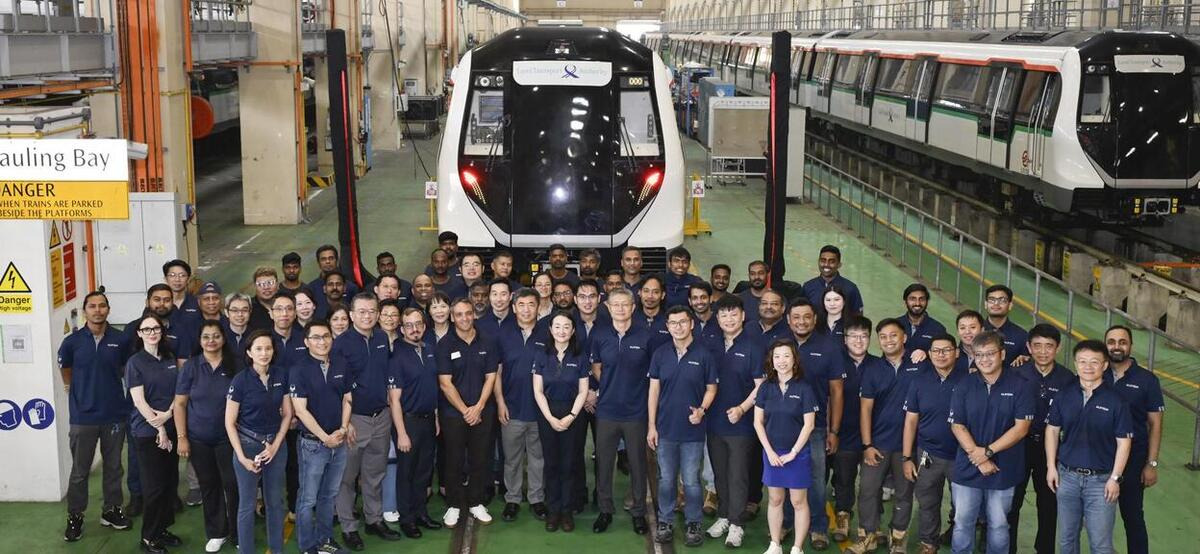
Image Source: Alstom
Singapore is powering up metro travel with one hundred six Alstom trains. These modern trains bring capacity cleaner energy use, better accessibility and smarter track monitoring, to the busy North‑South and East‑West Lines. One hundred thirty‑six new railcars will also help strengthen journeys. Alstom trains will support an efficient and reliable urban rail network.
Advertisement
Advertisement
The completed delivery strengthens the ongoing renewal of two of Singapore’s most important metro corridors. Rather than simply replacing older rolling stock, the new fleet introduces technology aimed at improving passenger movement, accessibility, energy use and infrastructure monitoring.
All 106 trains are based on Alstom’s Movia platform. Each train has six carriages, creating a combined fleet of 636 railcars for the North-South and East-West Lines.
Advertisement
Advertisement
Singapore Reaches Major Rail Fleet Milestone
The large-scale fleet programme developed through two separate orders. The first, placed in 2018, covered 66 Movia trains. Another 40 trains were ordered in 2019, taking the total to 106.
Production was carried out at Alstom’s railway vehicle manufacturing facility in Changchun, China. The wider project involved Alstom operations across Singapore, China, Germany and Sweden.
Advertisement
Advertisement
Completion of the deliveries represents an important milestone for a network where dependable, high-capacity rail transport plays a central role in everyday mobility.
New Trains Put Capacity and Passenger Movement First
The new rolling stock has been developed to handle intensive metropolitan operations.
Every six-carriage train provides 220 seats and has a maximum speed of 90 kilometres per hour. Longitudinal seating helps create additional standing room and gives passengers more space to move through the carriage.
This arrangement is particularly valuable during peak travel periods, when stations and trains can experience high passenger volumes.
The fleet also includes flexible multi-purpose areas and step-free access. These features are intended to make journeys more convenient for people with reduced mobility while creating a more adaptable environment for different passenger requirements.
Alstom Adds Energy-Saving Technology
Energy efficiency forms another major part of the train design.
Advertisement
Advertisement
The fleet uses Alstom Flexx Urban bogies and Mitrac propulsion systems alongside regenerative braking technology.
Instead of allowing braking energy to go entirely to waste, regenerative braking enables energy produced during deceleration to be recovered. This can be particularly effective in metro operations because trains repeatedly accelerate and slow down between stations.
Over years of intensive service, technologies that reduce energy demand can contribute to more efficient railway operations.
Trains Can Inspect Tracks During Passenger Services
The fleet also introduces a notable infrastructure-monitoring capability.
Cameras installed on the trains can gather track information while regular passenger journeys are taking place. The collected information can support assessments of railway infrastructure and help with maintenance planning.
This effectively gives the trains an additional role beyond moving commuters.
Advertisement
Advertisement
Rather than separating every element of track observation from normal operations, useful infrastructure data can be gathered as trains travel across the network.
For heavily used rail corridors, improved monitoring can support better maintenance decisions and provide additional information about track conditions.
Recycling Features Strengthen Sustainability Focus
Environmental considerations extend beyond the energy consumed while the trains are operating.
Around 95 per cent of the materials incorporated into the new trains are recyclable. More than 96 per cent of their materials can also be recovered when the trains eventually reach the end of their service lives.
These figures are significant because metro rolling stock can remain operational for decades. Environmental performance therefore depends not only on daily electricity consumption but also on how vehicles are manufactured, maintained and ultimately retired.
New Era for Singapore’s North-South and East-West Lines
The delivery of 106 Alstom trains gives Singapore a substantial new fleet for two of its busiest metro lines.
Advertisement
Advertisement
Across 636 railcars, the programme combines high-capacity interiors with accessibility improvements, regenerative braking, modern propulsion technology and automatic track-monitoring capabilities.
For passengers, the changes are centred on space, movement and accessibility. For railway operations, the new fleet introduces technologies designed to improve efficiency and provide useful infrastructure data.
With the final trains now delivered, the programme marks a significant step in Singapore’s continuing rail modernisation, bringing a new generation of Alstom rolling stock to the North-South and East-West Lines.
Advertisement
