
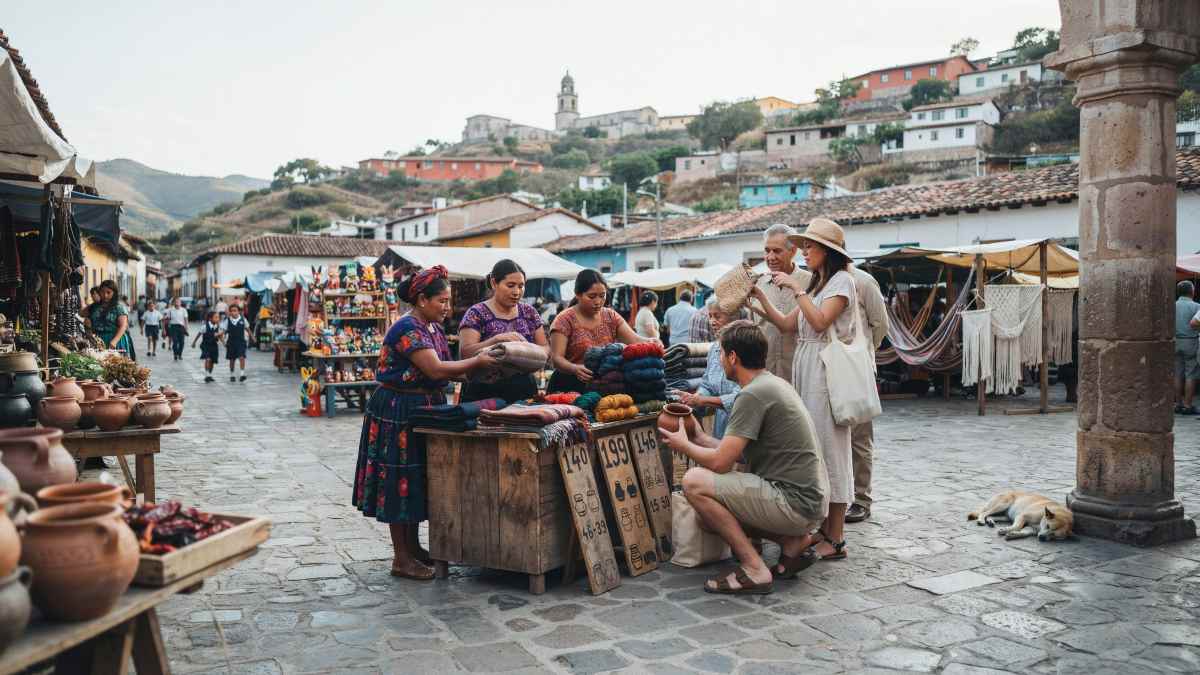
Image generated with Ai
Community-based tourism in Mexico is growing within Indigenous and rural areas as part of the creation of a national programme by the government, which aims to attract more tourists to destinations that are under the management of the communities and not part of the already existing tourism circuits, such as Cancun and Los Cabos. This initiative revolves around the idea of involving community-based experiences in the process of developing tourism in the country, where the rural organisations taking part offer cultural, environmental and agricultural activities. Various destinations are emerging in states like Yucatan, Morelos and Oaxaca based on experiences linked to Indigenous culture, biodiversity and production practices.
Community tourism is increasingly connecting visitors with rural landscapes and cultural traditions outside Mexico’s major resort destinations.
Advertisement
The national framework includes a guide to community tourism experiences intended to organise and promote destinations operated by local communities. Such experiences can include nature activities, cultural interpretation, traditional food and visits to community-managed production areas.
For travellers, the model provides opportunities to explore Mexico through smaller-scale experiences rather than relying exclusively on established beach resorts and large tourism complexes.
Advertisement
Advertisement
Community-managed tourism can also encourage visitors to stay longer in rural areas by combining several activities within the same destination.
Yucatán is one of the regions where Indigenous and community-based experiences can connect tourism with Mayan cultural heritage.
Among the distinctive activities associated with the region are melipona bee sanctuaries. The stingless bee has a long relationship with Mayan communities, and its management provides a link between traditional knowledge, biodiversity and local livelihoods.
Visitors participating in community tourism experiences can learn about the bees, their ecological importance and their place within local cultural traditions.
These experiences provide a different perspective on Yucatán tourism, complementing the state’s archaeological sites, cenotes and coastal attractions with community-led encounters.
Oaxaca provides another important setting for community-based tourism, with rural communities offering experiences connected to agriculture, traditional crafts and local production.
Agave-related activities are particularly relevant to the state’s cultural tourism landscape. Traditional agave cultivation and distillation can form part of visitor experiences that connect travellers with agricultural landscapes and longstanding production knowledge.
Community-managed experiences can allow visitors to see how products are produced while directing tourism spending towards local operators and rural businesses.
This creates a tourism connection between cultural heritage and local economic activity.
Morelos is also included within the broader community tourism framework, providing opportunities to develop rural and agro-ecological experiences close to central Mexico’s major population centres.
Highland agricultural trails can introduce visitors to farming landscapes, local food production and regional ecosystems.
For travellers, these experiences can be incorporated into itineraries focused on nature and culture, offering a contrast to the country’s urban attractions and coastal destinations.
The proximity of rural Morelos to major population centres also creates potential for shorter community-based excursions as well as longer rural stays.
A defining feature of Mexico’s rural landscape is the presence of ejidos, communal landholdings that can support locally managed tourism initiatives.
Community tourism connected to these areas can provide local organisations with a direct role in determining how tourism develops on their land.
Visitor activities can consequently be structured around local priorities, including environmental protection, cultural preservation and the capacity of individual sites to receive travellers.
For tourism businesses and visitors, this creates a more community-focused operating model in which rural destinations can establish their own experiences rather than relying entirely on external tourism operators.
Mexico’s best-known tourism centres attract substantial international visitor numbers, particularly along established beach corridors.
Community tourism provides another route for distributing travel activity across the country. By promoting rural destinations and Indigenous experiences, the strategy broadens the geographic range of places available to international visitors.
Travellers can combine traditional resort stays with excursions into communities offering ecological, agricultural and cultural activities, creating more varied itineraries across Mexico.
The approach also provides smaller destinations with opportunities to develop accommodation, guiding, food and cultural services around tourism demand.
The national community tourism strategy is putting in place a plan that integrates indigenous and rural communities in the development of tourism in Mexico. The tours revolving around the melipona bees, the agave culture, agroecology trails and biocultural conservation allow visitors to explore parts of Mexico’s culture which are intricately linked to the natural environment and community life. With the continuous implementation of the plan until 2026, the sector of community tourism is broadening the tourist map of the nation by going beyond its already existing resort destinations. For tourists from overseas, the network represents an opportunity to discover Mexico through its own local tourism destinations while learning about its indigenous cultures, agriculture, and biodiversity.
Advertisement
Tags: Cancún tourism, community-based tourism Mexico, Indigenous Mexico, Indigenous tourism Mexico, Mexico community tourism, Mexico rural tourism, mexico tourism, Morelos, Morelos tourism, Oaxaca, Oaxaca tourism, sustainable tourism Mexico, Yucatán, Yucatán tourism
Advertisement
Advertisement













Saturday, September 5, 2026

Saturday, September 5, 2026

Saturday, September 5, 2026

Saturday, September 5, 2026

Saturday, September 5, 2026

Saturday, September 5, 2026

Saturday, September 5, 2026

Saturday, September 5, 2026



