
Kenya and South Africa as Eco-Lodge Models Inspire a New Wave of Alternative Tourism in the Caribbean
Published
Although all-inclusive beach resorts put the Caribbean on the map, a movement towards ‘alternative’ Caribbean tourism is changing the region’s hospitality scene. Focus on low impact luxury eco-lodges in Kenya and South Africa is serving as a blueprint for retreat building. Deep within the unspoiled jungles, developing communities is building a model of luxury eco-retreats. The model uses methods of biodiversity conservation, renewable energy, and community integration to offer an alternative to mass coastal development. Based on the African models of eco-tourism and sustainable conservation, this model has the potential to change the existing perceptions of luxury in the Caribbean. This African-inspired model has the potential to also create longterm economic wealth for the local community.
The Evolution of the Caribbean Hospitality Landscape
For decades, the Caribbean has been synonymous with mass coastal tourism. The traditional model heavily favoured sprawling all-inclusive resorts, high-capacity cruise ship terminals, and densely populated beachfront developments. While this conventional approach successfully established the region as a premier global holiday destination, it frequently resulted in significant environmental degradation, the displacement of local communities, and an overwhelming strain on fragile island infrastructures. Furthermore, the economic benefits of mass tourism have often been heavily diluted; official statistics indicate that conventional all-inclusive models only yield a 20% to 40% local economic retention rate, with the vast majority of profits repatriated to international corporate headquarters.
However, as of August 2026, the narrative is experiencing a dramatic and necessary transformation. An increasing awareness of climate change vulnerability, coupled with a fundamental shift in post-pandemic consumer behaviour, has catalysed a profound reimagining of what a Caribbean holiday should entail. Modern travellers are increasingly eschewing commodified, crowded beach environments in favour of authentic, meaningful, and low-impact nature-based experiences. This monumental shift in demand has given rise to a new wave of alternative tourism in the Caribbean, prompting innovative regional developers, government ministries, and local conservationists to seek inspiration from an unlikely source: the highly successful, eco-centric luxury safari lodges of Kenya and South Africa.
Why the Traditional Resort Model is Facing Scrutiny
The traditional sun, sea, and sand model has historically placed immense pressure on coastal ecosystems. Coral reef degradation, mangrove deforestation, and overwhelming waste management challenges have forced local governments and international bodies like the United Nations Environment Programme (UNEP) and UN Tourism to call for urgent, systemic reform. In response, authoritative regional institutions, including the Caribbean Tourism Organization (CTO) and the Caribbean Alliance for Sustainable Tourism (CAST), have actively begun promoting strategic diversification away from mass coastal infrastructure. The objective is to transition toward higher-yield, lower-density tourism paradigms that protect ecological integrity while significantly boosting local economic empowerment.
Advertisement
Advertisement
The African Inspiration: Kenya and South Africa’s Safari Lodge Blueprint
To fully comprehend the mechanics of this emerging trend in alternative tourism in the Caribbean, it is essential to examine the origins of the inspiration. The luxury eco-lodge model, perfected over decades on the African continent, has proven that high-end hospitality and rigorous environmental stewardship can effortlessly coexist.
Advertisement
Advertisement
Pioneering Sustainable Luxury in the Savannah
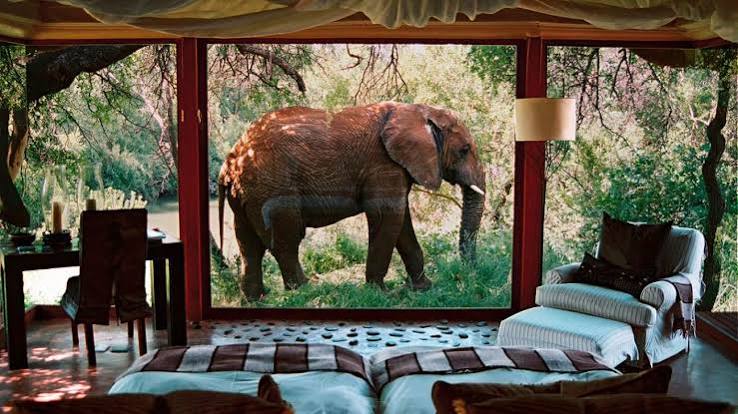
In nations like Kenya and South Africa, operators of luxury safari lodges have long operated under the fundamental principle that the natural environment is the primary asset, and its preservation is non-negotiable. Renowned establishments located in areas such as Kenya’s Lewa Conservancy or South Africa’s Sabi Sands have set the global gold standard for sustainable tourism. These remote lodges operate entirely off-grid, utilising expansive solar arrays for energy, gravity-fed mountain spring water, and highly advanced bio-box wastewater treatment systems to ensure zero contamination of the surrounding environment.
Crucially, the African model operates on a principle of “high value, low impact.” Rather than accommodating thousands of guests at lower price points, these lodges restrict capacity to a few dozen visitors at premium rates. This drastically reduces the physical footprint on the land, minimises wildlife disruption, and generates sufficient revenue to actively fund extensive conservation initiatives.
Deep Community Integration and Economic Empowerment
Perhaps the most vital component of the African safari model is its profound integration with local communities. Establishments in Kenya, for example, do not merely employ local residents in entry-level positions; they source all produce from local organic community farms, provide bursaries for local education, and directly fund essential infrastructure such as clean water initiatives and schools. This holistic approach ensures that the surrounding population becomes a direct stakeholder in the preservation of the local ecosystem. By demonstrating that an intact environment is far more economically valuable than a depleted one, the African model creates an impenetrable safeguard against poaching, deforestation, and land degradation.
Safari Meets Sand: Adapting the Model for the Tropics
Recognising the overwhelming success of these African models, visionary developers and government planners across the Caribbean are now actively adapting these precise principles to suit their unique tropical topographies. The core philosophy remains identical: protect the core asset, limit the footprint, maximise the yield, and integrate the community. However, instead of vast, arid savannahs and the “Big Five,” the Caribbean variation is nestled deep within dense, ancient rainforests, overlooking volcanic craters, and situated alongside pristine, untamed rivers.
Shifting Focus Inland: The Rise of the Rainforest Retreat
The most visible manifestation of this new era of alternative tourism in the Caribbean is the geographical shift of development. Historically, the premium real estate in the Caribbean was strictly limited to the beachfront. Today, the most exciting and exclusive tourism developments are occurring inland, hidden away beneath the dense canopy of the rainforest.
Advertisement
Advertisement
By moving away from the highly vulnerable coastlines—which are increasingly susceptible to the impacts of climate change, rising sea levels, and severe tropical cyclones—developers are mitigating substantial environmental risk. Inland rainforest retreats offer natural climate control, breathtaking biodiversity, and a deep sense of seclusion that modern luxury travellers actively crave.
Structural Emulation of the Safari Tent
Architecturally, the influence of the African safari lodge on new Caribbean eco-retreats is unmistakable. Heavy concrete structures, typical of 1990s resort architecture, are being entirely abandoned. In their place, developers are utilising lightweight, sustainably harvested local timber, tensioned canvas roofs reminiscent of African luxury tents, and raised stilt foundations. Elevating structures on stilts or solid concrete bases, directly mimicking the safari tent approach, prevents the compaction of soil, allows natural water drainage to continue uninterrupted, and leaves essential migratory pathways open for local fauna.
Furthermore, these Caribbean lodges are increasingly adopting the off-grid ethos of their African counterparts. The integration of cutting-edge solar technology, sophisticated rainwater harvesting systems, and natural, open-air ventilation designed to capture mountain breezes (obviating the need for energy-intensive air conditioning) has become the new baseline for luxury approvals in progressive Caribbean nations.
Case Study: Dominica as the Epicentre of Alternative Tourism
If one wishes to observe the most advanced execution of alternative tourism in the Caribbean, one must look directly at the Commonwealth of Dominica. Known affectionately as the “Nature Island,” Dominica has made a deliberate, strategic policy choice that distinguishes it from virtually every other island in the region: it actively rejected mass-market beach tourism in favour of low-impact, high-yield ecotourism.
Government Policy and Climate Resilience
Following the catastrophic devastation of Hurricane Maria in 2017, the Dominican government, supported by international bodies like the World Bank and the UN, pledged to become the world’s first fully climate-resilient nation. This monumental policy directive fundamentally altered the nation’s tourism strategy. The government implemented strict guidelines ensuring that new tourism developments align perfectly with sustainability goals, strongly favouring small-scale, environmentally friendly lodges over massive concrete resorts. The nation is concurrently working towards a 100% renewable energy target, largely driven by its vast geothermal potential.
Advertisement
Advertisement
The Eco-Lodge Landscape in Dominica
Dominica’s accommodation market is now defined by small, owner-operated, luxury eco-properties. There are no all-inclusive mega-resorts on the island; even the largest properties have fewer than 100 keys, an intentional structure protected by robust government policy.
Properties such as Jungle Bay and Secret Bay serve as the ultimate paradigm of the African model translated to the Caribbean. Rebuilt post-Hurricane Maria using local timber and strict LEED-equivalent principles, these lodges operate as working organic farms, ensuring that farm-to-table dining is not a mere marketing slogan, but an authentic operational reality. Secret Bay, an ultra-luxury eco-villa property perched on a cliffside, commands rates between $700 and $2,500 per night, proving that sustainability can yield extraordinary economic returns.
Unmatched Local Economic Retention
The economic data surrounding Dominica’s focus on alternative tourism in the Caribbean is staggering. Official statistics demonstrate that the eco-tourist in Dominica generates a daily spend of $200 to $350. More importantly, the local economic retention rate of this ecotourism model stands at an impressive 65% to 85%. Unlike mass all-inclusive resorts where revenue immediately exits the country, the eco-lodge model inherently relies on local guides, local agricultural networks, and community transport, ensuring that the wealth generated permeates deeply into the local socio-economic fabric.
Expanding the Model: Regional Adoption Across the Caribbean
While Dominica remains the definitive benchmark, the shift toward African-inspired eco-lodges is rapidly spreading across the wider Caribbean basin. Destinations such as Belize, St. Lucia, and Bonaire are actively cultivating distinct sustainable tourism offerings, collectively establishing a formidable regional ecotourism cluster.
St. Lucia’s Volcanic Sanctuaries
In St. Lucia, the integration of luxury and nature has deep roots, but the latest developments are leaning heavily into the safari-style ethos. Nestled between the iconic Pitons, newer boutique retreats are focusing heavily on regenerative travel. These properties actively engage in coral reef restoration, employ dedicated marine biologists, and maintain extensive organic estates that supply their culinary operations. The emphasis is shifting away from merely observing nature to actively participating in its restoration, a core tenet borrowed directly from African conservation models.
Advertisement
Advertisement
Belize’s Jungle and Marine Integration
Belize, possessing both the largest barrier reef in the Northern Hemisphere and expansive tropical rainforests, has embraced the eco-lodge model with unmatched vigour. Inland Belize is now dotted with high-end, low-capacity lodges that directly mirror the operational flow of a South African game reserve. Guests partake in guided jaguar tracking, bird watching, and Mayan archaeological explorations by day, before returning to off-grid luxury by night. The Belizean government has supported this through progressive legislation, enforcing strict environmental impact assessments and providing tax incentives for properties that implement renewable energy and local employment guarantees.
Bonaire’s Blue Economy
Even islands predominantly known for diving, such as Bonaire, are adapting the principles of alternative tourism in the Caribbean. Bonaire boasts the world’s first government-mandated marine park, funded entirely by diver fees, which guarantees 100% protection of its reefs. The island is currently seeing a surge in sustainable boutique accommodations that utilise wind and solar power, reflecting a broader commitment to a circular “blue economy.”
Official Statistics and Economic Implications
The transition toward alternative tourism in the Caribbean is not merely a feel-good environmental exercise; it is an incredibly lucrative and rapidly expanding economic sector. According to 2025–2026 data projections and official market assessments, the Caribbean eco-tourism sector has definitively transitioned from a niche market to a mainstream economic powerhouse.
Exponential Market Growth
As of August 2026, the eco-tourism segment represents approximately 18% of total regional visitor expenditure. The sector is experiencing an exceptional annual growth rate of 12% to 15%, dramatically outpacing traditional leisure travel. Total direct expenditures in Caribbean eco-tourism reached $6.8 billion in 2024, and official forecasts project this figure to hit a staggering $12.5 billion by the year 2030.
Investment in Sustainable Infrastructure
This explosive consumer demand is driving significant capital investment. In recent years, investment in sustainable Caribbean accommodations has consistently surpassed $400 million annually, with particularly robust growth noted in the installation of solar-powered microgrids, commercial-scale rainwater harvesting systems, and advanced waste-to-energy technologies. Developers who previously focused solely on beachfront concrete blocks are now eagerly acquiring inland rainforest tracts to develop high-yield eco-lodges.
Advertisement
Advertisement
The Social and Community Impact
A central pillar of the African safari model is community empowerment, a feature that is radically transforming the socio-economic landscape of participating Caribbean nations. For decades, traditional tourism relegated local populations to lower-tier service roles. The new wave of alternative tourism in the Caribbean fundamentally alters this dynamic.
Capacity Building and Local Ownership
Authoritative bodies such as the Caribbean Alliance for Sustainable Tourism (CAST) have been instrumental in this shift, undertaking extensive environmental impact research and conducting dozens of training workshops across the region to elevate local capacity. By facilitating the establishment of Environmental Management Systems, CAST ensures that the transition to green tourism is rigorously measured and certified.
Furthermore, the operational requirements of eco-lodges demand highly specialised, intimate knowledge of the local environment. Consequently, local residents are no longer just hospitality staff; they are highly trained naturalists, expert hiking guides, organic agricultural managers, and sustainability coordinators. This shift not only commands higher wages but also restores a profound sense of cultural pride and ownership over the local tourism product.
The Regenerative Travel Trend
Research indicates that a staggering 72% of global travellers now believe humanity must act sustainably to preserve the planet, with 45% actively seeking verified eco-friendly travel options. More importantly, there is a rapidly growing segment dedicated to “regenerative travel”—the philosophy that a visitor should leave a destination measurably better than they found it.
Caribbean eco-lodges are facilitating this by inviting guests to actively participate in conservation. From engaging with the Dominica Sea Turtle Conservation Organization (DOMSETCO) to monitor nesting sites, to funding local school initiatives and participating in coral outplanting, the modern luxury traveller in the Caribbean is becoming an active agent of positive environmental change.
Advertisement
Advertisement
Policy Implications and Government Action
The successful proliferation of alternative tourism in the Caribbean relies heavily on stringent, forward-thinking government policy. Official tourism boards and national ministries are increasingly recognising that protecting natural assets requires robust legislative frameworks.
Taxation, Zoning, and Eco-Fees
Governments are adopting sophisticated economic levers to promote sustainability. This includes the implementation of specific eco-fees—modelled directly on the conservation fees levied by African national parks—which are channelled directly back into environmental protection agencies. Additionally, strict zoning laws are being enforced to prevent the overdevelopment of fragile inland corridors, ensuring that the low-density exclusivity of the eco-lodge model is legally maintained.
The integration of official international guidelines from UN Tourism and the OECD is also prevalent. These bodies provide the macro-level statistical frameworks required by Caribbean nations to accurately measure the carbon footprint of their tourism sectors, ensuring that national climate pledges—such as the Paris Agreement—are rigorously upheld.
Future Outlook: A Paradigm of Resilience
As we look toward the end of the decade, the trajectory for the Caribbean hospitality sector is irrevocably altered. The traditional all-inclusive resort will undoubtedly continue to exist, but it is no longer the sole, defining feature of the region’s tourism portfolio.
The integration of the African luxury eco-lodge model into the tropical rainforests of the Caribbean has proven to be a masterstroke of adaptive innovation. By prioritising environmental integrity, limiting physical footprints, and ensuring that the economic windfall of tourism is equitably distributed among local communities, the region is future-proofing its most vital industry.
Ultimately, this ongoing shift toward alternative tourism in the Caribbean serves as a beacon for global travel. It demonstrates, with verifiable economic and ecological success, that true luxury does not require the paving of paradise. Instead, the ultimate luxury of the 21st century is found in unspoiled nature, authentic community connection, and the profound knowledge that one’s travel is actively contributing to the preservation of the planet.
Advertisement
