Image generated with Ai
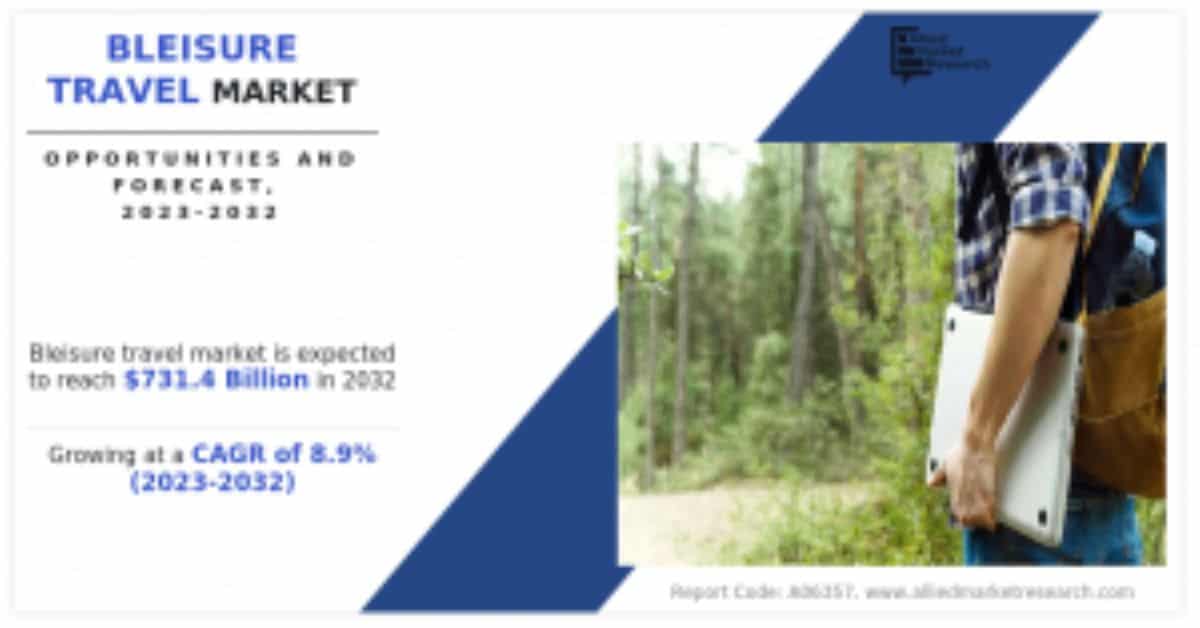
The global bleisure travel market is undergoing significant expansion, reshaping the way modern professionals approach business trips and leisure activities. Valued at approximately three hundred fifteen point three billion US dollars in 2022, the market is projected to rise sharply and reach around seven hundred thirty-one point four billion US dollars by 2032. This reflects a strong compound annual growth rate of roughly eight point nine percent between 2023 and 2032.
The growth trajectory highlights a structural shift in global tourism and corporate travel behaviour. According to verified tourism and labour mobility trends supported by international travel and workforce development frameworks, business travel is increasingly being integrated with leisure experiences, forming a hybrid model widely known as bleisure travel.
This transformation reflects broader global priorities such as employee well-being, flexible work arrangements, and digitally enabled travel systems that allow professionals to extend business trips into personal leisure stays.
Bleisure travel, also known as blended travel, refers to the combination of business and leisure activities within a single trip. Typically, a traveller attends meetings, conferences or corporate engagements and then extends their stay to explore the destination for recreation or cultural experiences.
Advertisement
Advertisement
This form of travel often involves professionals using weekends or additional days before or after official work commitments to engage in sightseeing, local tourism and relaxation activities. The concept has gained traction as global work cultures evolve toward flexibility and hybrid working models.
Government-supported tourism boards and economic development agencies in several regions have recognised this trend as a contributor to increased visitor spending, longer stays, and more diversified tourism revenue streams.
Several interconnected factors are driving the rapid expansion of the bleisure travel market across global regions.
One of the primary drivers is the increasing demand for improved work-life balance. Professionals are prioritising experiences that combine productivity with personal well-being, and employers are increasingly supportive of travel arrangements that enhance employee satisfaction and retention.
Digital transformation in the travel and hospitality industry is another key factor. The rise of online booking platforms, mobile travel applications, and integrated corporate travel systems has made it easier for travellers to extend business trips seamlessly into leisure stays.
Additionally, the expansion of affordable accommodation services, including business-friendly hotels and extended-stay properties, has contributed to increased adoption. Many hospitality providers now offer tailored packages for corporate travellers who choose to remain longer at their destination.
Government tourism infrastructure development, including improved transport connectivity and visa facilitation policies in several countries, has also supported the growth of blended travel models.
Despite strong growth momentum, the bleisure travel sector faces certain constraints that may limit its full potential.
One of the key challenges is the additional expenditure associated with extended travel. While combining business and leisure can be beneficial, the cost of longer accommodation, dining and recreational activities can discourage some travellers or employers from fully embracing the model.
Another limitation is the lack of standardised documentation and clear policy frameworks surrounding bleisure travel. Many corporate organisations still operate under traditional business travel guidelines, which do not always account for blended travel arrangements. This can create administrative complexity and restrict adoption in some sectors.
Regulatory differences across countries, particularly regarding travel insurance, taxation and visa classification for mixed-purpose visits, also present operational challenges.
Despite existing challenges, the bleisure travel market presents significant opportunities for future expansion. Increasing collaboration between corporate organisations and tourism service providers is expected to create more structured travel packages and integrated mobility solutions.
The development of modern travel infrastructure, including smart airports, high-speed rail connectivity and digital immigration systems, is also expected to enhance the convenience of bleisure travel. These improvements are particularly important in regions focused on strengthening inbound tourism and business connectivity.
Sustainability is another emerging area of opportunity. Tourism authorities and hospitality companies are increasingly aligning with environmental goals by promoting longer stays with reduced travel frequency, which can help reduce carbon emissions associated with repeated business trips.
The growth of bleisure travel is also driving deeper integration between hospitality providers and corporate travel management systems. Hotels, airlines and travel agencies are increasingly offering customised services that cater to professionals who extend their stay beyond business obligations.
This includes flexible booking policies, workspace-enabled hotel rooms, loyalty programmes tailored for extended stays, and curated local experience packages designed for business travellers.
Such integration reflects a broader trend in global tourism where industry sectors are no longer operating independently but are instead forming interconnected ecosystems focused on delivering seamless travel experiences.
The bleisure travel market is segmented based on employee category, age group, industry type and geographical region.
From an employee perspective, the market includes executive-level professionals, middle management staff and entry-level employees. Each category demonstrates different travel behaviour patterns, with executives often undertaking higher-value trips and extended stays.
In terms of age distribution, millennials represent a significant share of bleisure travellers due to their preference for flexible work arrangements and experiential travel. Generation X and other age groups also contribute to market growth, particularly in senior corporate roles.
Industry-wise, both government and private corporate sectors play a role in driving demand, particularly in fields requiring frequent travel such as consulting, technology, finance and international trade.
Geographically, Europe held a leading position in the global bleisure travel market in 2022, accounting for approximately one-third of total revenue share. The region’s strong performance is supported by high disposable incomes, a large working-age population and a well-developed tourism infrastructure.
European countries also benefit from strong intra-regional connectivity, allowing business travellers to easily extend their trips across multiple destinations.
Meanwhile, the Asia-Pacific region is expected to register the fastest growth rate during the forecast period, with an estimated compound annual growth rate of around nine point four percent between 2023 and 2032. This growth is driven by expanding corporate sectors, rising middle-class income levels and increasing international business mobility.
North America and the LAMEA region also continue to contribute significantly to global market expansion, supported by established corporate travel industries and growing tourism investments.
The future of the bleisure travel market is expected to be shaped by continued digitalisation, evolving workplace culture and increasing emphasis on employee well-being. As remote and hybrid work models become more established, the boundary between business and leisure travel is likely to become increasingly fluid.
With strong growth projections and expanding global adoption, bleisure travel is positioned to become a defining component of the modern tourism economy. Its ability to merge productivity with personal experience ensures that it will remain a key driver of innovation in both corporate travel and hospitality industries.
Advertisement
Tags: bleisure travel market, business tourism statistics, corporate tourism growth, digital travel transformation, employee travel trends
Advertisement
Advertisement













Saturday, September 5, 2026

Friday, September 4, 2026

Saturday, September 5, 2026

Friday, September 4, 2026

Thursday, September 3, 2026

Wednesday, September 2, 2026

Saturday, September 5, 2026