

Mexico Tourism Hits Nearly Twenty Nine Million International Arrivals, Cruise Traffic Jumps Over Thirteen Per Cent, and Cancún, Puerto Vallarta, Tulum and Guadalajara See New Travel Trends

Published
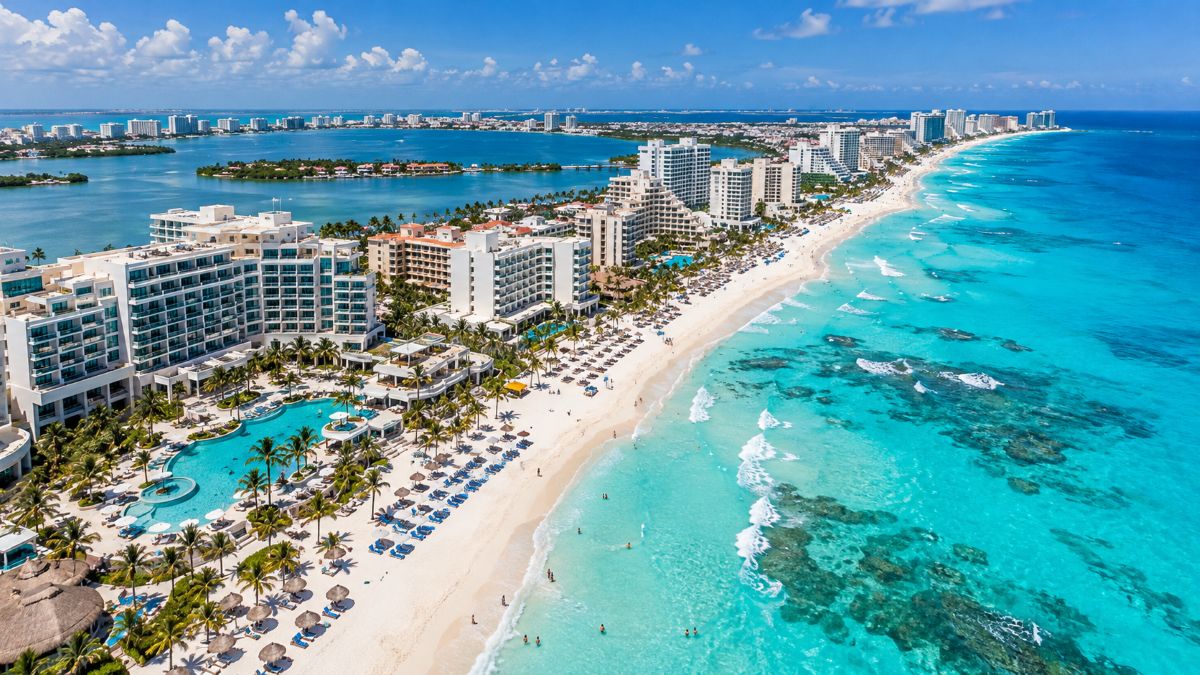 Image generated with Ai
Mexico’s tourism industry is gaining fresh momentum in 2026, welcoming 28.9 million international tourists between January and July, a 4.5% increase compared with the previous year. From the turquoise beaches of Cancún and the luxury resorts of Los Cabos to the cultural treasures of Mexico City, Oaxaca and Mérida, the country continues to attract travellers seeking diverse holiday experiences. Official tourism figures also reveal that international visitor receipts reached approximately US$21.7 billion, while cruise passenger arrivals climbed 13.6% to 7.4 million. However, the growth story is not uniform. While some destinations are experiencing stronger visitor demand, others face changing airport traffic, hotel occupancy and spending patterns, highlighting the opportunities and challenges shaping Mexico’s travel and tourism industry as it moves towards 2027.
Mexico Tourism Records 28.9 Million International Arrivals as Travel Demand Expands
Mexico’s latest consolidated national tourism figures show continued expansion in international visitor numbers.
Advertisement
Advertisement
According to the Ministry of Tourism’s DataTur statistical platform, the country received 28.9 million international tourists during January–July 2026, representing growth of 4.5% year on year.
International visitor receipts reached approximately US$21.7 billion, an increase of 0.3%. Meanwhile, cruise passenger arrivals climbed 13.6% to 7.4 million.
Advertisement
Advertisement
The contrast between tourist arrivals and visitor receipts is important. Although more international tourists visited Mexico, spending growth was substantially slower, suggesting that higher visitor volume did not translate into an equivalent increase in tourism earnings.
The figures also demonstrate the continuing importance of Mexico’s large domestic market alongside overseas tourism.
Advertisement
Advertisement
Mexico Tourism 2026: Latest Official Data at a Glance
| Tourism indicator | January–July 2026 | Annual comparison |
|---|---|---|
| International tourist arrivals | 28.9 million | +4.5% |
| International visitor receipts | US$21.7 billion | +0.3% |
| Air arrivals originating in the US | 8.1 million | 65% share of specified air-arrival market |
| Passengers on scheduled domestic and international flights | 71.6 million | — |
| Cruise passenger arrivals | 7.4 million | +13.6% |
| Domestic tourist arrivals in hotel rooms | 37.7 million | +2.3% |
Source: Mexico Ministry of Tourism, DataTur. Preliminary figures subject to revision. Categories have different statistical definitions and should not be added together.
Mexico’s National Statistics Institute, INEGI, separately reported that 8,189,014 international travellers entered the country in June 2026. Of these, 4,112,469 were overnight international tourists, while the remainder were same-day visitors.
Advertisement
Advertisement
The distinction demonstrates why total international traveller entries cannot automatically be described as tourist arrivals.
Cancún Remains a Major Caribbean Tourism Gateway Despite Mixed Aviation Trends
Cancún remains one of Mexico’s principal international tourism destinations, supported by resort accommodation, Caribbean beaches and access to the wider Riviera Maya.
The federal tourism ministry’s summer 2026 projections placed Cancún at the top of its selected destinations for expected hotel occupancy, at 67.9% between 20 July and 30 August.
The government also projected a 1.7% increase in tourist arrivals compared with the corresponding 2025 period.
Advertisement
Advertisement
However, airport indicators were less positive. Operator ASUR reported a 4% year-on-year decline in passenger traffic across its Mexican airports during August 2026.
The results demonstrate why airport throughput and hotel tourism demand must be examined separately.
Mexico City Strengthens Its Position Through Urban Tourism and International Events
Mexico City continues to attract visitors through cultural attractions, historic neighbourhoods, museums, restaurants, conferences and major entertainment events.
The Ministry of Tourism projected that the capital would receive 458,000 tourists during the Easter holiday period in 2026, with expected hotel occupancy of 56.2%.
For the summer holiday period, authorities anticipated tourist-arrival growth of approximately 3%, with projected hotel occupancy of 58.2%.
Mexico City’s international profile also benefited from hosting matches during the FIFA World Cup in June and July 2026. Mexico’s official tourism portal identified the tournament as an opportunity to promote the country’s cultural attractions, hospitality infrastructure and visitor experiences.
Advertisement
Advertisement
Looking towards the remainder of 2026, major sporting and cultural events remain important for the city’s visitor economy.
Los Cabos Continues Attracting International Resort and Luxury Travellers
Los Cabos remains a major tourism centre on Mexico’s Pacific coast, combining luxury accommodation, beaches, marine recreation and outdoor activities.
Government forecasts issued in July projected an 8.7% increase in summer tourist arrivals compared with 2025, one of the stronger growth expectations among the selected destinations.
Projected hotel occupancy for the summer period stood at 62.5%.
Earlier immigration statistics showed 413,985 foreign-national arrivals at Los Cabos airport during January–February 2026, an increase of 3.1% compared with the corresponding period of 2025.
These figures provide two different measures: tourism forecasts for the summer period and recorded foreign-national airport entries earlier in the year.
Advertisement
Advertisement
Puerto Vallarta Maintains Strong Hotel Demand While Aviation Markets Adjust
Puerto Vallarta continues to support Mexico’s Pacific tourism economy through beach holidays, hospitality services, cultural tourism and international events.
The Ministry of Tourism projected hotel occupancy of 64.4% for the July–August summer holiday period, alongside expected tourist-arrival growth of 1.1%.
Earlier in 2026, government projections for the Easter holiday period had placed Puerto Vallarta’s expected hotel occupancy at 78.2%.
However, foreign-national arrivals through Puerto Vallarta airport declined 5.3% during January–February 2026 compared with the previous year.
The contrasting results show that strong seasonal hotel demand can coexist with weaker performance in particular international arrival segments.
Oaxaca Builds Tourism Opportunities Around Cultural Heritage and Local Experiences
Oaxaca remains an important destination for cultural and heritage tourism, supported by traditional cuisine, historic architecture, crafts and regional celebrations.
Advertisement
Advertisement
Unlike the principal beach destinations, Oaxaca’s tourism appeal extends across its historic city, indigenous communities, archaeological attractions and surrounding natural landscapes.
The state also benefits from complementary coastal destinations, particularly Huatulco and Puerto Escondido.
DataTur’s January–March 2026 accommodation monitoring recorded a hotel occupancy rate of 76.9% for Bahías de Huatulco, compared with 75.5% in the corresponding 2025 period.
This indicates strong accommodation demand in one of Oaxaca’s important coastal tourism centres, although the figure should not be treated as the occupancy rate for Oaxaca City itself.
Mérida Emerges as a Strong Performer in Mexico’s Cultural Tourism Market
Mérida has attracted particular attention in the government’s 2026 tourism forecasts.
During the Easter holiday period, the Ministry of Tourism projected an 18.5% increase in tourist arrivals, with more than 108,000 visitors expected.
Advertisement
Advertisement
For the summer holiday period, Mérida recorded an even stronger projected growth rate of 23.4% against the corresponding 2025 season.
Its expected summer hotel occupancy stood at 58.7%.
The city benefits from its position within Yucatán’s wider tourism network, providing access to Maya heritage, colonial architecture, traditional cuisine and regional cultural attractions.
These official projections identify Mérida as an important destination to monitor as cultural tourism continues developing across southeastern Mexico.
Guadalajara Strengthens Urban Tourism Through Culture and Sporting Events
Guadalajara remains a major destination for business travel, events, gastronomy and cultural tourism.
Government forecasts indicated that the city could receive more than 152,000 tourists during the Easter holiday period in 2026.
Advertisement
Advertisement
For the July–August summer season, the Ministry of Tourism projected a 1.2% increase in tourist arrivals and average hotel occupancy of 57%.
Guadalajara also served as one of Mexico’s three host cities for the FIFA World Cup 2026, bringing international attention to its visitor infrastructure and broader tourism offering.
The city provides an important contrast with Mexico’s resort destinations because conferences, exhibitions, urban attractions and sporting events contribute to demand beyond traditional beach holidays.
Tulum Introduces New Visitor Access Measures and Tourism Diversification
Tulum is undergoing important changes involving attraction access, visitor experience and tourism development.
On 17 July 2026, the Mexican government announced measures under its Tulum Renace programme, including free admission to Parque del Jaguar and revised entry charges for the archaeological zone and associated protected area.
The government announced rates of MXN80 for Mexican nationals and MXN265 for international visitors, subject to the applicable implementation arrangements.
Advertisement
Advertisement
The wider Tulum Renace strategy incorporates 128 actions covering tourism regulation, environmental management, destination promotion and infrastructure.
Tulum is also diversifying into sports and wellness tourism. Quintana Roo’s government announced its National Sports Tourism Strategy for Tulum in September, including the Euforia Freedom Tulum programme held from 2–4 October 2026.
Playa del Carmen Expands International Promotion Across Europe and Latin America
Playa del Carmen has launched an international promotion initiative aimed at strengthening its presence among overseas tourism operators.
According to the municipal government, the destination participated in IFTM Top Resa in Paris and FIT América Latina in Buenos Aires during September 2026.
A statement issued on 6 October reported more than 50 business meetings and 20 media interviews across the two events.
The initiative forms part of Playa del Carmen’s wider ambition to develop as a smart tourism destination.
Advertisement
Advertisement
Hotel indicators also demonstrate its established tourism capacity. DataTur recorded 77.3% occupancy for Playa del Carmen during January–March 2026, compared with 81.5% in the equivalent 2025 period.
That represents a decrease of 4.2 percentage points, despite the destination’s continuing investment in international promotion.
Mexico’s New Digital Tourism Booking Services Support Travel Planning
Beyond individual destinations, Mexico is also developing its digital tourism infrastructure.
On 5 August 2026, the Ministry of Tourism announced that the official Visit México platform had introduced integrated booking functionality for selected services.
The system enables travellers to purchase Mexicana airline tickets, Maya Train journeys and accommodation at Grupo Mundo Maya hotels.
The government described the initiative as part of efforts to improve direct digital access to tourism products.
Advertisement
Advertisement
For visitors exploring southeastern Mexico, such services could simplify the organisation of multi-destination itineraries involving transport and accommodation.
What Mexico’s Tourism Figures Mean for the End of 2026 and 2027
Mexico’s tourism outlook is characterised by national growth alongside different conditions in individual destinations.
The 28.9 million international tourist arrivals recorded during January–July demonstrate continued visitor demand, while stronger cruise traffic and domestic hotel arrivals support the wider tourism economy.
Nevertheless, weaker airport performance in selected markets and slower growth in international visitor receipts indicate that the industry is not expanding uniformly.
As the December holiday period approaches, Cancún, Los Cabos, Puerto Vallarta and the Riviera Maya remain important resort markets, while Mexico City, Guadalajara, Mérida and Oaxaca offer complementary cultural and urban tourism experiences.
Tulum’s visitor-access reforms and Playa del Carmen’s international promotional activity also illustrate how destinations are adapting their tourism strategies.
Mexico enters the final months of 2026 with a growing international tourism market, expanding cruise activity and a wide range of destinations supporting its visitor economy. Cancún, Los Cabos and Puerto Vallarta remain important coastal tourism centres, while Mexico City, Guadalajara, Oaxaca and Mérida continue to strengthen the country’s appeal through culture, heritage, gastronomy and major events. Meanwhile, Tulum’s tourism reforms, Playa del Carmen’s international promotional efforts and new digital travel booking services reflect Mexico’s wider push to improve visitor experiences. Nevertheless, slower growth in tourism receipts and mixed airport performance suggest that attracting more visitors alone will not guarantee stronger economic returns. As Mexico looks towards 2027, its ability to balance visitor growth, tourism spending, destination development and sustainable infrastructure will play an important role in determining the industry’s next phase of expansion.
Advertisement
