

Ireland and Romania Spearhead Europe’s Halloween Tourism Race as Other Rivals Pursue Greater Visitor Spending

Published
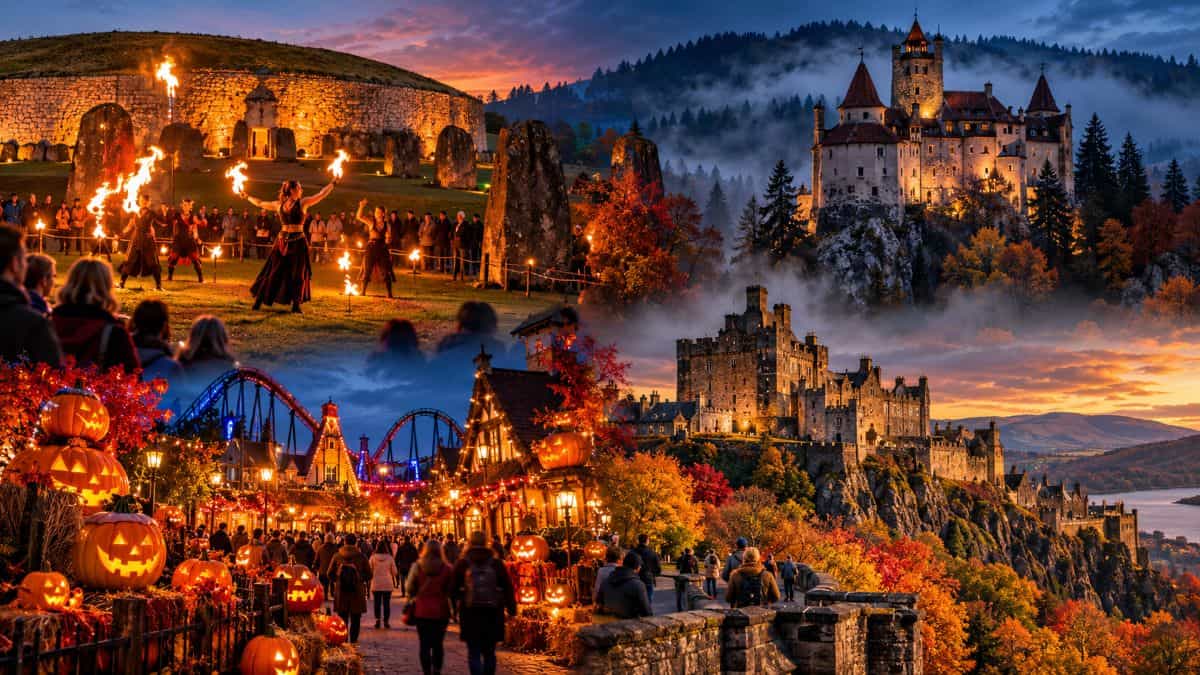
Ireland’s Púca Festival, Romania’s Dracula-associated attractions, Germany’s seasonal entertainment venues and the United Kingdom’s Halloween experiences offer four distinct routes to autumn tourism growth. However, the commercial winner cannot be identified through festival attendance or national tourism totals alone. Ireland reported more than 60,000 Púca Festival visitors and an estimated €3 million local economic boost in 2025, while Germany recorded 45.5 million accommodation overnight stays in October 2024. Ireland’s official statistics also recorded €534.3 million in spending by overseas visitors during October 2024, excluding fares. These figures establish the scale of the opportunity, but researchers must isolate Halloween-related spending, additional overnight stays and completed international trips before declaring a national winner.
Halloween Tourism Moves Beyond Seasonal Spectacle
Halloween tourism in Europe is becoming an important subject for destination marketers seeking to strengthen autumn demand and extend the commercial season beyond summer. The opportunity combines cultural heritage, immersive entertainment, historic attractions, themed accommodation and regional food experiences. Nevertheless, the four countries represent different business models, making consistent measurement essential.
Advertisement
Advertisement
Ireland draws on Samhain, the ancient seasonal festival associated with Halloween’s cultural roots. Romania leverages Transylvania’s Gothic imagery and Dracula associations, while Germany can build on its extensive attraction and accommodation markets. The United Kingdom combines historic sites, city breaks and organised seasonal entertainment across several regions.
The wider European market provides important context. Eurostat reported approximately 3.02 billion nights in tourist accommodation across the European Union in 2024, with Germany recording 441 million. These figures demonstrate the scale of European tourism, although neither the EU total nor Germany’s annual performance measures Halloween’s direct contribution.
Advertisement
Advertisement
The investigation therefore needs two separate measures of success. One is total commercial scale, including attributable spending and visitor numbers. The other is incremental performance, measuring how much additional business Halloween generates beyond normal autumn demand.
Ireland Converts Samhain Heritage Into Revenue
Ireland offers the clearest published starting point because its Púca Festival has a documented attendance and local economic-impact estimate. Fáilte Ireland reported that the 2025 festival attracted more than 60,000 visitors across Trim and Athboy, generating an estimated €3 million boost to the local economy. The four-day event ran from 30 October to 2 November 2025, combining music, folklore, fire performances, storytelling, markets and cultural programming.
Advertisement
Advertisement
The reported figures suggest an estimated €50 in local economic impact per attendee when the €3 million estimate is divided by 60,000 visitors. This is a simple ratio, not verified individual spending, and actual attendance exceeded 60,000. The calculation nevertheless illustrates why festival attendance should be paired with transparent economic-impact methodology.
The previous edition provides another useful reference point. A Meath County Council management report recorded 43,000 attendees and €4.6 million in local economic revenue for the preceding festival. The different reported attendance and revenue figures require careful verification before researchers calculate growth, since reporting definitions and economic-impact methods may differ between editions.
Advertisement
Advertisement
Ireland’s wider inbound tourism figures also reveal the scale of autumn spending. The Central Statistics Office recorded 548,100 overseas visitors in October 2024, who spent €534.3 million excluding fares and generated 3.9 million nights. Spending increased 3.6% year on year, despite visitor numbers declining 5.1%.
These figures are national context, not Halloween-specific revenue. Even so, they demonstrate the importance of separating visitor volume from visitor value. For Ireland, the next research priority is determining how many overseas travellers visited because of Púca, how long they stayed and how much they spent in Meath and surrounding counties.
Romania Tests Dracula Tourism’s Commercial Reach
Romania’s strongest differentiator is its internationally recognisable folklore, supported by Transylvania’s historic landscapes, medieval architecture and Dracula-related visitor experiences. Bran Castle offers a prominent focal point for travellers interested in the region’s Gothic associations. However, the commercial strength of that identity cannot be established through reputation alone.
Researchers should distinguish ordinary castle admissions from Halloween-specific visits and dedicated event attendance. A visitor exploring Bran Castle during a summer itinerary should not automatically count as a Halloween traveller. Likewise, a visitor attending a themed event may be a local resident rather than an overnight tourist.
Advertisement
Advertisement
Romania’s National Institute of Statistics provides the foundation for measuring monthly accommodation arrivals and overnight stays. The investigation should compare October with September and November, then examine year-on-year changes. Regional data for Brașov and surrounding Transylvanian destinations would help determine whether seasonal demand reaches local accommodation providers and businesses beyond the principal attraction.
A second priority is visitor origin. Event organisers and attraction operators should disclose ticket sales by market, where available, alongside accommodation patterns and average stay duration. These measures would help establish whether Dracula-related experiences attract international visitors who contribute additional spending to Romania’s visitor economy.
For travellers, the distinction matters because Transylvania offers more than one attraction. A multi-night itinerary can combine castles, historic towns, regional cuisine and countryside excursions. The commercial question is whether Halloween encourages visitors to extend that itinerary, rather than merely purchasing a single attraction ticket.
Germany Offers Scale but Needs Attribution
Germany provides the largest clearly quantified October accommodation benchmark among the four countries in this comparison. Destatis recorded 45.5 million guest overnight stays in October 2024, representing a 2.5% increase compared with October 2023. Domestic visitors accounted for 38.5 million nights, while international visitors generated seven million.
This scale creates a substantial market for hotels, restaurants, transport operators and seasonal attractions. Theme parks and entertainment venues can use Halloween programming to encourage repeat visits, family trips and overnight stays. Nevertheless, national accommodation figures do not establish whether those bookings were motivated by Halloween.
Germany’s research advantage lies in the potential to connect regional tourism statistics with individual attraction performance. Researchers should examine ticket sales, event dates, hotel occupancy and room rates around participating venues. They should also distinguish visitors who travel specifically for Halloween from guests who attend a seasonal attraction during an existing holiday.
Advertisement
Advertisement
The European comparison further clarifies Germany’s position. Eurostat placed Germany among the EU’s largest accommodation markets in 2024, with 441 million annual nights. That figure establishes national scale, but it cannot be compared directly with Ireland’s festival attendance or economic-impact estimate.
For tourism businesses, the practical opportunity is to measure whether seasonal programming increases the length of stay. A theme-park ticket may generate immediate revenue, while an overnight booking can distribute spending across accommodation, food, transport and additional attractions.
The United Kingdom Offers a Broad Attraction Economy
The United Kingdom presents a more dispersed model, spanning historic attractions, urban entertainment, family experiences and regional Halloween events. Its visitor economy is larger and more varied than any single festival or castle, so a credible comparison requires a carefully selected sample of seasonal attractions.
VisitEngland’s 2024 attraction survey recorded 2.9 million annual visits to the Tower of London and 6.5 million visits to the British Museum. These figures demonstrate the scale of the wider attraction sector, but they are annual totals rather than Halloween-specific attendance. The research must identify which attractions run dedicated seasonal programmes and publish comparable admissions or ticketing data.
The UK analysis should also account for geographical differences. London city breaks, rural heritage attractions and seasonal events in England, Scotland, Wales and Northern Ireland attract different visitor markets. Researchers should avoid treating the entire UK as a single uniform destination when assessing local economic impact.
For accommodation, monthly national and regional statistics can reveal whether October performs differently from surrounding months. Yet hotel occupancy alone cannot establish causation. Conferences, school holidays, sporting events and ordinary leisure trips may also influence autumn demand.
Advertisement
Advertisement
The strongest UK evidence would connect seasonal ticket sales with accommodation bookings and visitor-origin surveys. This would establish whether Halloween encourages extra nights, rather than simply shifting an existing attraction visit to October.
Four Countries, Four Commercial Models
The comparison below separates verified indicators from measures that still require Halloween-specific evidence. National totals provide context, while event-level records are needed to calculate attributable revenue.
| Country | Verified indicator | What it establishes | Key evidence still needed |
|---|---|---|---|
| Ireland | Púca attracted 60,000+ visitors and an estimated €3m local economic boost in 2025 | A documented festival-level impact | Visitor origin, overnight stays and direct spending |
| Romania | National accommodation statistics are available through the national statistics office | A framework for measuring October demand | Dracula-event admissions and Halloween-attributable expenditure |
| Germany | 45.5m accommodation nights in October 2024 | Large autumn accommodation market | Seasonal attraction attendance and associated hotel bookings |
| United Kingdom | Tower of London recorded 2.9m annual visits in 2024 | Scale of a major paid attraction | Halloween admissions and incremental visitor spending |
The figures cannot be added together or used to produce a reliable ranking because they measure different activities and periods. Ireland’s festival estimate covers a specific event, while Germany’s number counts nights across accommodation establishments. The UK’s attraction figure represents annual admissions, and Romania requires comparable event-level data.
Flight Searches Reveal Interest, Not Arrivals
International flight searches can help identify emerging interest in destinations during the weeks before Halloween. Google Travel Analytics provides participating industry partners with aggregated insights into destination and route demand, including historical comparisons and search trends. However, access to its detailed dashboards is restricted to eligible travel-industry partners.
Researchers should compare searches for routes serving Dublin, Bucharest, Cluj-Napoca, major German gateways and relevant UK airports. They should then test whether increased search interest corresponds with completed bookings, passenger arrivals and accommodation demand. Search activity alone cannot establish that a traveller purchased a ticket or completed a journey.
A robust dataset should distinguish the country of origin, intended destination, search period and travel dates. It should also separate international from domestic journeys. This would help identify whether Halloween is attracting overseas visitors or mainly encouraging residents to take short domestic breaks.
Advertisement
Advertisement
Air passenger statistics provide a useful cross-check, but they also have limitations. Arrivals include people travelling for business, family visits and other reasons unrelated to Halloween. A visitor survey or booking-linked event dataset is needed to establish motivation.
Overnight Stays and Spending Set the Standard
Accommodation data offer one of the most practical ways to assess whether seasonal events generate additional tourism. Ireland’s October 2024 figures illustrate the value of this approach: overseas visitors spent 3.9 million nights in the country, averaging 7.1 nights per visit. Their expenditure reached €534.3 million excluding fares, despite a year-on-year decline in visitor numbers.
These statistics show why volume and value should be analysed separately. A destination can attract fewer visitors yet record higher expenditure, while another may generate substantial attendance without encouraging overnight stays. Neither result alone establishes Halloween’s economic contribution.
The research should compare October with September and November, alongside the same months in previous years. It should also examine average room rates, occupancy and length of stay in the areas hosting major events. Where possible, comparable non-event destinations could help estimate what might have happened without Halloween programming.
Visitor expenditure must also be defined consistently. Direct spending on hotels, restaurants, transport, tickets and retail should remain separate from wider economic-impact estimates that include indirect or induced activity. Without this distinction, comparisons risk double counting the same money.
A Practical Scorecard for the Industry
A final ranking should prioritise attributable economic activity rather than the raw size of national tourism markets. The proposed scorecard below offers a transparent starting framework, with weights that researchers should agree before evaluating the countries.
Advertisement
Advertisement
| Performance measure | Suggested weight |
|---|---|
| Halloween-attributable visitor spending | 30% |
| Additional overnight stays | 25% |
| Verified event and attraction attendance | 20% |
| International travel demand | 15% |
| Accommodation performance | 10% |
The framework should produce two separate rankings. The first would measure total Halloween-related tourism impact, while the second would assess the additional business generated beyond normal autumn demand. A large country could lead the first ranking without depending heavily on Halloween, whereas a smaller destination might perform better on incremental economic return.
Missing data should not automatically translate into a low score. Instead, the final report should disclose gaps and avoid declaring a winner until all four destinations meet minimum evidence standards. The scoring system is an analytical proposal, not a result calculated from the figures currently available.
Travellers Can Follow the Money
The findings could help travellers identify destinations where Halloween supports a fuller autumn itinerary. In Ireland, the Boyne Valley combines Púca’s cultural programming with heritage experiences and nearby attractions. In Romania, Transylvania offers castles and historic towns, while Germany and the UK provide varied seasonal entertainment and city-break opportunities.
Travellers should check official event dates, ticket availability, transport connections and accommodation conditions before booking. Seasonal events can sell out, while rural attractions may require advance transport planning. Visitors should also compare the total cost of a multi-night stay rather than judging value solely by the price of an event ticket.
For tourism operators, the commercial lesson is to connect seasonal events with bookable accommodation, food experiences and regional transport. For destination authorities, consistent visitor surveys and transparent economic-impact methods would make future comparisons more credible. These measures can help show whether Halloween spreads spending beyond major attractions and strengthens the shoulder season.
The available evidence confirms that Halloween can support a meaningful tourism opportunity, particularly where organisers connect cultural identity with measurable visitor activity. Ireland currently offers the clearest event-level example through Púca, while Germany’s accommodation figures demonstrate a much larger national autumn market. Romania and the UK require more comparable Halloween-specific attendance and spending data before a defensible winner can emerge. The next stage is therefore not a speculative league table, but a consistent annual dataset linking visitor motivation, completed trips, overnight stays and local expenditure. That approach would give travellers better planning information and help tourism businesses measure the genuine commercial value of Europe’s spooky season.
Advertisement
