
Cambodia Shapes Koh Ker Travel With Visitor Circuit Review Carrying Capacity Planning and Heritage Route Work

Published
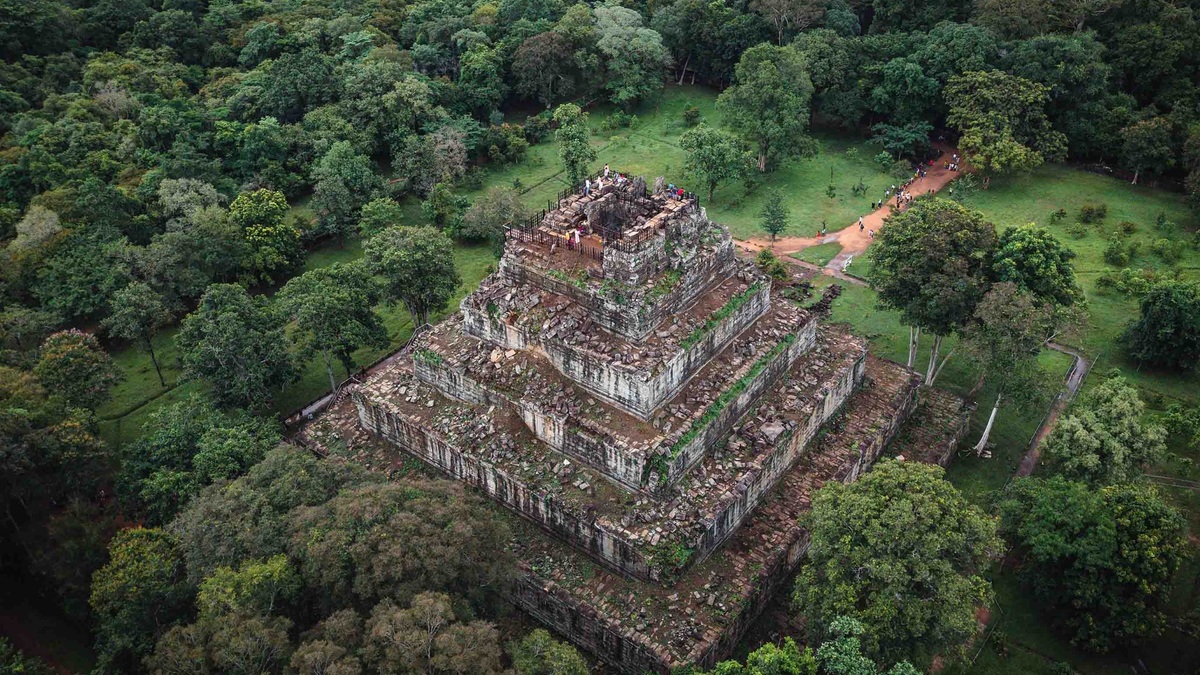
Cambodia has begun a potentially significant shift in how international travellers will experience Koh Ker. Days before the November dry-season travel period approaches, heritage authorities have reviewed tourist visiting circuits across the UNESCO-listed archaeological landscape, while a newly approved management programme is preparing carrying-capacity assessments, visitor-pressure monitoring and possible rerouting measures. Separately, tourism officials are preparing joint packages connecting Preah Vihear, Kampong Thom and Siem Reap provinces. Together, the developments point to a move from simply promoting Koh Ker towards actively managing how future tourism growth reaches and moves through the site.
Cambodia’s latest Koh Ker development is about managing visitors before attracting more
The most important development for travellers occurred on 27 September 2026.
According to Cambodia’s Ministry of Culture and Fine Arts, ad hoc experts from the International Coordinating Committee for Preah Vihear inspected conservation and development work at Koh Ker. Their examination covered Prasat Khnar, Prasat Kok Krorng, Prasat Krachap, Prasat Balang Tboung, Prasat Krahom and Prasat Pram.
The official record specifically states that the inspection extended to the management of tourist visiting circuits. That detail changes the tourism significance of the exercise. It means Koh Ker’s current development agenda reaches beyond monument restoration into the practical movement of visitors through the archaeological landscape.
Advertisement
Advertisement
The timing matters. Cambodia’s Ministry of Tourism identifies the dry period as running broadly from October to April, while November to January coincides with the country’s principal high-season conditions because rainfall falls and temperatures are relatively cooler.
For travel companies building November departures, Koh Ker is therefore entering the important seasonal window precisely when authorities are examining how visitors should circulate around the World Heritage property.
Advertisement
Advertisement
Latest verified Koh Ker developments relevant to travellers
| Date | Official development | Direct travel relevance |
|---|---|---|
| 25 August 2026 | Tourism and heritage authorities reviewed Koh Ker amenities and preparations for joint packages connecting Kampong Thom, Preah Vihear and Siem Reap provinces | Could expand Koh Ker from an isolated excursion into a wider heritage itinerary |
| 27 September 2026 | ICC-Preah Vihear experts inspected Koh Ker conservation work and tourist visiting circuits | Visitor movement is now part of active site-management scrutiny |
| 30 September 2026 | ICC technical session reviewed completed and continuing Koh Ker restoration and archaeological research | More of the archaeological landscape is entering structured conservation and interpretation work |
| 1 October 2026 | Cambodia’s Ministry of Culture and Fine Arts published the technical-session results | Provides a same-day official news peg for this development |
| 2026–28 programme | UNESCO-backed project targets carrying capacity, visitor flow, monitoring and Heritage Impact Assessment | Could shape future routing, infrastructure decisions and site access management |
Sources: Cambodia Ministry of Culture and Fine Arts, National Authority for Preah Vihear and UNESCO World Heritage Centre.
Koh Ker visitor management is moving towards measurable carrying capacity
The deeper change comes from UNESCO’s 2026 international-assistance programme.
The World Heritage Committee approved US$85,000 on 28 July 2026 for developing management, conservation and protection capacity at Koh Ker. UNESCO records show that the project is now listed for implementation. Koh Ker has received three approved World Heritage assistance requests worth a combined US$122,126, including earlier disaster-risk work.
The 2026 project is particularly important for tourism because its official objectives explicitly address visitor pressure.
According to UNESCO documentation, Koh Ker’s World Heritage status is bringing greater tourism but also potential environmental, social and heritage-management pressures. Planned work therefore includes visitor management, sustainable tourism, documentation, monitoring, risk assessment and research into the ancient hydrological landscape.
The programme goes substantially further.
Advertisement
Advertisement
UNESCO documentation sets out plans for a visitor carrying-capacity assessment methodology tailored specifically to Koh Ker. Authorities are expected to develop and validate the methodology, monitor carrying capacity periodically and adjust visitor-management practices when necessary.
Potential responses identified in the programme include visitor-flow analysis, routing adjustments and protective measures where research identifies pressure on monuments or landscape zones. Tourist facilities and infrastructure upgrades are also expected to undergo Heritage Impact Assessment procedures.
That creates an important distinction for the travel trade. Cambodia is not merely seeking higher Koh Ker footfall. Its emerging system is designed to establish how much visitation different parts of the archaeological landscape can sustain and how those visitors should move.
Why Koh Ker is entering a different phase from the Angkor circuit
Koh Ker and Angkor remain fundamentally different tourism products.
UNESCO describes Koh Ker as an archaeological landscape extending across 1,187.61 hectares, surrounded by a 3,523.77-hectare buffer zone. The former capital developed under Jayavarman IV and functioned as the Khmer Empire’s sole capital from 928 to 944 CE. It sits roughly 80 kilometres north-east of Angkor as measured by UNESCO’s site description.
The National Authority for Preah Vihear places Koh Ker approximately 120 kilometres from Siem Reap town and about 460 kilometres from Phnom Penh. That geography means many international visitors will continue to encounter Koh Ker as a substantially longer excursion than the core Angkor temples around Siem Reap.
Advertisement
Advertisement
Ticketing further separates the two experiences.
Koh Ker versus Angkor for international travellers
| Operational factor | Koh Ker | Angkor Archaeological Park |
|---|---|---|
| Current one-day admission | US$15 | US$37 |
| Accessible temples stated by Angkor Enterprise | 10+ | 50+ |
| One-day park validity | One day | One day |
| Published park entry time | 6:00 am | 5:00 am |
| Published park closing time | 6:30 pm | 6:30 pm |
| Higher-duration pass | Not listed for Koh Ker | US$62 three-day, US$72 seven-day |
| Geographic relationship | About 120 km from Siem Reap town according to NAPV | Main heritage complex accessed from Siem Reap |
| Emerging 2026 management issue | Carrying capacity, visitor circuits, pressure monitoring | Established mass heritage circuit and multi-day ticket structure |
Current admission information is published by state-run Angkor Enterprise.
The price difference is straightforward: a Koh Ker one-day pass costs US$22 less than an Angkor one-day pass.
There is also an operational detail agents should notice. Angkor Enterprise’s ticket listing gives Koh Ker park access from 6:00 am to 6:30 pm, while its dedicated Koh Ker ticket-counter guidance describes the physical counter as generally operating from 7:00 am until 5:30 pm. Operators planning very early arrivals should therefore confirm ticket arrangements rather than assuming counter and site hours are identical.
Visitor-volume comparisons need greater precision than the usual uncrowded claim
Many destination narratives describe Koh Ker as a quieter alternative to Angkor. The latest institutional evidence suggests a more useful story.
Angkor Enterprise reported 510,848 foreign travellers purchasing Angkor Passes between 1 January and 30 September 2026.
Advertisement
Advertisement
However, its current public-facing statistics do not present an equivalent cumulative Koh Ker visitor number for the same nine-month period on the principal statistics page.
For that reason, a rigorous 1 October report should not manufacture a visitor-density ratio between the two properties.
The stronger evidence-based distinction is structural. Angkor operates a mature multi-day ticket system around more than 50 accessible temples, while Koh Ker has a separate US$15 day ticket and is now developing site-specific carrying-capacity and visitor-flow management.
That matters more to tour planners than a loosely defined uncrowded label. A future management decision could affect which Koh Ker monuments receive heavier visitation, where groups pause, how vehicles and pedestrians are channelled, and whether fragile areas require additional controls.
New provincial heritage packages could change Koh Ker’s role in Cambodia itineraries
A second development strengthens this interpretation.
On 25 August 2026, leaders of the National Authority for Preah Vihear met Cambodia’s Ministry of Tourism and the Preah Vihear Provincial Department of Tourism to examine tourism amenities within the Koh Ker site and Srayong Commune.
Advertisement
Advertisement
According to the Ministry of Culture and Fine Arts, the work was undertaken in preparation for joint tour packages linking Kampong Thom, Preah Vihear and Siem Reap provinces. The delegation subsequently inspected tourism facilities and locations at Koh Ker.
This could be more consequential than another promotional campaign.
Koh Ker has traditionally been operationally associated with an extended excursion from Siem Reap. A structured three-province product would instead position it inside a larger Cambodian heritage journey.
No official launch date, final commercial itinerary, package price, transport schedule or distribution arrangement has yet been published in the primary records reviewed for this report. Agents should therefore distinguish between package preparation and an already bookable government programme.
Prasat Krahom restoration broadens what travellers may understand about Koh Ker
The 30 September ICC-Preah Vihear Technical Session adds a cultural-product dimension.
According to the National Authority for Preah Vihear, approximately 150 national and international researchers participated in person and online in the technical session covering Preah Vihear and Koh Ker.
Advertisement
Advertisement
For Koh Ker specifically, the meeting reviewed the completed restoration of the Prasat Krahom tower and southern gate, supported by the ALIPH Foundation.
It also covered continuing research at Prasat Balang Tbong, preparation of a conservation plan for the western gate of Prasat Krachap and conservation work concerning Prasat Pram.
Research reviewed by the committee also included work on human settlement at Koh Ker by Germany’s Max Planck Institute and archaeological excavation findings concerning construction and agriculture involving Yale University in the United States. The official record does not publish full research conclusions, so those results should not be extrapolated beyond what the authority has released.
For travellers, the significance lies in product depth. Koh Ker can increasingly be interpreted as a complete tenth-century urban and ritual landscape rather than simply a journey to the stepped Prasat Prang monument.
Analysis — why this matters for Cambodia’s travel industry now
The new combination of visitor-circuit review, carrying-capacity methodology and inter-provincial package preparation creates an unusually important moment for Koh Ker.
For destination management, it means growth may be engineered differently from the outset. Instead of allowing visitor patterns to expand first and introducing controls later, Cambodia has an opportunity to integrate tourism flows with conservation before Koh Ker reaches Angkor-scale demand.
Advertisement
Advertisement
For tour operators, that could eventually create a more sophisticated heritage product. Longer Cambodia itineraries could distribute traveller time beyond the main Siem Reap circuit, while specialist archaeological, educational and cultural programmes could use Koh Ker’s restoration and research activity to deepen interpretation.
There are also constraints.
The site is significantly farther from Siem Reap than Angkor’s principal circuits. Vehicle time, guide duty hours, meal planning, fuel, comfort stops and daylight all become more important when designing a day programme.
The carrying-capacity work also means access conditions should not be treated as permanently fixed. If monitoring eventually identifies pressure at particular monuments, routing or site-use practices could change.
That is precisely why the latest development is more significant than another claim that Koh Ker is simply cheaper or quieter.
Critical operational takeaways for travel agents and tour operators
- Use the current US$15 Koh Ker admission figure. The official Angkor Enterprise tariff is the appropriate current reference; older Cambodian tourism pages contain legacy pricing.
- Do not market the three-province programme as launched. Authorities are preparing packages linking Kampong Thom, Preah Vihear and Siem Reap, but final commercial details have not been published.
- Monitor visitor-routing changes. Koh Ker’s 2026 management programme explicitly covers visitor flows, carrying capacity and potential routing responses.
- Allow adequate road time from Siem Reap. NAPV places Koh Ker around 120 kilometres from the town, making transport planning materially different from an Angkor circuit.
- Confirm early-entry ticket logistics. Published park-access and physical ticket-counter hours are not identical.
- Avoid unsupported crowd claims. Angkor has current cumulative pass statistics, but a directly comparable September Koh Ker visitor total is not displayed in the official public data reviewed.
- Build conservation flexibility into itineraries. Restoration, research and carrying-capacity monitoring may influence how individual monuments are visited over the longer term.
Cambodia’s Koh Ker strategy could influence a broader heritage-tourism model
Koh Ker is entering the 2026–27 dry season with something more substantial than increased visibility.
Advertisement
Advertisement
The site now sits at the intersection of active restoration, archaeological research, UNESCO-backed management investment, visitor-flow review and preparations for wider provincial tourism packages.
UNESCO’s programme has a planned 24-month duration, supported by US$85,000 from the World Heritage Fund and an identified NAPV in-kind contribution valued at US$37,100 within the wider project budget.
If those mechanisms are fully implemented, Koh Ker could provide Cambodia with a test case for managing heritage tourism through carrying-capacity evidence before visitation reaches a scale that creates harder conservation trade-offs.
For international travellers, the immediate message is simpler. Koh Ker remains a separate, lower-priced and more distant heritage experience than Angkor. But as November begins Cambodia’s prime dry-season period, the way visitors move through the ancient capital is becoming part of the destination story itself.
Advertisement
