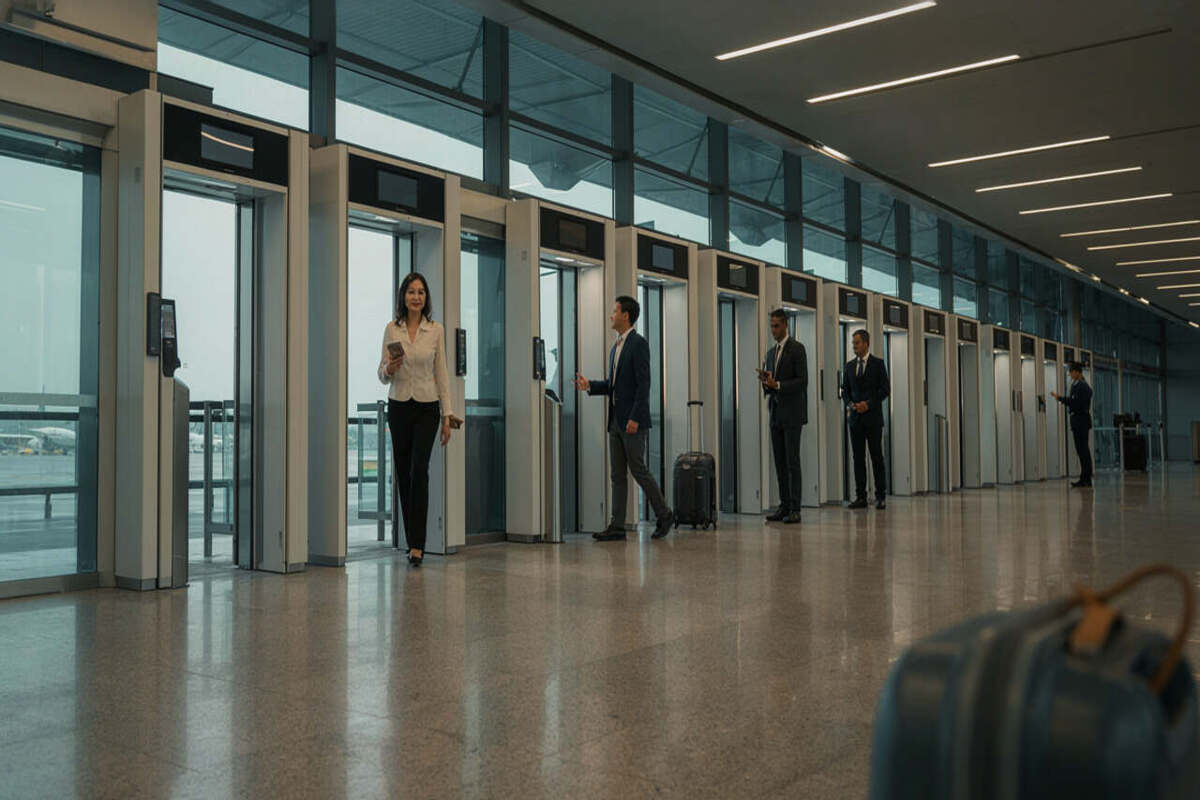
Image generated with Ai
Thailand is digitizing immigration management at Suvarnabhumi Airport to mitigate queues for international travelers. Automated immigration eGates are expected to facilitate visa and passport checks of eligible passport holders of 31 more countries at Suvarnabhumi Airport. This will help tailor Thailand’s border system to offer high passenger flow and better address the growing demand for international tourism in the country. Initially, the automated immigration eGates will be available for 33 countries’ travelers, including other major tourism markets in Asia, Europe, Oceania, and the Middle East. This will be a major disruption to the way immigration management is done in Southeast Asia, as it will be technology driven at a busy aviation hub.
The planned expansion comes as Thailand continues to strengthen its airport infrastructure and visitor services to handle increasing international arrivals. Suvarnabhumi Airport has experienced heavy passenger volumes during holiday periods, with long immigration waiting times becoming a challenge for many overseas visitors. By increasing the use of biometric-based automated processing, authorities aim to create smoother arrival procedures while improving overall airport efficiency.
Advertisement
Singapore and Hong Kong passport holders currently have access to Thailand’s automated immigration gates. Under the proposed expansion, travellers from 31 more countries will become eligible, increasing the total number of supported nationalities to 33.
The newly added countries include Australia, Austria, Belgium, Canada, the Czech Republic, Denmark, Finland, France, Germany, Greece, Hungary, Ireland, Italy, Japan, South Korea, Latvia, Luxembourg, Malaysia, Malta, the Netherlands, New Zealand, Norway, Poland, Portugal, Slovakia, Slovenia, Spain, Sweden, Switzerland, the United Arab Emirates and the United Kingdom.
Advertisement
Advertisement
The inclusion of these markets reflects Thailand’s focus on major international visitor sources. Many of these countries contribute significant numbers of leisure travellers, business visitors and long-stay guests to Thailand every year.
However, the expanded eGate system will not immediately allow every eligible traveller to complete immigration without additional registration requirements. The automated process is mainly designed for returning visitors whose biometric details are already available in Thailand’s immigration database.
First-time visitors from eligible countries will still need to complete immigration procedures at a staffed counter. During their first entry, immigration officers will collect required biometric information, including fingerprints and facial recognition data, before future automated processing becomes available.
Travellers will also need to continue using the same passport registered in the system. If a passport expires or is replaced, visitors may need to complete biometric registration again before accessing automated immigration services.
The expansion plan follows an official review of Suvarnabhumi Airport operations and an assessment by Thailand’s Immigration Bureau regarding the wider use of automated passport control technology. Authorities evaluated several factors before selecting additional countries, including immigration records, passport security standards, entry rejection statistics and broader national security considerations.
The wider implementation is expected to have a significant impact on passenger processing capacity. The expanded eGate system could support approximately 6.5 million additional short-term visitors annually, along with around 900,000 foreign residents who hold longer-term visas in Thailand.
Once the system becomes fully operational, automated immigration gates could handle around 53% of international arrivals at Suvarnabhumi Airport. This would reduce pressure on traditional immigration counters and allow airport staff to focus more effectively on passengers requiring additional assistance or security checks.
The introduction of wider biometric immigration access is also expected to strengthen Thailand’s position as a modern tourism destination. Airports around the world are increasingly adopting digital border solutions to improve passenger experiences, reduce waiting times and create more efficient international travel processes.
The rollout of the expanded eGate access will take place gradually. The implementation timeline depends on several operational factors, including equipment readiness, integration of biometric databases, security verification procedures and completion of required approvals.
Airport authorities are also preparing additional measures to manage passenger flows during busy travel periods. Staff deployment will be adjusted according to flight arrival patterns, ensuring more resources are available when large numbers of international passengers arrive at the same time.
The airport is also reviewing the layout of its three immigration zones to improve movement and prevent passenger queues from extending into surrounding areas. These changes are designed to create a more organised arrival experience, particularly during peak tourism seasons.
Passengers using the automated immigration system should also be aware that the process may differ from traditional border control. Instead of receiving a physical passport stamp, travellers may receive an electronic control slip confirming their entry information.
For Thailand’s tourism sector, the expansion of eGate services represents a major step towards improving the visitor journey from the moment travellers arrive. Faster immigration processing can strengthen the country’s appeal among international tourists, business travellers and long-stay visitors who expect efficient digital services.
As global tourism becomes increasingly technology-driven, Thailand’s investment in automated border processing reflects a broader effort to modernise its travel infrastructure. With millions of additional visitors expected to benefit from the system, Suvarnabhumi Airport is set to become faster, more efficient and better prepared for future international travel demand.
Advertisement
Tags: airport technology, eGate immigration, Suvarnabhumi Airport, Thailand Tourism, thailand travel
Advertisement
Advertisement













Saturday, September 5, 2026

Friday, September 4, 2026

Saturday, September 5, 2026

Friday, September 4, 2026

Thursday, September 3, 2026

Wednesday, September 2, 2026

Saturday, September 5, 2026