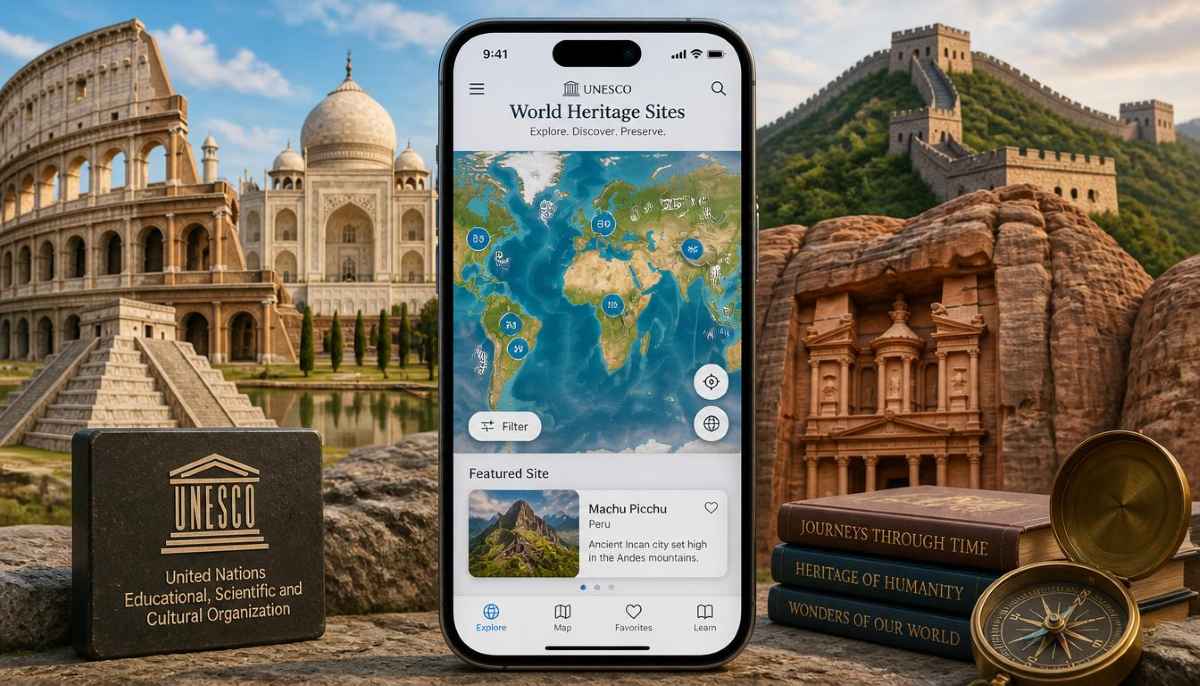
The landscape of global travel and tourism has undergone a remarkable transformation with the widespread adoption of digital tools designed to enhance cultural exploration. Historically, travelers relied heavily on printed guidebooks, physical maps, and word-of-mouth recommendations to discover historical landmarks and architectural wonders.
However, empirical studies in tourism management indicate that many significant points of interest recognized by international organizations often remained overlooked due to fragmented information sources or a lack of localized awareness. To bridge this information gap, specialized mobile applications have been introduced to the digital marketplace, offering comprehensive databases verified against official cultural registry inventories. These platforms compile extensive data sets of cultural and natural points of interest, ensuring that users can easily identify and explore significant locations that might otherwise be missed during their journeys.
Advertisement
Advertisement
Impact on Travelers
The integration of these digital navigation and discovery tools has a profound effect on how modern tourists plan and experience their trips. Field data from application analytics demonstrates that by utilizing interactive mapping features and detailed regional directories, individuals are empowered to uncover hidden historical sites and celebrated cultural monuments with unprecedented ease.
Travelers benefit significantly from features that allow them to track their visited locations, curate personalized bucket lists, and access offline descriptions of notable landmarks based on verified historical archives. This structured approach not only enriches the overall vacation experience but also encourages deeper engagement with regional history and architectural heritage. Furthermore, the ability to view nearby points of interest in real-time ensures that visitors can maximize their itineraries without spending excessive time on logistical research.
Advertisement
Advertisement
Industry Insights
Within the broader travel and technology sector, the emergence of heritage-focused applications reflects a growing demand for niche, educational, and sustainable tourism solutions. Industry stakeholders and market analysts have observed a steady shift toward digital platforms that prioritize cultural preservation and experiential learning over conventional sightseeing.
Industry reports note that applications dedicated to cataloging international heritage locations contribute significantly to spreading tourist traffic away from overcrowded mainstream destinations toward less-frequented regional sites. This decentralization supports local economies and promotes sustainable tourism practices by fostering a greater appreciation for diverse cultural landscapes across the globe, as supported by sustainable development metrics.
Advertisement
Advertisement
Practical Information
For individuals seeking to incorporate these tools into their travel routines, modern heritage applications are typically available as free downloads across major mobile platforms, including iOS and Android. Users can access comprehensive listings, interactive maps, and basic tracking functions without incurring financial costs, while optional premium upgrades are frequently offered to unlock advanced functionalities such as offline storage, unlimited favorites, and synchronized cross-device usage. The interface is designed to be intuitive, enabling users to filter locations by country, category, or proximity. Additionally, robust privacy controls allow individuals to manage their stored data and personal accounts securely according to standardized data protection regulations.
Comparison with Previous Policies and Developments
When contrasted with older travel methodologies, contemporary digital heritage tools represent a massive leap forward in information accessibility and efficiency. Previous generations of tourism policies and guidebooks often suffered from static content, high update costs, and limited geographical scope, leaving travelers vulnerable to missing key regional attractions.
Advertisement
Advertisement
In contrast, modern applications receive frequent data updates reflecting newly inscribed locations and revised regional listings backed by continuous database curation. This dynamic approach eliminates the logistical and travel friction inherent in traditional planning methods, providing a seamless, interactive, and centralized resource for global explorers.
Get the latest travel updates, destination news, and industry highlights.
We use cookies on our website to give you the most relevant experience by remembering your preferences and repeat visits. By clicking “Accept”, you consent to the use of ALL the cookies.
This website uses cookies to improve your experience while you navigate through the website. Out of these, the cookies that are categorized as necessary are stored on your browser as they are essential for the working of basic functionalities of the website. We also use third-party cookies that help us analyze and understand how you use this website. These cookies will be stored in your browser only with your consent. You also have the option to opt-out of these cookies. But opting out of some of these cookies may affect your browsing experience.
Necessary cookies are absolutely essential for the website to function properly. These cookies ensure basic functionalities and security features of the website, anonymously.
Cookie
Duration
Description
cookielawinfo-checkbox-analytics
11 months
This cookie is set by GDPR Cookie Consent plugin. The cookie is used to store the user consent for the cookies in the category "Analytics".
cookielawinfo-checkbox-functional
11 months
The cookie is set by GDPR cookie consent to record the user consent for the cookies in the category "Functional".
cookielawinfo-checkbox-necessary
11 months
This cookie is set by GDPR Cookie Consent plugin. The cookies is used to store the user consent for the cookies in the category "Necessary".
cookielawinfo-checkbox-others
11 months
This cookie is set by GDPR Cookie Consent plugin. The cookie is used to store the user consent for the cookies in the category "Other.
cookielawinfo-checkbox-performance
11 months
This cookie is set by GDPR Cookie Consent plugin. The cookie is used to store the user consent for the cookies in the category "Performance".
viewed_cookie_policy
11 months
The cookie is set by the GDPR Cookie Consent plugin and is used to store whether or not user has consented to the use of cookies. It does not store any personal data.
Functional cookies help to perform certain functionalities like sharing the content of the website on social media platforms, collect feedbacks, and other third-party features.
Performance cookies are used to understand and analyze the key performance indexes of the website which helps in delivering a better user experience for the visitors.
Analytical cookies are used to understand how visitors interact with the website. These cookies help provide information on metrics the number of visitors, bounce rate, traffic source, etc.
Advertisement cookies are used to provide visitors with relevant ads and marketing campaigns. These cookies track visitors across websites and collect information to provide customized ads.