
Asia Faces Severe Travel Disruption Amid Typhoon Dolphin with 874 Cancellations and 5,677 Delays Impacting Tokyo and Other Airports

Updated
Published
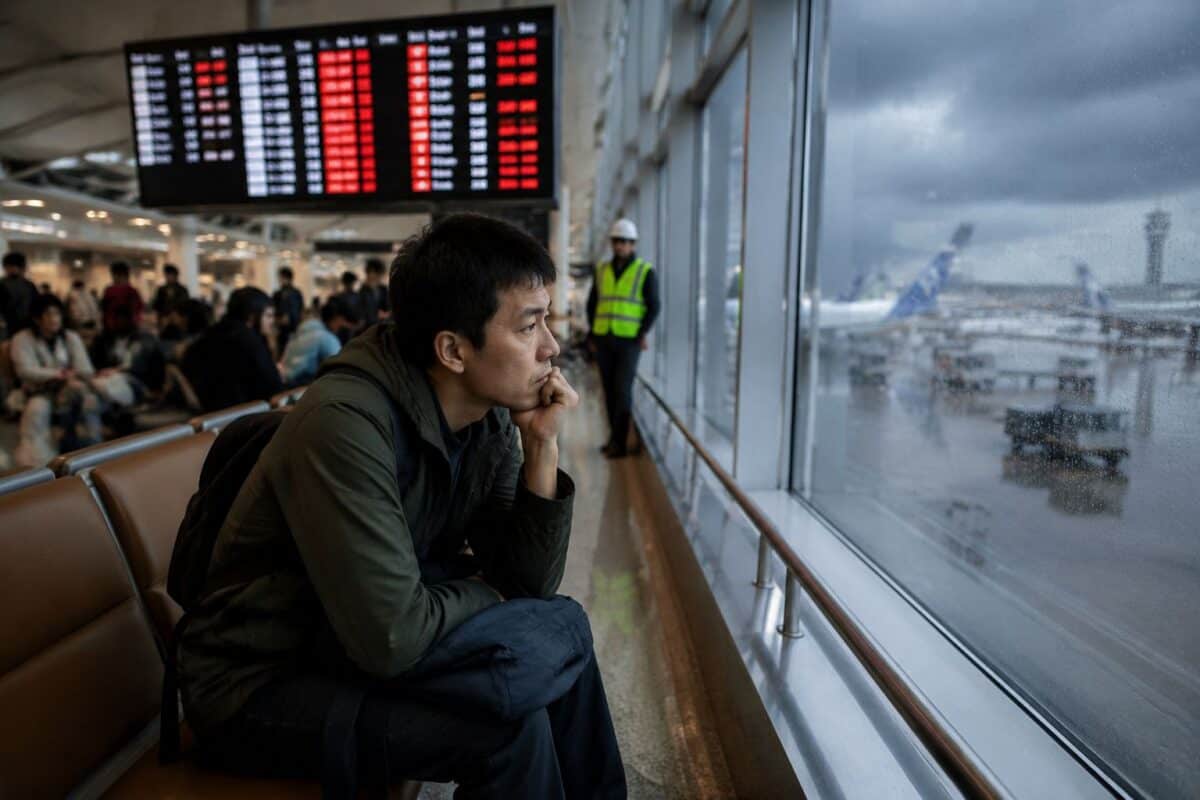
Asia is facing severe travel disruption as Typhoon Dolphin continues to affect aviation operations, causing 874 cancellations and 5,677 delays across major airports. The disruption has impacted Tokyo and other airports in Japan, China, India and wider Asian markets. Moreover, strong winds, heavy rainfall, flooding risks and storm-related safety restrictions have forced airlines to adjust schedules and suspend flights. Typhoon Dolphin has created the biggest pressure in Japan, where Okinawa, Kagoshima and island airports experienced widespread cancellations. Meanwhile, heavy rain warnings and approaching storm conditions have affected Chinese airports, creating extensive delays. In addition, operational congestion and weather challenges have contributed to disruptions across India, Southeast Asia and the Middle East. Airlines and airports are monitoring conditions closely as passengers face changing schedules, longer waiting times and travel uncertainty across Asia’s aviation network.
Why Are Asia’s Airports Facing Major Travel Disruptions Today?
Typhoon Dolphin Creates Severe Conditions Across Japan
The primary weather-related reason behind the disruption is Typhoon Dolphin, which has affected southwestern Japan with strong winds, heavy rainfall, high waves and flooding risks. The storm has forced authorities to issue evacuation warnings and has disrupted transportation networks across Okinawa, Kagoshima and nearby island regions.
Advertisement
Advertisement
Japan recorded significant airport disruption, with several airports experiencing large numbers of cancellations. Naha Airport reported 250 cancellations, making it the most affected airport by cancellations in the region. Other Japanese island airports, including Ishigaki, Miyako, Amami, Yakushima, Tokunoshima, Okinoerabu and Kikai, also faced widespread cancellations due to severe weather conditions.
The storm has also affected major Japanese aviation hubs. Tokyo Haneda Airport recorded 307 delays and 59 cancellations, while Narita International Airport reported 140 delays and 10 cancellations. Kansai International Airport recorded 99 delays and 16 cancellations, while Osaka Itami Airport experienced 129 delays and 26 cancellations.
Advertisement
Advertisement
Heavy Rainfall and Storm Preparations Disrupt Chinese Aviation
China’s aviation sector has been affected by heavy rainfall and preparations for Typhoon Dolphin’s expected impact on eastern coastal areas. Severe weather warnings, flooding risks and transport restrictions have increased pressure on airports and airlines.
Among all airports listed, Beijing Capital International Airport recorded the highest number of delays with 661, along with 14 cancellations. Shanghai Hongqiao International Airport recorded 303 delays and four cancellations, while Xiamen Gaoqi International Airport reported 260 delays and 12 cancellations.
Advertisement
Advertisement
Other heavily affected Chinese airports included:
- Chengdu Tianfu International Airport: 259 delays and four cancellations
- Nanjing Lukou International Airport: 276 delays and four cancellations
- Chengdu Shuangliu International Airport: 205 delays and four cancellations
- Wuhan Tianhe Airport: 154 delays and two cancellations
The combination of heavy rainfall, storm preparations and increased operational restrictions has created significant pressure across China’s aviation network.
Advertisement
Advertisement
Which Airports, Cities, Countries and Airlines of Asia Are Most Affected?
Japan Experiences Widespread Airport and Airline Disruptions
Japan has emerged as one of the most disrupted countries due to Typhoon Dolphin. Regional airports serving island communities have faced the highest cancellation rates because strong winds and dangerous weather conditions have limited safe flight operations.
Airlines operating in Japan have also recorded significant disruptions. ANA Wings reported 65 cancellations and 88 delays, while Japan Transocean Air recorded 65 cancellations and five delays. Japan Air Commuter experienced 57 cancellations, while Japan Airlines recorded 51 cancellations and 161 delays.
Other affected Japanese carriers included:
- All Nippon Airways: 40 cancellations and 124 delays
- Skymark: 44 cancellations and 14 delays
- Solaseed Air: 22 cancellations and 14 delays
- Jetstar Japan: 13 cancellations and 23 delays
China Airlines Face Heavy Delays
Chinese airlines have recorded some of the largest delay numbers in Asia due to airport congestion and severe weather conditions.
Advertisement
Advertisement
Major airline disruptions include:
- China Eastern: 17 cancellations and 830 delays
- China Southern Airlines: 7 cancellations and 745 delays
- Air China: 17 cancellations and 611 delays
- XiamenAir: 11 cancellations and 318 delays
- Shenzhen Airlines: one cancellation and 333 delays
The high delay figures indicate that while cancellations remained relatively limited among Chinese carriers, flight schedules were heavily affected by operational disruptions.
India and Southeast Asia Also Experience Pressure
India’s aviation network has also been affected, with Indira Gandhi International Airport in Delhi recording 522 delays and 17 cancellations, making it one of the most impacted airports outside East Asia.
Indian airlines reported:
- IndiGo: 390 delays and eight cancellations
- Air India: 167 delays and seven cancellations
- SpiceJet: 61 delays and 11 cancellations
- Akasa Air: 31 delays and three cancellations
Other affected regional aviation markets included Thailand, Indonesia, Taiwan, Saudi Arabia and the United Arab Emirates.
How Can Affected Passengers Manage Their Travel Plans Now?
Passengers travelling through affected airports should closely monitor airline notifications before leaving for airports. Weather-related disruptions can change quickly, especially in areas impacted by storms and heavy rainfall.
Advertisement
Advertisement
Travellers should:
- Check updated flight status through airline websites and airport platforms.
- Allow additional time for airport arrival due to congestion.
- Contact airlines directly for rebooking options if flights are cancelled.
- Avoid travelling to airports during severe weather warnings unless flight operations are confirmed.
- Keep alternative travel plans available where possible.
Passengers affected by cancellations should also confirm baggage arrangements, connecting flight options and revised departure times before beginning their journey.
Asia Aviation Recovery Depends on Weather Conditions
The extent of the disruption today underscores how vulnerable Asia’s aviation network remains to extreme weather events. Typhoon Dolphin and weather associated with it has caused one of the largest travel disruption events in the region, with 5,677 delays and 874 cancellations reported at the listed airports. Japan and China remain the key focus areas but airports across India, Southeast Asia and the Middle East are also witnessing operational pressure. Airlines and airport authorities continue to adjust schedules and watch the weather and passenger demand. Further improvements will depend on the movement of typhoon Dolphin, rainfall conditions and the ability of airports to resume normal operations safely.
Data Verification Notice
The data has been extensively curated by our editorial team using real-time aviation figures recorded on 7 August 2026 at 4:01 pm ET USA (8 August 2026, 5:02 am, (GMT+9)).
Primary Source: FlightAware.
Verification Protocol: All statistics have been independently reviewed and cross-checked by our human editorial desk. Timestamped records, data logs and feed snapshots are securely archived internally to support historical accuracy and editorial transparency.
Note: Real-time flight-tracking figures reflect active airspace and operational data. Minor variations may occur when compared with information displayed at individual airport terminals or airline departure gates.
You can check our previous day’ s article on flight cancellations. Click here.
Advertisement
