
Indonesia Battles Toxic Haze With Dry Ice as Wildfires Threaten Flights and Tourism

Published
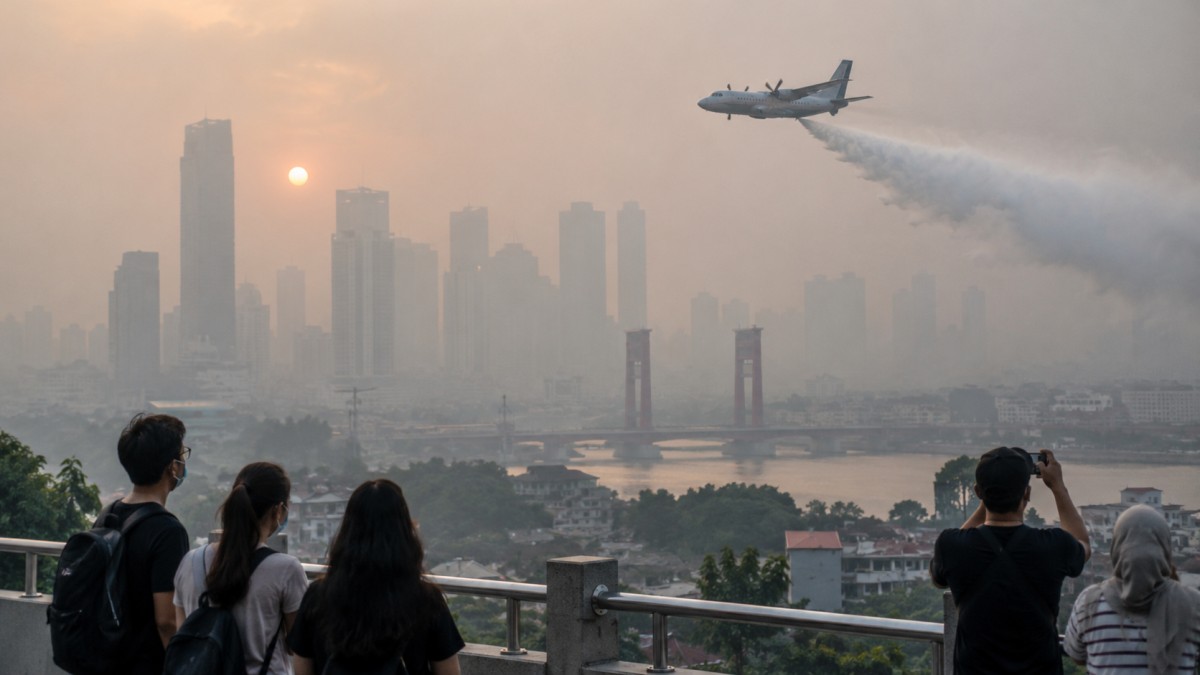
The Indonesian government has started testing a dry-ice solution in South Sumatra in order to combat the hazardous wildfire haze that is causing disruption to air travel and outdoor tourism activities. Its aim is to increase visibility and eliminate the dense smoke resulting from forest and peatland fires in Indonesia and neighboring countries. Tourists scheduled to undertake their indoor and outdoor trips are likely to have trouble with air quality, reliability of transportation and the potential of outdoor leisure activities. The initiative has the potential to solve many problems for affected areas but the efficiency of the innovative method is yet to be determined.
Why Is Indonesia Using Dry Ice to Combat Dangerous Wildfire Haze?
Indonesia has launched an experimental response to worsening smoke pollution by preparing to release dry ice from aircraft above South Sumatra. On 14 October 2026, Coordinating Minister for Political and Security Affairs Dudung Abdurachman inspected preparations at Sri Mulyono Herlambang Air Base in Palembang. The authorities scheduled the trial for 15 October, prioritising areas experiencing reduced visibility and deteriorating air quality. The operation targets airborne haze produced by extensive forest and land fires. Officials hope the intervention will improve conditions for residents, transport operators and visitors travelling through affected parts of southern Sumatra.
The experiment represents another element of Indonesia’s wider wildfire response, alongside firefighting and weather-modification operations. South Sumatra Governor Herman Deru identified Palembang as a priority location because smoke has affected the provincial capital. He also highlighted Ogan Komering Ilir district as an important source of haze. The government hopes the method can move smoke away from the lower atmosphere and improve visibility. However, authorities must evaluate the results before establishing its effectiveness. For tourists, improved visibility could eventually support road transfers, airport operations and sightseeing, but the trial does not guarantee immediate improvements in air quality.
How Could the Dry Ice Experiment Improve Travel Conditions in Indonesia?
The operation uses solid carbon dioxide, commonly called dry ice, to influence the movement of smoke particles in the atmosphere. Unlike conventional cloud seeding, which attempts to stimulate precipitation under suitable weather conditions, this experiment seeks to disperse haze directly. Its intended outcome is improved visibility over populated areas. The technique remains experimental, and its effectiveness in reducing harmful pollution exposure has not been established. Travellers should therefore avoid interpreting the operation as confirmation that affected destinations have become safe for prolonged outdoor activity.
Advertisement
Advertisement
For Indonesia’s travel industry, even temporary improvements in visibility could help transport services and local tourism businesses. Clearer conditions may assist sightseeing operators, tour guides and visitors who depend on outdoor experiences. However, moving smoke away from one location does not necessarily remove pollutants from the wider environment. Fires can continue producing new emissions while weather conditions redistribute existing smoke. Tourism recovery will consequently depend on sustained improvements in measured air quality, successful wildfire suppression and reliable transport operations, rather than the deployment of dry ice alone.
Which Indonesian Tourism Destinations Face the Greatest Haze Concerns?
South Sumatra and Central Kalimantan require particular attention because their forest-fire conditions have directly affected visibility and aviation-related operations. Palembang serves as an important gateway to South Sumatra’s cultural attractions, historical neighbourhoods and river tourism experiences. Central Kalimantan supports rainforest tourism, river journeys and wildlife-focused itineraries. Visitors planning activities in these regions should confirm local conditions before travelling. Haze severity can vary considerably between destinations and throughout the day, making location-specific information more useful than a general assessment of Indonesia’s nationwide air quality.
Advertisement
Advertisement
Indonesia’s Forestry Ministry confirmed that poor visibility prevented weather-modification aircraft from departing from Tjilik Riwut Airport in Palangka Raya and Iskandar Airport in Pangkalan Bun. Authorities consequently arranged operations from Syamsudin Noor Airport in Banjarmasin for 15–16 October. This demonstrates the operational difficulties that smoke can create for aviation, although it does not establish that all commercial passenger flights at those airports have stopped. Tourists visiting other Indonesian destinations, including Bali and Java, should check conditions independently rather than assume the entire country faces identical disruption.
How Is Wildfire Haze Affecting Flights and Airport Operations?
Thick smoke can reduce visibility around airports, creating potential problems for departures, arrivals and ground handling. Indonesia’s Forestry Ministry has already acknowledged visibility-related difficulties affecting aircraft involved in firefighting support operations. Commercial flight disruption depends on individual airport conditions, aircraft operating requirements and aviation safety decisions. Travellers flying through Palembang, Palangka Raya or Pangkalan Bun should monitor their journeys closely. Passengers should not assume that a scheduled flight will depart normally simply because their airline has not announced a network-wide disruption.
Tourists should check directly with airlines before leaving their accommodation, especially when connecting to regional flights or organised tours. Travellers holding separate flight tickets should allow additional flexibility because missed connections may not receive the same protection as flights booked under a single itinerary. Anyone experiencing a cancellation should request written confirmation from the airline and review the applicable refund or rebooking conditions. No verified nationwide passenger-flight suspension or special airfare programme has been established in the official material reviewed for this report.
What Should Tourists Know About Haze-Related Health Risks?
Wildfire smoke contains fine particulate pollution that can penetrate deeply into the respiratory system. Indonesia’s Meteorology, Climatology and Geophysics Agency (BMKG) monitors PM2.5 concentrations and publishes air-quality warnings. The agency categorises increasingly high pollution concentrations as unhealthy, very unhealthy or hazardous. These conditions matter particularly for tourists planning trekking, cycling, wildlife excursions or extended sightseeing. Travellers with respiratory or cardiovascular conditions, older visitors and families with young children should exercise additional caution when pollution levels rise.
+2
The World Health Organization recommends reducing exposure to wildfire smoke, remaining indoors during severe pollution and wearing a properly fitted N95 or FFP2 respirator when outdoor travel becomes necessary. Tourists should select accommodation with effective indoor air filtration where possible. They should also avoid strenuous outdoor activities during periods of heavy smoke. Anyone experiencing significant breathing difficulties should seek medical attention. A visible improvement in the skyline does not automatically mean that harmful fine-particle concentrations have returned to safer levels.
Advertisement
Advertisement
What Are the Most Important Travel Precautions Before Visiting Indonesia?
Visitors planning journeys through haze-affected regions should make flexible arrangements wherever possible. Before booking non-refundable accommodation, domestic flights or guided excursions, tourists should review current destination-specific air-quality reports. BMKG provides monitoring information, wildfire hotspot data and short-term forecasts showing potential haze movement. These services can help travellers determine whether outdoor activities remain suitable. Airlines, local tourism operators and accommodation providers can also clarify how changing conditions may affect confirmed bookings, transfers and scheduled visitor experiences.
Travellers can use the following checklist to reduce uncertainty during the haze emergency:
- Flights: Check airline and airport updates before departure.
- Hotels: Confirm cancellation terms and indoor air-filtration facilities.
- Tour tickets: Ask operators about postponement and refund options.
- Health: Carry suitable respirators and essential prescribed medication.
- Sightseeing: Reduce outdoor exposure when pollution warnings intensify.
- Travel insurance: Check whether disruption and wildfire-related incidents are covered.
These precautions can help visitors manage changing conditions without unnecessarily abandoning unaffected parts of their itineraries.
Why Does Indonesia’s Haze Crisis Matter for Southeast Asian Tourism?
Indonesia’s wildfire crisis extends beyond its national borders because atmospheric conditions can transport smoke across Southeast Asia. Pollution has affected neighbouring countries, including Singapore and Malaysia, creating wider concerns for regional travel and outdoor activities. For international tourists, the disruption presents additional challenges when journeys combine several countries. A traveller might experience satisfactory conditions at one destination but encounter unhealthy pollution elsewhere. Consequently, multi-country itineraries require separate air-quality assessments for each city rather than relying on conditions at the initial departure point.
The situation also highlights the importance of environmental management to tourism-dependent communities. Poor visibility can affect sightseeing, while prolonged smoke exposure may discourage outdoor excursions and reduce visitor spending. Hotels, restaurants, transport operators and independent tour guides could experience changing demand if pollution continues. However, confirmed tourism revenue losses or visitor-arrival declines cannot be established from the government information reviewed. Authorities must demonstrate sustained improvements in wildfire control before the industry can assess the broader economic consequences with confidence.
What Happens Next for Indonesia’s Tourism Recovery?
The first action consists of controlling the fires while determining if dry ice can be used in the attempt to dispel the haze in the immediate situation. Furthermore, Indonesia has stepped up efforts towards weather modification in order to assist fire suppression. BMKG’s climate bulletin for October 2026 signifies the development of unbelievably high El Niño conditions during the July – September timeline while suggesting rainfall forecasts for the upcoming months. Rain may contribute to the firefighting process, but the forecasts do not provide guarantees of rapid improvements everywhere. Monitoring of shifting winds, rain movement, smoke, and fine particles concentration will be required for the authorities to correctly assess environmental issues. The crucial point for travelers is the fact that Indonesia remains the destination requiring proper planning depending on the location during the wildfires period. At the same time, the experimental dry ice operations can enable the management of the smoke.
Advertisement
