
South Korea Unlocks Stress Free Travel for Foreign Visitors With Naver Map Digital Navigation Guides

Updated
Published
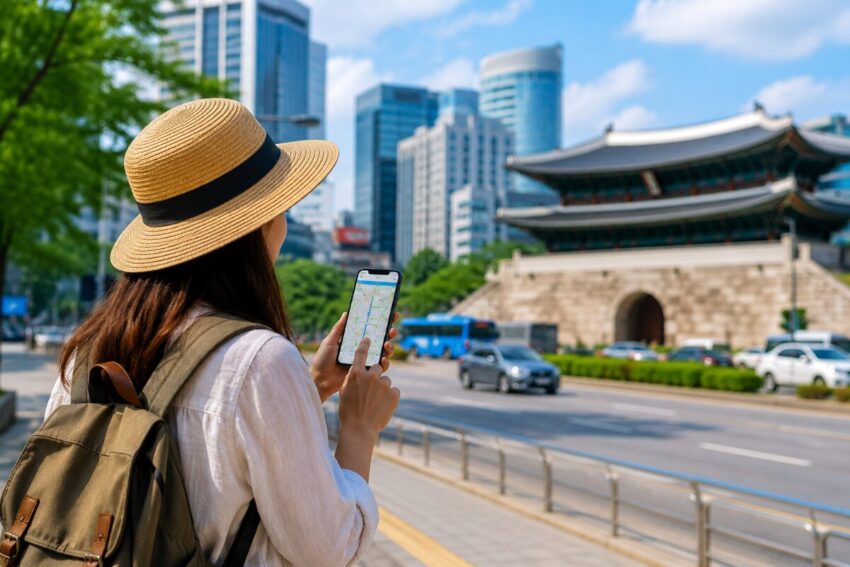 Image generated with Ai
South Korea is making travel easier for foreign visitors as NAVER Map expands its digital navigation support with multilingual usage guides in English, Chinese and Japanese. The move matters because many travellers arrive in Korea with strong interest in Seoul, Busan, Jeju, Gyeongju and other tourism hubs, but they often face stress when local routes, public transport signs, food districts and neighbourhood searches feel unfamiliar. The new NAVER Map guide gives tourists a clearer way to explore places, check routes, use public transport information and move with more confidence. It also supports South Korea’s wider smart tourism image at a time when inbound travel is recovering strongly. For foreign visitors, this is not just a tech update. It is a practical travel safety net. It helps them plan, move, eat, shop and explore with less anxiety.
Why Foreign Visitors Need Better Navigation In South Korea
Navigation is one of the first worries for any international tourist. This worry becomes stronger in a country where place names, subway exits, bus routes and local addresses may be new to the visitor. South Korea offers one of Asia’s most advanced transport systems, but first-time tourists can still feel lost when they move between airports, railway stations, shopping streets, markets, hotels and cultural sites.
Advertisement
Advertisement
Official tourism guidance makes the need clear. Google Maps GPS navigation does not work in Korea in the same way many foreign visitors expect. VisitKorea advises travellers to use local alternatives such as Naver Map and Kakao Map for multilingual Korean navigation. This creates a special travel environment. Tourists cannot always depend on the global app they use at home. They need a Korean digital guide that speaks their language and understands local routes.
That is where NAVER Map becomes important. The app helps visitors search attractions, check estimated travel time and compare route choices by walking, biking, driving or public transport. It also connects travel searches with local information such as customer reviews, official websites, restaurants, cafés and popular attractions.
Advertisement
Advertisement
Why This Digital Navigation Update Matters For South Korea’s Foreign Visitors
| Key Area | What Readers Need To Know | Why It Matters For Foreign Visitors | Tourism Impact |
|---|---|---|---|
| Main country | South Korea | The update directly supports foreign visitors travelling across Korea. | Strengthens South Korea’s smart tourism image. |
| Main platform | NAVER Map | Foreign tourists can use a local Korean map service instead of depending only on global navigation apps. | Makes local travel smoother in cities and regional destinations. |
| Core update | Multilingual digital navigation guide | The guide explains how to search places and use public transport navigation. | Reduces confusion during city travel, airport transfers and sightseeing. |
| Supported guide languages | English, Chinese and Japanese | These languages support major inbound visitor markets. | Helps more travellers access local routes and attractions with confidence. |
| App language support | Korean, English, Chinese and Japanese | The app supports multilingual map use for international visitors. | Makes South Korea more accessible to non-Korean-speaking tourists. |
| Public transport help | Route guidance, subway maps, real-time public transit arrivals and boarding guidance | Visitors can better understand subway, bus and route choices. | Supports easier movement between hotels, airports, landmarks and shopping districts. |
| Place discovery | Restaurants, cafés, attractions, reviews, photos and local information | Tourists can find places to eat, shop and visit without relying only on guidebooks. | Spreads spending to local businesses and neighbourhoods. |
| Offline support | Leaflets planned at Incheon Airport, Airport Railroad desks and Myeongdong Welcome Centers | Tourists can learn about the guide at high-traffic arrival and visitor points. | Improves first-arrival confidence for international travellers. |
| Main problem solved | Travel anxiety and navigation confusion | Foreign visitors may struggle with Korean addresses, transit systems and local route planning. | Creates a better first impression of South Korea as a visitor-friendly destination. |
| Key tourist hubs affected | Seoul, Busan, Jeju, Gyeongju, Incheon and Myeongdong | These destinations receive strong interest from international travellers. | Helps tourists explore beyond one landmark or one neighbourhood. |
| Why Naver Map matters | VisitKorea lists Naver Map for route suggestions, estimated travel time and public transport options. | Visitors can compare walking, driving, cycling and public transport routes. | Supports independent travel and longer destination exploration. |
| Important traveller note | Google Maps GPS navigation is limited in Korea, while local apps offer multilingual navigation support. | Tourists should prepare before arrival and download a Korea-friendly navigation app. | Reduces on-ground confusion and improves travel safety. |
| Best audience for this update | First-time visitors, solo travellers, families, business travellers and short-stay tourists | These groups often need fast, simple and reliable navigation. | Helps South Korea appeal to both leisure and business travel markets. |
| Wider tourism message | South Korea is turning digital tools into visitor support. | Smart navigation makes travel feel easier and safer. | Boosts the country’s image as a modern, tech-ready tourism destination. |
What The New NAVER Map Guide Offers
NAVER released its usage guide page for foreign tourists on 30 December 2024. The guide was designed to help visitors use NAVER Map more smoothly during trips across Korea. It is available in English, Chinese and Japanese. These are key languages for major inbound visitor markets and help Korea serve a wider international audience.
The guide explains how visitors can search for places worth visiting and how they can use public transportation navigation. This is important because many tourists do not only need a map pin. They need a step-by-step way to reach the exact destination. They need to know which subway line to take, where to get off, which bus to use, and what route may save time.
Advertisement
Advertisement
NAVER Map also supports real-time public transit arrival information, subway maps, boarding and disembarking guidance, and alternative transport options. These features can reduce confusion during peak travel hours, airport transfers and late evening journeys. For tourists, simple guidance can make the difference between a relaxed day and a stressful one.
South Korea Uses Language Access To Reduce Travel Stress
Language access is central to this rollout. NAVER Map supports Korean, English, Chinese and Japanese. This gives South Korea a stronger position in smart tourism because it allows foreign visitors to use local information without depending fully on translation guesswork.
The guide does not only help with routes. It also supports discovery. Foreign users can explore local information, visitor reviews, text, photos and videos in multiple languages. This matters because tourists now plan trips around local food, small cafés, beauty districts, shopping streets, pop-up stores, cultural venues and hidden neighbourhoods. They do not want only landmark lists. They want local choices that feel current and real.
This is why digital navigation has become part of destination competitiveness. A city may have great temples, markets, rail links and restaurants. But if a visitor cannot find them easily, the tourism value becomes weaker. NAVER Map tries to close that gap by turning local knowledge into a usable travel tool.
Leaflets Bring The Digital Guide Into Key Tourist Hubs
The rollout also moves beyond the screen. NAVER planned to produce leaflets and place them at major locations used by foreign tourists. These include Incheon Airport Tourist Information Centers, Airport Railroad Information Desks and Myeongdong Welcome Centers.
This offline support is important. Many tourists start their Korea journey at Incheon International Airport. Some visitors may not know which app to download. Others may not know that local navigation tools are more useful in Korea. Leaflets at arrival points can guide them before confusion begins.
Advertisement
Advertisement
Myeongdong is another smart location for this support. It remains one of Seoul’s most familiar areas for international visitors. It connects shopping, food, hotels, currency exchange, cosmetics and public transport. A navigation guide placed there can reach tourists when they are actively exploring the city.
Korea Tourism Gains From Easier Visitor Movement
South Korea has strong reasons to support smoother visitor movement. The Ministry of Culture, Sports and Tourism reported that Korea received 16.37 million visitors in 2024. That level reached 93.5 per cent of the 2019 pre-pandemic figure. The ministry also expected further growth in 2025.
This recovery makes visitor convenience more urgent. A larger tourist flow increases pressure on airports, stations, hotels, shopping areas, restaurants and cultural districts. Digital guides can help spread visitors across more places. They can also reduce pressure on tourist information counters and make independent travel easier.
The tourism gain is clear. When tourists move with confidence, they are more likely to visit more neighbourhoods, spend more time outside their hotel, try local food and book more activities. Better navigation can support restaurants, cafés, retail shops, cultural venues, local transport providers and accommodation businesses.
Naver Map Supports Local Discovery Beyond Famous Landmarks
Modern travellers want more than famous landmarks. They want local streets, real food, trending cafés, shopping corners, photo spots and cultural districts. NAVER Map supports this demand through place information, reviews, menus, prices, photos and videos. These details help tourists make quick choices during a trip.
The BE LOCAL campaign, run with Korea Tourism Organization, shows how this strategy is widening. It guides foreign visitors towards local experiences in places such as Seoul, Busan and Gyeongju. It also highlights restaurants, cafés, shopping spots and cultural complexes. This supports a broader tourism model. Visitors are encouraged to move beyond the most obvious sites and engage with local life.
Advertisement
Advertisement
For South Korea, this can boost regional tourism. Busan and Gyeongju are not only side trips. They are major destinations with strong cultural and event appeal. Better map guidance can help international visitors feel more ready to explore them.
What This Means For Seoul, Busan, Jeju And Gyeongju
The biggest impact will be felt in high-traffic destinations. Seoul benefits because foreign visitors often move between Myeongdong, Hongdae, Itaewon, Seongsu, Gangnam, palaces, markets and riverfront areas. Accurate route guidance can make this movement easier.
Busan benefits because its tourism appeal stretches across beaches, food markets, film venues, temples, shopping areas and hillside villages. Tourists need good routing because attractions are spread across the city.
Jeju benefits because many travellers use rental cars, buses and local navigation to reach beaches, waterfalls, walking trails and volcanic landscapes. Clear map use can reduce stress for independent visitors.
Gyeongju benefits because its heritage sites, museums, hanok areas and event-linked tourism depend on smooth visitor flows. When tourists can move easily, they can explore more deeply and stay longer.
Why This Is A Real Travel News Story
This is a real travel technology story, not a blog-style travel tip. The main rollout came from NAVER’s official corporate announcement. The tourism need is supported by Korea Tourism Organization guidance. The wider visitor recovery is supported by MCST information. Official Korea.net reporting also shows that foreign tourists already use Korean apps during travel, with Naver Map leading among map services.
Advertisement
Advertisement
However, the wording must remain accurate. This is not a direct government launch of a national navigation system. It is an official NAVER Map rollout that supports South Korea’s foreign visitor experience. It also fits the country’s broader smart tourism direction, because it helps travellers handle route planning, local discovery and public transport use in a simpler way.
South Korea Turns Digital Confidence Into Tourism Power
South Korea is using smart navigation to solve a very human travel problem. Visitors want to feel safe, confident and free when they explore a new country. They do not want to panic at a station, guess a bus route or miss a neighbourhood because the directions are unclear.
NAVER Map’s multilingual digital guide gives foreign visitors a stronger travel companion. It helps them move through Korea with clearer steps and less stress. It also helps South Korea turn technology into hospitality. As inbound tourism continues to recover, this small digital guide can create a big impact. It can make Seoul easier, Busan more reachable, Jeju more relaxed and Gyeongju more welcoming. For travellers, that means less anxiety. For South Korea, it means stronger tourism growth.
Advertisement
