

Thailand Leads with Indonesia and Other Nations as Sustainable Tourism Reshapes Asia’s Growth Map

Published
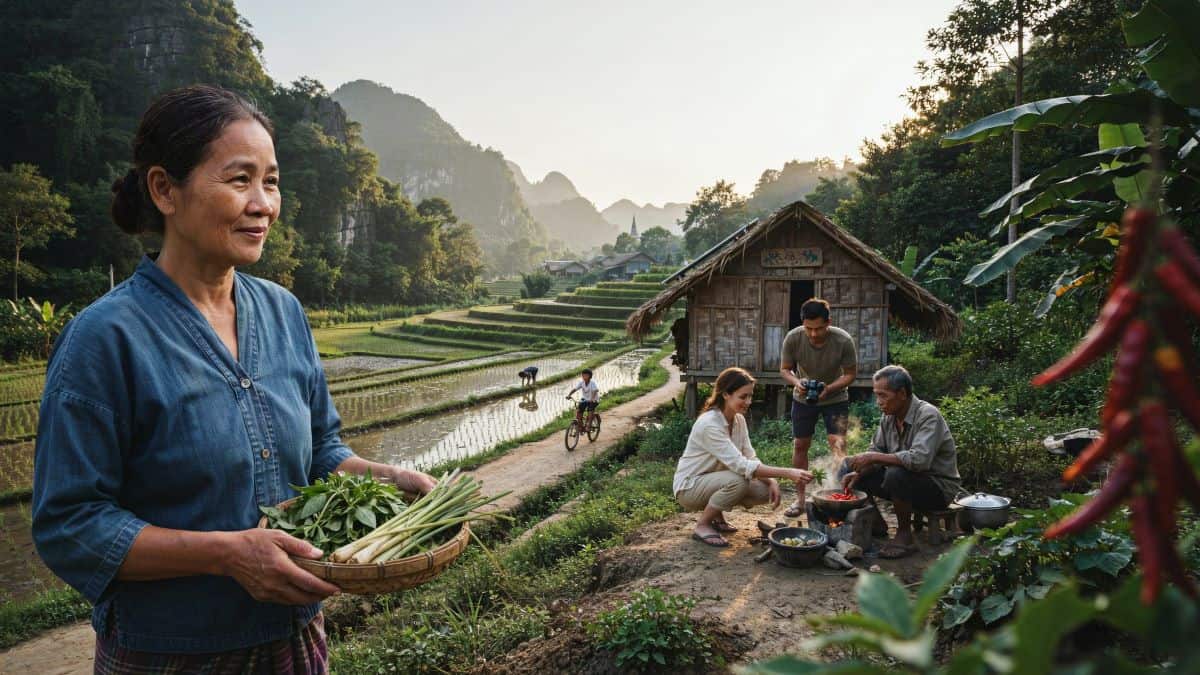
Thailand is embedding sustainable tourism into its economic agenda, while Indonesia, India, Malaysia and Vietnam are making progress towards the same change by developing tourism villages, community homestays, environmental investment, green standards and rural investment. The change is important because Asia is no longer considering sustainability to be a side campaign. Governments are starting to determine the destination of tourists, how spending is distributed, who gains from tourism and how the home country ensures that the natural and cultural resources which attract visitors are managed sustainably.
The outcome is a new tourism growth map. While high-volume hotspots are still significant, secondary destinations, indigenous communities, villages and conservation areas are more prominent in the national tourism policies.
Advertisement
Advertisement
Sustainable Tourism in Asia Moves From Promise to Measurable Economic Strategy
Asia’s sustainable tourism story is becoming easier to measure because governments are attaching hard numbers, standards and investment programmes to it.
| Destination | Sustainable tourism strategy | Key verified indicator |
|---|---|---|
| Thailand | Quality tourism, community experiences and green destination management | 19 Green Destinations-recognised destinations |
| Indonesia | National tourism-village development | More than 6,200 villages targeted |
| India | Sustainable destination investment and tribal homestays | 53 Swadesh Darshan 2.0 projects |
| Malaysia | Registered community homestay economy | 399,624 visitors in H1 2026 |
| Vietnam | Heritage-led community and rural tourism | Five UN Tourism Best Tourism Villages |
| Macao | Urban visitor dispersal | 723,000 Citywalk visits |
The common thread is clear: tourism growth is increasingly being judged by value, distribution and resilience, not arrivals alone.
Advertisement
Advertisement
Thailand Sustainable Tourism Strategy Raises the Bar on Quality-Led Growth
Thailand stands at the centre of this transformation because it is trying to combine one of Asia’s largest visitor economies with more disciplined destination management.
By 2 June 2026, Thailand had welcomed more than 14 million international visitors, generating around ฿679 billion in tourism revenue. Yet the Tourism Authority of Thailand is increasingly promoting a “Value over Volume” approach that seeks stronger spending, better visitor experiences and wider economic benefits instead of relying only on larger arrival totals.
Advertisement
Advertisement
Thailand had also reached 19 destinations recognised by the Green Destinations Foundation, while Krabi has become a major testing ground for linking marine protection, local communities and lower-impact tourism.
Thailand’s community strategy reaches beyond established resorts. DASTA’s 2025 portfolio included 55 high-quality community-based tourism communities, giving smaller destinations a clearer route into the national tourism economy.
Why Thailand’s latest approach matters
Thailand is beginning to measure what sustainability actually delivers.
At Thailand Travel Mart Plus 2026, organisers recorded 931.75 kilograms of sorted waste and estimated that waste-management actions cut emissions by 700.75 kilograms of CO₂e.
That shift is important. Destinations gain credibility when they can show measurable environmental outcomes instead of relying on broad claims about “green travel”.
Indonesia’s 6,200 Tourism Villages Could Rewrite the Rural Tourism Economy
Indonesia is taking community tourism to a scale few Asian markets can match.
Advertisement
Advertisement
The Ministry of Tourism reported around 15.39 million international visits in 2025, alongside approximately 1.20 billion domestic tourism trips. Tourism generated an estimated US$18.28 billion in foreign-exchange earnings and supported about 25.91 million jobs.
But the most important sustainability number may be the tourism-village network.
Indonesia recorded 6,153 tourism villages in 2025 and is developing a network of more than 6,200 villages in 2026 through certification, training, mentoring and stronger local business links.
That model opens tourism income to:
- Homestay owners
- Local guides
- Farmers and food producers
- Craft makers
- Cultural performers
- Small transport providers
- Community enterprises
The strategic value goes beyond creating new attractions. Tourism villages can pull visitor spending away from overcrowded gateways and place more economic activity directly inside rural communities.
Bali Tourist Levy Turns Sustainability Into Destination Financing
Bali offers another model: make tourism help finance the destination it depends on.
Advertisement
Advertisement
The island’s IDR150,000 foreign tourist levy has operated since 14 February 2024. Around 2.4 million overseas visitors paid the levy during 2025, generating approximately IDR369 billion.
The Bali Provincial Government says the money supports:
- Environmental protection
- Balinese cultural preservation
- Tourism infrastructure
- Destination management
However, the official figures also expose a challenge. The 2.4 million levy payers represented only about 34% of Bali’s roughly seven million foreign visitors in 2025.
This creates an important policy lesson for Asia: a visitor levy is only as powerful as its compliance system. Governments considering similar charges must solve collection, enforcement and transparency if they want tourism taxes to produce meaningful environmental gains.
India Sustainable Tourism Investment Pushes Growth Beyond Major Cities
India is using public investment to embed sustainability into destination development.
By February 2026, the Ministry of Tourism had sanctioned 53 Swadesh Darshan 2.0 projects worth ₹2,208.31 crore.
Advertisement
Advertisement
Another 38 projects worth ₹697.94 crore were approved through Challenge Based Destination Development.
These programmes expand tourism through themes including:
- Culture and heritage
- Eco-tourism
- Spiritual tourism
- Vibrant Villages
- Rural destinations
- Environmentally sensitive locations
The significance lies in the design. Sustainability is no longer being confined to a small eco-tourism segment. It is moving into mainstream public tourism investment.
India’s 1,000 Tribal Homestays Put Local Livelihoods at the Centre
India is also connecting tourism directly with tribal and rural communities.
The government plans to support 1,000 tribal homestays under PM-JUGA, creating accommodation and livelihood opportunities in communities that often sit outside conventional tourism circuits.
Support can include up to ₹5 lakh for community requirements, up to ₹5 lakh per household for constructing two rooms, and up to ₹3 lakh for upgrading existing rooms, alongside training and capacity building.
Advertisement
Advertisement
India’s Best Tourism Village programme strengthens the same direction. Seventy-one villages were selected across the 2023 and 2024 editions, with assessment covering culture, community values and environmental, economic and social sustainability.
The long-term test will be straightforward: can tourism create lasting household income while protecting the identity that makes these villages worth visiting?
Malaysia Community Tourism Shows Exactly How Local Tourism Revenue Can Be Tracked
Malaysia provides one of Asia’s strongest examples of measurable community tourism.
By 30 June 2026, its Homestay Experience Programme had grown into a nationwide village economy.
| Malaysia Homestay Programme, H1 2026 | Official total |
| Homestay clusters | 252 |
| Participating villages | 604 |
| Operators or houses | 3,600 |
| Cooperatives | 56 |
| Domestic visitors | 371,364 |
| International visitors | 28,260 |
| Total visitors | 399,624 |
| Revenue | RM28.29 million |
These figures matter because they answer a question often missing from sustainability campaigns: how much economic activity reaches communities?
Malaysia is not simply promoting village experiences. It is counting participating communities, operators, visitors and revenue.
Advertisement
Advertisement
Sarawak Indigenous Tourism Turns Local Culture Into Economic Opportunity
Sarawak adds another layer to Malaysia’s model.
By June 2026, Sarawak recorded:
- 74 homestay clusters
- 152 participating villages
- 968 operators or houses
- 39,898 visitors
- Around RM5.29 million in H1 revenue
Its tourism offer links rainforests, longhouses, indigenous culture, traditional food and community experiences.
The state gained further global exposure through PATA Travel Mart 2026 in Kuching, which attracted more than 1,100 delegates from 48 countries and destinations, including 221 buyers, more than 365 sellers and over 4,000 scheduled business appointments.
The deeper opportunity is visitor dispersal. International trade access can help lesser-known destinations reach buyers without depending entirely on major urban gateways.
Vietnam Community-Based Tourism Protects Heritage While Managing Success
Vietnam is building rural tourism around culture rather than replacing it.
Advertisement
Advertisement
The country now has five villages recognised by UN Tourism’s Best Tourism Villages programme:
- Tân Hóa
- Thái Hải
- Trà Quế
- Lô Lô Chải
- Quỳnh Sơn
Vietnam’s community-tourism policies connect travel with ethnic heritage, traditional crafts, local food, rural livelihoods and environmental protection.
But Vietnam also illustrates an issue that every successful CBT destination must confront.
In April 2026, tourism authorities reviewed development at Quỳnh Sơn, examining service quality, cultural conservation, waste management and visitor capacity.
That follow-up matters because community tourism can create its own pressure once a small destination becomes popular. Sustainable tourism must manage success, not simply create it.
Macao Citywalk Strategy Shows Sustainability Is Not Only About Nature
Macao demonstrates that sustainable tourism also applies to dense urban destinations.
Advertisement
Advertisement
Its POP MART MACAO CITYWALK programme spread attractions across four community districts, drawing approximately 723,000 visits.
MGTO also reported around MOP3.64 billion in transactions through participating e-wallet platforms during the wider campaign.
The strategy reveals another side of sustainable tourism: moving visitors through a destination more intelligently.
Visitor dispersal can:
- Reduce excessive concentration
- Bring spending into neighbourhood businesses
- Encourage deeper destination exploration
- Support cultural districts
- Spread tourism benefits geographically
Macao tourism projects also won a record seven PATA Gold Awards in August 2026, including recognition across sustainability, marketing and social responsibility.
ASEAN Sustainable Tourism Strategy Turns National Experiments Into Regional Policy
The biggest signal comes at regional level.
Advertisement
Advertisement
ASEAN recorded approximately 144 million international visitor arrivals in 2025 and is now implementing the ASEAN Tourism Sectoral Plan 2026–2030.
Sustainable tourism sits alongside resilience, workforce empowerment, accessible travel, digital development and product diversification as a core regional priority.
The economic stakes are enormous.
ASEAN estimates that travel and tourism generated about US$379 billion in 2024, equal to around 9.7% of regional GDP, while supporting roughly 42 million jobs.
When an industry reaches that scale, sustainability becomes more than an environmental objective. It becomes an economic-risk strategy.
If destinations lose biodiversity, overwhelm infrastructure, weaken local culture or concentrate tourism income too narrowly, they also weaken the foundations of future growth.
Advertisement
Advertisement
Why Thailand, Indonesia and Other Asian Nations Are Changing Tourism’s Growth Map
Asia’s sustainable tourism transformation is becoming visible through several powerful shifts:
- Thailand is prioritising quality, green destination standards and measurable environmental performance.
- Indonesia is building community tourism across more than 6,200 villages.
- India is directing major public investment towards sustainable and rural destinations.
- Malaysia is measuring community tourism through visitors, operators and revenue.
- Vietnam is protecting rural heritage while managing the pressures created by tourism success.
- Macao is proving that visitor dispersal can strengthen sustainability even in dense urban destinations.
The bigger change is conceptual.
For decades, tourism success often meant one number: arrivals.
That measure is no longer enough.
The destinations most likely to win the next phase of Asian tourism will increasingly be those that can answer more difficult questions: Where does visitor spending go? Do communities benefit? Can infrastructure cope? Are natural resources protected? Is tourism generating greater value without damaging the destination?
Thailand currently offers one of the clearest examples of this shift, while Indonesia, India, Malaysia and Vietnam show how widely the model is spreading.
Advertisement
Advertisement
That is why sustainable tourism is reshaping Asia’s growth map. Tourism is moving beyond simply attracting more people. The stronger model now links growth with community income, conservation, visitor distribution, cultural protection and measurable destination value — creating a tourism economy designed not only to grow, but to endure.
In conclusion, Thailand is at the forefront with Indonesia and other Asian countries as sustainable tourism evolves the growth map of Asia, with policy now paving the way for responsible tourism to become actionable economic growth. Beyond the traditional hotspots, green standards, tourism villages, community homestays, and visitor levies and rural investment are achieving benefits. The shift indicates that Asia’s next generation of tourism growth will be driven by the creation of more robust communities, more efficient destinations and sustainable value creation that will stand the test of time, as well as increased visitation.
Advertisement
