
Houston Joins Miami, Monterrey, Guadalajara, Mexico City, Dallas and More in an Escalating Wave of Extreme Summer Heat and Humidity That Is Dramatically Reshaping Fan Safety, Travel Conditions and the Entire 2026 FIFA World Cup Experience

Published
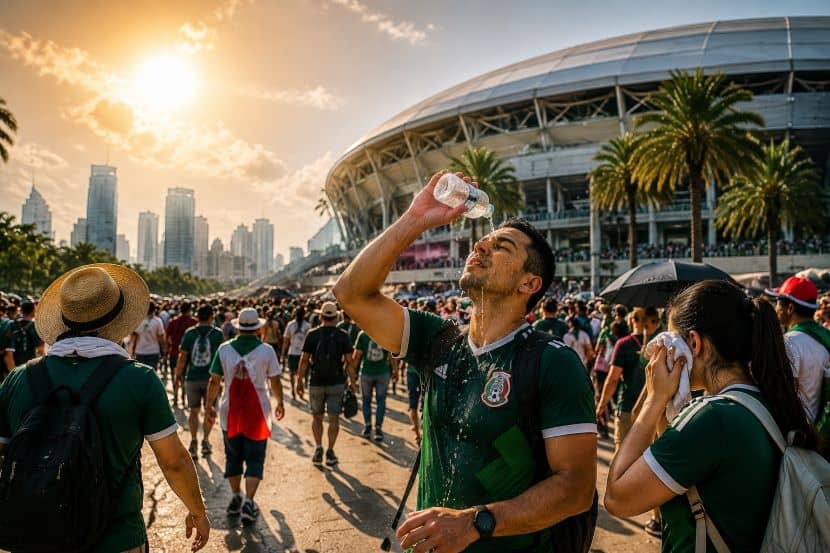
A multi-city heat stress pattern is emerging across North America as Houston, Miami, Monterrey, Guadalajara, Mexico City, Dallas, Kansas City and Philadelphia face an escalating wave of extreme summer heat and humidity that is increasingly shaping how the 2026 FIFA World Cup will be experienced by traveling supporters, local spectators and event operators. The convergence of peak seasonal temperatures with one of the largest global sporting events is creating conditions where fan safety, travel logistics and stadium accessibility are being re-evaluated through the lens of environmental exposure rather than purely sporting schedules.
Across the southern United States and Mexico, national meteorological assessments consistently highlight June and July as periods of heightened thermal intensity, but the situation becomes more complex when humidity, altitude and urban density are layered onto baseline heat conditions. In Houston and Miami, moisture-heavy air traps heat and elevates perceived temperatures, placing strain on outdoor fan zones and transit corridors. Monterrey and Dallas experience more direct dry heat exposure, where solar intensity accelerates dehydration and limits safe daytime mobility. Guadalajara and Mexico City add a distinct challenge, combining strong sunlight exposure with altitude-related fatigue that impacts endurance for international visitors. Further north, Kansas City and Philadelphia introduce variability, where shifting humidity patterns can trigger sudden spikes in heat stress during large public gatherings.
Advertisement
Advertisement
Together, these conditions are reshaping operational planning across the entire tournament footprint, influencing hydration infrastructure, shaded public design, medical readiness systems and the timing of fan activities. The result is a World Cup environment increasingly defined not only by football, but by how cities adapt to sustained climate pressure during peak summer months.
Houston: Humid Heat, Urban Congestion and High-Risk Fan Zones
Houston stands at the center of heat-related planning discussions due to its combination of high temperature and extreme humidity. According to national meteorological data from U.S. climate monitoring systems, Gulf Coast summers frequently produce conditions where humidity pushes “feels-like” temperatures significantly above actual readings. This creates sustained heat index levels that can reach dangerous thresholds during prolonged outdoor exposure.
Advertisement
Advertisement
During large public gatherings linked to early World Cup-related activity in the city, downtown fan zones have already demonstrated how quickly conditions can escalate. Reports from event management briefings describe temperatures approaching the upper 90s Fahrenheit (around 37–38°C), compounded by heavy humidity that reduces the body’s ability to cool itself through perspiration.
One major fan gathering scenario involving approximately 30,000 attendees reportedly saw more than 100 heat-related illness cases in a single day, with most treated directly on-site through emergency response systems. While such interventions prevented escalation, the incident highlighted the strain that mass attendance places on urban outdoor spaces during peak summer conditions.
Advertisement
Advertisement
Houston’s response framework reflects a multi-layered approach built around:
- Hydration infrastructure across all fan zones and transit areas
- Cooling mist systems integrated into pedestrian corridors
- Indoor air-conditioned refuge zones for high-risk periods
- Sunscreen distribution and heat awareness messaging
- Rapid-response medical teams positioned in high-density areas
The city’s broader tourism environment is also adapting. Hotels, transport operators and event planners are aligning schedules and visitor guidance with heat index forecasts, encouraging movement toward shaded areas and climate-controlled venues during midday hours. Houston’s defining challenge is not just heat intensity, but persistence—conditions remain elevated for extended periods with limited overnight relief due to humidity retention.
Advertisement
Advertisement
Miami: Coastal Humidity, Heat Index Escalation and Continuous Exposure Risk
Miami introduces a different climate profile shaped by coastal humidity and strong solar radiation. According to national weather monitoring agencies in the United States, South Florida summers are consistently categorized as high heat index zones, where moisture in the air amplifies perceived temperature.
In open-air stadium environments and surrounding urban corridors, this creates a continuous exposure cycle for fans moving between transport hubs, parking zones and event entrances. Unlike dry heat regions, where shade provides rapid relief, Miami’s humidity slows cooling processes, increasing cumulative heat stress.
Key environmental factors include persistent moisture saturation, intense UV exposure and limited natural airflow in dense urban spaces. These conditions combine to create a sustained risk profile during daytime sporting events and pre-match fan gatherings.
Mitigation strategies being implemented across tourism and event infrastructure include shaded queue management systems, expanded hydration points, cooling buses near transit stations and indoor relief zones integrated into fan mobility routes. Miami’s challenge is less about peak temperature spikes and more about prolonged exposure across the entire match-day experience.
Advertisement
Advertisement
Monterrey: Dry Heat, Solar Intensity and Evening Match Adaptation
Monterrey represents one of the most extreme dry heat environments among World Cup host cities. National meteorological agencies in Mexico regularly record summer temperatures reaching between 95°F and 100°F (35°C to 38°C), often intensified by direct solar radiation.
Unlike humid climates, Monterrey’s dry air accelerates dehydration risk while offering limited natural cooling during peak daylight hours. As a result, operational planning for major events has increasingly shifted toward evening scheduling strategies.
High-profile matches are often planned for after 8:00 PM, when temperatures begin to drop and spectator safety conditions improve significantly. This scheduling adaptation has become a central tool in managing both athlete performance and fan comfort.
Urban mitigation measures include shaded pedestrian corridors near stadiums, hydration distribution points in public plazas and expanded medical presence along transit routes. Monterrey illustrates how scheduling is as critical as infrastructure when managing heat risk.
Guadalajara: Inland Sun Exposure and Extended Outdoor Movement
Guadalajara experiences a warm inland climate characterized by strong sunlight and moderate-to-high temperatures during peak summer months. National environmental monitoring systems in Mexico have recorded increasing frequency of extreme heat days compared to historical averages, contributing to greater strain on outdoor activity patterns.
In stadium environments and surrounding fan zones, exposure risk is driven primarily by sun intensity rather than humidity. Afternoon hours present the highest stress levels, particularly in uncovered seating areas and open public plazas.
Advertisement
Advertisement
To address these conditions, planning frameworks emphasize shaded infrastructure expansion, distributed hydration access points and increased medical readiness in high-traffic zones. Cooling spaces integrated into fan festivals are becoming essential components of event design.
Guadalajara’s challenge is fundamentally one of exposure duration, where prolonged time in direct sunlight creates cumulative stress even when temperatures are not at peak extremes.
Mexico City: Altitude Strain Combined with Heat Variability
Mexico City presents a unique combination of high altitude and increasing heat variability. At elevation, oxygen levels are lower, which can intensify fatigue during prolonged physical activity. When combined with strong solar radiation, this creates a dual-layered stress environment for international visitors.
Meteorological trends indicate an upward shift in the frequency of warm-day events, particularly during summer months aligned with major sporting calendars. While temperatures may not always reach extremes seen in northern Mexico or Texas, the physiological impact is amplified by altitude conditions.
Visitors experience faster onset of fatigue, increased hydration requirements and reduced tolerance for prolonged standing or walking in open-air environments. This has led to expanded shaded pedestrian routes, increased rest zones and enhanced emergency medical coverage across event districts.
Mexico City’s complexity lies not in single-factor heat, but in the interaction between environmental conditions and human physiology at elevation.
Advertisement
Advertisement
Dallas: Extreme Heat Outside, Controlled Comfort Inside
Dallas experiences some of the most consistent extreme heat conditions in the United States during summer months. National weather service data frequently records temperatures exceeding 100°F (38°C), with heatwaves persisting for extended periods.
However, the city’s stadium infrastructure introduces a significant mitigating factor. Modern facilities with retractable roofing systems and climate control provide controlled environments during matches, reducing direct heat exposure inside venues.
Outside these controlled environments, however, exposure remains significant. Parking areas, security queues and fan activation zones often involve prolonged time outdoors under direct sun. This creates a dual-experience environment where comfort depends heavily on location within the event ecosystem.
Mitigation strategies focus on shaded staging areas, cooling stations near entrances and heat-aware scheduling for pre-event gatherings.
Kansas City: Sudden Humidity Surges and Atmospheric Instability
Kansas City experiences variable summer conditions where humidity surges can create unexpected spikes in heat stress. National meteorological tracking identifies these as episodic but intense conditions driven by shifting air masses from southern regions.
This variability requires flexible planning approaches, including temporary cooling installations, shaded fan zones and adaptive scheduling protocols aligned with heat advisories. The unpredictability of conditions remains the primary challenge for organizers.
Advertisement
Advertisement
Philadelphia: Urban Density and Mid-Atlantic Humidity Pressure
Philadelphia’s summer climate is defined by humidity combined with dense urban heat retention. Open-air stadium access routes and crowded transit systems amplify exposure during peak periods.
Cooling buses, shaded pedestrian corridors and hydration stations near transit hubs form part of the city’s mitigation strategy. Crowd density remains a key factor influencing perceived heat stress, particularly during high-attendance fixtures.
Comparative Climate Overview Across Host Cities
Houston and Miami represent humid heat environments where moisture drives risk. Monterrey and Dallas reflect dry extreme heat systems where solar intensity dominates. Guadalajara and Mexico City introduce inland and altitude-related stress factors, while Kansas City and Philadelphia demonstrate variability and humidity-driven spikes.
Across all cities, a shared pattern emerges: the 2026 FIFA World Cup is being staged not only as a sporting event but as a large-scale climate resilience exercise. Public health agencies in both the United States and Mexico continue to emphasize hydration, heat index monitoring and exposure reduction as core safety measures.
Houston joins Miami, Monterrey, Guadalajara, Mexico City, Dallas, Kansas City and Philadelphia in rising extreme summer heat and humidity, reshaping fan safety and World Cup travel experience.
Conclusion: A Tournament Defined by Climate Adaptation
The 2026 FIFA World Cup across Houston, Miami, Monterrey, Guadalajara, Mexico City, Dallas and other major North American cities is increasingly defined by environmental conditions as much as sporting competition. Official meteorological guidance and public health frameworks consistently highlight the importance of managing heat exposure during peak summer months.
As tourism flows increase and global audiences converge on host cities, climate adaptability becomes a central feature of travel planning. Infrastructure investments, scheduling adjustments and public safety measures collectively shape a tournament environment where weather is not a background factor but an active influence on experience, movement and safety across the entire event landscape.
Advertisement
