
Montréal 2026 Goes Beyond Sport as Canada Prepares for a Global Tourism Surge Through Cycling’s Biggest Stage

Updated
Published
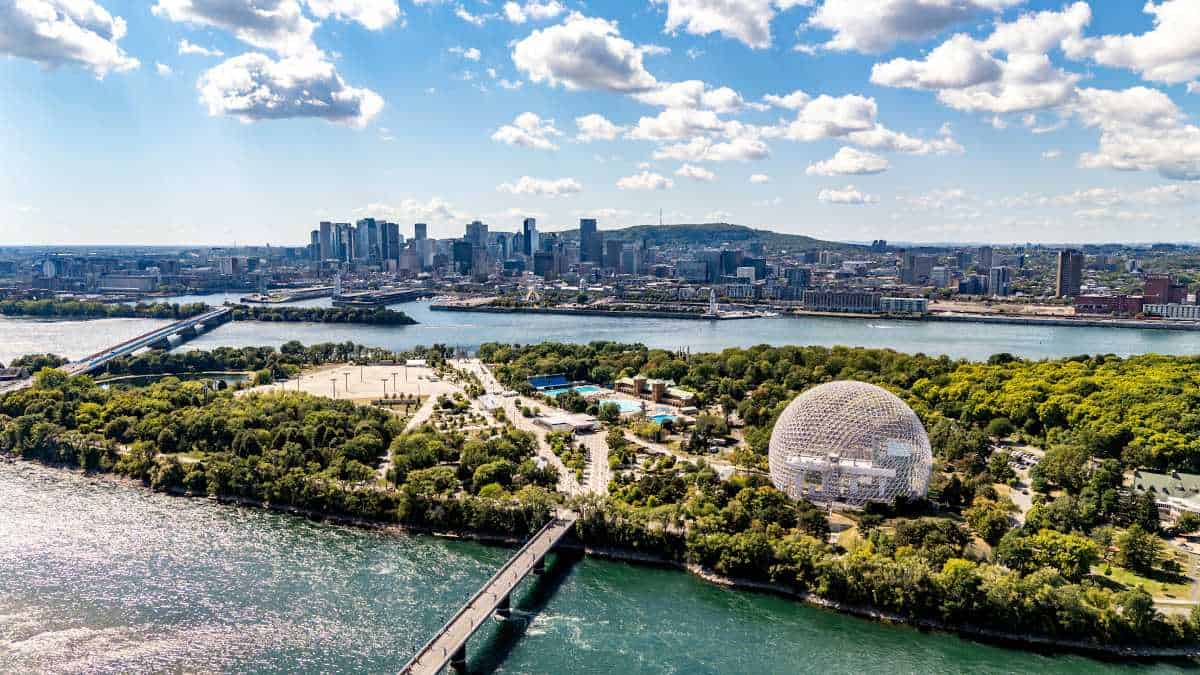
The 2026 UCI Road World Championships will bring around 1,100 riders from 100 nations to Montréal from 20–27 September, with 13 world titles at stake. The tourism potential is significant. Kigali 2025 attracted about 1 million unique spectators and contributed €19.6 million to its economy, while Flanders 2021 recorded more than 1 million unique visitors and nearly €36 million in visitor spending. Montréal could benefit through increased demand for hotels, restaurants, transport and visitor experiences.
2026 UCI Road World Championships Bring World-Class Cycling to Montréal
The 2026 UCI Road World Championships are one of the biggest international cycling events coming to Canada. Montréal will host the championships from 20 to 27 September 2026, bringing the world’s leading road cyclists together for 13 races across elite, under-23 and junior categories. Around 1,000 riders are expected to compete.
The event includes individual time trials, road races and a mixed team relay. Major races will pass through Montréal and surrounding communities, creating a major sporting and tourism attraction. The City of Montréal is also organising a Fan Village near Mount Royal, while races and related activities will be accessible to spectators.
For travellers, the championships offer an opportunity to experience Montréal through international sport, cycling, entertainment and public fan activities. Visitors should also plan ahead because several streets will have temporary closures and parking restrictions during the event.
Advertisement
Advertisement
Top Cyclists and Nations Participating in the 2026 UCI Road World Championships in Montréal
The 2026 UCI Road World Championships in Montréal, Canada (20–27 September 2026) will feature around 1,000 elite cyclists from more than 80 countries competing across 13 events, including elite men’s and women’s road races, individual time trials, under-23 categories, junior races and the mixed team relay.
Major Riders and Teams Expected to Participate
🇬🇧 Great Britain
Advertisement
Advertisement
- Tom Pidcock – Elite men’s road race leader and one of the biggest names competing.
- Adam Yates
- Oscar Onley
- Fred Wright
- Zoe Bäckstedt – Elite women’s time trial and road race contender.
- Cat Ferguson – U23 women’s category.
🇧🇪 Belgium
- Remco Evenepoel – Former world champion and leading time-trial specialist.
- Wout van Aert – Multiple-time world championship medallist.
- Supported by riders including Tiesj Benoot, Thibau Nys and Gianni Vermeersch.
🇸🇮 Slovenia
- Primož Roglič – Team leader following the absence of Tadej Pogačar.
- Other selected riders include Jan Tratnik, Matej Mohorič and Luka Mezgec.
🇺🇸 United States
- Quinn Simmons – Elite men’s road race leader.
- Matteo Jorgenson
- Brandon McNulty
- Kristen Faulkner – Olympic gold medallist competing in the women’s road race and time trial.
- Taylor Knibb – Time trial competitor.
🇲🇽 Mexico
- Isaac del Toro – One of the emerging young riders expected to challenge in the elite men’s race.
🇫🇷 France
- Paul Seixas – Young French talent among the riders to watch.
🇳🇱 Netherlands
Advertisement
Advertisement
- Demi Vollering – One of the leading names in women’s road cycling.
🇮🇹 Italy
- Elisa Longo Borghini – Women’s road race contender.
- Filippo Ganna – Time-trial specialist.
Participating Nations
The championships will bring together national teams from across Europe, North America, South America, Asia, Africa and Oceania. Confirmed or expected participating cycling nations include:
Canada (host), Great Britain, Belgium, Slovenia, United States, Mexico, France, Netherlands, Italy, Switzerland, Spain, Australia, New Zealand, South Africa, Norway, Sweden, Mauritius and many others.
The event will be held on challenging Montréal routes featuring the Mount Royal circuit, making climbing ability and endurance key factors for riders competing for the famous rainbow jerseys awarded to world champions.
Five-Year UCI World Championships Comparison Shows Major Tourism and Economic Value
The UCI Road World Championships have repeatedly generated substantial visitor spending and destination exposure. However, the editions are not perfectly like-for-like: Glasgow 2023 combined 13 cycling disciplines, while Zürich 2024 combined road and para-cycling. Published economic-impact methodologies also differ.
| Year | Host destination | Athlete participation | Spectators / visitors | Reported economic impact |
|---|---|---|---|---|
| 2021 | Flanders, Belgium | 75 nations; total rider figure not stated in the cited UCI summary | 1M+ unique visitors; 1.5M total visits | €27.4M gross added value; visitors spent nearly €36M |
| 2022 | Wollongong, Australia | 647 riders | Nearly 100,000 unique visitors; 236,000 attendance | €35.6M+ economic activity, equivalent to 930 annual jobs |
| 2023* | Glasgow & Scotland, UK | 7,100+ athletes, 131 nations | Nearly 1M spectators | £205M+ economic activity, equivalent to 5,285 annual jobs |
| 2024* | Zürich, Switzerland | Approximately 1,000 cyclists across road and para-cycling | Organisers forecast about 850,000 spectators | A directly comparable final economic-impact figure was not identified in the official sources reviewed |
| 2025 | Kigali, Rwanda | 734 riders from 113 countries | Around 2M attendance, including 1M unique spectators | €19.6M economic contribution; around €2.5M spending from participants/accompanying people/media and nearly €1M tourism spending from travelling spectators |
Important: Glasgow 2023 was a much larger multi-discipline UCI Cycling World Championships, so its 7,100 athletes and £205 million impact should not be directly compared with a conventional Road World Championships. Zürich 2024 was also expanded by integrating para-cycling.
Advertisement
Advertisement
What the Five-Year Record Means for Montréal 2026
The figures demonstrate why the 2026 UCI Road World Championships in Montréal can matter well beyond cycling. Previous hosts have benefited from spending on hotels, restaurants, transport and other visitor services, alongside extensive international media exposure. Flanders 2021 alone recorded more than one million unique visitors and €27.4 million in gross added value, while Wollongong 2022 generated more than €35.6 million in economic activity.
Kigali 2025 provides the most recent comparable example: 734 riders from 113 countries, around one million unique spectators, and an estimated €19.6 million contribution to the city’s economy.
This historical record gives Montréal 2026 a significant sports-tourism opportunity, particularly through international visitors, accommodation demand, restaurants, local transport and destination visibility. The eventual Canadian economic impact, however, should not be stated as a forecast based simply on previous editions because host-city scale, visitor origin, event format and economic-impact methodology vary considerably.
How Montréal 2026 Could Strengthen Tourism and Benefit Travellers
The 2026 UCI Road World Championships could provide a significant boost to Montréal tourism as international cyclists, teams, officials, media and cycling fans travel to Canada for the September event. Previous championships demonstrate the scale of this opportunity. Flanders 2021 attracted more than one million unique visitors, while Wollongong 2022 welcomed nearly 100,000 unique visitors and generated more than €35.6 million in economic activity. Kigali 2025 recorded around one million unique spectators and an estimated €19.6 million contribution to the local economy.
For Montréal, increased visitor numbers could support hotels, restaurants, cafés, public transport, attractions and other tourism businesses. Travellers can also benefit because the championships turn a sporting trip into a wider city break. Spectators can combine world-class cycling with visits to Montréal’s neighbourhoods, cultural attractions, restaurants and Mount Royal.
The event also gives international travellers an opportunity to experience elite cycling without relying entirely on ticketed venues, as road championships traditionally use public routes with spectator viewing areas. Longer stays could encourage visitors to explore destinations beyond Montréal, potentially spreading tourism spending across Québec. The championship therefore represents both a major sporting occasion and an opportunity to strengthen Canada’s international sports tourism appeal.
Advertisement
