
Storm Boelo Disrupts UK Travel: 84mph Winds Leave Homes Without Power and Trigger Transport Cancellations

Updated
Published
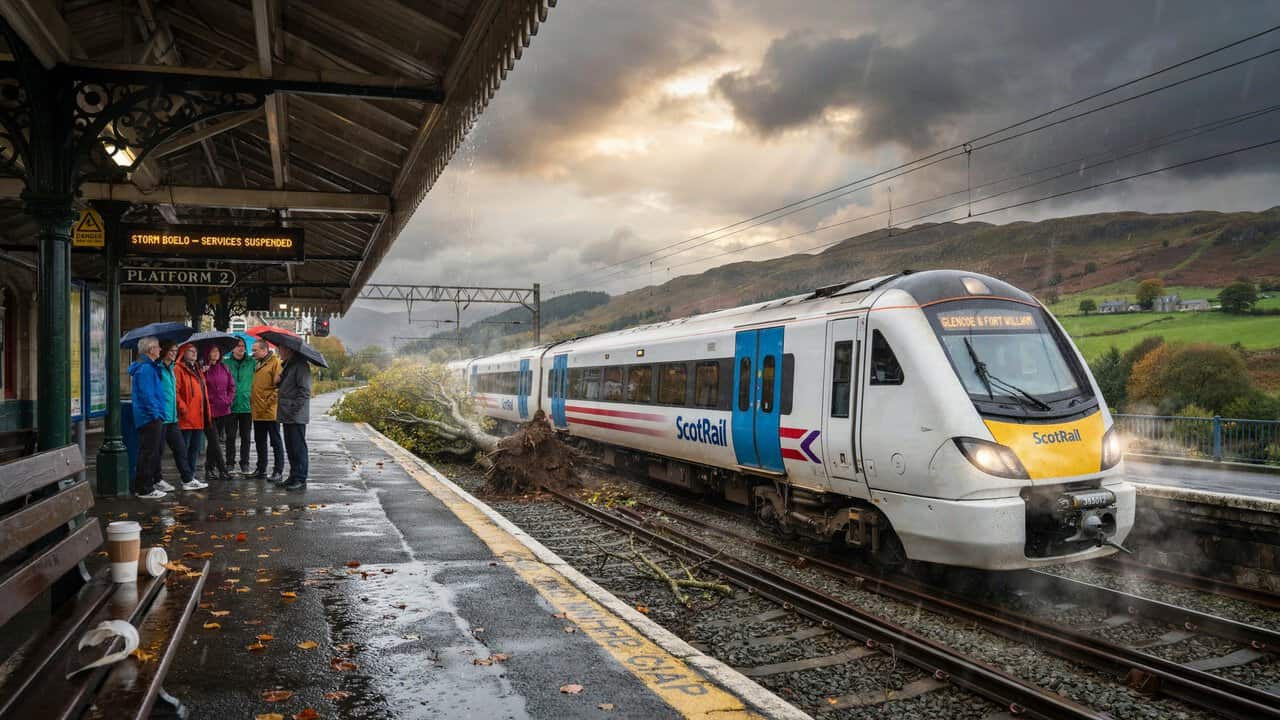
Storm Boelo has caused extensive travel disruption across the United Kingdom after powerful winds, heavy rainfall and falling trees damaged infrastructure, interrupted transport services and reportedly left around 82,000 homes without electricity. Scotland, Northern Ireland and northern England experienced some of the most serious conditions over the weekend of 24–25 October 2026. Wind gusts reportedly reached 84mph in Argyll and Bute, while road closures, railway interruptions, flight diversions and ferry cancellations complicated journeys. With disruption potentially continuing into Monday, 26 October, travellers face uncertainty over transport schedules, road conditions and the restoration of essential services.
The storm has also been linked to a fatal incident near Castle Douglas in Dumfries and Galloway, where a 60-year-old man reportedly died after being struck by a falling tree on Sunday morning. Emergency services attended the scene, but the man could not be saved.
Advertisement
Advertisement
The reported scale of the damage highlights the wider consequences of severe autumn weather for Britain’s transport network. Fallen trees can obstruct railway tracks and major roads, while powerful crosswinds can make aviation and maritime operations unsafe. Floodwater can create additional hazards even after the strongest winds have passed.
For travellers, the central concern is not simply whether the storm has weakened. It is whether transport operators have completed safety inspections, cleared affected routes and restored scheduled services.
Advertisement
Advertisement
How Did Storm Boelo Cause Widespread Disruption Across the United Kingdom?
Storm Boelo developed into a powerful Atlantic weather system before reaching the British Isles, bringing a combination of damaging winds, heavy rain and hazardous coastal conditions. The Met Office officially named the storm on 22 October, identifying northern parts of the UK as particularly vulnerable to the approaching low-pressure system.
The storm followed Storm Austen, which had already brought unsettled weather to southern England and Wales. The arrival of two named storms within a short period placed additional pressure on transport services, electricity networks and emergency response arrangements.
Advertisement
Advertisement
According to the Met Office, an active Atlantic jet stream helped strengthen the developing low-pressure systems and steer them towards the UK. As Boelo approached from the west, winds intensified across Northern Ireland and western Scotland before affecting a wider area.
The most disruptive conditions developed during Saturday evening and continued into Sunday, 25 October. Strong westerly winds swept across exposed coastal districts, islands, upland areas and inland transport corridors.
The Met Office had forecast widespread gusts of approximately 55–65mph, with stronger gusts of 70–80mph possible in exposed locations. Subsequent reports indicated that winds reached 84mph in Argyll and Bute, demonstrating the severity of the storm in western Scotland.
The combination of powerful winds and rainfall created several overlapping hazards. Trees fell onto roads and railway infrastructure. Floodwater affected properties and transport routes. Electricity lines sustained damage, while airports and ferry operators faced difficult operating conditions.
Importantly, the storm’s effects were not restricted to the period of maximum wind intensity. Damage to transport infrastructure and electricity networks meant that some disruption could continue after the weather began improving.
Which UK Regions Were Most Severely Affected by Storm Boelo?
Scotland experienced some of the most significant reported impacts, particularly across western and southern areas. Northern Ireland and northern England also faced dangerous winds, transport interruptions and electricity outages.
Advertisement
Advertisement
The geographical extent of the storm made it particularly challenging for transport operators because affected routes crossed several regional networks.
| Region or destination | Reported impact | Significance for travellers |
|---|---|---|
| Scotland | Severe winds, flooding, power cuts and transport disruption | Road, rail, aviation and ferry journeys affected |
| Argyll and Bute | Wind gusts reportedly reached 84mph | Exposed coastal roads and maritime connections vulnerable |
| Dumfries and Galloway | Fatal falling-tree incident near Castle Douglas | Serious hazards from damaged trees and debris |
| Largs, North Ayrshire | Flooding affected properties and surrounding areas | Potential local road and access disruption |
| Saltcoats, North Ayrshire | Flooding and storm-related damage | Difficulties for local journeys and coastal access |
| Northern Ireland | Strong winds and disruption to transport | Potential delays for road, air and sea journeys |
| Northern England | Power cuts, fallen trees and difficult weather | Regional transport and road journeys affected |
| Scottish Highlands and islands | Exposure to powerful winds and heavy rain | Ferry connections and exposed routes particularly vulnerable |
The table reflects reported impacts and official warnings during 24–26 October. It does not establish that every transport service in each location was cancelled.
Scotland’s western coastline was especially exposed to the Atlantic weather system. Coastal settlements and island communities can face multiple simultaneous problems during severe storms, including interruptions to ferry connections, electricity supplies and road access.
In the Highlands and islands, travellers may depend on a limited number of transport connections. Even one cancelled ferry or blocked road can significantly affect onward journeys.
Across northern England, disruption also extended beyond the immediate areas experiencing the strongest gusts. Electricity network damage and fallen trees created problems for communities and travellers.
Why Did Scotland Face Some of the Most Dangerous Weather Conditions?
Scotland’s exposure to Atlantic winds played a major role in the severity of Storm Boelo.
Advertisement
Advertisement
The storm approached from the northwest, bringing increasingly strong winds towards the country’s western coastline. As the weather system moved eastwards, gusts affected a broad area, including mainland Scotland, the Western Isles and Orkney.
The Met Office issued an amber wind warning covering much of Scotland and additional northern areas. Transport Scotland identified the period between 9pm on Saturday, 24 October, and 9pm on Sunday, 25 October, as particularly significant.
An amber warning indicates a heightened likelihood of serious disruption and potential danger. In this case, the anticipated impacts included falling trees, flying debris, damaged buildings, transport cancellations and power failures.
Police Scotland’s travel advice identified a high risk of disruption across numerous areas, including Strathclyde, Dumfries and Galloway, the Highlands, Grampian, Tayside and central Scotland.
The warning was particularly relevant for motorists using exposed routes and bridges. Strong crosswinds can affect vehicle stability, especially for lorries, caravans and other high-sided vehicles.
Scotland had also experienced heavy rainfall associated with Storm Austen before Boelo arrived. The successive weather systems increased concerns about flooding and the condition of already saturated ground.
Advertisement
Advertisement
These circumstances made the storm more than an isolated wind event. Authorities had to consider the combined effects of rainfall, damaged infrastructure, electricity failures and transport disruption.
How Many Homes Lost Electricity During Storm Boelo?
Around 82,000 homes were reported to have lost electricity as Storm Boelo moved across the United Kingdom, although this figure should be understood as a reported outage snapshot rather than a final verified total of distinct households affected.
Electricity failures occurred across Scotland and parts of northern England as powerful winds damaged infrastructure and brought down trees.
A Scottish Government update published at 3.30pm on Sunday, 25 October, provided a more precise picture of conditions in Scotland at that stage.
The government reported that approximately 40,000 electricity customers were without supply, while around 26,000 customers had already had their power restored.
These figures are important because the number of households without electricity changes throughout a storm. Additional faults can occur while engineers are restoring earlier outages.
Advertisement
Advertisement
The reported UK-wide figure of 82,000 should therefore not be added to the Scottish Government’s figures. They represent different reporting scopes or points in time.
Electricity restoration teams faced particularly difficult working conditions because strong winds continued to affect damaged areas. Repairs involving overhead power lines, fallen trees and exposed equipment cannot always proceed safely during severe weather.
The Scottish Government confirmed that electricity suppliers would continue restoration work when conditions permitted.
For residents and visitors, electricity failures can have consequences beyond lighting and heating. Some properties may lose access to communications equipment, electric cooking facilities or other essential services.
Hotels, guesthouses and holiday accommodation providers may also experience operational difficulties where local electricity supplies are interrupted.
Travellers staying in affected areas should contact their accommodation provider directly if they have concerns about essential facilities or check-in arrangements.
Advertisement
Advertisement
Why Were Flights Cancelled or Diverted During the Storm?
Storm Boelo disrupted aviation operations as powerful winds and difficult weather conditions affected airports and flight paths across parts of the United Kingdom.
Air travel is particularly sensitive to rapidly changing wind conditions, especially during take-off and landing. Strong crosswinds, gusts and wind shear can complicate aircraft operations even when visibility remains adequate.
The Met Office and Transport Scotland both identified aviation as one of the transport sectors vulnerable to disruption during the storm.
Reports indicated that several flights were cancelled or diverted because of the weather. However, a complete verified list of affected flights, airports and passenger numbers was not available in the official material reviewed.
It would therefore be inaccurate to claim that every airport in Scotland or northern England experienced widespread cancellations.
Airlines and airport operators make operational decisions according to local weather conditions, aircraft capabilities, runway conditions and safety requirements.
Advertisement
Advertisement
A flight may depart normally from its origin but encounter unsuitable landing conditions at its destination. In those circumstances, the aircraft may enter a holding pattern, attempt an approach or divert to an alternative airport.
Diversions can have consequences for later flights because aircraft and crews may no longer be in their scheduled locations.
This can create knock-on disruption after the strongest weather has passed. A flight scheduled for Monday may be affected by operational difficulties that began on Sunday.
Passengers should therefore distinguish between an improving weather forecast and confirmation that their particular flight will operate as planned.
What Air Passengers Should Check
Before leaving for an airport, passengers should verify the operating status of their flight directly with the airline. Airport departure boards provide useful information, but the operating carrier remains the principal source for booking-specific changes.
Travellers should also check whether their airline has issued temporary rebooking arrangements for weather-affected services.
Advertisement
Advertisement
Those travelling on connecting itineraries should pay particular attention to minimum connection times and possible changes to arrival airports.
Where a flight has been cancelled, passenger rights depend on the applicable aviation rules and the circumstances of the cancellation. Severe weather may remove an airline’s obligation to pay fixed disruption compensation, but it does not automatically remove all obligations relating to refunds, rerouting or passenger care.
How Did Storm Boelo Affect Britain’s Railway Network?
Railway operations faced disruption as high winds brought down trees and created hazards along exposed railway corridors.
Transport Scotland warned before the storm that rail services could experience cancellations and longer journey times. The Scottish Government subsequently confirmed that rail transport had been disrupted.
The immediate concern for railway operators during severe winds is the condition of the infrastructure.
Fallen trees can obstruct tracks, damage overhead electrical equipment or interfere with signalling systems. Debris may also make sections of railway unsafe until engineers complete inspections.
Advertisement
Advertisement
Even when trains are technically able to operate, railway managers may introduce speed restrictions to reduce risk.
These measures can extend journey times and affect the wider timetable. A delayed service may disrupt later departures because the same train or crew is required elsewhere.
The impact can be particularly noticeable on routes serving rural communities, where alternative rail connections may be limited.
Passengers travelling between Scotland and England may also experience complications when disruption affects connecting services.
Importantly, the restoration of railway services can take longer than the improvement in weather conditions. Operators must establish that damaged infrastructure is safe before normal operations resume.
Travellers should consult their train operating company and National Rail information before departing. Where a service is cancelled, passengers should check the applicable refund and alternative travel arrangements.
Advertisement
Advertisement
Why Were Ferry Services Especially Vulnerable to Storm Boelo?
Ferry operations were among the transport services affected by Storm Boelo, particularly because of strong winds and hazardous conditions around exposed coastlines.
Scotland’s island transport network depends heavily on maritime connections. These services carry residents, visitors, vehicles, freight and essential supplies.
When powerful Atlantic winds generate rough seas, ferry operators must assess whether vessels can safely enter harbours, berth and complete scheduled crossings.
Strong winds can create difficulties during manoeuvring, while large waves may make particular routes unsuitable for operation.
Transport Scotland specifically warned that ferry services were likely to experience disruption during the storm. The Scottish Government later confirmed that maritime transport had been affected.
For tourists, a ferry cancellation can have a greater effect than the loss of a single journey.
Advertisement
Advertisement
Visitors may need to extend accommodation bookings, rearrange vehicle hire or change onward railway and flight connections.
Travellers heading towards the Scottish islands should avoid assuming that all services will resume immediately after winds decrease.
Marine conditions can remain challenging, and operators may need to reposition vessels or adjust schedules.
Passengers should check their ferry operator’s latest sailing information before travelling to a port.
How Did Falling Trees and Flooding Affect Road Travel?
Road journeys became hazardous as Storm Boelo brought down trees, scattered debris and caused flooding across affected areas.
The Scottish Government confirmed that several roads had been blocked by fallen trees. Flooding also damaged some transport routes.
Advertisement
Advertisement
These conditions create difficulties for motorists because the danger is not always visible from a distance.
A fallen tree may completely obstruct a road, while branches and debris can force drivers into unexpected manoeuvres.
Floodwater presents a different hazard. Drivers may be unable to judge its depth or identify damage beneath the surface.
The Met Office warned that some roads and bridges could close during the strongest winds. Exposed routes were particularly vulnerable because crosswinds can affect vehicle stability.
High-sided vehicles face additional risks, especially when travelling across bridges or open stretches of road.
Motorists should check Traffic Scotland or the relevant regional road authority before setting out.
Advertisement
Advertisement
Drivers should not attempt to cross flooded roads where the depth or condition of the surface is uncertain.
For travellers using rental vehicles, unfamiliarity with local roads may increase the difficulty of navigating diversions.
Allowing additional journey time is sensible, but travellers should not interpret that advice as encouragement to drive through dangerous conditions.
Why This Matters
Storm Boelo demonstrates how severe weather can interrupt several parts of a journey simultaneously, even when individual transport operators are working to restore normal services.
The impact extends beyond passengers whose flights or trains have been cancelled. Travellers may also face blocked roads on the way to airports, disrupted public transport connections, unavailable ferry crossings or accommodation affected by electricity failures.
For Scotland’s tourism sector, reliable connections between mainland destinations and island communities are especially important. Ferry cancellations and damaged access routes can complicate travel plans for visitors who depend on scheduled services.
Advertisement
Advertisement
The storm also illustrates why travellers should assess the entire journey rather than focusing only on their principal transport booking.
A confirmed flight departure offers limited reassurance if the road to the airport remains closed. Similarly, a functioning railway station does not guarantee that connecting trains are operating normally.
For transport operators, recovery involves more than waiting for winds to weaken. Infrastructure inspections, debris removal, crew availability and the repositioning of vehicles or aircraft can all affect the restoration of services.
How Is the Scottish Government Responding to the Storm?
The Scottish Government activated its emergency resilience arrangements before the worst conditions arrived.
On 23 October, ministers convened the Scottish Government Resilience Room to coordinate preparations for Storm Boelo.
The meeting brought together agencies responsible for weather forecasting, transport, emergency services and public safety.
Advertisement
Advertisement
Following the storm’s arrival, ministers held another meeting on Sunday, 25 October, to review its effects and the ongoing response.
The Scottish Government confirmed that the meeting considered electricity outages, flooding, blocked roads and disruption across rail, aviation and ferry services.
The Met Office, Scottish Environment Protection Agency, Transport Scotland and emergency services participated in the response arrangements.
The government emphasised the importance of checking official information before travelling, particularly because disruption was likely to continue into Monday.
This coordinated response matters because storm-related disruption frequently crosses organisational boundaries.
A road closure may affect emergency access, public transport and electricity repairs simultaneously. Flooding may require cooperation between local authorities, environmental agencies and transport operators.
Advertisement
Advertisement
Central coordination helps agencies assess priorities and communicate risks, although it does not eliminate the operational difficulties created by severe weather.
Will Storm Boelo Continue to Affect Travel on Monday, 26 October?
Further disruption remains possible on Monday, 26 October, even though the strongest winds associated with Storm Boelo were expected to ease during Sunday.
The Scottish Government specifically warned that transport disruption could continue into the beginning of the working week.
The Met Office’s broader outlook also indicated that another Atlantic low-pressure system could bring renewed rain and strong winds early in the week.
That forecast does not mean Storm Boelo itself will maintain peak intensity throughout Monday. Rather, the UK faces a combination of lingering storm damage and the possibility of additional unsettled weather.
The distinction matters for travellers planning journeys over the next several days.
Advertisement
Advertisement
A route may reopen after fallen trees are cleared, only to face further restrictions if another spell of strong winds develops.
Similarly, transport services may operate reduced schedules while operators address earlier disruption.
The Met Office’s longer-range forecast suggested that conditions could become calmer across parts of southern Britain later in the week. However, the timing and extent of that improvement remained uncertain.
Travellers should therefore rely on updated warnings rather than treating an earlier forecast as a guarantee of safe conditions.
What Travellers Should Know
Passengers planning journeys through Scotland, Northern Ireland and northern England should check transport conditions immediately before departure. The most useful information is specific to the service, route or destination involved.
Before Booking or Travelling
- Flights: Confirm departure times, cancellations and diversions with the operating airline.
- Railways: Check train operators for cancellations, speed restrictions and alternative services.
- Ferries: Verify sailing schedules before travelling to ports.
- Roads: Review official traffic information for closures, flooding and bridge restrictions.
- Accommodation: Contact hotels or holiday properties in affected areas if electricity or access problems are reported.
- Weather: Check the latest Met Office warnings for the relevant travel period.
- Power cuts: In Great Britain, call 105 to contact the local electricity network operator.
- Refunds: Review the applicable operator’s terms and statutory passenger rights before accepting alternative arrangements.
Passengers whose flights are cancelled should pay particular attention to their choices under UK aviation consumer protection rules.
Advertisement
Advertisement
The Civil Aviation Authority confirms that eligible passengers generally have a choice between a refund and alternative travel arrangements. Airlines must also provide qualifying care and assistance during disruption.
Travellers who arrange reasonable meals or accommodation because an airline cannot provide the required assistance should retain itemised receipts.
Rail and ferry passengers should check the relevant operator’s conditions because entitlements and alternative arrangements differ between transport modes.
For households experiencing electricity outages, Ofgem advises contacting the local network operator. Compensation may be available under applicable rules, depending on the duration and classification of the interruption.
What Happened During Storm Austen Before Boelo Arrived?
Storm Austen brought the first major spell of severe weather before Storm Boelo reached northern Britain.
The Met Office reported that Austen affected southern England and Wales during Thursday night and Friday, 22–23 October.
Advertisement
Advertisement
Powerful winds were recorded in several exposed locations. Official Met Office information identified gusts of 76mph at St Mary’s Airport in the Isles of Scilly, 74mph at Aberporth in Wales and 71mph at Culdrose in Cornwall.
Austen moved eastwards before Boelo intensified across northern parts of the UK.
Although the two storms were separate weather systems, their arrival within a short period contributed to an unusually unsettled sequence of autumn weather.
The Met Office linked this pattern to an active jet stream steering Atlantic low-pressure systems towards Britain.
The earlier rainfall was relevant because wet ground can increase the risk of flooding when additional precipitation arrives.
For travellers, the succession of storms reduced the opportunity for a prolonged period of settled conditions between disruption events.
Advertisement
Advertisement
Frequently Asked Questions About Storm Boelo
How many homes lost power during Storm Boelo?
Around 82,000 homes were reported to have experienced electricity outages across affected parts of the UK. In a separate official snapshot on Sunday afternoon, the Scottish Government reported approximately 40,000 customers without electricity and around 26,000 already restored.
Which parts of the UK were most affected?
Scotland, Northern Ireland and northern England experienced the main impacts. Particularly serious conditions were reported in Argyll and Bute, Dumfries and Galloway, Largs and Saltcoats.
Were flights, trains and ferries cancelled?
Yes. Transport authorities confirmed disruption across aviation, railway and ferry services. The precise status of individual journeys depends on the relevant operator and the time of travel.
Can passengers claim compensation for storm-related flight cancellations?
Severe weather can qualify as an extraordinary circumstance, meaning fixed compensation may not be payable. However, eligible passengers retain important rights to refunds, rerouting and care under UK aviation law.
When will travel return to normal?
There is no single confirmed restoration time for every affected route. Some services may recover as weather conditions improve, while others may remain disrupted until safety inspections and repairs are completed.
Storm Boelo Leaves Lasting Questions for UK Travel as Recovery Continues
Storm Boelo has exposed the vulnerability of interconnected transport and electricity networks during periods of severe autumn weather. The storm brought dangerous winds, widespread outages, flooding and disruption across Scotland, Northern Ireland and northern England, while a fatal falling-tree incident underlined the seriousness of the conditions.
The immediate priority remains the safe restoration of essential services and transport connections. Although the strongest winds were expected to ease, travellers may continue to encounter delays caused by damaged infrastructure, blocked routes and disrupted schedules. With further unsettled weather possible early in the week, checking official forecasts and operator updates remains essential. For affected passengers, understanding refund rights, alternative arrangements and local travel conditions will be particularly important as recovery continues.
Advertisement
