
California, Hawaii and More US States to Face Downward Tourism Economy as Gasoline Cost Remains High But Stable

Updated
Published
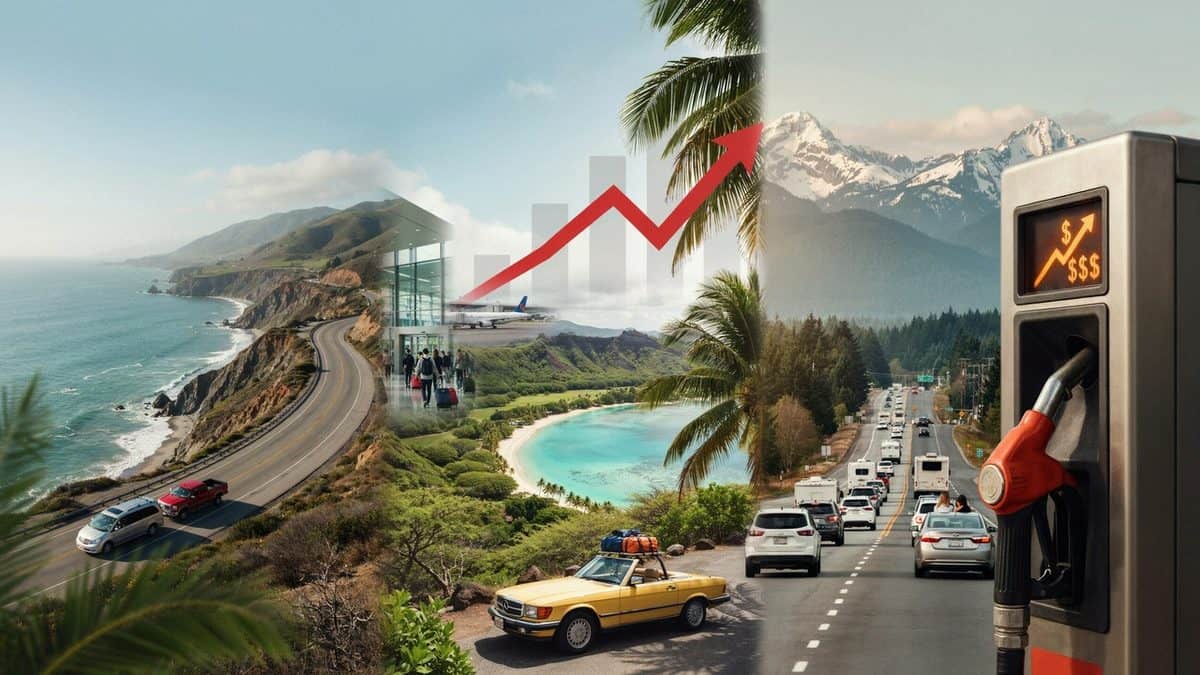
Image generated with Ai
California, Hawaii and more US states face tourism pressure as gasoline costs remain high but stable, forcing travellers to rethink road trips, spending and destinations across the country.
California, Hawaii and more US states could face a tourism squeeze as gasoline costs remain high but relatively stable. The national average has held near $4.09 a gallon, according to AAA, while California remains above $5.60 and Hawaii and Washington are also above $5.20. As a result, expensive fuel could influence travel decisions, particularly for families planning long road trips.
However, the effect is unlikely to be a nationwide tourism collapse. Instead, travellers may choose shorter journeys, cheaper destinations and fewer driving days. Meanwhile, states with lower petrol prices could gain an advantage as tourism demand shifts towards more affordable domestic travel options.
US travel is not expected to collapse because of high petrol prices, but the tourism impact is likely to be uneven across states. California, Hawaii, Washington, Alaska, Nevada, Oregon, Idaho and Arizona face the greatest pressure because petrol prices are well above the national average, while cheaper states such as Indiana, Texas, Mississippi and South Carolina could remain more attractive for road travellers seeking to control holiday costs. The latest AAA data puts the national regular petrol average at about $4.09 a gallon, with California at nearly $5.65 and Indiana at about $3.44.
Advertisement
Advertisement
High petrol prices could reshape US travel
The latest fuel figures arrive at an important point for US tourism, with domestic leisure travel still expected to expand in 2026 despite inflation, geopolitical uncertainty and higher energy costs. The U.S. Travel Association forecasts domestic leisure travel spending to rise 0.9% to $909 billion in 2026, while warning that travellers are increasingly likely to choose shorter-duration and lower-cost trips, including regional and drive destinations.
That distinction matters for tourism because expensive petrol does not necessarily mean Americans will stop travelling; instead, the first response may be shorter road trips, fewer driving days, cheaper accommodation, fewer attractions and destinations closer to home, creating both risks and opportunities for individual states.
Advertisement
Advertisement
US Gasoline Prices Ease Slightly as Hormuz Volatility Keeps Crude Oil Above $80
National Gasoline Average Edges Lower
The US national average price for a gallon of regular gasoline has slipped by just one cent over the past week, reaching $4.09 per gallon. Despite the small weekly decline, motorists continue to face historically elevated prices at petrol stations, with August shaping up to become one of the most expensive months ever recorded.
The limited movement at the pump comes as crude oil prices have also shown relatively little change. However, ongoing volatility surrounding the Strait of Hormuz continues to keep oil markets under pressure, with crude prices remaining around the $80-per-barrel range.
August Set for a New Pump Price Record
The latest figures highlight how unusual the current summer fuel market has become. For the first time on record, the national average price of regular gasoline has remained above $4 per gallon on every day in August.
That trend is putting August on course to establish a new record as the most expensive August for US motorists, surpassing the previous record set in 2022. While the latest weekly decline offers a small degree of relief, it has not been large enough to significantly change the broader picture facing drivers.
The continued strength in gasoline prices is closely linked to elevated crude oil costs, as petroleum remains the primary underlying component of retail fuel prices. Market uncertainty around a critical global oil transportation route is adding another layer of pressure to an already volatile energy market.
EV Charging Costs Remain Unchanged
Electric vehicle drivers, meanwhile, have seen no change in the national average cost of charging at public stations. The average price remained steady at 42 cents per kilowatt hour over the past week.
Advertisement
Advertisement
The unchanged EV charging figure contrasts with the modest movement in petrol prices. For consumers deciding between conventional petrol-powered vehicles and electric vehicles, energy costs remain an important part of the overall ownership equation.
Energy Costs Remain a Major Consumer Concern
The latest figures show that American motorists are receiving little meaningful relief despite the one-cent weekly decline in gasoline prices. With crude oil remaining around $80 per barrel and uncertainty continuing around the Strait of Hormuz, fuel prices could remain elevated.
At the same time, the record-setting August average demonstrates how persistent the current pressure has become. Whether prices ease significantly will depend heavily on crude oil movements, geopolitical developments and wider energy-market conditions in the weeks ahead.
California: the biggest road-travel pressure point
California has the highest regular petrol price among the 50 states, at approximately $5.65 a gallon, compared with the national average of about $4.09.
For California tourism, the exposure is significant because many leisure itineraries involve substantial driving, from Los Angeles and San Diego to national parks, the Central Coast, wine country and the Sierra Nevada, meaning higher fuel bills can encourage visitors to reduce driving distances or combine fewer destinations into one trip.
Hawaii: expensive fuel, different tourism equation
Hawaii ranks second at roughly $5.43 a gallon, but the tourism effect differs from mainland states because most visitors arrive by air rather than driving across state borders.
Advertisement
Advertisement
Nevertheless, petrol prices can influence rental-car costs, sightseeing budgets and local mobility, so high fuel prices may put pressure on visitor spending even when they do not directly discourage international or mainland arrivals.
Washington: pressure on Pacific Northwest tourism
Washington records one of the country’s highest petrol averages at approximately $5.27 a gallon, creating a notable challenge for road-based tourism across the Pacific Northwest.
The effect could be particularly visible in travel involving Seattle, the Olympic Peninsula, Mount Rainier, the North Cascades and longer cross-state itineraries, where petrol can become a meaningful part of a family’s holiday budget.
Alaska: long distances amplify the cost
Alaska has an average regular petrol price of about $4.83 a gallon, placing it among the most expensive states for motorists.
The tourism implications are amplified by Alaska’s geography because visitors often cover considerable distances by road, particularly when combining Anchorage with national parks, scenic routes and other attractions, making every additional mile more expensive.
Nevada: Las Vegas remains different from road tourism
Nevada is also near $4.81 a gallon, putting it substantially above the national average.
Advertisement
Advertisement
Las Vegas can be partly insulated because the city is a major air-access destination, but tourism elsewhere in Nevada may be more exposed to fuel costs, especially travellers visiting desert landscapes, national recreation areas and attractions through multi-day road itineraries.
Oregon: road trips face a sharper squeeze
Oregon has regular petrol at approximately $4.77 a gallon, making it another state where fuel costs could influence tourism behaviour.
Road-based travel along the Oregon Coast, into the Cascade region or between Portland and outdoor destinations can involve substantial mileage, potentially encouraging visitors to spend more time in one area rather than travelling extensively across the state.
Idaho and Arizona: outdoor tourism watches fuel costs
Idaho and Arizona have petrol averages of approximately $4.57 and $4.54 a gallon, respectively, placing both above the national average.
Both states have tourism products that can require significant driving, including national parks, scenic landscapes, outdoor recreation and dispersed attractions, so higher fuel prices could encourage travellers to prioritise fewer destinations during individual trips.
Mountain West states face mixed pressure
Colorado sits at about $4.30 a gallon, while Montana, Utah and Wyoming are around $4.39, $4.39 and $4.39, respectively.
Advertisement
Advertisement
These states are heavily associated with outdoor tourism and scenic driving, meaning the issue is less about eliminating travel and more about how visitors manage distance, with travellers potentially staying longer in one gateway community while reducing the number of far-flung attractions visited.
Northeast tourism has a different exposure
Connecticut, New York, Vermont, Pennsylvania, Massachusetts, Maine, New Hampshire, New Jersey and Rhode Island all record petrol prices at or around $4 a gallon or higher.
However, tourism in many Northeast destinations benefits from rail, air services and dense urban centres, reducing dependence on private cars compared with large western states, so high petrol prices could affect regional leisure drives more strongly than total visitor numbers.
Midwest states could see road-trip demand shift
Illinois has petrol at roughly $4.31 a gallon, while Michigan is around $4.22 and Minnesota approximately $4.06. Iowa, North Dakota, Nebraska and South Dakota are closer to the $4 threshold, creating a more moderate fuel-cost environment for regional tourism.
For tourism businesses across the Midwest, the opportunity could be to attract travellers from nearby states with shorter itineraries, because consumers facing expensive long-distance driving may favour destinations that can be reached within a few hours rather than committing to major cross-country journeys.
Southern states have a fuel-price advantage
Texas has one of the country’s lowest petrol averages at roughly $3.63 a gallon, while Mississippi is around $3.65, South Carolina about $3.67, Louisiana and Tennessee around $3.69, and Alabama close to $3.71.
Advertisement
Advertisement
This creates a relative advantage for road tourism across the South, although large states such as Texas still involve considerable driving distances, meaning cheaper petrol does not eliminate the cost of long journeys but can make regional travel more manageable.
Indiana leads the low-cost group
Indiana has the lowest regular petrol average in the latest AAA state data, at approximately $3.44 a gallon. Arkansas, Kentucky, North Carolina, Oklahoma, Georgia, Missouri and Kansas also sit below or around $3.83 a gallon, giving many destinations in these states a relative fuel-cost advantage.
That could become increasingly relevant to tourism marketing if consumers become more price-sensitive, particularly for families and middle-income households comparing several destinations within driving distance.
Every US state faces a different travel equation
The current state-by-state figures show why a national petrol average alone cannot explain the tourism impact. A traveller in California paying nearly $5.65 a gallon faces a very different holiday budget from someone starting a road trip in Indiana at about $3.44, even before differences in accommodation, attractions and food are considered.
The exposure also depends on the type of tourism each state attracts, because a city break supported by public transport can absorb higher fuel prices more easily than a national-park itinerary requiring hundreds of miles of driving.
State-wise petrol prices and tourism exposure
AAA’s latest state averages provide a useful snapshot of where the pressure is greatest, although petrol prices can change daily and should not be interpreted as a direct forecast of visitor arrivals.
Advertisement
Advertisement
- Alabama — $3.71: Low fuel-cost pressure; favourable for regional road tourism.
- Alaska — $4.83: High pressure because of long travel distances.
- Arizona — $4.54: High exposure for outdoor and road tourism.
- Arkansas — $3.72: Relatively favourable for domestic driving holidays.
- California — $5.65: Highest pressure and major road-tourism exposure.
- Colorado — $4.30: Moderate-high pressure for mountain and outdoor tourism.
- Connecticut — $4.15: Moderate pressure, partly offset by transport alternatives.
- Delaware — $3.94: Moderate pressure for regional travel.
- Florida — $3.95: Moderate pressure despite strong tourism demand.
- Georgia — $3.79: Relatively favourable for regional road travel.
- Hawaii — $5.43: Very high fuel costs, particularly for rental-car tourism.
- Idaho — $4.57: High pressure on long-distance outdoor travel.
- Illinois — $4.31: Moderate-high pressure, with urban transport alternatives.
- Indiana — $3.44: Lowest-cost environment among the states.
- Iowa — $3.98: Moderate pressure.
- Kansas — $3.82: Moderate-low pressure.
- Kentucky — $3.73: Low pressure for road tourism.
- Louisiana — $3.69: Low pressure.
- Maine — $4.11: Moderate pressure for seasonal road tourism.
- Maryland — $3.96: Moderate pressure.
- Massachusetts — $4.07: Moderate pressure.
- Michigan — $4.22: Moderate-high pressure.
- Minnesota — $4.06: Moderate pressure.
- Mississippi — $3.65: Low pressure.
- Missouri — $3.83: Moderate-low pressure.
- Montana — $4.39: High exposure because of long outdoor itineraries.
- Nebraska — $4.01: Moderate pressure.
- Nevada — $4.81: High pressure outside air-centric Las Vegas tourism.
- New Hampshire — $4.05: Moderate pressure.
- New Jersey — $4.05: Moderate pressure.
- New Mexico — $4.02: Moderate pressure.
- New York — $4.19: Moderate-high pressure, softened by rail and public transport.
- North Carolina — $3.75: Relatively favourable for road tourism.
- North Dakota — $4.00: Moderate pressure.
- Ohio — $3.90: Moderate-low pressure.
- Oklahoma — $3.77: Low pressure.
- Oregon — $4.77: High pressure for road-based tourism.
- Pennsylvania — $4.21: Moderate-high pressure.
- Rhode Island — $4.07: Moderate pressure.
- South Carolina — $3.67: Low pressure.
- South Dakota — $4.03: Moderate pressure.
- Tennessee — $3.69: Low pressure.
- Texas — $3.63: Low pressure relative to the national average.
- Utah — $4.39: High exposure for national-park tourism.
- Vermont — $4.17: Moderate-high pressure.
- Virginia — $3.88: Moderate-low pressure.
- Washington — $5.27: Very high pressure.
- West Virginia — $3.95: Moderate pressure.
- Wisconsin — $3.87: Moderate-low pressure.
- Wyoming — $4.39: High exposure for long-distance outdoor tourism.
What higher fuel prices mean for tourism businesses
The biggest change may not be fewer travellers but different travel behaviour. The U.S. Travel Association expects consumers to move towards shorter and lower-cost trips as travel costs rise, while higher-income households are expected to continue supporting overall domestic leisure spending.
For hotels, attractions, destinations and tour operators, this creates an incentive to promote regional packages, multi-night stays, bundled attractions and experiences that reduce the need for visitors to drive long distances between activities.
Travel demand remains resilient despite the pressure
The broader US tourism outlook remains positive rather than recessionary, with the U.S. Travel Association forecasting $1.37 trillion in total travel spending in 2026, including approximately $1.20 trillion from domestic travel.
That means high petrol prices should be treated as a consumer-behaviour risk rather than evidence of an across-the-board tourism downturn, particularly because travel remains a priority for many Americans even as they become more selective about where, when and how far they travel.
“Higher petrol prices will certainly influence how Americans plan travel, but they do not remove the desire to explore. The opportunity for US destinations is to make travel feel smarter, closer and better value, particularly for regional visitors who can discover attractions within a manageable driving distance. California, Washington and other high-cost states may face stronger pressure, while lower-cost markets can attract travellers looking for affordable road experiences. Tourism businesses should respond with practical value, flexible packages and stronger regional marketing. The current environment can encourage destinations to highlight local experiences, slower itineraries and longer stays, allowing travellers to enjoy meaningful tourism without allowing fuel costs to dominate their entire holiday budget.”— Anup Kumar Keshan, Editor-in-Chief, Travel And Tour World
The cause is straightforward: gasoline remains significantly more expensive than a year ago, while crude oil prices remain around $80 a barrel amid continued Strait of Hormuz volatility. The answer is that tourism could experience a selective downward economic effect, rather than an across-the-board decline. Road travel, national parks, outdoor attractions and long-distance driving holidays are likely to feel the pressure first. The reason is that higher fuel bills reduce the amount travellers can spend on hotels, restaurants, attractions and shopping. Yet tourism remains resilient, with the U.S. Travel Association forecasting continued growth in domestic leisure spending during 2026, although travellers are expected to favour shorter and lower-cost trips.
Advertisement
Advertisement
California, Hawaii and more US states are entering a critical period for travel and tourism as gasoline remains expensive but relatively stable. The immediate risk is not that Americans will stop travelling, but that they will change how they travel. Consequently, long road trips could lose momentum while regional tourism, shorter holidays and lower-cost destinations gain attention. California, Hawaii and Washington face particularly high fuel costs, whereas Texas, Indiana and several Southern states offer cheaper petrol. Therefore, the tourism economy may see a redistribution of demand rather than a universal downturn. For destinations and tourism businesses, value, accessibility and shorter itineraries could become increasingly important to travellers.
Frequently Asked Questions
Will high petrol prices reduce US travel?
High petrol prices can reduce some forms of travel, especially long road trips, but current forecasts do not indicate a broad collapse in US tourism. The U.S. Travel Association expects domestic leisure spending to continue growing in 2026, although travellers are expected to favour shorter and lower-cost trips.
Which US state has the highest petrol price?
California currently has the highest regular petrol average among the 50 states, at approximately $5.65 per gallon, followed by Hawaii at about $5.43 and Washington at roughly $5.27.
Which state has the cheapest petrol?
Indiana has the lowest regular petrol average in the latest AAA data, at approximately $3.44 per gallon, giving road travellers there a significant price advantage compared with motorists in California and Hawaii.
Which states could see the greatest tourism pressure?
The greatest potential pressure is concentrated in California, Hawaii, Washington, Alaska, Nevada, Oregon, Idaho and Arizona, particularly for tourism products requiring extensive driving. The actual impact will depend on traveller income, trip distance, transport alternatives and the type of destination.
Could cheaper states benefit from high petrol prices?
Yes. States with lower fuel costs could become relatively more attractive to road travellers, particularly when destinations offer comparable outdoor, cultural or leisure experiences within a shorter driving radius.
Advertisement
Advertisement
Will national parks be affected?
Potentially. National parks and outdoor destinations often require visitors to drive considerable distances, so higher fuel costs can encourage shorter itineraries, fewer stops or longer stays in one gateway destination rather than multi-park road trips.
Are EV travellers protected from high petrol prices?
Not completely. AAA reports that the national average cost of electricity at a public EV charging station remained around 42 cents per kilowatt hour, while charging prices also vary substantially by state.
What should US tourism businesses do?
Tourism businesses can focus on regional travel, value-led packages, longer stays, bundled attractions and drive-friendly itineraries. Making the total holiday cost clearer can help consumers compare destinations when petrol becomes a larger part of their travel budget.
Advertisement
